Tuesday, November 24, 2015

Classics: A Tribute to Paris By Lauren Ennis

In the film Midnight in Paris, aspiring novelist Gil Pender asks, “How is anyone ever gonna come up with a book, or a painting, or a symphony, or a sculpture that can compete with a great city?” as in his words, “every street, every boulevard is its own special art form”. Throughout history there have been countless cities that have become famous for the blend of unique qualities that make up their culture. Even amongst the world’s cosmopolitan havens, however, one city has always stood out as a center of art, romance, and culture; Paris. Throughout its vast history, Paris has produced countless artists, entrepreneurs, and scientists, and inspired many more who have had the opportunity to visit the City of Light. The city has withstood revolution, war, and enemy occupation with its spirit of innovation and resilience intact. On Friday, November 13, 2015 Paris was attacked in a series of terrorist assaults at locations throughout the city. The attacks ultimately resulted in the deaths of one-hundred thirty people and injury to over three-hundred others. The recent attacks come in the wake of attacks across the globe executed by the terrorist group ISIS and other Islamic terrorist groups, including the infamous attack on satirical magazine Charlie Hedbo in January, 2015. Once again Parisians have faced the tragedy in true Paris fashion by taking action against terror threats abroad, while refusing to be ruled by fear and carrying on with their daily activities at home. In honor of this truly great city and its citizens, this week will feature three films that each capture some small piece of the magic of Paris.
Taking 'picturesque' to a whole new level

Midnight in Paris: This 2011 Hollywood crowd-pleaser portrays Paris from a tourist’s perspective, capturing each of its many landmarks with the idyllic freshness that a traveler experiences upon their maiden voyage to the city. The film follows idealistic American screenwriter, Gil Pender (Owen Wilson) as he falls in love with all things Parisian. While a trip into the sights of the city would have been enjoyable enough, the film takes viewers on a true adventure when Gil is magically transported back in time to his idea of the ‘golden age’; Paris during the 1920’s. Over the course of the film, he meets and mingles with the great artists of the decade and soon finds the inspiration of the era rubbing off on him. Complications ensue, however, as he finds himself infatuated with fashion designer and artist’s model Adrianna (Marion Cotillard) while he is already struggling to salvage his relationship with his materialistic fiancée, Inez (Rachel McAdams), in his own era. This frothy romantic comedy possesses the wit, charm, and romantic spark that ensure it is equally successful as both a comedy and love story. What stands out about the film, however, is the fact that it contains two love stories; the love triangle between Gil, Adrianna, and Inez and the love affair between Gil and Paris. At the film’s start, Gil is infatuated with the city in the way that so many newcomers are, and sees it through an idealized perspective. As the film progresses, however, that infatuation grows into a full passion as he experiences Paris through three different eras and makes a true connection with the city and its diverse citizenry. When the breezy journey reaches its finale, Gil comes to realize that not only can the past not be repeated, but that it inevitably contained just as many complications and frustrations as the present. While Gil’s infatuation with the 1920’s may cool to fond nostalgia, it’s no wonder why his love affair with Paris remains sizzling hot.

Silly balloon, tricks are for kids


The Red Balloon: Released in 1956, The Red Balloon remains one of cinema’s most innovative films and one of, if not the most, acclaimed film short. The nearly dialogue-free story follows a young boy, Pascal (Pascal Lamorisse), and his magical friendship with his new toy, a red balloon that seems to possess a consciousness and will of its own. The film chronicles the pair’s enduring friendship as stuffy adults and neighborhood bullies threaten to tear them apart. Throughout the film’s thirty-five minute running time, the balloon takes on a series of roles in Pascal’s life ranging from dog-like companion, to partner in mischief, to devoted protector. In this way, the balloon serves the dual purpose of acting as a crucial character in the story and portraying the film’s overarching symbol of the power of imagination. Throughout the film, adults misunderstand Pascal’s relationship with the balloon and try to separate them, while other children are jealous and try to take the balloon for themselves, much in the same way that people who don’t understand imagination suppress or dismiss it and those who lack it often try to take credit for other’s creative pursuits. This recurring pattern establishes the film’s theme of imagination versus conformity, which comes full circle in the breathtaking finale as Pascal’s imagination allows him to literally rise above the confines of the world around him. Set against the backdrop of post-war Paris, the story also serves as a metaphor for France's creative spirit, which not only survived but continued to thrive even after the devastation of occupation during WWII. Beyond its sweetly inspiring story, The Red Balloon also perfectly portrays Paris through the innocence and curiosity of a child, with each street becoming its own adventure and each sunrise carrying the hope of a new day full of endless possibilities. For a journey back into the wonder of childhood, follow the trail of The Red Balloon.
Just two notes and I'm seeing things rosie

La Vie En Rose:  During the 1940’s and 1950’s, the songs of Parisian torch singer Edith Piaf were an instantly recognizable and poignant addition to the soundtrack of a generation. The film La Vie En Rose explores Piaf’s (Marion Cotillard) tumultuous life from her poverty-stricken childhood to her eventual international stardom. Passed from her neglectful street performer mother, to her irresponsible circus performer father, to her no-nonsense brothel madam grandmother, Piaf’s childhood was anything but conventional. Forced by her parents to earn her own living when she was still just a child, she quickly found her calling and escape from the slums in music. As she rose in the industry, however, life continued to be a struggle as she faced the deaths of both her only child and the love of her life (Jean Pierre Martins), as well as a debilitating car accident and subsequent morphine addiction. Rather than following the traditional trajectory of a birth to death biography format, the film is instead comprised of a series of flashbacks that appear through association to Piaf's present as she attempts to launch a comeback shortly before her death at age forty-seven. In this way, the film is more personal than most biopics as it is told entirely from the perspective of its protagonist, which provides additional insight into who she was and what it was about her that made her stand out among so many other talented artists. Marion Cotillard’s performance is nothing short of mesmerizing as she goes beyond mere mimicry and completely inhabits her role as the complicated singer, as she captures Piaf’s fascinating combination of backstreet toughness, girlish vulnerability, world-weariness, and carpe diem sensibility. From street waif, to Montmartre bohemian, to international celebrity Edith Piaf was a woman whose resilience and originality reflected the same inspiring qualities of the city in which she spent the majority of her days. Even today, over fifty years after her death, Piaf's music continues to enchant and inspire as a symbol of Paris in its all of its artistry. Below, I have included a link to a clip of Celine Dion's performance at the American Music Awards of Piaf's Hymne a'lAmour in an emotional and fitting tribute to the victims of the Paris attacks. 

Vive la France et vive liberte. 


Sunday, November 22, 2015

Dance Off: The Red Shoes vs. Black Swan By Lauren Ennis

It is often said that the best way for an artist to create meaningful work is for them to portray that which they know best. As a result, it is little wonder why one of the most enduring portrayals in art is the struggle and sacrifice of the artistic lifestyle. From consumptive bohemians, to mad painters, to reclusive writers, many of the most raw characterizations in modern storytelling are those of artists striving to achieve success and fulfillment regardless of the cost it may require. While each art form entails its own set of challenges, one of the most demanding of art forms is dance, particularly ballet. Unlike ancient eastern dance traditions designed to work with and accentuate the body’s natural movements, ballet captures audience’s attention by revealing the beauty of the human form beyond the limits of everyday movement. Similarly, while modern dances thrive upon spontaneity and improvisation, ballet is a rigorous art form, which requires the utmost precision in each of its choreographed movements. By its very nature ballet is an art form which is consuming, elite, and inaccessible; in short it is the ideal vehicle through which to explore the passion, doubts, obstacles, and triumphs of life as an artist. As a result, there have been numerous books and films which have used ballet to portray diverse characters facing obstacles ranging from aging (The Turning Point), to unemployment (Waterloo Bridge), to political oppression (White Nights), to personal loss (Save the Last Dance). Despite the many critically and commercially successful ballet films, the film that many critics and viewers continue to immediately think of when they heard the word ‘ballet’ is the 1948 British drama The Red Shoes.
Ballet; the stuff nervous breakdowns are made of

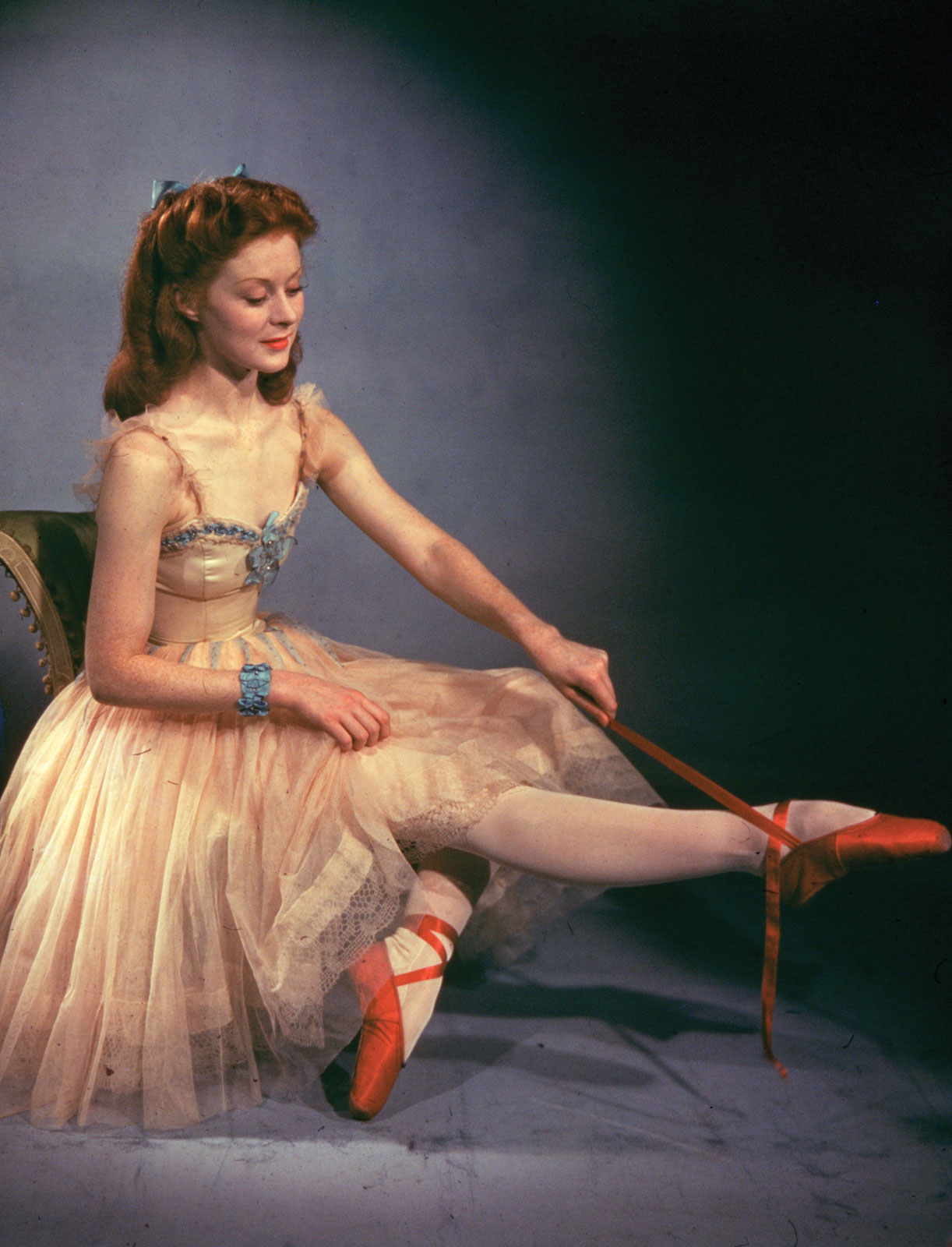
The story of The Red Shoes is a deceptively simple one; inexperienced but passionate dancer, Vickie (professional ballerina Moira Shearer), joins an elite ballet company where she achieves the success she’s always dreamed of, only to become conflicted between her professional goals and personal needs. While the conflict between love and art was already a well-worn theme even in 1948, what the film lacked in original storytelling it made up for in accuracy, visual innovation, and emotional honesty. Few dance films can compare to The Red Shoes in terms of attention to detail and realism. Rather than focusing upon the glamour of the performances, the film spends most of its time backstage, as it shows the painstaking work that goes into a ballet from its first draft to its final rehearsal. In this way the film provides an insider’s perspective to viewers who are unfamiliar with the world of professional dance and pays apt tribute to the men and women who tirelessly work to bring that magical world to life. The film even goes so far as to populate its cast with professional dancers rather than utilizing established actors and body doubles. The film also accurately portrays its heroine’s struggle for success rather than relying upon the cliché of a meteoric rise to stardom, as Vickie frustratedly works her way through the ranks of the ballet company over time.
The film approaches its characters with similar realism in its exploration of daily life in a ballet company populated with a diverse array of three dimensional characters. Despite the film’s age, The Red Shoes is remarkably refreshing  in the way that it treats its story as one of a particular dancer working in a specific company rather than as a commentary upon ballet, dance, or art at large by avoiding typical clichés such as abusive directors, ego-maniacal stars, and petty rivalries. In this way the film ensures that the audience is able to invest in the characters as though they were real people, which in turn lends the relationships and conflicts between the characters emotional weight.
A girl and her best frenemy; toe shoes

Today, another ballet film has taken center stage using a very different approach. In the 2010 psychological thriller Black Swan, Natalie Portman plays similarly impressionable and eager dancer, Nina, whose quest for stardom takes a disturbing turn. In order to provide viewers with insight into Nina’s fractured mind the characters, plot, and visuals take on a sinister quality befitting a horror movie’s haunted house rather than a typical theater. Because the story is told from an unstable character’s perspective, the world of ballet quickly escalates from a competitive, but fulfilling, working environment to an elaborate prison in which dancers torture their minds and bodies in order impress fickle audiences and lecherous directors. Although the fantastic elements heighten the surreal atmosphere and suspense, they also bring the film dangerously close to caricature as Nina is constantly surrounded by the very stock characters that The Red Shoes widely avoided as she is alternately sexually harassed by her volatile director, threatened by a bitter ballerina forced into early retirement, and tormented by the impossible expectations of her ex-dancer stage mother. This tendency toward camp is most obvious in Nina’s one-note abusive relationship with exploitive director Thomas LeRoy (Vincent Cassel), which sorely lacks the subtlety and complexity that made Vickie’s relationship with impresario Boris Lermontov (Anton Walbrook) both fraught and fascinating. Through its unabashed sense of melodrama, Black Swan creates its own surreal world of light and shadow in which everyone and everything poses a potential threat, which works wonderfully for a psychological thriller, but fails to shed any light or add any dimension to the public’s understanding of ballet.
When did things get all Lewis Carroll around here?!

Nina’s struggle with her unraveling psyche, for all of its flash and theatrics similarly fails to resonate when compared with the much more relatable and timeless conflict that proves to be Vickie’s undoing. On the dvd box and in critics’ summaries, Vickie is described as being torn between ‘love and dance’. Although this statement is accurate given the fact that she is forced to choose between her position in the company and her marriage to its temperamental composer, Julian (Marius Goring), there is also another more resonant struggle that she faces; the conflict between career and family. Today we often hear about the conflict between career and family and the difficulty of balancing the two is hotly discussed and debated. At the time of this film’s release, this debate was more than a mere talking point; it was the frontier faced by an entire generation of women who had held down the home-front by managing homes and taking jobs as the men in their lives fought overseas in WWII, only to be forced back into their former roles when peace returned. In her attempt to balance her marriage and her career, Vickie simultaneously faces another, even greater, challenge to find her place in a changing society. It is through this battle within its heroine that The Red Shoes rises above its ‘dance movie’ premise and becomes a true tragedy when Vickie finally makes the ultimate sacrifice in order to escape a world in which she cannot be her true and complete self.


Despite their drastically different approaches to their stories, the films share a number of striking similarities beyond their focus upon ballet. Both films tackle the emotional toll of dedication to art, with Black Swan taking this idea to a chilling end. The Red Shoes and Black Swan also share breathtaking visuals that border on the surreal as the fairy tale landscapes of the performances not only come to life, but expand to permeate the characters’ entire worlds. It is these visuals that not only transport viewers into the world of both heroines, but also provides audiences with crucial insight into how each woman perceives that world. The most notable similarity, however, by far is the ambiguous endings to both films that leave viewers spellbound as they continue to ponder if it the fates of Vicky and Nina were accidents, deliberate or just two more casualties of the dark side of dance. Both films succeed at telling very different tales set within the ballet world, but once the initial lights came on following Black Swan the shock of the film's darkness faded while I was still haunted by Vickie Page and the tragic end she was driven to by The Red Shoes.
What a little hard work and psychosis can accomplish...

Sunday, October 25, 2015

A Tribute to Maureen O'Hara By Lauren Ennis

On Saturday, October 24, 2015 Hollywood lost one of its legendary leading ladies with the death of Maureen O’Hara. Born in Dublin, Ireland in 1920, O’Hara arrived in the US after being cast in Charles Laughton’s adaptation of The Hunchback of Notre Dame in 1939. Her portrayal of the equal parts tormented and sensual gypsy dancer, Esmeralda, earned the notice of studios and audiences alike and marked the start of a Hollywood career that would last decades. While her flame colored tresses and emerald eyes brought her the nickname ‘the queen of technicolor’, it was her fiery portrayal of a host of intelligent, no-nonsense, heroines that brought her from the realm of alluring starlet to the much deserved status of leading lady. Here are three of my favorite Maureen O’Hara films that I recommend not only to viewers unfamiliar with O’Hara’s work, but also to cinema buffs looking for an inspiring film experience.

Dance, Girl, Dance: Released just one year after O’Hara’s arrival in Hollywood, this film was considered a commercial and critical failure upon its initial release. As the feminist movement of the 1970’s took hold, however, the film was re-examined and touted for its themes of female independence and artistic integrity. The film tells a tale of a group of aspiring dancers struggling to make a living on the stage, focusing upon two very different women; brassy stage veteran, Bubbles (Lucille Ball) and naïve newcomer, Judy (O’Hara). As the film progresses, the pair are continually put in competition with one another in their pursuits of both romantic and career success, with Bubbles repeatedly outshining Judy through her willingness to do whatever it takes, with whoever it takes, to get ahead. Although not a classically trained dancer, O’Hara beautifully carries off the ballet, jazz, and hula routines that the script calls for, adding a sense of realism to the film’s proceedings. Over the course of the film, she develops the character of Judy from an innocent, but determined, girl to a disillusioned, but self-respecting, woman in such a way that Judy’s evolution is a natural progression, rather than a required plot point. While Bubbles, with her constant wisecracking and racy antics, would initially seem the more enticing character to play, O’Hara imbues Judy with a steely resilience and strength of character that endears her to audiences. Similarly, O’Hara succeeds in the difficult task of holding her own against the formidable comedic talents of Lucille Ball. Despite the fact that it debuted in 1940, the film remains startlingly modern with Judy’s burlesque hall speech to a heckling audience offering insight into women’s roles in entertainment and society at large still which still resonates today. For a dance drama that will get your mind working as well as your toes tapping, look no further than Dance, Girl, Dance.

That best not be heckling I hear...
Miracle on 34th Street: With a cast featuring Kris Kringle himself, the role of jaded divorcee Doris Walker easily could have been relegated to a background part. In Maureen O’Hara’s hands, however, Doris is no humbug, but is instead an entirely believable and relateable character. While the film’s main story arc concerns the trial of a beloved department store Santa Claus wrongfully accused of being criminally insane, the film also contains another more poignant, if less flashy, tale of a hardened woman reconnecting with her childhood idealism. At the film’s start, Doris is a recently divorced department store manager and devoted mother, whose rigid approach to office management is directly mirrored in her strict home life. Her initial dismissal of both neighbor Fred Gaily (Jeffrey Lynn)’s optimism and Kringle’s whimsy make her at first seem a difficult character bordering on unsympathetic. As the story progresses, however, it is revealed that Doris’ efforts to instill practicality in her daughter are all part of an attempt to shield Susan from the pain of later disillusionment. Even with this insight into her  past, however, the script still threatened to leave Doris a stereotypical scorned woman, but O’Hara’s warmth and wit ensures that her character is a multifaceted person rather than a mere plot device or type. Over the course of the film, she develops the role with a nuance and subtlety that makes the drastic change in Doris at the film’s finish a logical and hard won metamorphosis rather than the overnight transformation typically found in inspirational tales.  While Kringle’s exoneration is the miracle usually associated with the film’s title, Doris Walker’s rediscovery of her lost faith in life and love are equally miraculous, and it is this adult aspect of the script that continues to resonate with audiences long after their belief in St. Nick has faded. 
Fine, you can believe in Santa, but the Easter Bunny and Tooth Fairy are off-limits

The Quiet Man: Despite acting in over sixty films in a career that spanned from the 1930’s until the early 2000’s, Maureen O’Hara remains best known for a series of films she appeared in opposite western icon John Wayne, in particular their 1952 film The Quiet Man. The film tells a deceptively simple tale of an American boxer connecting with his Irish roots following a devastating accident in the ring. The film begins in a gentle fashion with Wayne’s Sean Thorton acclimating himself to life in the Emerald Isle until O’Hara bursts onto the scene in a performance that is nothing short of pure dynamite. In her portrayal of Mary Kate Danaher she is at her most fiery as she by turns brawls with and bewitches Wayne’s world weary boxer. It is the complicated  relationship between the central couple that provides the fireworks in an otherwise lilting tale of small-town life. While the two are instantly attracted to one another, a land dispute between Sean and Mary Kate's hard drinking brother and Mary Kate's own insistence upon adhering to the arduous traditions of Irish courtship make their romance a hard-earned one. Throughout the film,  chemistry between O'Hara and Wayne lights up the screen, leaving little wonder as to why the two were paired together so often. Although the role of Mary Kate is one that can be best summarized by stubbornness, pride, and defiance, it is also one that equally called for tenderness and affection; a combination that required the actress playing it to walk a tightrope between the character’s extremes. Fortunately for audiences, O’Hara was more than equal to the task and her Mary Kate is fierce without becoming shrewish and loving without ever taking any nonsense from the men in her life; in short she is a lass that the film's hero and audiences alike can't help falling in love with. John Wayne once said of his frequent co-star, "She is a great guy"; as these three films and the many others that she starred in show she was also a truly great actress.
Maureen O'Hara and John Wayne; lighting up the screen through any storm

Wednesday, October 14, 2015

Three Reasons That There is Still No Place Like Oz By Lauren Ennis

1939 is often cited as “the greatest year in Hollywood”. This single year saw the release of such classics as Gone With The Wind, Mr. Smith Goes to Washington, Wuthering Heights, Stagecoach, and Ninotchka, amongst numerous other excellent films. Though these films differed widely in style, subject matter, and genre, all of these films shared the ability to resonate with Depression-era audiences. Seventy-five years later, several of these films are still considered classics as they continue to enthrall modern audiences. While all of these films earned their place in cinematic history, few have cast a spell quite as enchanting or far-reaching as a children’s fable that still has us dreaming of a land beyond the rainbow. Here are three reasons that the streets of Oz remain paved with cinematic gold.
Lions and songs and dance, oh my!

A PRODUCTION FOR THE AGES: Although it was released over seven decades ago, The Wizard of Oz remains strikingly modern. From flying monkeys, to melting witches, to a tornado that is truly out of this world, the film’s endless list of iconic images alone would have been enough to earn it a place in cinematic history. Even in an era dominated by CGI, there is no single image that conjures the instant recognition or continues to inspire awe like that of Judy Garland stepping out of sepia toned Kansas into the vibrant array of sight and sound that is Oz. The stark contrast between the drab reality of Dorothy’s Kansas and the splendor of Oz creates more than just a memorable contrast; it brings viewers into Dorothy’s mind as the world around her is colored first in oppressive grey and then in the vibrant colors which represent her vastly different views of each world. In many ways, this same color scheme also stood in for the drabness of life in poverty stricken Depression-era America contrasted with the bright lights and glamorous images of Hollywood through which viewers sought a refuge from their harsh reality. Through ingenious use of camera-work and the efforts of an extensive creative team, the film successfully brings Oz to vibrant life in such a way that dispels audience disbelief until the closing credits. From the yellow brick road of munchkin land to the depths of the witch's forest and the cosmopolitan Emerald City, each region of Oz contains its own culture and characteristics which in turn lends a sense of realism to the  otherwise fantastic plot. Although the successful blend of realism and fantasy would be an accomplishment in of itself, the fact that the elaborate costumes, dazzling sets, and breathtaking special effects were created without the benefit of modern technology is nothing short of daunting, and makes the film stand out as a true ‘horse of a different color’.
It ain't easy being green


THE VERY ESSENCE OF AMERICANA: Despite the fact that it was originally marketed to children, The Wizard of Oz has become firmly ingrained in the fabric of American culture. The use of such classic lines as “I have a feeling we’re not in Kansas anymore, Toto”, “I’ll get you my pretty and your little dog too!”, “Lions, and tigers, and bears. Oh my!” and of course “There’s no place like home”, just to name a few are so commonplace that these bits of dialogue have entered the realm of popular vernacular. Similarly, each of the film’s central characters remains iconic as they continue to appear as Halloween costumes and adorn home décor, accessories, and a plethora of personal items. Similarly just a few notes of one of the film’s signature songs will get grown adults ready to break out into a rousing performance of their favorite childhood tunes. “Over the Rainbow” in particular continues to enjoy fanfare from a wide range of music fans with pop, jazz, and even punk rock artists covering the beloved ballad. With each passing decade a new generation has been introduced to the wonders of Oz and each of those generations in turn has enriched the film's legacy with their own unique appreciation and prospective on the enduring tale. 

MESSAGE/STORY: Originally written as a populist allegory, The Wizard of Oz has meant an array of divergent things to each generation and individual exposed to its brilliant combination of fantasy, drama, innocence, wit, and raw emotion. While the visuals, sound, and casting came together to create a truly dazzling production, perhaps the film’s true secret to its enduring impact is the power of its story. On the surface, the film tells a straight-forward, if imaginative, tale of an average girl thrust into an adventure in a strange land. At its heart, however, the script actually relays a far more relatable tale of one girl’s journey to find herself only to realize that already possessed all that her heart desired all along. Through its dual storylines the film is able to entertain children with its dramatic twists and turns while simultaneously reminding adults of the value of the simpler aspects of life. Although it is tempting to, like Dorothy, dream of the allure of far-off lands and excitement of adventure, the film reminds us that it is a far happier and healthier practice to take a harder look at the small thrills and everyday blessings in our own lives. Through its depiction of the hidden dangers behind the surface beauty of Oz and the powerful love and support that surround Dorothy in Kansas, the film provides an apt message that can be summed up in five words, “there’s no place like home”.  

A girl's best friend

Thursday, October 1, 2015

Movies You Should & Should Not Let Your Young Children Watch this Halloween

Movies You Should & Should Not Let your kids watch this Halloween

By: Brian Cotnoir

Well it’s that time again: October.  Halloween will be here before you know it, and each year there are plenty of Halloween themed movies for kids on TV.  However, not every movie shown on ABC Family or Cartoon Network is ideal for certain groups of kids, if anything, some of them are just downright too scary for kids, but sometimes I can be very difficult for kids.  Remember films like the original “Poltergeist” and “Gremlins” were rated PG when they were first released and they absolutely traumatized many kids.  So assuming a film is safe for kids just because it’s on TV can often be a poor judgement, and just because a film is animated doesn’t necessarily mean it’s meant for kids either.  And I just wanted to clarify that the films that I’m classifying as “Dangerous” aren’t bad films (In fact, I enjoy most of them), but I think are more intended for older audiences despite being advertised to younger audiences.  Also, the age recommendations I’ve placed are just my own opinion.

SAFE

Hocus Pocus (ALL AGES)

Okay seriously, this movie is perfect for everyone!  It’s about as close to perfect as you can get to a perfect Halloween film.  We have the wonderful folks at Disney to thank for this wonderful live action film starring Bette Middler, Kathy Najimay, and Sarah Jessica Parker.  This film has everything, it has thrills, it has action, it has laughs, it has songs, it has a talking cat, and probably the coolest movie zombie ever!  If you only allow your kids to watch one movie this Halloween it should definitely be “Hocus Pocus”.

What's that you say? "Hocus Pocus" is playing on ABC Family

The Nightmare Before Christmas (AGES 7+)

Another Wonderful Halloween film released by Disney in 1993 (technically Touchstone, but I’m not here to debate that) is Tim Burton’s “The Nightmare Before Christmas”.  What started out as a poem written by Tim Burton has since blossomed into a huge cult phenomenon that makes Goths and creepy kids all over the world lose their every loving minds.  The creatively creepy stop-motion designs of Tim Burton, combined with the brilliant directing of Henry Selick, and the memorable & beloved songs of Danny Elfman make this cult classic a must see on everyone’s Halloween movie list.

Everybody Scream!  Everybody Scream!


Hotel Transylvania (ALL AGES)

Every now and then Adam Sandler is a part of a film that makes us all go; “Oh Yeah, he’s pretty talented”.  The story of a Hotel run by monsters for monsters is a fun and enjoyable adventures for kids and adults of all ages, and features an All-Star cast including Adam Sandler, Kevin James, Selena Gomez, Steve Buscemi, Cee Lo Green, and many others.  I haven’t seen the sequel “Hotel Transylvania 2” yet, but if it’s anything like the first film it’s has to be a must see for your kids.


The Addams Family Values (AGES 10+)

I love “The Addams Family”; the TV show was one of my favorites as a child (and truth be told, the first person I ever had a crush on was Morticia Addams), so as a kid this was always one film I looked forward to every Halloween.  “The Addams Family Values” may be a sequel film, but you don’t need to see the original to enjoy it.  It has all the charm and dark humor of the of the original TV sitcom from the 1960’s. It’s an ideal film to for your kids to watch this Halloween, and will hopefully introduce them to the awesomeness that is “The Addams Family” (da na na na *snap snap*)

Add caption


The Harry Potter Films (AGES 10+)

The “Harry Potter” is not just a great Children’s Fantasy film series, but it is also great to show your kids during the Halloween Season.  Think about it; it’s a story that revolves around a group of young children who are learning how to become witches and wizards!  That’s got to be the coolest and most interesting children’s story ever told!  Not only that, but the films are based off of a book series that is beloved by both children and adults.  Parents can read the story to their kids, and then have a weekend movie marathon.  The films aren’t scary, but do contain some scenes or sequences that might be a little too intense for some younger audience members, but nevertheless the “Harry Potter” films are great films for you to share with your kids this Halloween. 


DANGEROUS

Coraline (AGES 13+)

This is the film that actually inspired this review.  A friend of mine thought it’d be okay to let 7-year-old daughter watch the stop motion film “Coraline” last October, because she assumed it would be a lot like “The Nightmare Before Christmas”, and was shocked to see that the film contains some intense scary imagery, and even references to eye gouging.  This may be one of the darkest children’s films ever made.  I enjoy the movie “Coraline”, but trust me it is not for younger kids.

You Know; For Kids! 

FrankenWeenie (AGES 13+)

Another stop motion film brought to us by writer/director Tim Burton, but unlike “The Nightmare Before Christmas” this one just might be a little too dark for younger audience members.  The film is based off of a live action short film that Burton made back in the 1980’s, about a young boy who tries to bring back his beloved pet dog from the dead in a similar style to Dr. Frankenstein.  I mean the film is harmless enough, but it does contain a few intense scenes.  The film has multiple references to resurrecting the dead and contains a sequence where the kids in town are being chased and tormented by some of the animals they brought back from the dead.


ParaNorman (AGES 11+)

Same reasons as the previous two:  It’s a good film.  It’s stop motion.  It contains a few scenes that may be too intense for younger audience members.


Teen Witch (NO ONE!)

This movie was made in the 1980’s to capitalize on the popularity of “Teen Wolf” and appeal to a female audience.  Let me be very clear when I say this:  If you let your child watch “Teen Witch” then they will suffer massive brain damage and you should be charged with child abuse for letting your child watch such a stupid and moronic film.  For further explanation why please click the link below.

5 Reasons Why "Teen Witch" is the Worst Film you could ever let your children watch

The Witches (AGES 13+)

Base of the classic Roald Dahl novel “The Witches” is the story of a group of witches who are bent on destroying all children.  The scariest part of the film comes when the witches remove their disguises and reveal their true forms to one another.  That scene is the stuff that children’s nightmares are made of, and will definitely give younger children nightmares if you let them watch it.

This image could result in a lot of therapy for your kids. 
Scooby Doo on Zombie Island (AGES 11+)

I Love Scooby Doo; It’s one of the Best TV series ever made, and they’ve also made a bunch of straight-to-video films that are very good for the most part, and the one Scooby Doo film I remember the most as a kid has to be “Scooby Doo on Zombie Island”.  In this one Scooby and the gang witness hordes of zombies rise from the grave, and become hostage to a group of people who are members of some sort of Voodoo Cult that pray to an ancient Cat God, and can transform into Cat People...Wow, is this an frightening film or what. 

Tuesday, September 22, 2015

Classics: A Review of The Barefoot Contessa By Lauren Ennis

We are often warned against judging books by their covers and told to be wary of grass that looks too green on the other side of the fence. Yet, despite having been instilled with these lessons since childhood, we all still fall into the inevitable trap of comparing ourselves, usually negatively, to those around us. This habit, while all too human, serves little purpose but to blind us to the better aspects of our own lives in favor of an ideal that may not be all that it appears. The 1953 drama The Barefoot Contessa perfectly captures both the ease with which we are all too often seduced by appearances and the darkness that can lurk behind even the glossiest of surfaces.
Flamenco; hotter than twerking since 1954

The story begins in flashback as a series of acquaintances and friends gather at the funeral of Hollywood sensation Maria Vargas (Ava Gardner). As the funeral gets underway, each of the men who were closest to Maria reflect upon their relationships with her and her influence upon their lives. With each new reminiscence, however, emerges a new and distinct version of Maria as her publicist (Edmond O’Brien) recalls the glamour girl he promoted, her husband (Rosanno Brazzi) looks back on the woman he loved and lost, and her director (Humphrey Bogart) remembers his much missed friend. At the film’s start Maria’s life of fame, fortune, and luxury seems nothing short of enviable, leaving viewers all the more curious as to the cause of her mysterious death. As the film progresses, however, the layers of makeup and marketing are stripped away until all that remains is the poverty stricken dancer director Harry Dawes first met at a Madrid nightclub. The story eventually takes on a cautionary tone as it is revealed that throughout her life, the people in Maria’s life continually tried to control and manipulate her, and that only in death was the elusive star truly free. By the film’s shocking finale, it revealed that Maria’s glittering life was far from golden despite what the public had been led to believe.  

While Hollywood has chronicled the dangers of its fame machine both before and since the release of The Barefoot Contessa, few films have done so in such a subtle or realistic fashion. Unlike fellow Hollywood tale Sunset Boulevard, which emphasized the excess of life on the big screen, The Barefoot Contessa abandons all histrionics in favor of a deceptively simple tale of one actress’ meteoric rise and tragic fall. By utilizing multiple narrators the film also succeeds in balancing divergent tales as Maria’s outward success is chronicled while she continues to battle her inner demons behind closed doors. These dual tales in turn highlight both the falsities of fame and the ways in which private struggles are often masked by public success. As a result, the film is a cautionary tale that emphasizes the pitfalls not just of life in the fast lane, but also of trusting in the lure of appearances. This warning remains particularly relevant in today’s age of social media in which we are constantly bombarded by the supposed excitement, happiness, and success of our friends and acquaintances, all while their hardships and shortcomings remain carefully obscured.
Yes men; no actress' ensemble is complete without one

The cast brings a diverse array of characters to life in roles that easily could have been reduced to types. Warren Stevens is both formidable and pitiful in his portrayal of Kirk Edwards, the bitter Hollywood mogul who first discovers Maria. Similarly, Mari Aldon and Marius Goring light up the screen in their brief but memorable performances as Kirk’s tragic alcoholic girlfriend and a smarmy South American playboy who attempts to add Maria to his collection of showy possessions. Rosanno Brazzi adds depth to his role as Maria’s husband as he develops from a cardboard, Prince Charming-esque, love interest to a haunted character whose outward calm masks his internal battle against a traumatic past. Edmund O’Brien provides a comic center to the dramatic proceedings as Maria’s bumbling publicist, who by the film’s finish finally learns that there is more to living than promoting other people’s lives. Despite the array of fine performances surrounding them, the film truly belongs to Bogart and Gardner in their roles as Maria and Harry. Any questions concerning Gardner’s talent can be ended with one viewing of this film as she evolves from ambitious new-comer desperate to escape her circumstances to established star for whom happiness remains elusive. Gardner also deserves an extra nod for her successful imitation of a Spanish accent in the film’s early scenes and sensual performance of a unique take on the flamenco. Bogart brings his usual world-weary charisma and breathes new life into his persona by imbuing Harry with a fatherly tenderness as well as his standard cynical charm. Together the duo add a warmth and familiarity to a script that could otherwise be too coldly observant and removed from the everyday to elicit much emotion.


Part Cinderella story, and part cautionary tale The Barefoot Contessa is above all thoroughly entertaining. The script lends audiences an inside look at Hollywood in all of its glitz and sleaze with enough razor sharp barbs and parallels to actual celebrities to populate the spiciest of gossip columns. Despite its 1950’s setting, the film remains strikingly relevant in its themes as it warns against the lure of illusions both on-screen and off. For a juicy look at Hollywood behind the scenes, kick up your heels and hop onto the nearest couch for a viewing of The Barefoot Contessa.
A good friend is the stuff that dreams are truly made of

Tuesday, September 8, 2015

Classics: A Review of Tea With Mussolini By Lauren Ennis

The old adage says that “it takes a village to raise a child”. The semi-autobiographical 1999 film Tea with Mussolini proves just how true that sentiment can be. Based upon a chapter in Italian director Franco Zefirelli’s memoir, the film chronicles the efforts of a diverse group of friends to raise a child under the threat of fascism. By turns endearingly quirky and deadly serious, the film highlights the impact and importance of family upon our lives even in the face of the most devastating of adversity.
Sometimes the closest families are made and not born

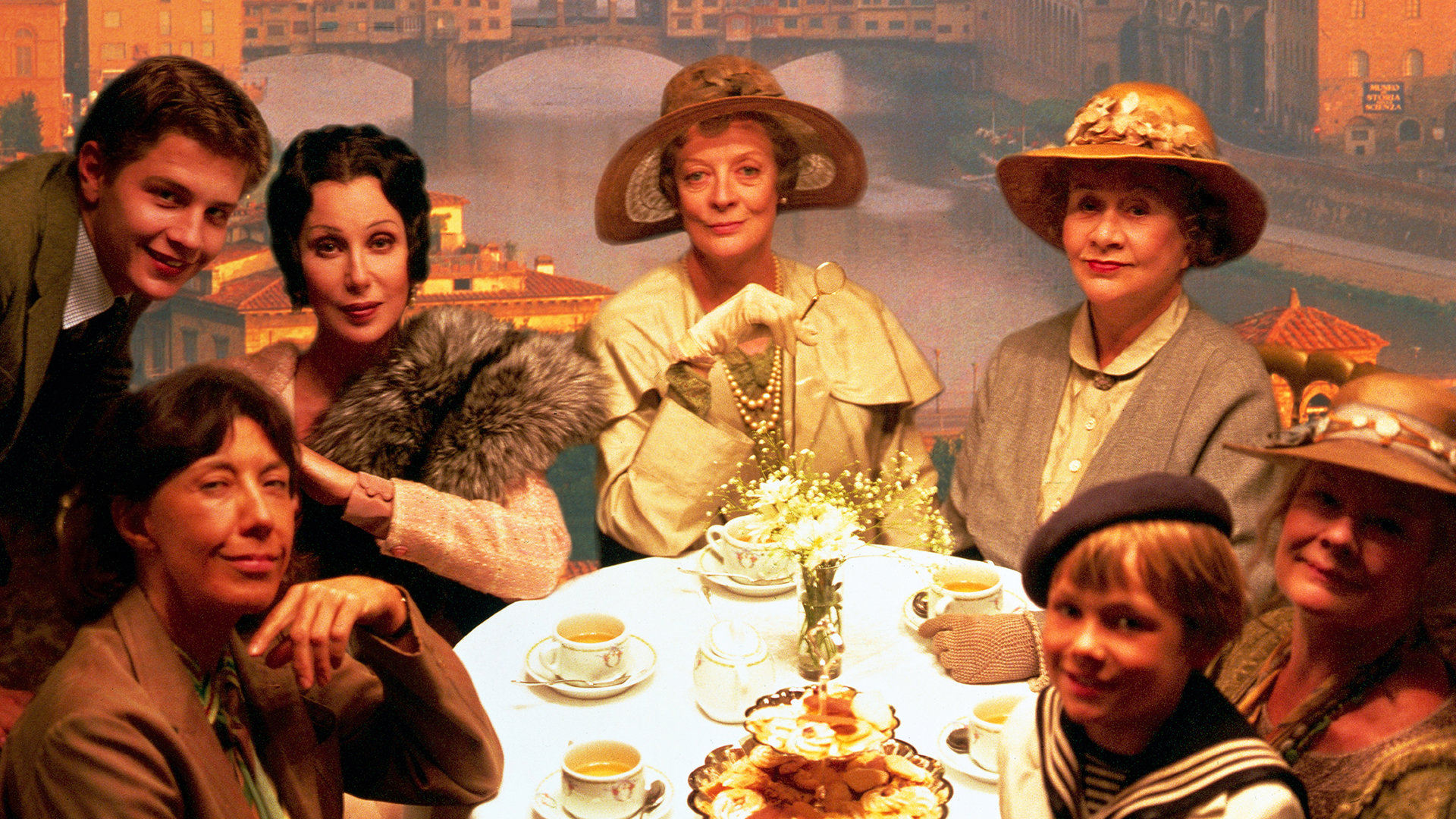
The story begins with a group of eccentric female British expatriates living abroad in Florence, Italy in the mid nineteen thirties. The ladies soon find their idyllic world shaken with the arrival of two very different outside forces; Mussolini’s fascists and a little boy grieving the death of his single mother. The boy, Luca (Charlie Lucas, and later played by Baird Wallace), is quickly taken under the wing of the nurturing Mary (Joan Plowright) after her boss, the boy’s father (Massimo Ghini), places him in an orphanage in order to hide the child’s existence from his nagging wife. Determined that Luca have a better life, Mary and her friends take him in and each play a role in raising him, instilling within him an appreciation for all forms of art and culture. Under their tutelage, he embarks upon a journey to lead an artist’s life and become, “a perfect English gentleman”. Just as Luca begins to adjust to his new family however, the threat of war begins to loom heavy over Florence, prompting his father to pack up the family business, move to Austria, and reluctantly take his son abroad with him. Five years later, Luca returns after running away from an Austrian boarding school to a war-torn Florence that he hardly recognizes. When Mary and her friends are interned as enemy aliens, he springs into action to aid the only family he’s ever known.

While the film chronicles the effects of the rise of fascism and outbreak of World War II upon Florence, the script’s real story lies in the way that the characters cope with and overcome the adversity that they are faced with. When Luca is confronted with the loss of his mother, he finds solace in the world of love and art that Mary and her friends introduce him to. As the film progresses, it is these same foundations that inspire him to leave occupied Austria, join the resistance, and return to pursue the life that he always dreamed of. Similarly, when the women are interned, they turn to their friendship and artistic passions to find the strength and courage to keep going. Even after suffering deprivations, betrayal, and imprisonment at the hands of the fascists, there are two things that the regime cannot take away the diverse group; their love for life and each other. By the film’s finish it is evident that the experiences that they have endured have only left them with a reaffirmed sense of who and what matters most in life.
Tea time anyone?

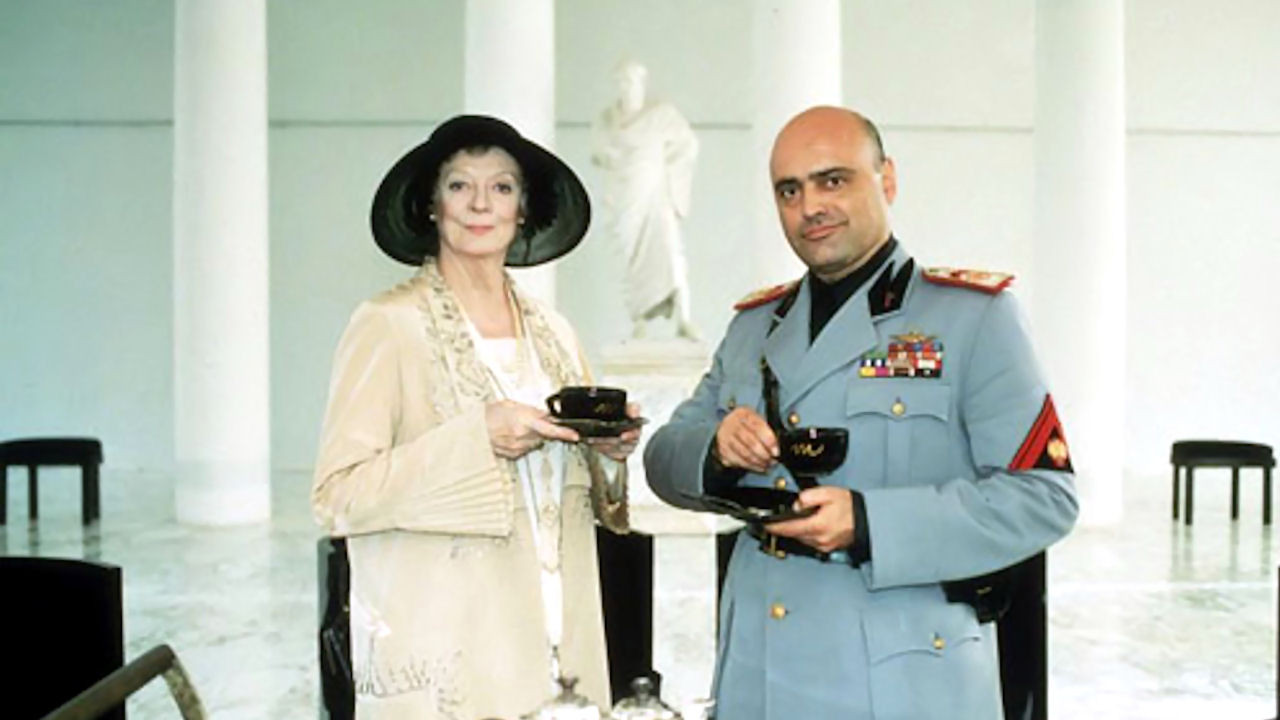
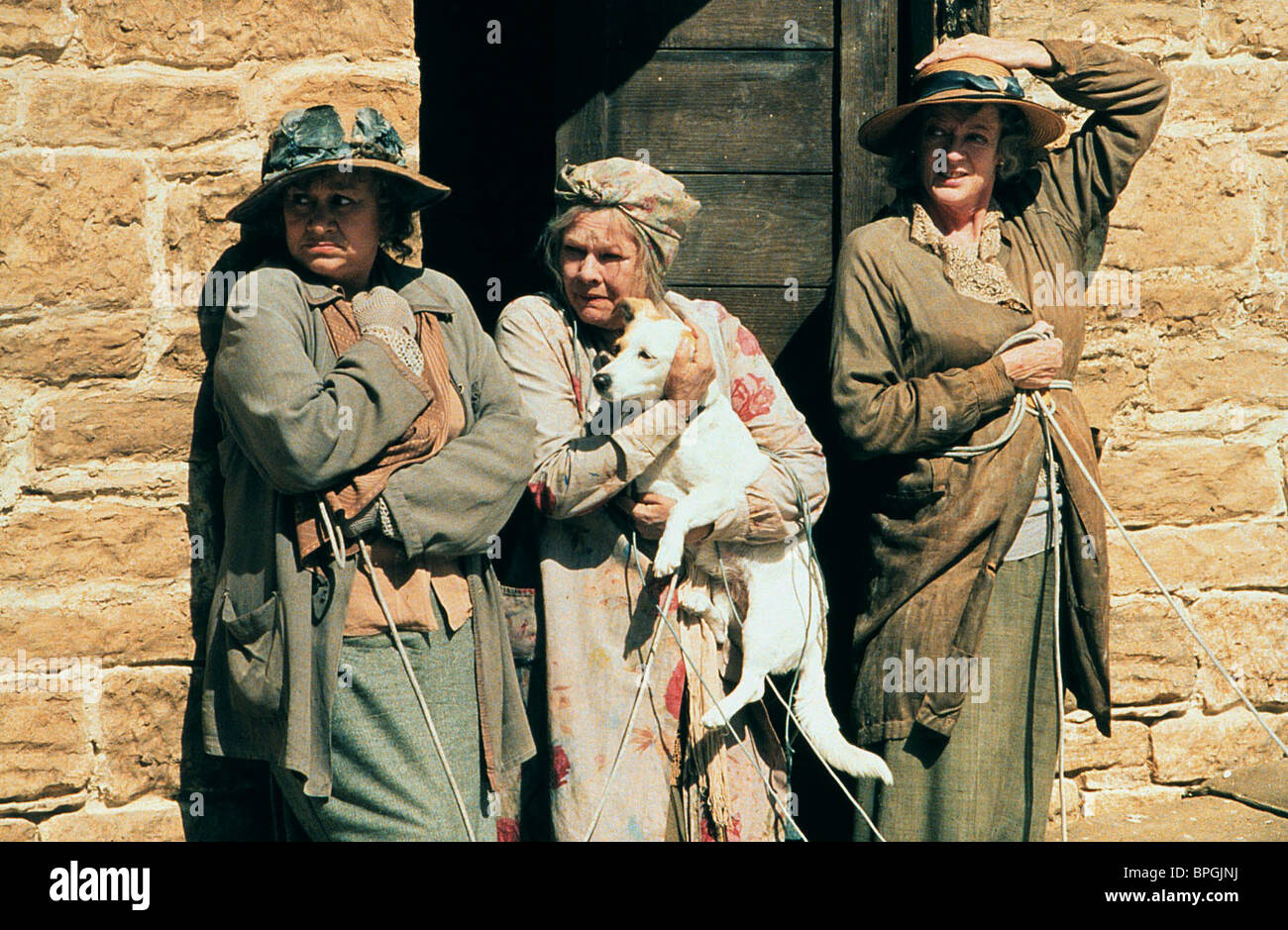
Despite its many hard-hitting themes, the film largely maintains a gentle pace, focusing more upon the inner world of the characters than the devastating historical events surrounding them. As a result, it was crucial that the cast convey the distinct and diverse personalities that populate the film’s version of Florence in order to maintain viewers’ interest and add emotional weight to the often episodic story. Fortunately, the cast proves nothing short of stellar with each member of the ensemble adding their own distinct flavor to the film’s melting pot of characterizations. Judi Dench and Lily Tomlin, although somewhat underused, infuse their roles as a dog-obsessed struggling artist and sarcastic, openly lesbian, archaeologist with quirky charm and an anarchic spirit that leaves audiences wishing they had more screen time. Joan Plowright is utterly enchanting as the loving Mary, and imbues her part with a sincere sweetness and warmth that ensures her bond with Luca is entirely believable. Maggie Smith makes great use of her usual comic haughtiness as the formidable Lady Hester, whose delusions of grandeur leave her unable to see the realities of her changing world. Cher dominates each frame that she appears in as the lovably loud and always entertaining show-girl turned wealthy art collector, Elsa, bringing a necessary pathos to an outwardly superficial but subtly complex character. Both Charlie Lucas and Baird Wallace are joys to watch as they portray Luca’s progression from grieving child, to unsure teen, to courageous young man.


Coming of age tale, inspirational story, and family film, Tea With Mussolini is all of these things and more. Through the combined power of the performances of its uniformly outstanding ensemble cast and equal parts witty and poignant script, the film brings to vibrant life a time and place long since passed. Although the film is set over three quarters of a century ago, its central themes of the importance of family and the power of art speak to all eras and cultures.  If you’re looking for a film that will make you want to get up and seize life in all of its glory, sit back and take a sip of Tea With Mussolini.
They ain't afraid of no dictator!