With each passing season come changes that carry the
potential to alter the very fabric of our lives. These changes can bring us to
soaring heights and devastating lows, but through it all one thing remains
constant; the importance of those closest to us. In Louisa Mae Alcott’s classic
novel Little Women the four March
sisters encounter professional and personal struggle, triumphs, and tragedy
with one constant remaining in their lives; their relationships with each
other. Although each pursues a unique path in life, Jo, Meg, Beth, and Amy
ultimately learn that it’s their common bond that provides them with the
strength and courage to follow their dreams.
Kodak moments that predate even cameras
The story begins in the midst of the Civil War as
Marmee (Susan Sarandon) struggles to raise her four daughters while her husband
is on the front lines as a Union chaplain. Although their circumstances have
been significantly reduced by war-time hardship, the March women manage to
create their own light in the face of their darkest fears as they devote
themselves to helping others and various creative outlets. The outside world
soon enters their family circle with the arrival of orphaned neighbor Theodore
‘Laurie’ Lawrence (Christian Bale) and his staid tutor John Brook (Eric Stoltz)
who introduce both friendship and romance to the girls’ lives. As the war draws
to a close the sisters are each drawn to different paths with Meg choosing a
traditional role as wife and mother and Beth remaining dedicated to helping
their mother at home while Jo and Amy travel in pursuit of respective careers
as a writer and a painter. Through the years, each of the girls faces unique
hardships as well as tragedy, all of which ultimately serve to reinforce and
strengthen their bond with one another.
While the 1868 novel has been adapted numerous times,
the 1994 adaption sets itself apart through a fresh retelling, which still
honors the tale’s historical setting. Previous adaptations tend to portray the
story as children’s fare with the girls’ conflicts and youthful enthusiasm
playing as quaint and saccharine, which in turns makes it even more difficult
for audiences to relate to characters whose lives are drastically different
from our own. In this most recent adaptation, however, each character is
completely three dimensional with their own strengths, flaws, and quirks that
make each of them, and the world that they inhabit, come alive. The script successfully
details the evolution of each character as they come of age in response to the
changes of the Civil War and Reconstruction with a nuance and naturalness that
previous adaptations sorely lack. As a result, the struggles and triumphs that
each character faces carries an emotional weight and urgency that ensures the
story resonates with modern audiences. The film also succeeds in the way in
which it balances the social norms of family values, restraint, and discretion
that the plot hinges upon while still nodding to the ways in which the March
family were very much ahead of their time. The script offers a particular
freshness through its portrayal of Marmee’s efforts to instill self-sufficiency
and self-value in her daughters even in the midst of the gender oppression of
1860’s society; lessons that remain just as crucial for girls today.
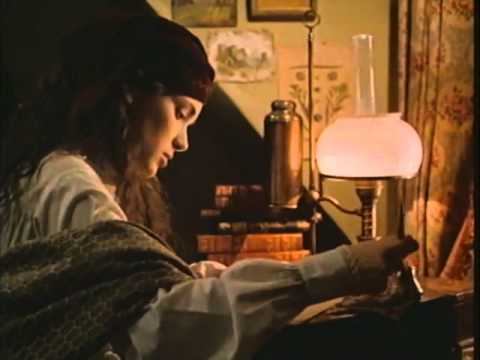
A portrait of the artist as a young woman
Through
its attention to the details of both character and setting the 1994 adaptation
is a must see for both devotees of the novel and newcomers looking for a family
film that will truly appeal to all ages.
While the intelligent and emotionally honest script
lends the film a strong foundation, the film would not possess its enduring
power without an equally excellent cast. Susan Sarandon brings an effective
combination of tender love and iron will to her role as the resilient Marmee, leaving
little wonder as to why her little women look to her for strength and guidance
even as they enter adulthood. Trini Alvarado brings depth and subtlety to her
role as the conservative Meg, bringing a complexity to a character who is often
reduced to a bland ‘good girl’ to contrast the rebelliousness of Jo and Amy.
Similarly Claire Danes adds genuine warmth and a kindness that radiates from
the screen to her portrayal of Beth, lending credibility to a character who is
written as too good to be true. Kirsten Dunst brings a refreshing sense of
mischief and fun to her performance as Amy, lending her role such charm that it’s
all too easy to forgive Amy’s childish vanity and selfishness. Samantha Mathis portrays
adult Amy with a ladylike propriety that masks the frivolity and materialism
that Amy struggles to repress as she enters womanhood. Winona Ryder lights up
the screen with an intelligence, originality, and vibrancy that brings one of
literature’s most beloved heroines bursting off of the page and steals the film
in each of her scenes. The men in the film hold their own and make the most of
what easily could have been thankless roles with standout performances. Eric
Stoltz infuses his performance as the reserved Mr. Brooke with a dry wit and
sensitivity that brings a level of humanity to a character who is often reduced
to a stock love interest. Similarly Gabriel Byrne portrays Jo’s eventual love
interest, Professor Bhaer, with an intelligence, maturity, and thoughtfulness
that leaves little wonder as to how he is able to attract the stubbornly independent
Jo. Last, but certainly not least, Christian Bale is absolutely charming as
Laurie, infusing the boy next door with an irresistible roguishness that may
leave viewers just as confused as to why Jo rejects him as Alcott’s first
readers were.
Much like the novel it is based upon, 1994’s Little Women is nothing short of a
modern classic. Little Women is an
apt example of what family dramas and coming of age tales should strive to be
as it brings to mind the extraordinary gifts that even the most seemingly
ordinary life holds. Through its modern edged script and multi-faceted
performances the film brings fresh life into the enduring tale, reminding us
all that regardless of how much the world has changed the value of family is
still as crucial as ever. As Amy says, we’ll all grow up someday, and while it
helps to know what we want, the film aptly shows us that it is essential that
we recognize what we have.
As we have reached the end of one year and the start
of another, we reflect upon all that has been lost and gained in the past
three-hundred sixty-five days and our hopes for the days to come. Leading up to
the New Year, televisions, radios, and websites have been flooded with countdowns
of the pop-culture and political events of the past year. As enjoyable as those
lists may be to build up anticipation for the New Year, they can never fully
measure the moments of success, loss, laughter, and strife that make up a year
for any given individual. The 2005 film Rent
offers a simple, but more effective unit to measure the 525,600 minutes in a
year; love. Based upon the hit musical of the same name, Rent chronicles the highs and lows of one year in the life of a
group of friends as they struggle against addiction, illness, and unemployment
while living ‘la vie boheme’ to the fullest.
Viva la vie boheme!
The story begins on Christmas Eve 1989 in New York’s Lower
East Side as starving artists and roommates Mark (Anthony Rapp) and Roger (Adam
Pascal) learn that their former friend turned landlord, Benny (Taye Diggs), is
planning to evict them unless they are able to pay the year’s rent within
twenty-four hours. The pair are soon saved from homelessness when their friend,
former professor and anarchist Collins (Jessse L. Martin), returns to town with
both a financial windfall and his new lover, transsexual street performer Angel
(Wilson Jermaine Heredia). Complications ensue as Roger meets and is captivated
by heroin addicted stripper, Mimi (Rosario Dawson), while in the midst of his grief
following the death of his girlfriend and struggle to remain drug free after
overcoming his own addiction. Mark faces girl trouble of his own as his
ex-girlfriend, performance artist Maureen (Idina Menzel), continues to use him
for his skills as a filmmaker, despite having left him to pursue a relationship
with successful lawyer Joanne (Tracie Thoms). As the story progresses, the group
comes together through shared artistic passion and love, even as distrust,
misunderstanding, and tragedy threaten to tear them apart.
Originally adapted as a modern take on Puccini’s opera
La Boheme, the musical Rent was a cutting edge hit when it
debuted in 1996. Prior to the show’s opening, musicals had come to be
identified with safe, reliable, and family friendly fare that held little relevance
in the outside world. In composer Jonathan Larson’s hands, however, the story of
the lives and loves of the bohemian set became a call to artistic arms and a
stand of solidarity in the midst of the social ostracism which was so common during
the heart of the AIDS epidemic. When the film was released nine years later,
critics complained that the story had lost some of the bite that had made it so
popular a decade earlier, citing AIDS and addiction as themes that no longer
held relevance. Ten years after the film’s release, however, it is all too evident
just how pertinent those ‘outdated’ issues actually are as the US finds itself
in the midst of a heroin epidemic which has led to a resurgence in HIV and both
drug addiction and HIV continue to plague nations across the globe. Beyond it’s
ripped-from-the-headlines plot, the film also contains themes such as artistic
struggle, poverty, friendship, acceptance, and love that speak to all ages and
cultures, which ensures that the story holds meaning for all generations.
525,600 minutes, how do you measure a year in the life?
Stage to film is a complex transition that many shows
fail to successfully make. Through the efforts of the film’s crew and stellar
cast, however, Rent packs an equal
emotional punch as both a stage production and a film. The success of this transition is due to a
combination of factors, particularly the power of its songs, which are by turns
powerful rock anthems and poignant ballads, but are each memorable enough to
keep audiences humming for days. Perhaps the most crucial aspect of the success
of this transition is the film’s multi-talented cast, who bring each of the
film’s musical numbers, dance sequences, and straight-dialogue scenes to
vibrant life. Rather than casting Hollywood stars in order to guarantee ticket
sales, the film’s makers took the risk of choosing to maintain the story’s
integrity and cast the people who know it best; its original stars. All of the
film’s principal roles, with the exceptions of Mimi and Joanne, are portrayed
by members of the 1996 Broadway cast, and the knowledge of and passion for the
story that each of actors possess is evident in every frame. Anthony Rapp’s
combination of earnestness, awkward uncertainty, and boyish charm make him an ideal
every-man as he narrates the tale. Adam Pascal’s tormented performance as Roger
elevates his character beyond self-described ‘pretty-boy frontman’ to a
multifaceted portrait of young man overcoming his demons and coming to terms
with his own mortality. Jesse L. Martin brings genuine emotion and soulfulness
to his subtle role as Collins, and perfectly captures the struggle to remain
hopeful in the face of illness and personal loss. Idina Menzel is nothing short
of explosive in her performance as the impulsive and attention-hungry Maureen,
and adds a vulnerability to her role that humanizes what could have easily been
an over-the-top part. Wilson Jermaine Heredia is a breath of life in his
performance as the nurturing Angel, in which he provides the film with many of
its laughs and some of its most tearful moments. Newcomers Tracie Thoms and
Rosario Dawson successfully make their roles their own as Thoms evokes Joanne’s
outward restraint and inward passion and Dawson exemplifies both Mimi’s street-wise
cynicism and sensuality and the vulnerability that those qualities disguise. Taye
Diggs also lends a convincing combination of charm and ruthlessness to his portrayal
of bohemian turned Wall-street sell-out Benny.
Written as ‘the MTV generation’s answer to La Boheme’ according to Larson, Rent has become a true phenomenon all its
own. Proving that some things never change, the central themes of embracing life
in the face of adversity and the importance of love and friendship that both
works share remain powerful messages, even in the new millennium. Rock-opera,
coming of age story, romance, and drama, Rent
is all these things and more with something for almost every viewer. As we
approach a new year, I can think of no better question to ponder than that
which the film’s most iconic song asks, “how do you measure a year in the life?”.
As we finally arrive to the
conclusion of the Hunger Games (should have been a trilogy) four-part series we
appreciate it’s first two segments. “The Hunger Games,” and “The Hunger Games:
Catching Fire” both gave us a very real glimpse into the world that author
Suzanne Collins created. Jennifer Lawrence’s Katniss Everdeen captured the
attention of America’s youth in quick succession. Though these first two films
did not have the vision or strong acting to receive such notoriety, they did
give us something more. Though it takes place in fictional “Panem,” these films
gave us something real. Then, in the way that most endings are ending these
days, they spilt the finale, “The Mocking Jay,” into two parts. Part 1 was very
much a lifeless film that could have been completely avoided, for the exception
of the final scene.
Every teen queen requires a throne
Mocking Jay: Part 2 begins right
where Part 1 left off. Kantiss is recovering from her reunion with the now
brain washed, Peeta Mellark (Josh Hutchinson). The film progresses with
Everdeen’s realization that filming propaganda isn’t enough to help to the
cause that wishes to free itself from the clutches of its evil ruler, President
Snow (Sutherland). There are scenes throughout, involving mostly the more
reputable actors, which give the film depth and presence. Although not seen
often, the late, Phillip Seymour Hoffman captivates audiences as turn cloak
game maker, Plutarch Heavensbee. Woody Harleson
and Elizabeth Banks enhance the film, giving it more renown and perhaps
nearly taking it above the expectations of your typical teenage angst film.
The film picks up as it moves
forward, don’t await a repeat of Part 1. Teamed up with a group of loyal rebel
leaders, complete camera crew, and her two lovers, Katniss enters the capital
on a mission to end the war, to see president Snow dead, to finally end the
suffering of her people. You’ll find no arena in this film, but do suspect more
ploys from Snow and his elitist.
If you’ve seen the first three
films of this series please see it through completely. I do not believe anyone
who has watched the first three films could be disappointed with this final
chapter. I will note that the ending is not one of too much popularity. Besides
having split the final adaptation into two parts this series has taken a step
in elevating what we expect from our films that aim towards “tweens.”
The holidays are a time in which people come together
with family and friends to celebrate as a new year approaches and reflect upon
all that has come and gone in the year passed. Sometimes, seasonal nostalgia
can call attention to the people and things we have lost and things we would have liked to
have changed in the last year, lending us just the gumption we need to alter
our lives for the better. In the 2006 romantic comedy The Holiday, the holiday spirit proves to be just the inspiration
that two women need to learn to live life to the fullest all year long.
Laughter truly is the best medicine
The film starts with British newspaper reporter Iris
(Kate Winslet) ending her year on a decidedly low note when the ex-boyfriend
(Rufus Sewell) she is still struggle to get over announces his engagement to
Iris’ co-worker. Half-way across the world in Los Angeles, movie trailer
producer Amanda proves similarly unlucky in love when she learns that her
live-in boyfriend (Edward Burns) has been having an affair with his much
younger secretary. While each woman pursues her own course of grieving, with
Iris despondently blaming herself and Amanda fuming at her boyfriend’s
betrayal, both find themselves searching for a way to get away from their
fraught love lives and both find their answer in the same place; the internet.
Amanda spots Iris’ online ad for a home-exchange vacation and the pair agree to
swap lives for two weeks over the holidays, marking the start of a whimsical
journey in which each will find new friendships, a renewed sense of self, and
of course, a little romance.
While romantic comedies have long been a holiday
staple, The Holiday succeeds as a
year-round crowd pleaser by transcending both the holiday and romantic comedy
genres. Although on its surface the film appears to be a typical tale of love
lost and found just in time for the holidays, the script is actually an
empowering tale of two people searching for things that they ultimately find
within themselves. Iris is so lacking in confidence that she continues to
pursue a man who had previously been unfaithful to her and clearly only maintains
contact with her in order to utilize the free editing she does on his novel. In
an opposite characterization, Amanda has become so accustomed to being the
strong one in her relationships that she has lost touch with her own
vulnerability and her ability to cry. Despite their vast differences, both
women engage in behavior patterns that prevent them from growing while either
single or in a relationship. As a result, it is their common struggle to accept
themselves and live life on their own terms, rather than their search for love,
that is the film’s central conflict. Although both do eventually find romance,
they do so only incidentally, as the film remains firmly focused upon its
heroines’ personal development. The film also avoids the rom-com cliché of love
interests solving all of the story’s problems. While both Amanda’s charming beaux, Graham (Jude Law), and Iris’ endearing flame, Miles (Jack Black) are
enjoyable characters, the script makes them three dimensional men rather than
stereotypical ‘knights in shining armor’ by revealing their shortcomings and
insecurities as well as their strengths. This in turn makes the relationships
between both couples more interesting and realistic than the paint by numbers
plotting of many romantic comedies. While the holiday ambiance adds to the film’s
whimsy and romantic atmosphere, its central messages of ‘believe in yourself’
and ‘be open to life’ are ones that resonate throughout the year, making The Holiday a cinematic vacation that
viewers can enjoy any time.
Who says complicated has to be a bad thing?
One of the more unique aspects of the film is the way in
which the script pays homage to the romantic comedies of the 1930’s and 1940’s.
While the life-swap premise already lends itself to screwball antics, the film
takes its nod to the classics a step further by making numerous references to
classic films and the men and women who brought them to life. The most obvious
of these cinematic connections comes in the form of Amanda’s elderly
screenwriter neighbor, Arthur, whom Iris quickly befriends. Played by classic screen
veteran Eli Wallach, Arthur offers nostalgic insight into Hollywood’s
Golden Age and serves as a mentor to Iris by encouraging her to follow the
example of the no-nonsense female protagonists of his favorite films. The film’s
music also adds a classic touch through the focus upon Miles’ job as a film
composer and the old-fashioned sensibility of the film’s soundtrack. As a
result, the film serves as a valentine to not only the holiday season, and
love, but also to film itself.
The cast keeps the laughs and sparks flying throughout
the film’s running time. Cameron Diaz makes Amanda an endearing combination of comic
cuteness and inner strength, making her a protagonist that audiences would want
to take a holiday with. Similarly, Kate Winslet imbues Iris, who could have
been a one-note role, with an intelligence, wit, and kindness that make her a
heroine that cannot help rooting for. Jude Law adds a level of vulnerability to his
usual charm that makes Graham a truly irresistible love interest and Jack Black
brings an unassuming quality to his role which, combined with his expected
hilarity, makes Miles the boy we all wish lived next door to us. Finally, Eli
Wallach adds just the right touch of wisdom, whimsy, and gentle humor to his
role as Arthur.
Feel-good, breezy, and charming The Holiday is the rare modern romantic comedy that succeeds as
both a romance and a comedy. Through its combination of slapstick set-ups and
dry wit the script brings a freshness to the genre while successfully paying
homage to the genre’s past greats. The members of the cast each utilize their unique
strengths to bring their roles to surprisingly realistic life, while still
maintaining the film’s romantic idealism. You don’t need to travel to get away
from it all with The Holiday in your
film lineup.
Thank you so much for your continued support! In keeping with Confessions of a Film Junkie's mission of spreading the love of film and storytelling, I've included links to some of my recently published plays and screenplays. All of the scripts are historical fiction written in the tradition of the classic films I review on the blog.
Thank you so much for your continued support for our blog. We've come a long way over four years three-hundred posts, and we couldn't have done it without all of you! In keeping with our mission of spreading and sharing the love of cinema we've added a new blogger. Without further adieu, I'd like you to join me in welcoming writer, film buff, and fellow Lasell College alumni, Miguel Taveras a/k/a Theodore Theater.
In my previous review, I discussed French films in
tribute to the victims of the recent terrorist attacks in Paris. Unfortunately, recent
events have brought terrorism to the forefront of our lives once again. In this
past week alone, fifty-seven people have been killed and one-hundred fourteen
have been injured in terror attacks in Chad, England, Yemen, and the United
States as well as an ISIS execution of a Russian citizen. In recent years, radical Islamist terrorist groups have caused death
and devastation in cities across the globe. These attacks have been carried out
against civilians of numerous races, ethnicities, religions, and political
affiliations for one reason; the victims did not adhere to the oppressive
beliefs of radical Islam. In light of recent events, it is undeniable that we
as citizens of the free world are at war. It is a war that we have faced and
overcome in the past, and will continue to face as long as there are people in
the world who seek to threaten the freedom that defines our way of life. From
1932 to 1945 we faced a similarly dangerous threat from another group
determined to invoke their beliefs and rule over others at any cost; the Nazis.
Terrorist groups of today resemble the Nazis in their brutality,
oppressiveness, and determination to eliminate any viewpoint that conflicts
with their own warped ideology. After the Paris attacks, social media users
around the world shared a clip from the 1942 classic Casablanca in order to show support for and solidarity with the
victims of those attacks. The film, which chronicles a “fight for love and
glory” and “case of do or die” that remains strikingly relevant today, contains
far more inspiration than that one scene and conveys truths
that hold as much meaning now as they did at the time of its debut in the midst
of World War II. This week I will be discussing lessons from the film that our
divided world once again desperately needs at this crucial moment in our
history.
The usual suspects
Isolationism
is no longer a practical policy: Adapted from a 1940 stage
play written by Murray Burnett and Joan Alison, which was in turn inspired by
the playwrights’ experiences in occupied Europe, Casablanca was written as both a critique of American
isolationism and rallying cry for the Allied cause. The film focuses upon a
world-weary saloon owner whose philosophy has been reduced to his repeated
mantra of “I stick my neck out for no one”.
Convinced that defeat is inevitable, Rick (Humphrey Bogart) shuts
himself away from the conflicts of the greater world, only to have world events
enter his cafe and re-enter his life with the return of former flame, Ilsa
(Ingrid Bergman). Just before Ilsa’s arrival in the café, Rick reaffirms his
isolationist stance when he stands by as black market racketeer Ugarte (Peter
Lorre) is arrested by the Nazis, despite Ugarte’s pleas for his help. While
Ugarte was presented as a mercenary character, he was also revealed to be
playing an active role in fighting the Nazis by selling illegal visas to
refugees seeking to escape from occupied Europe and assassinating two Nazi
officers. Even after Ugarte’s arrest and eventual execution, Rick remains reluctant to take part in the Allied cause when he refuses to assist Ilsa and her husband, fugitive resistance leader Victor Lazlo (Paul Henreid), escape Casablanca. Rick’s refusal to help Ugarte and Victor sets off a chain of events that effects
the lives of people on both sides of the war, much in the same way that the
complacency of the global community has proven to be a catalyst in the rise of
terrorist groups, as jihadism has been permitted to wreak havoc and gain power
across the Middle East and Africa with precious little international action
taken.
Today,
we face a crossroads which is eerily similar to Rick’s in wake of the latest
attacks, as we are presented with the choice of either taking necessary further action
against terror organizations or continuing to push the issue of terrorism aside
as ‘someone else’s problem’. Throughout the film, Rick dismisses the threat of
fascism as a problem for Europeans like Victor and Ilsa, which holds no real
meaning in his simple life. As the plot twists and turns, however, he is faced
with the reality that for any man who hopes to maintain his integrity and
humanity fascism is indeed a dire problem. It is all too easy and human to be too consumed
by our personal concerns to pay mind to the troubles of people we have never
met, but by continuing to do so we fail to realize that global issues like
terrorism are in fact our problem. Today,
people continue to advocate for causes such as racial, gender, religious, and
sexual orientation equality. While each of these causes is indeed a worthy one, many fail to see that all of these individual causes fall under the same category of the fight against
terrorism, as terror groups continue their mission of religious intolerance,
gender oppression, racism, and homophobia. As a result, just as fascism was not
just Europe’s problem, radical Islam is not a problem restricted to the Middle
Eastern and African nations where its influence has taken the strongest hold, or of individual cities that have faced attacks, but is in fact a threat to every nation and city in which equality, dignity,
and freedom hold any value.
Friendship
is a beautiful thing: Set against the backdrop of a city
populated by occupying forces and refugees from across Europe as well as local
Moroccans, Casablanca contains an
international cast of characters from various walks of life.
One of the most poignant aspects of the film is the way in which its diverse
cast of characters put aside their differences and unite to work together for a
cause greater than themselves. It is unsurprising that several of the
expatriates in the café continue to fight against the oppression that they previously
escaped from, but the film also includes mercenary characters such as Ugarte
who commit small acts of resistance, even as they continue to profit from the
call for black market items that the Nazis have created. Even the cynical
Ferrari reveals where his true sympathies lie when he tells Victor that Rick
has the letters of transit, even though his decision to do so actually harms
his own profits. One of the film’s most heartfelt moments occurs not between
star-crossed lovers Rick and Ilsa, but instead between Rick and his friend, corrupt
Vichy official Louis Renault (Claude Rains). Throughout the film, Louis insists that his
sympathies ‘blow with the wind’ as he consistently acts in his own
self-interest by aiding the presiding Nazi government and extorting sexual
favors from desperate refugees in exchange for visas. After witnessing Rick’s courage in risking his
own life in order to help Victor and Ilsa escape, however, he finally realizes that
it might be a good time to become a patriot after all and follows his friend’s
example by covering up Rick’s murder of Gestapo officer Major Strasser (Conrad Veidt) at the risk of his own career
and freedom.
Just as the diverse cast of characters at Rick’s Café overcome
their differences to support and work with one another for the greater good,
many people today have shown their own support in the fight against terrorism.
Following the Paris attacks people voiced their support for France and the
victims by sharing videos, words of encouragement, prayers, and images on the
news and through social media. In the midst of this support, however, I was
shocked and disgusted to see that many others offered only apathy, cynicism,
and snide remarks. The majority of those who shared such negative reactions
defended their views by saying that other terror attacks did not receive the
same amount of public attention and raising questions concerning race. While
all crimes of this nature deserve to be denounced, to make such distinctions in
the midst of a tragedy is splitting hairs at best and causing further division
in an already divided world at its worst. These reactions reminded me of a
scene in Casablanca in which Strasser smugly asks Rick “are you one of those
people who can’t imagine us in your beloved Paris?” to which Rick, who bitterly
associates Paris with his painful break-up with Ilsa, replies “It’s not
particularly my beloved Paris”. In this scene, Rick is focusing upon his personal biases rather than the reality in front of him, much in the same way that people
dismissing the Paris attacks placed their own agendas before the gravity of those tragic events. Like the Nazis, terrorists today are utilizing a ‘divide
and conquer’ tactic by causing chaos and unrest in our society which pits us
against one another when we should be uniting in a common cause. By continuing to focus upon our
differences and attacking each other’s views we are taking the same resources
that we should be using to stand up to this enemy and instead utilizing them to
alienate one another. In this way, we are allowing terrorists to claim further
territory, not on our lands but within our minds and hearts. Our battle against
terrorism, while indeed a violent one, is at its heart a battle of ideas, and
by failing to stand together in words and ideas we are in fact giving in to the
ideology of fear and distrust that terrorists are hoping to instill within us.
Rather than allowing ourselves to fall into the ideological trap that has been
set for us, we should instead take a lesson from the clientele at Rick’s and
come together, not in a café, but in a movement to face and overcome the fear
and division that our foes are working to inspire within us.
Taking the sting out of occupation
If
we stop breathing we die; if we stop fighting our enemies the world dies: When
Rick first learns of Victor’s arrival in Casablanca, he is instantly impressed
and there is little reason to wonder why. While Rick’s hardships have left him
embittered, Victor’s hellish ordeal in a concentration camp has left him more
determined than ever to fight for his beliefs. Prior to the events of the film,
Victor is described as using his job as a reporter to print stories exposing
and denouncing the atrocities committed by the Nazis. After narrowly escaping
the Gestapo in Prague he went on to Paris and, rather than safely living in anonymity,
continued his work where he had left off. Upon arriving in Casablanca, he is
closely monitored by the corrupt Vichy government and under constant threat of arrest.
Even under these dire circumstances, however, he continues to carry on with his
work by attending resistance meetings and heroically leading a public
demonstration in front of Strasser and other Gestapo officials. Victor's actions, while seemingly small, prove so inspiring that Rick eventually follows his example first through subtle acts of resistance such as helping a newlywed refugee purchase a visa so she will not be forced to sell herself to Louis and eventually through his decision to give up his relationship with Ilsa and aid Victor's escape.
In our own lives it seems impossible to take action
against such a massive threat, and Victor Lazlo is a character who seems more
myth than man. There are, however, always ways both great and small to
contribute to the causes that we believe in. Since the Paris attacks of January 2015, the hacker/activist group Anonymous has launched a cyber
assault against ISIS and other terrorist organizations by reporting organization members’ identities and funding sources to police, shutting down
supporters’ social media accounts, hacking into websites that express views
which are sympathetic to the groups, and on December 12 will be launching its own
propaganda campaign. Although the group utilizes sophisticated tech skills and
methods in its efforts, it has opened its doors to any citizens interested in
doing their part to fight terrorism by releasing a ‘how to’ guide with
instructions on how to cyberattack ISIS regardless of would-be hackers’
computer skills. The group has also requested that the public take part in its“Trolling Day” propaganda campaign this Friday by posting jokes, cartoons, and memes
exposing ISIS for the barbarians, hypocrites, and cowards that they are. This
campaign is strikingly similar to the much shared scene in Casablanca in which
Victor inspires the café’s patrons by leading them in an impromptu rendition of
French national anthem “La Marseillaise” which drowns out a group of Gestapo
officers’ rendition of the German patriotic tune “Die Wacht Am Rhein”. While it
may not be saving lives or attacking these groups at their source, Trolling Day is
a similarly admirable effort, which I hope will serve to boost morale as well as
destroy the carefully constructed image that ISIS has created online. For those who
prefer not to utilize social media there are other ways to contribute, such as reporting
suspicious activity you see to the authorities, voting on issues related to
foreign policy, writing letters to your local representative or news outlet, showing
support for our troops as they participate in military action against terrorism, offering support to victims of terrorist
attacks, boycotting social media sites that refuse to censor terrorist
propaganda, discussing events related to terrorism, and even the simple act of
remaining informed of current events. As is shown by the enduring power of
Victor Lazlo’s demonstration, any effort regardless of how small it may seem
can and does matter. Despite what Rick might say, the problems, and more
importantly the actions of little
people do matter, even in this crazy mixed up world. While the threat of the
Nazis may be long since passed, radical Islamic terrorists have taken up the
torch of hate and oppression set down by their predecessors, thereby becoming the
threat of our time. The fight against terrorism is our burden and struggle, and
if we fail to come together in this cause we will regret it. Maybe not today.
Maybe not tomorrow. But soon, and possibly for the rest of our lives.




_-_Clip_Seasons_of_Love/revision/latest/scale-to-width-down/330?cb=20120524200616)