Sunday, May 31, 2015

Classics: The Spies We Loved: Mata Hari vs. Dishonored By Lauren Ennis

At the height of the Hollywood studio system off the 1930’s and 1940’s the major studios developed fierce rivalries with one another. In order to draw audiences away from their rivals, studios would try to out-do one another by copying each other’s successes. As a result, for reach studio’s star, another studio had a star marketed for similar appeal, and for each box office hit another, almost identical film was released in hopes of luring the original film’s audience. One particularly interesting rivalry was the one that studios created between actresses Greta Garbo and Marlene Dietrich. After Swedish starlet Garbo made the difficult transition to sound with her fan base intact, Paramount imported German screen sensation Dietrich in hopes of replicating MGM’s success. When Garbo continued to remain a fan favorite over her newly arrived competitor Paramount resorted to promoting Dietrich in films that directly mirrored Garbo’s despite the obvious differences between the two’s acting styles and screen personas. One such instance is Paramount’s 1931 release of Dishonored, a World War I spy thriller that followed in the footsteps of the MGM hit Mata Hari released earlier that same year. While both films provide interesting twists on the popular genre, which movie can claim the more adept agent, the more thrilling twists, and ultimately the sultrier spy?
The improvising strippers had to do before poles

Ladies With Pasts: Although both films focus upon their heroine’s spy-jinks, both also lend more credibility to their stories by providing their leading ladies with civilian lives outside of their intelligence work. Because Mata Hari was loosely inspired by a true story, screenwriters were forced to keep their script generally aligned with history. As a result Mata retains her larger than life persona as an exotic burlesque dancer and courtesan who conducts her top secret work under the watchful eyes of the very authorities who should be tracking her. Mata’s double life as a stage sensation lends the story a unique dynamic as her star status allows her to routinely break social norms and flaunt her scandalous behavior under the guise of being a temperamental artist without raising suspicion. Her stage success also places her in a position in which she can disobey her superiors’ orders with minimal consequences because her career allows her to travel across enemy lines with little difficulty, making her an agent with valuable leverage. Despite the story’s attention to the nuances of her double life, however, the script fails to explain why she, a Dutch citizen, would risk her life for Germany in an effort to betray France, the nation in which she has achieved her lavish lifestyle. There is also no motive to lend credibility to her willingness to engage in such dangerous work as she displays little allegiance to any nation. As a result, it is difficult to identify with Mata’s later crisis of conscience as she seems to be following orders more as an act of flippant rebellion than as matter of political or personal loyalty.

In Dishonored, Dietrich’s Maria, also known as Agent X27, is a far more ordinary woman caught up in extraordinary circumstances. At the film’s start, she is working as a prostitute after being left a destitute widow in the wake of World War I. When Austrian intelligence approaches her about using her seductive skills to help her country she accepts for lack of other options rather than out of a sense of patriotic duty. Although fictional, this scenario is far more believable than the sensationalized Mata Hari in its portrayal of its heroine’s hopeless desperation driving her into the dangerous would of international espionage. Maria’s existential quest through a world of deception and betrayal also reflects the void that modern life became for World War I’s ‘Lost Generation’ upon returning home, placing the story within the historical context of the era in which it takes place and the equally disillusioned era it was released in. Through its portrayal of the spy as just another disillusioned soldier, the film draws sympathy for its heroine without resorting to cliché twists and moral turns. For its hard-hitting portrayal of an average woman’s journey through the maze of modern warfare, dishonored wins the battle for most resonant and believable backstory.
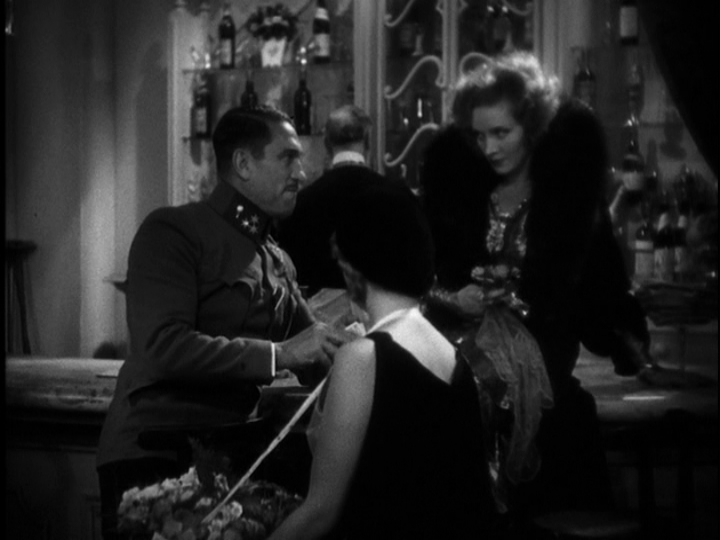
Happy hour anyone?

The Company They Keep: While spy thrillers are known for their roguish heroes and vampish heroines, they are also equally known for their lackluster love-interests. Long before interchangeable Bond-girls became synonymous with the genre, spy thrillers had been filling screens with romantic leads whose roles were as flimsy as the special effects that they worked with. Unfortunately, Dishonored falls into this all too common trap by having Maria meet her match in a male spy from an enemy nation. While the idea of two agents brought together by the very work that threatens to tear them apart has the potential to create an interesting dynamic, the plot fails to bring them together so much as have them occasionally bump into each other. While the two do meet several times during their missions, their interactions are always cut short and their exchanges are limited to shop-talk and innuendo. As a result, the pair are little more than acquaintances when the plot calls for them to be tragic lovers. This forced plot twist is made even more obvious by the lack of chemistry between Victor McLaglen’s Colonel Kranau, whose attempts to woo his fellow spy consist primarily of grinning lasciviously, and Dietrich’s Maria, whose cool sex appeal better fits the detached prostitute that she begins the film as. By the time that the film reaches a truly unique climax it is difficult for audiences to remain invested in its heroine, whose downfall seems to be an illogical surrender to temporary lust rather than a self-sacrificing love.

While Mata Hari’s naïve Alexis (Ramon Navarro) appears to be a strange choice to catch the notorious Mata’s eye, it is the offbeat nature of their relationship that makes it endearing. Rather than a conventional, macho, leading man he is instead a star struck fan who worships Mata to the point of becoming a pest. While he is repeatedly referenced to be a hero in the Russian air force, he seems to be in more need of rescuing than her. She initially goes out with him to spite her superiors and only allows him to spend the night with her as an act of pity, certain that he’ll return to the front and never see her again. When she is assigned to obtain information from him, however, she is forced to spend more time with him and eventually develops a friendly fondness for him that threatens to develop into something more. While the spy who falls for their assignment was already an established cliché, Mata Hari provided a logical backstory to make the relationship credible and just enough original flair to make the plot almost feel fresh. Unlike Maria and Colonel Kranau’s convenient change of heart, Mata and Alexis’ relationship follows a natural trajectory with her feelings developing from pity and guilt to respect and genuine affection and Alexis’ idolizing of her evolving into understanding and real romance. Although Ramon Novarro is less than convincing as a Russian pilot with his heavy Spanish accent, he imbues Alexis with an innocence, kindness, and goofy charm that could soften even the most cynical secret agent. For its quirky take on what could have been a tired story, Mata Hari claims victory for the more memorable relationship and a truly lovable love-interest.
The best spies shoot from the hip!

Star Quality: In casting Greta Garbo as Mata Hari, MGM made a wise business decision. Mata Hari went on to become one of the top box-office hits of 1931 and continues to be a favorite of Garbo fans, even making cameos in more recent releases. While Mata could have easily been a stereotypical femme fatale, Garbo instead gave audiences the multifaceted performance that they had come to expect of her. Rather than the extremes of the haughty vamp and the self-sacrificing lover that the script alternates between portraying her as, Garbo’s Mata is a complex character who shifts from glamour girl, to enticing agent, to stifled celebrity, to devoted companion without hitting a single false note. As a result, she is a character whom audiences can come to know and root for because of her many strengths and despite her many faults. Paramount was equally business savvy when they cast Dietrich in Dishonored. Dietrich possesses just the right blend of smoldering sex appeal and cool detachment to portray her own enigmatic agent. Unfortunately, while Maria makes for an ideal blank slate, she is also in many ways reduced to a type. While viewers get to see the desolation of WWI Vienna that drives her first to prostitution and then to espionage we are never able to see what beyond her reduced circumstances motivates her. As a result, the audience is shown her actions but never the emotional or psychological reasoning behind those actions. Thus, audiences are forced to settle for Dietrich’s usual, albeit thoroughly entertaining persona just when the story begins to demand the presence of a full-fleshed character. Dietrich’s mystique, while befitting for a spy, fails to provide viewers with any real insight into the woman behind the code name, making it difficult to be fully invested in Maria’s adventures or their consequences.


Both Dietrich and Garbo bring their full talents to the table in two of the better performances of their lengthy careers, making for a tight competition. This final category, even more so than the previous two, comes down to a matter of personal taste. Personally, I prefer to know what makes a character tick rather than be kept constantly guessing as to why as well as what they’ll do next. For her three-dimensional performance of what easily could have been a cardboard character, I give Garbo the slight edge, leaving Mata Hari the victor to whom goes the bragging rights. Tell me what your favorite spy films are in the comments!
Think twice before you steal Greta's spotlight!
If you'd like more on seductive spying check out my full-length stage drama Through Enemy Eyes http://www.jacpub.com/Full-Length/Ennis_EnemyEyes.htm

Tuesday, May 19, 2015

Classics: A Review of Arthur By Lauren Ennis

In fashion as in history trends that were previously forgotten return to repeat themselves once again. The old adage that ‘what once was old is now new’ also holds true for cinema, as sequels and remakes are routinely released as new despite their recycled themes and plots. Another way that Hollywood makes the retro trendy is by reviving styles and genres long since fallen out of favor. One genre that Hollywood has routinely attempted to remarket is the screwball comedy. Due to its effervescent nature and Depression-era origins the screwball comedy, while always entertaining is difficult to modernize. One film, however, managed to successfully pay homage to the screwball comedies of Hollywood’s Golden Age while adding its own modern twist; the 1981 Arthur.
Nightcap anyone?

Like many of the 1930’s comedies that inspired, Arthur follows the hijinks of a wealthy eccentric whose unique world view is beyond the comprehension of either his healthy family or working class friends. Unlike those earlier films which left their protagonists’ unconventional lifestyles without motive or explanation, Arthur delves into the psyche of its loveable oddball, making the film both a hilarious genre throwback and a surprisingly heartfelt character study. The story begins with Arthur (Dudley Moore) aimlessly pursuing whatever thrills he can find or buy as his best friend and butler, Hobson (Sir John Geilgud), does his best to keep Arthur out of trouble and Arthur’s name out of the newspapers. Conflict enters when Arthur’s stern tycoon father (Thomas Barbour) demands that Arthur marry Susan (Jill Eikenberry), the mousy daughter of his best friend ruthless businessman Burt Johnson (Stephen Elliott). When Arthur refuses, his father threatens to cut Arthur off from all family funds. Still childishly dependent upon his family’s money, Arthur finds himself unable to fathom life beyond the family estate and reluctantly agrees to his father’s demands, resigning himself to a loveless marriage. Just as Susan prepares to reform her playboy fiancée, however, fate intervenes in the form of charismatic waitress and aspiring actress Linda Marolla (Liza Minnelli). As the wedding draws near, Arthur is forced to choose between a hard-working but fun-loving life with Linda and the emotionally void but financially secure life that Susan and his family offer, and begins to grow-up in the process.

While at first glance, Arthur may appear to be a frivolous comedy, the film successfully blends lessons about, love, family, the search for meaning and growing up between its many laughs. Although endearingly zany until the film’s final frame, Arthur is for much of the story a tragic character. Despite, and in large part because of his wealth, he leads a life that is almost entirely devoid of connection or meaning. After regular rejection by his family and constant reminders from his fiancée of the many ways in which he needs to change he realizes that the people who are supposed to be closest to him are close to him in proximity only. Compounding his isolation is the fact that his sheltered existence has left him unprepared to do anything except follow his father’s orders. As a result, he is a mean without passion or interests beyond the temporary thrills that his parent’ money affords him. Fully aware of the emptiness of his lie, he self-medicates, relying upon alcohol to dull the ache of his loneliness and distract him just long enough to maintain the illusion of his carefree existence. Through his budding romance with the equally quirky Linda, however, he eventually finds understanding and begins to see how fulfilling adult relationships can be. When the father-son relationship between Arthur and Hobson is reversed by Hobson’s failing health, he learns the value of helping others and begins to find meaning in give back to, rather than always taking from, his relationships. Although the script acknowledges the necessity of money to sustain life, by the film’s finish Arthur finally realizes that it is only by living with purpose amongst those you care about that makes life truly worth living for.
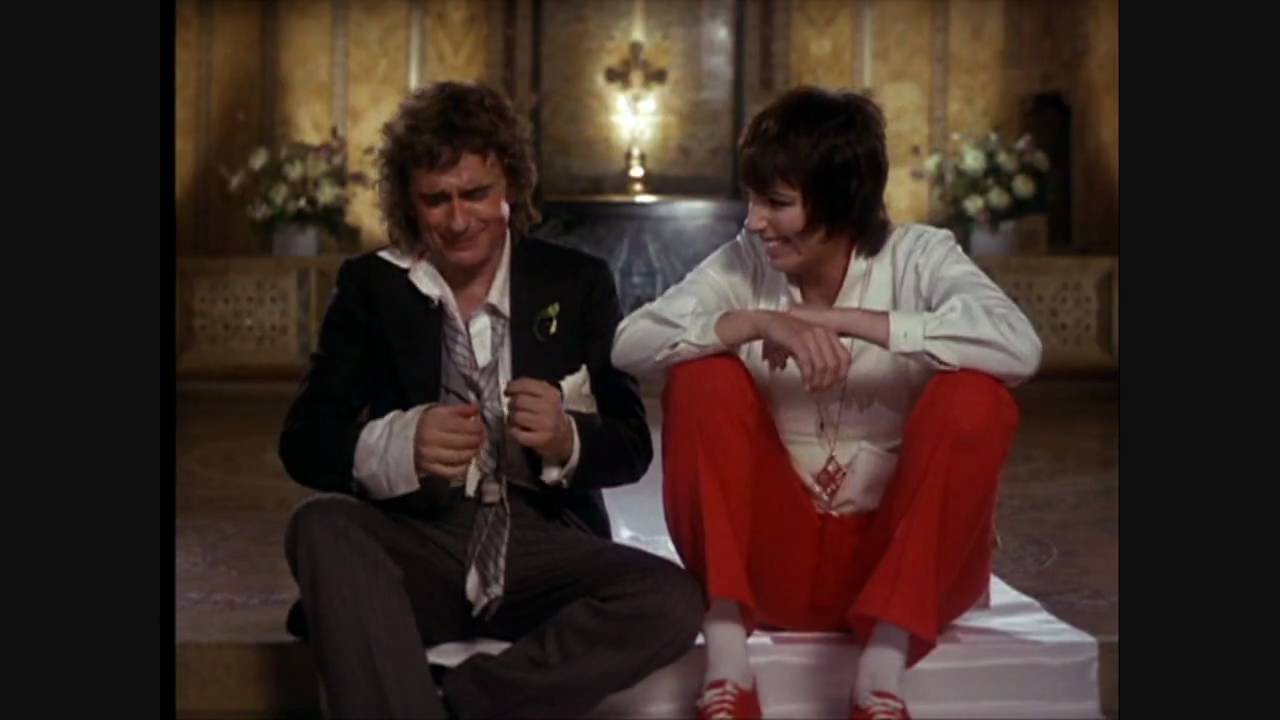
You could almost swear they're related!

Although initially criticized for playing alcoholism for laughs, Arthur actually provides a more realistic depiction of alcoholism, albeit from the perspective of an alcoholic. At the film’s start, Arthur is happily engaging in inebriated antics, leading the more entertaining and social life that alcoholics convince themselves drinking provides. As the story continues, however, and his addiction begins to take its toll, he becomes isolated from those around him and begins to see how his addiction has actually added to rather than cured his problems. Finally, it is only when personal loss gives him the courage to live a full and sober life while he still can that he is able to regain control of his life and earn Linda’s love. Thus, while its story ultimately ends with its glass half-full, Arthur uses its hero’s struggles to show the lure of addiction and its consequences.

While Arthur’s screwball take on a Don Quixote-esque quest for a better world is an enticing premise, the script alone could not have made the film the enduring fan favorite that it is. The cast turn in uniformly superb performances, with the tree central players creating characters that remain highlights in each of their lengthy careers. Through a unique balance of slapstick comedy and poignant emotion Dudley Moore brings Arthur, a character that easily could have been a one-dimensional role, roaring off of the screen and straight into audiences’ hearts. Similarly, Sir John Geilgud rises above the stereotype of the devoted and proper butler through his by turns caustic and emotionally resonant portrayal of Arthur’s mentor, father-figure, and unwilling partner in shenanigans, Hobson. Liza Minnelli completes the trio in her portrayal of the outwardly tough and sassy, but inwardly vulnerable Linda, in a performance that is reminiscent of her Oscar-winning work as Sally Bowels in Cabaret. The supporting cast perfectly complement the performances of the leads with Stephen Elliott and Geraldine Fitzgerald earning particular notice in their side-splitting turns as Arthur’s volatile future father-in-law and saucy grandmother.


Life, love, and the pursuit of happiness; through his whimsical journey Arthur Bach learns the meaning of all these things and more. Through its winning combination of comedy, romance, and life lessons, Arthur is a film that defies both genre definitions and audience expectations. Just ‘once around the park’ with Arthur, Hobson, and Linda and you too will be feeling a buzz that will linger long after the final reel.
Laughter and tears; the formula for any lasting relationship

Monday, May 4, 2015

Mom in the Movies: Three Movies to Celebrate Mother’s Day By Lauren Ennis

Each year, we celebrate motherhood in its many forms and the influence of mother figures upon our lives. While motherhood is truly something to be celebrated, it is impossible for any single film to fully capture the experience of motherhood in all of its complexity, heartache, and fulfillment. This week, I will be featuring three films to honor those most special of ladies in our lives. Please let me know what your favorite mother’s day movie is in the comments!

1. The Joy Luck Club: Adapted from the best-selling Amy Tan novel of the same name, The Joy Luck Club interweaves the stories of four Chinese women in San Francisco as they struggle to raise their American-born daughters. Through its portrayal of the misunderstandings and insecurities that plague the women’s relationships, the film expertly captures the contradictions of the immigrant experience. By framing its tales through flashbacks from each character’s perspective the film also conveys the complexities of relationships between cultures and generations, as each pair of mothers and daughters strive to understand and relate to one another. Throughout its eight vignettes, the film maintains an uncompromising honesty in its depiction of the ways that families hurt and betray each other, sometimes without even realizing that they are doing so. After years of unfulfilled hopes and unsaid grievances, however, each pair ultimately realizes that although they may not always understand one another there’s a lot that they could learn from each other. Through all of the turmoil both personal and political that both generations endure, two things about these women remain unchanging; their resilience and their devotion to their families. At once a cross-cultural period piece and a modern character study, The Joy Luck Club is a must see for anyone who grew up thinking they were so different from their parents only to grow up and learn otherwise.
A picture that tells a thousand stories

2. Two Women: Released in 1961, Two Women was the film that shot Italian starlet Sophia Loren to international stardom. Prior to the film’s production, Loren had starred in several Italian films as well as a handful of Hollywood romantic comedies. It was only when she acted against the sexy type that studios had tried to pigeonhole her in, however, that she achieved what was perhaps her greatest cinematic success and became the first actress in a foreign film to win Hollywood’s coveted Best Actress Oscar. The film chronicles the efforts of a widowed shopkeeper to shield her pre-teen daughter from the horrors surrounding them in war-torn Italy. After the allies begin bombing Rome, Cesira (Loren), decides to seek refuge in the mountain village she grew up in. Upon reestablishing themselves in the village, however, mother and daughter are confronted with the reality of war once again with the arrival a regiment of Nazis departing the country. The Nazis demand that the village school-teacher (Jean-Paul Belmondo) whom Cesira has begun a romance with and her daughter, Rosetta, (Eleanora Brown) has developed a crush on act as their guide and take him as a prisoner, devastating both women. After she learns that the German occupation of Rome has nearly ended Cesira determines to return home and rebuild her business. This decision proves to be a fateful one as it leads them on a grueling journey that results in the pair being attacked by a group of Moroccan soldiers in one of the most brutal (although not especially graphic) scenes in cinematic history. Although desperation and trauma threaten to shatter their relationship along with their innocence, the two manage to find their way back to each other in time to realize that their greatest strength and solace is in each other. Through its unflinching depiction of World War II and its atrocities, Two Women is a compelling argument against war and a powerful testament to the ultimate triumph of the human spirit in the face of adversity, which perfectly captures the sacrifice of a mother’s love.
Motherhood: a true balancing act

3. Volver: Made in many ways as a nod to one of director Pedro Almodovar’s favorite icons, Two Women star Sophia Loren, Volver is a modern Spanish take on the neorealist films of ‘50’s and ‘60’s Italian cinema. The film begins with sisters Soledad (Lola Duenas) and Raimunda (Penelope Cruz) visiting their ailing aunt where they are told that their aunt’s neighbors claim to have been visited by the ghost of their deceased mother. Soledad is shaken by the visit, but working mother Raimunda pays it little mind as she returns home to her unemployed husband, Paco (Antonio de la Torre) and teenage daughter, Paula (Yohana Cobo). The paranormal stir soon becomes the least of Raimunda’s worries after Paula stabs Paco to death when he attempts to rape her. As she scrambles to cover up the murder, Raimunda is forced to reflect upon the sexual abuse that led to her estrangement from her own mother, Irene, (Carmen Maura) and the mysterious circumstances surrounding Irene’s death. Complications both dramatic and comic ensue as the ‘deceased’ Irene returns and takes up residence in Soledad’s apartment and the sisters’ friend and former neighbor, Augustina, turns to a sleazy day-time talk show to investigate Irene’s death. While the film’s various elements seem incompatible on paper, the story successfully weaves elements of gritty drama, supernatural fantasy, and absurd comedy to compromise a cohesive and endlessly entertaining narrative that is almost as complicated as family life itself. The ensemble cast is uniformly excellent with Cruz earning particular note in her multifaceted role that is both an artistically original performance and an affectionate tribute to the stars of yesterday. Part surreal comedy and part poignant family drama, Volver is a film that defies conventional definition in its telling of a tale that is both entirely unique and universally relateable.
You're never too old to need your mother

Sunday, April 19, 2015

Classics: A Review of Breakfast at Tiffany's By Lauren Ennis

Films are remembered for a variety of reasons including dazzling special effects, clever dialogue, and powerful storylines. Some films, however, are remembered for something more subtle than their technical aspects; those are the films that manage to rise above their individual parts to become complete works that are truly timeless. One such film is the 1961 romantic comedy Breakfast at Tiffany’s. Adapted from a Truman Capote novella, the film overcame its slight plot and controversial characterizations to become a fan favorite, which has cemented the places of both Audrey Hepburn and Holly Golightly as darlings of popular culture around the globe.
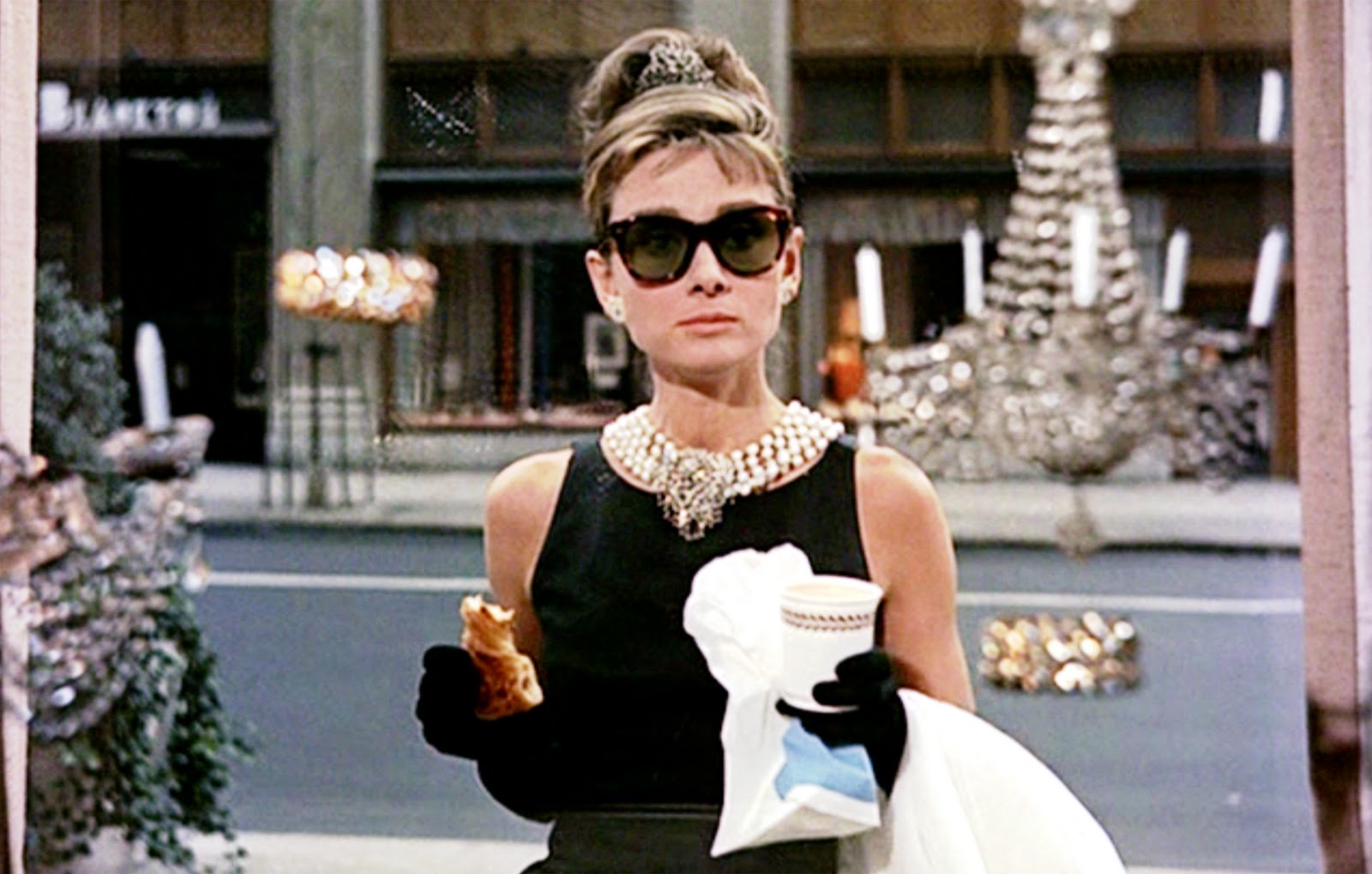
The days when carbs were chic

The story begins with Holly (Hepburn) longingly gazing into the display window at Tiffany’s as dawn breaks over New York City. Upon her return home, it is revealed that the elegant Holly is actually an escort attempting to dodge the advances of an insistent client. The film then introduces the whimsical characters who inhabit her apartment building, including photographer Mr. Yunioshi (Mickey Rooney), and new tenant Paul Varjak (George Peppard). Like Holly, Paul arrived in New York in pursuit of fame and fortune, and has also resorted to trading sexual favors to wealthy clientele in order to survive. The two become fast friends with Paul drawn to the mercurial Holly and her quirky lifestyle, and Holly finding stability and trust in the straightforward Paul. The film then chronicles the various arguments, reconciliations, and adventures of the pair, as Paul attempts to make sense of the girl he soon finds himself falling for against his better judgment.

The mere mention of either Holly Golightly or Breakfast at Tiffany’s conjures a wealth of iconic images and sounds. The opening shot of Audrey Hepburn ethereally treading down a deserted street epitomizes the glamour of Old Hollywood and the loneliness of life in Holly’s New York. Similarly, the closing shot of Holly, Paul, and her nameless cat in a rain soaked alley contains all the hope and promise of a modern fairy tale. Holly’s signature slang and distinctive world view have gone on to be referenced in numerous books, films, and television shows, as well as the passing conversations of would-be trendsetters eager to capture a bit of the signature Golightly charm. Despite its witty script, heartfelt scenes and excellent performances, the film is perhaps best known for its fashion. Each year countless women and girls adorn their rooms with pictures of Audrey Hepburn in Holly’s little black dress and don her famous cigarette holder and tiara, sometimes without having even viewed the film. Part of the film’s enduring fashion influence lies with its star, Hepburn, who brought the simplicity and chic of the European gamine to curve and curl worshipping 50’s Hollywood. Even today, the phrase ‘that’s so Audrey’ remains the ultimate fashion compliment. Still, even with her unparalleled style, none of Hepburn’s other ensembles have enjoyed the iconic status of Holly’s evening costume. The film’s theme song, ‘Moon River’, has also gained its place in cinematic history and is today considered a standard of the Great American Songbook, which has been covered by artists ranging from Andy Williams to Sir Elton John.

As incomparable as the film is, it was almost a very different story. The most famous change is the casting of Hepburn as its endearingly off-kilter heroine after Truman Capote had specifically insisted upon the casting of his friend, sex symbol Marilyn Monroe. Although Monroe had previously turned down the part for being too similar to her past roles, Capote remained bitter and insisted that Hepburn was unable to convey the complexity and sensuality of his leading lady. There were also numerous alterations to the script from the original novella, which portrayed Holly as a mercenary, marijuana smoking, bisexual prostitute and Paul as her gay best friend rather than her love interest. Capote’s original, grittier depiction of the pair was ultimately too hot for early ‘60’s censors to handle, which lead to the sanitized script that viewers have come to know and love. The lilting Moon River also narrowly escaped the cutting room floor after Hepburn told studio executives that the song would only be cut, ‘over my dead body’.
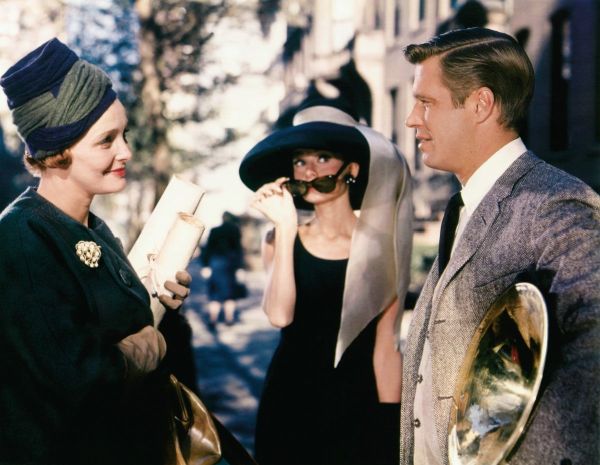
Holly doesn't need shades to see through this arrangement

Despite its iconic appeal, the film’s script amounts to little more than a character study of two compromised dreamers struggling to make it in the big city. As a result, the film almost entirely depended upon the cast to carry it to success. Regardless of Capote’s critiques, Hepburn is nothing short of a revelation as the outwardly carefree, but inwardly wounded Holly. Throughout the film, she captures each of the many facets of her ever-changing character with depth and raw emotion, while still infusing her role with the guile and charm that it calls for. George Peppard’s Paul makes for an ideal foil to Hepburn’s flighty flirt, as he keeps his character grounded in a reality that Holly refuses to acknowledge. Peppard also ensures that Paul is more than a cardboard love interest by portraying him with a weariness and cynicism befitting an artist turned kept man, while still maintaining the role’s basic decency. Buddy Epsen and Patricia Neal steal the film in each of their scenes, with Neal’s catty society maven and Epsen’s kindly country vet capturing the extreme world’s that Holly and Paul are caught between. The one misstep in the cast is Mickey Rooney’s miscast performance as Mr. Yunioshi, which drags the film into minstrel show caricature each time that he appears.


Frothy romantic comedy, in-depth character study, and quirky slice of life, Breakfast at Tiffany’s easily could have been just another tale of life and love in New York City. Through the work of its cast and crew, however, just enough cinema magic was created to ensure that the film would remain a darling of audiences and critics alike for years to come. I wholeheartedly recommend that film fans, fashionistas, and all the dreamers who have ever found themselves drawn to city lights take a seat and enjoy a large helping of Breakfast at Tiffany’s.
Two drifters off to see the world...

Monday, April 6, 2015

A review of "The Last House on Cemetery Lane

Confessions of a Film Junkie: A review of “The Last House on Cemetery Lane”

By: Brian Cotnoir

     Good news “The Mooring”; you’re no longer the Most Boring Horror film I’ve ever sat through, not after sitting through the 2015 film “The Last House on Cemetery Lane”.  And trust me; this film is so boring that’ll put you to sleep faster and better than Nyquil.  Let’s not waste any more time, and dive into the Horror Snoozefest that is “The Last House on Cemetery Lane”.         
So the film opens up with a Real Estate Agent played by an actress who looks like he/she got a botched sex change operation from the same doctor who did Bruce Jenner’s, showing a new rental property to a client named John Davies who is looking for a getaway so he work on his Horror screenplay (UGH!).  However, this new property comes with one small condition: the 3rd floor of the house is permanently rented out to an elderly blind woman named Agnes.  John is not happy, because he wanted to be left alone to work on his screenplay, but the Real Estate Agent assures him that Agnes will be no trouble at all.  So John moves in and tries to work on his screenplay, but he finds it difficult to focus on his work, and he finds himself being charmed by a cute neighbor, named Cassie. Not only that, but some bizarre things began to happen around the house, and John begins to suspect that it may be Agnes, or quite possibly something more sinister a foot.  
Do whatever you want to me just dont
make me watch this stupid film again!
         
Oh. Your. God!  This film is so boring! Like, I could not believe how frustratingly boring it was at times.  I did not think I could quite possibly find a Horror film more boring than “The Mooring”, but this one surpasses by far.  The conversations between the characters John and Cassie have to be the Most Boring thing I’ve ever seen heard in a film, I was finding it hard not to doze off while watching this.  There conversations remind me a lot of the conversations between Eli and Amanda from the film “Last Kind Words”, and what I mean by that is, they’re just mindless ramblings about life and have no effect on the plot whatsoever.  It truly is the most agonizing part of an already terrible film.  Not only that, but there isn’t one moment of scariness or intensity this entire film.  The “nightmare” sequences in the film aren’t the least bit terrifying and look like some weird Art-House style film made by someone who flunked out film school!  At least in a film like “Blood Runs Cold”—which also has a lot of nothingness going on it it—it at least had a creative and interesting killer!  But “The Last House on Cemetery Lane” has absolutely nothing to offer its audiences!      
Awful!  All of you are just awful!
As for the characters, I hate them all!  John Davies has got to be one of the Worst Protagonists ever in a film, and the thing I hate about him the most is that his character is a “Horror Screenwriter”.  I hate when the main character in a film is a person who writes others films, because that’s just lazy writing and poor character development.  Yeah, it works for Stephen King when he writes a story, but hey that’s Stephen F*cking King, he can get away with doing something like that because he’s a beloved Horror writer!  As for the character Cassie...I feel like you could’ve gotten rid of 80% of her scenes, and it wouldn’t have affected the plot in the slightest bit, and it would’ve prevented me from bashing my head against the wall during the excruciatingly pointless conversations between her and John.  As for Ms. Connelly (the Real Estate Agent) and Agnes, the only thing I remember about their characters is that they were both hideous, and I’m not sure if that was because of good make-up work, or if because they’re both really that ugly, but yeah, that was really the only memorable thing about either of them.                               
     The thing that concerns me the most about “The Last House on Cemetery Lane” is how it was first presented to me:  I found this film on Netflix, and when I saw the star rating on it, it had all 5-Stars filled in, and came HIGHLY recommended to me, based on the films I’ve rated on the site, and so I was expecting to see the next, best, unknown Horror film, and what I got was a Nyquil in DVD form!  There are only two reasons I could think of for why anybody would possibly want to see “The Last House on Cemetery Lane”: 1.) A Person suffers from severe insomnia and is looking for something to help them fall asleep or 2.)If you ever have to take care of a person who has suffered severe brain damage and you need to put something on for background noise to distract them while you do work around the house.  Other than those two types of people nobody will benefit or gain anything from watching “The Last House on Cemetery Lane”, without a doubt one of the worst and most boring Horror films I have sat through to date.

Sunday, April 5, 2015

Easter With an Edge: Biblical Bad Boys and Old Testament Temptresses By Lauren Ennis

The Easter and Passover seasons are a time in which those of the Christian and Jewish faiths reflect upon their religious beliefs and rejoice in the celebration of crucial events in their religious history. Since the silent era, studios have attempted to capture onscreen the larger than life tales of both the new and old testaments. The majority of those films focus relate the most famous of these tales including Moses’ deliverance of his people from slavery and Jesus’ crucifixion. In those films, the focus is placed upon the triumph of goodness over evil and the redemptive power of faith. While these films are powerful works, they ignore the darker aspects of the bible that helped make its tales truly epic. This week, I’ll be honoring the season with an added twist by exploring three films that will make you think twice about the goodness of the “good book”.
Sky rockets in flight, afternoon delight!

1.      David and Bathsheba: While King David is often remembered for his childhood triumph over Philistine giant Goliath, the kings’ story includes far more than that one chapter. The 1951 film David and Bathsheba chronicles the crises both moral and religious that the adult king encounters. The film begins by detailing the ways in which David (Gregory Peck) rules his kingdom, but quickly becomes a tale of lust and illicit love when he spies his neighbor, the beautiful Bathsheba (Susan Hayward) as she takes a bath by her window. Almost immediately after setting eyes on her he orders his men to bring her to the palace under the pretense of accepting an honor on behalf of her husband, Uriah (Kieron Moore), who is away fighting the kingdom’s enemies. It is soon revealed that Bathsheba is just as cunning as David and planned on bathing in front of her window in hopes of drawing his attention. Almost as soon as they are introduced, the pair embark upon a passionate affair and disregard the consequences until Bathsheba learns that she is pregnant with David’s child. It is only then that the couple consider the ramifications for their actions as they scramble to hide her condition before she can be accused of adultery; a capital crime. The pair first scheme to pass off the child as belonging to Uriah, and when that fails, plot to have Uriah killed so that Bathsheba can be free to remarry. The crosses and double crosses that ensue are more befitting of a noir than a biblical epic and make the film a truly sinful pleasure. Perhaps the most unsettling aspect of the tale is the ending, in which the couple escapes not just criminal prosecution, but all ramifications when David confesses to his sins and contritely prays, inspiring God to show mercy. While this twist shows the power of faith and mercy, it also goes against the moral lesson that the entire plot is built around and contradicts God’s supposed unbending law, which demanded the death of a minor character for an innocent mistake earlier in the film.  This in turn leaves viewers to grapple with the cynical question of whether or not there are in heaven as on earth two sets of laws; one for the privileged elite and another for the general population. Whatever your answer to this question, one thing remains unquestionable; the sheer entertainment value of an ancient scandal that could rival the most saucy of modern tabloids.
 
The days before Super Cuts
2.      Samson and Delilah: Samson and Delilah tells a similar tale of a biblical hero led astray by the temptations of the flesh. What stands out in the film, however, is the moral ambiguity of its traditionally cardboard characters. While touted by the other characters as Israel’s greatest warrior, Samson’s (Victor Mature) greatest enemy is not any foreign nation, but his own lack of self-control. Throughout the film, he behaves in a manner more befitting of an angst ridden adolescent than a national hero as he devotes more of his time to showing off his physical prowess and acting on petty grudges than furthering the cause of his people. When his retaliation for a lost bet goes too far and leads to his betrothed (Angela Lansbury) breaking their engagement, he refuses to take responsibility for his actions and instead chooses to immaturely lash out yet again, ultimately sparking a chain of events that ends with the murder of his fiancée. Beyond its morally compromised hero, the film also presents audiences with a complicated twist on the biblical tale’s femme fatale. Instead of a scheming seductress, Hedy Lamarr’s Delilah is portrayed as an ordinary woman hardened by personal tragedy. After witnessing the way that Samson’s recklessness led to the deaths of her father and sister, who in the audience could hold Delilah’s desire for vengeance against her? She is also shown to be ahead of both the ancient society of the film and that of the late 1940’s in which the film is released in her independence and willingness to break social norms. Rather than the passive tool of her countrymen that she is portrayed as in the bible, the film’s Delilah is an adept strategist and social chameleon who outsmarts the men around her at every turn. As a result, the film’s story of two people finding unexpected solace in one another as they cope with the loss and guilt of their pasts is far more relatable and complex than the original, simplistic, tale of a hero undone by a temptress. By 1940’s standards, the film also revels in the racier aspects of its story, showing off the physical charms of its leading man and lady in equal measure as it chronicles the forbidden love affair that ultimately proves to be Samson’s downfall. For a story that merges the battling best of the biblical with contemporary complications look no further than Samson and Delilah.
 
Is there any doubt as to why Andy Dufresne put her on his wall?

3.      Salome: Racism, incest, and political corruption; 1953’s Salome tackles all of these taboo topics and more. While the film is loosely based off of the biblical tale of the princess who ordered the execution of John the Baptist, the film diverges from its source material and transforms the formerly vindictive villainess into a misunderstood and courageous heroine. The film begins with Salome (Rita Hayworth) returning home to Galilee after her Roman fiancée rejects her because she is an immigrant and the local authorities banish her from Rome as an enemy alien. Despite her vow to never trust another Roman, she soon finds herself infatuated with the roguish Captain Claudius (Stewart Granger) during her journey home. When her stepfather, King Herod (Charles Laughton), learns of her budding relationship upon her return he becomes jealous of the young man, whom it is revealed he views as a romantic rival. As if the unwanted advances of her stepfather weren’t enough of an obstacle, Salome is also forced to evade the manipulations of her mother (Judith Anderson), who encourages Salome to give in to the king’s desires in order to secure both women’s political power. Meanwhile, prophet John the Baptist (Alan Badel) adds even more turmoil to the princess’ life by inciting the citizens of Galilee to overthrow the king, and queen as adulterers and insinuates that the two conspired to murder Herod’s brother, the queen’s late first husband. After failing to persuade the converted Christian Claudius to arrest John as a traitor, she soon finds herself regretting her actions and sympathizing with the prophet’s teachings. Eventually, John is arrested and Salome selflessly offers to perform a striptease for Herod on the condition that he in return grant any request she makes, with the hidden intention of  using the bargain to demand John’s release. As soon as her performance is finished, however, her mother demands the execution of John, ruining Salome’s opportunity to plea on his behalf. The film then reaches its inevitable, gory, climax when John is decapitated and his head presented to the royal family on a silver platter, leading Salome and Claudius to embark upon a daring escape from the palace. While this adaptations sidelines the most depraved aspects of the original story, Salome was daring in its time for its willingness to explore the effects of sexual abuse, racism, and religious persecution, even if only within a historical context. The film’s multifaceted portrayal of its characters succeeds where many other religious epics fail and creates a truly engaging story that viewers can apply to modern life. Coming of age story, religious epic, and social criticism, Salome is a truly epic film with more layers than its heroine’s famed seven veils.

Sunday, March 22, 2015

Classics: A Review of Broken Embraces By Lauren Ennis

Film noir is a genre that has become synonymous with the 1940’s and 1950’s. When they were first released, the thrillers, mysteries, and melodramas that compose the versatile genre were often pushed aside as ‘popcorn fare’ that were only produced to satisfy studio budgets. As time wore on, however, the gritty style and moral complexity of those forgotten films was finally recognized by new generations who saw the anxieties and broken hopes of their own era reflected back at them on the black and white screens of the past. Today, the genre has been hailed as both cutting edge and classic and is regularly, though rarely successfully, imitated. One film that successfully manages to blend the moral crises and dark sensibilities of noir with the issues and norms of contemporary society is the 2009 Spanish neo-noir Broken Embraces.
So familiar, but I can't think why....

The story begins with blind screenwriter Harry Caine (Lluis Homar) learning about the death of the producer of one of his films, tycoon Ernesto Martel (Jose Luis Gomez). Soon after this revelation, Harry’s agent approaches him with a new client, an amateur director known only as ‘Ray X’ (Ruben Ochandiano). Harry later realizes that Ray X is actually the alias of Ernesto Martel’s son, Ernesto Jr. The film then launches into a flashback to the early 1990’s when Harry still possessed his sight and was a director named Mateo Blanco who wrote screenplays under the pseudonym Harry Caine. Mateo is approached by Ernesto, who agrees to finance Mateo’s latest project, a comedy called “Girls and Suitcases”, in hopes of securing a role for his secretary turned mistress, Lena (Penelope Cruz). Mateo reluctantly allows Lena to audition only to find himself almost instantly captivated by her, and despite her lack of professional experience, he immediately casts her, leading the two to quickly embark upon an affair. Suspecting that something is amiss, Ernesto enlists the aid of his film loving son to spy on the pair under the guise of filming a documentary about the making of “Girls and Suitcases”. Ernesto Jr. soon finds the evidence that his father is seeking, leaving Lena to face the wrath of the increasingly abusive Ernesto Sr. The film then chronicles the tragedy that results when the lives of Mateo and his cast and crew intersect with those of the Martels.

Director Pedro Almodovar expertly pays tribute to film noir without resorting to blatant imitation. The film’s tone appropriately alternates between suspenseful and mournful, while still maintaining moments of wry humor. Rather than the stereotypical lights and shadows associated with the genre, Almodovar instead infuses the film with explosions of vibrant color. In this way, the film follows in the footsteps of such classics as 1945’s Leave Her To Heaven in its portrayal of the evil that lurks within broad daylight. The characters follow noir archetypes while still remaining entirely modern and believable. For instance, Lena enters the film with a femme fatale’s allure, but is later revealed to be using that same sensual charm to mask her tortured past and prison-like present. Similarly, Mateo, while an unabashed ladies’ man is decent at heart, and like many a noir hero, finds himself lost in the world of love, lust, and obsession that Lena’s presence transforms his life into. Finally, the ruthless Ernesto’s inhuman cruelty and all too human motivations earn him a place alongside the most infamous villains in the genre. The film also pays tribute to classic films outside of noir with Lena donning costumes that are direct references to such icons as Audrey Hepburn and Marilyn Monroe and Mateo viewing films that feature such classic stars as Ingrid Bergman and Jeanne Moreau. The story also includes a sly nod to Almodovar’s own early work with “Girls and Suitcases” serving as a clever stand-in for his hit comedy Women on the Verge of a Nervous Breakdown, making the film a treat for cinephiles both classic and modern.
Rainy days and Mondays always get them down

The cast provide uniformly excellent performances that weave an edgy mystery with a retro twist. Lluis Homar makes for an effective leading man, serving as the voice of reason in the film’s twisted tale, while still portraying his character’s unique blend of world weariness and charisma. Jose Luis Gomez is an excellent counter to Homar’s Mateo as he perfectly embodies the desperation that his obsession with Lena reduces the otherwise successful and powerful Ernesto to. Penelope Cruz shines in her role as the enigmatic Lena, proving that she can play far more complex and compelling characters than the pretty faces that she is too often limited to in American films. Blanca Portillo, Tamar Novas, and Ruben Ochandiano lend apt support in their roles as Mateo’s agent, Judit, Judit’s college student son, and Ray X, each excellently portraying characters who are not what they seem.


Broken Embraces is a film that blends the best of classic and modern cinema to tell a truly unique tale. Its winding story relates a powerful mystery that highlights the ways that art and creativity help us to find meaning in life despite its many obstacles. The dynamic performances and razor-sharp script perfectly merge to create an enticing film that could convert even the most staunch of film critics into cinema devotees. Whether you like your films at the forefront of innovation or bask in the nostalgia of screenings past, your heart is bound to break for Broken Embraces.
Proving that even call girls have professional limits
If you enjoy noir, check out my full-length noir style play, Call It Even http://www.jacpub.com/Full-Length/Ennis_CallItEven.htm