"A doctor's responsibility doesn't stop at the clinic doors" physician Jolanta Wadowska-Krol declares. Netflix's 2026 critically acclaimed series chronicles just how far Dr. Wadowska-Krol was willing to go to expose the lead poisoning outbreak amongst her young patients. This true story of corruption, oppression, illness, and resilience proves that history can truly be more strange, devastating, and ultimately inspiring than fiction. Discover one of modern history's unsung heroes in Lead Children.
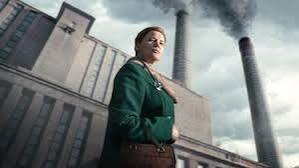
The story begins in 1974 Poland. The Cold War is at its height and the people are caught in the iron grip of communist oppression. After earning the ire of the state, idealistic doctor Jolanta is transferred to the working-class city of Szopience. When one of the children in her neighborhood collapses at a local fair she struggles to diagnose his mysterious illness. Soon after, she begins noticing that an unusual number of her pediatric patients are suffering from anemia. When the state begins hiding the ill children at facilities across the region she realizes that there are greater forces at play and launches her own investigation. She quickly confirms that the children are being poisoned by the lead emissions from the local metal smelter. When she brings her findings to the local authorities she earns the mistrust of the locals, who rely upon the smelter for their jobs, and security and state officials, who deem her a threat to the status quo. She then finds herself caught in web of political intrigue and bureaucratic corruption as she races against time to get the children treated before its too late.
Lead Children blends the best of medical dramas and political thrillers to shed vital light upon a largely forgotten chapter of history. Viewers begin the series fully aware that the children of Szopience are suffering from lead poisoning. Despite that spoiler, however, the depiction of Jolanta's investigation contains so many twists and turns that viewers will still be on the edge of their seats. Additionally, the series' portrayal of the impact of contamination upon the children and the community at large is nothing short of harrowing. While the series follows the familiar beats of such contamination related dramas as Erin Brokovich and A Civil Action it sets itself apart by placing its story within the greater context of communist oppression. By exposing the smelter's toxicity, Jolanta also exposes the corruption, negligence, and political machinations of the Soviet government, making her an enemy of the state. As a result, her life is every bit as at risk as those of her patients. In its portrayal of Jolanta's fearless efforts to resist state oppression and cure her patients, the series relates a tale of real-life heroism that serves as an apt reminder of the difference that one person can make. Discover one of history's most compelling unsung heroes in Lead Children.
The performances brilliantly bring the harrowing reality of life behind the iron curtain to the screen. Kinga Pries infuses Jolanta's friend and colleague nurse Wieslawa Wilczek with warmth and earnestness. Agata Kulesza captures the political savviness, intelligence, and determination of Jolanta's partner in her crusade, Professor Krystyna Berger. Zbigniew Zamachowski aptly portrays Jolanta's husband, Zbigniew Krol's, devotion to his wife and fears for his family with depth and nuance. Michal Zurawski blends calculation, callousness, and charm as secret police officer Hubert Niedziela. Even in the midst of superb supporting performances, Joanna Kulig dominates the series in her magnetic turn as Jolanta.
At once a harrowing look into the horrors of state oppression and a testament to the power of the human spirit Lead Children makes for six of the most compelling hours in modern television. The script brings a dark chapter of Poland's history to light with striking accuracy and devastating realism. The performances transport viewers to the gritty, contaminated, streets of Szponiece. Follow Jolanta on the trail of justice in Lead Children.




:upscale()/2014/11/10/849/n/1922283/807b8f706febd535_tumblr_lqo3xs6vQs1qcb58yo1_500-1.gif)