Sunday, February 26, 2017

Classics: A Review of Stranger Things By Lauren Ennis


In a world dominated by political unrest, violence, and economic upheaval it is all too tempting to yearn for the stability of a simpler time. Through the mere passage of time eras passed seem to lose their flaws as they take on the inviting glow of nostalgia.  Capitalizing upon the recent nostalgia for all things 1980’s the hit Netflix drama Stranger Things serves as an apt tribute to the sci-fi and adventure films of the 1980’s, while reminding us of the darker aspects of Cold War America that our nostalgia may have failed to account for.

And you thought middle school was frightening
The story begins as an homage to the stereotypical 80’s childhood with middle school sci-fi and fantasy fan Will Byers (Noah Schnapp) playing Dungeons and Dragons with his friends Mike (Finn Wolfhard), Lucas (Caleb McLaughlin), and Dustin (Gaten Matarrazzo). In typical latchkey kid fashion, the boys end the night by setting off for their respective homes alone on their bikes. The plot then takes a turn into classic sci-fi territory as Will is pursued by a mysterious unseen force until he finally vanishes, seemingly into thin air. The disappearance sparks a town-wide man-hunt after Will’s dedicated but harried mother, Joyce (Winona Ryder), enlists the aid of cynical town sheriff Jim Hopper (David Harbour). While the case leaves the small mid-western town of Hawkins, Indiana shaken as residents struggle for answers, the matter is treated as a standard missing persons case. As Joyce, Hopper, and Will’s friends experience increasingly bizarre paranormal encounters, however, it becomes clear that Will’s disappearance is anything but standard, and Hawkins is far more than the quiet town that it appears to be. Eventually, the disappearance of a local teen, the mysterious activities at a top-secret government lab, and the arrival of a truly strange little girl converge to expose a web of corruption, espionage, and abuse that plunges viewers into the darkest corners of Cold War America.

Through its loving tribute to 80’s pop culture and skeptical approach to government that is equally applicable to the past and present Stranger Things reminds us of all that we miss in our past while serving as an apt warning for the future. The inclusion of government test subject Eleven (Millie Bobby Brown) in particular fuses these two elements to create a character who is equal parts familiar and original. The efforts of Mike, Lucas, and Dustin to hide Eleven in Mike’s basement in a disguise comprised of costume accessories directly recall the adventures of Elliott and E.T. In the midst of her comic adjustment to the outside world, however, the series never lets viewers forget the disturbing events that led to her arrival in Hawkins. Similarly, the boys’ interactions are directly reminiscent of both Stand By Me and The Goonies but still keep viewers engaged in their adventures. The story arcs featuring Mike’s seemingly perfect sister, Nancy, and Will’s social outcast older brother, Jonathan, also contain the genre tropes that catapulted John Hughes’ teen dramedies to classic status, but use them to create a story that is emotionally honest and timeless. While remaining within the context of Cold War paranoia, the series’ portrayal of anti-Soviet hysteria and citizens dismissed as collateral damage remains eerily relevant in today’s fraught political atmosphere. Through its fond glimpse at the past with a knowing nod to our own age, Stranger Things tells a truly unique tale that will resonate in any era.

Welcome back, Winona
The out of this world plot would have remained grounded if not for the inspired performances of its cast. In a stroke of casting genius 1980’s and 1990’s indie ‘it girl’ Winona Ryder brings Joyce to life in a performance that covers all the stages of loss without striking a false note. David Harbour infuses his hardened sheriff with a charisma and cynical charm that makes Hopper a suburban take on Indiana Jones. Natalia Dyer is excellent in her role as good girl gone popular Nancy and brings a mix of innocence and adolescent angst to her role that would make Molly Ringwald proud. Charlie Heaton captures the awkwardness and kindness of social outsider Jonathan, making him a perfect foil to his rival for Nancy’s affections, charming but self-absorbed Steve. Even when surrounded by outstanding performances by their adult counterparts, the series belongs to its youngest cast members. Finn Wolfhard is a natural in his role as confident but protective group leader Mike. Caleb McLaughlin captures Lucas’ obstinacy and cynicism while still evoking the loyalty and kindness that he keeps carefully guarded. Gaten Matarazzo’s performance as Dustin strikes the ideal balance between comic and poignant as his character evolves from sidekick to the group’s voice of reason. Millie Bobbie Brown nearly steals every scene in which she appears as the enigmatic Eleven as she captures the role’s difficult combination of childlike innocence and beyond her years maturity.

Through its equal parts 1980’s nostalgia and modern insight Stranger Things relates an eerie tale of a community coming together in the face of adversity that will inspire viewers of any generation. The series’ combination of an intelligent script, retro atmosphere, and a truly stellar cast ensures that it more than earns its place as Netflix’s crown jewel. With laughter, romance, friendship, family, as well as the thrills and chills of the best in adventure and sci-fi, Stranger Things makes nostalgia the new cutting edge.

I better get a pension out of this

Sunday, February 12, 2017

Classics: Three Hollywood It Couples to Spend your Valentine's Day with By: Lauren Ennis


Winter winds are blowing, hearts are glowing, and almost every store is stocked with candy and flowers. This can only mean one thing; that equal parts anticipated and dreaded holiday, Valentine’s Day, is just around the corner. In recognition of this celebration of all things romantic I’ll be highlighting three couples who sizzled just as much off-screen as on. Submit your favorite on and off-screen couples in the comments!


Sometimes even Garbo didn't want to be alone
Greta Garbo and John Gilbert: This silent screen duo proved that romance truly transcends words. The two first met on the set of the 1926 romantic drama Flesh and the Devil, in which Hollywood newcomer Garbo portrayed the wanton woman who comes between Gilbert’s smitten soldier and his best friend. The pair quickly embarked upon a tumultuous affair, which was reportedly so passionate that during filming of Flesh and the Devil director Clarence Brown and his crew would tiptoe off the set while the two leads continued their love scenes long after Brown called, ‘cut’. Initially, their relationship enhanced both stars’ personal and professional lives with Gilbert drawing the notoriously reclusive Garbo out of her shell and Garbo bringing stability to the volatile Gilbert, while their pairing proved to be box office gold. The duo went on to star in two more silent dramas, the modern update of Tolstoy’s Anna Karenina, Love (1927), and the controversial (due to its thinly veiled references to homosexuality, addiction, and unplanned pregnancy) flapper tale A Woman of Affairs (1927). Tensions arose as he became frustrated by her refusal to accept his many marriage proposals and she became alienated by his increased drinking. Eventually, the pair went their separate ways when she left him at the altar after his drinking had begun to turn violent. Despite their less than amicable break-up, however, they did reunite for one final screen pairing in the 1933 historical drama Queen Christina ,in which Garbo played the Swedish monarch and Gilbert portrayed the Spanish ambassador for whom she abdicates her throne. By this time, her star had continued to rise, while his career was all but over after MGM executives used the transition to sound as an excuse to blacklist any stars they deemed troublesome. The blow to his career, combined with a crumbling personal life (including a bitter break up with Garbo’s rival Marlene Dietrich), proved devastating to Gilbert and led him to spiral even further into alcoholism. Despite their complicated past and his status as a studio liability, however, Garbo never forgot the ways in which Gilbert had helped launch her career and specifically requested that he be cast as her leading man. The sparks flew on screen (though Garbo remained aloof off screen) once again and their chemistry ensured that the film became one of her most critically acclaimed hits. Studio politics and addiction continued to plague Gilbert, however, and his career failed to revive. Shortly before his death three years later from a heart attack he was reported to have said of Garbo, “There’s never been a day since she and I parted that I haven’t been lonely for her”. Classic films fans remain just as lonely today for the pair’s timeless chemistry.

Insolence never looked so sexy
Humphrey Bogart and Lauren Bacall: “Anybody got a match?” was Lauren Bacall’s first line in her debut film To Have and Have Not, and there may be no on-screen match as smart and sexy as that of Bacall and her co-star and eventual husband Humphrey Bogart. The pair first met on the set of To Have and Have Not (1944) when nineteen year old Bacall was still adjusting to life in Hollywood and Bogart was struggling with his failing third marriage to actress May Methot. When they were first introduced Bacall was unimpressed with the forty-five year old star and requested that the studio cast her opposite the more conventionally suave Cary Grant instead. When filming began, however, Bogart did his best to put his inexperienced and understandably anxious co-star at ease and the two developed a friendship. Before shooting wrapped, that friendship had developed into a passionate affair that would go down in cinema history. The film was an instant success that left audiences wanting more of the duo’s no nonsense sex appeal, and led to Bacall being cast opposite Bogart’s cynical detective in The Big Sleep (1947). Despite the disapproval of her family, his marriage, and the efforts of director Howard Hawks (who had vied to start an affair of his own with the uninterested Bacall) to break them up, the pair remained devoted to one another and married in 1945. They went on to star in two more films together, the suspense thriller Dark Passage (1947) in which Bogart’s fugitive from justice finds love with Bacall’s lonely designer, and the gangster classic Key Largo (1948) in which the pair are held hostage by and eventually turn the tables on a ruthless mob boss. The couple remained married for twelve years and had two children together. Tragedy shattered their seemingly idyllic life together when Bogart was diagnosed with cancer in 1956 and died one year later. When his ashes were buried Bacall had the gold whistle he had given her when shooting wrapped on To Have and Have Not, inscribed with the film’s famous line, “If you need anything just whistle”, put inside the urn. Despite eventually remarrying and pursuing other relationships in the years following Bogart’s death, Bacall always maintained that she had never met another man or acting partner who could measure up to him, and to this day it would be difficult to find an on-screen pair who could measure up to Bogart and Bacall.

The couple that laughs together....
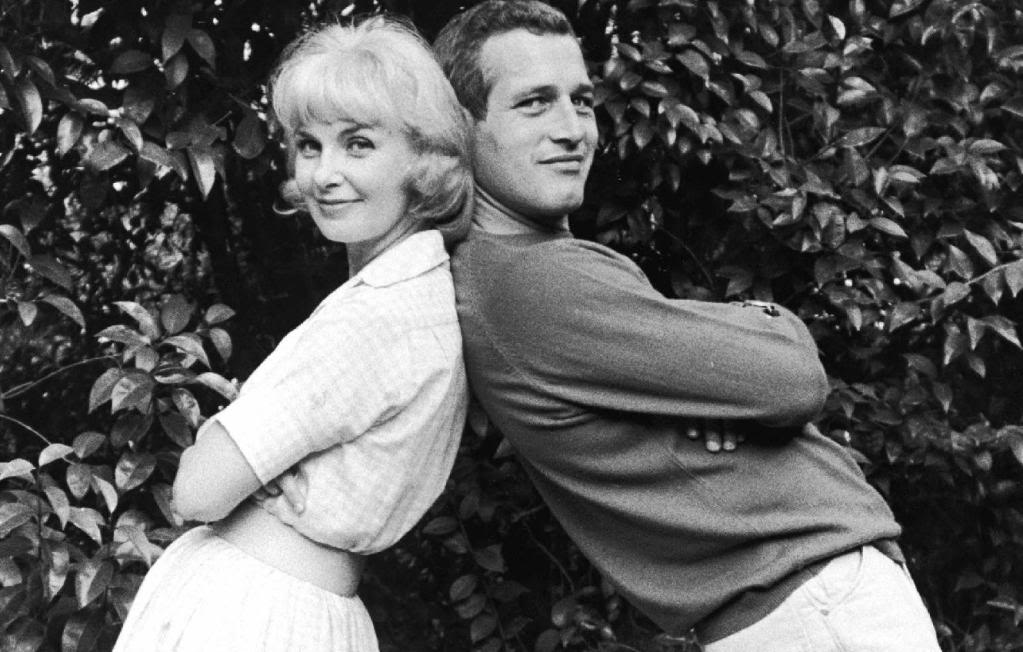
Paul Newman and Joanne Woodward: Fifty years of marriage is impressive, but fifty years of marriage in Hollywood must be an all-time record. Hollywood legends Paul Newman and Joanne Woodward made marriage look every bit as glamorous as a movie romance in one of cinema’s most enduring love stories. The pair first met in 1953 when Newman starred in the sexually charged play Picnic on Broadway and Woodward was cast as understudy to the lead actress. While there was an immediate attraction between them, he was already married and their relationship remained strictly platonic throughout the production. They remained friends, but did not work together again until four years later when they were cast opposite one another in the sultry romance The Long Hot Summer, in which Newman’s charismatic drifter wins the heart of Woodward’s head-strong southern beauty. By that time, he had divorced his first wife and the sparks were free to fly as they embarked upon a whirlwind romance that culminated in their marriage the next year. Rather than continue to live in the Hollywood fast lane, they made their home in a Connecticut farmhouse and became involved in the local community, including restoring the Westport Playhouse, which Woodward remained artistic director of until 2009. Even after the births of their three daughters the couple continued to work together and starred in a total of ten films together, with Woodward starring in an additional five films that Newman directed. While they admitted that working together could be difficult, they credited relying upon humor and mutual respect to work through their differences. When sex-symbol Newman was asked how he was able to remain faithful in the notoriously racy industry he famously said, “Why fool around with hamburger when you have steak at home”. When asked what the secret to her lasting marriage was Woodward replied, “Sexiness wears thin after a while and beauty fades, but to be married to a man who makes you laugh every day, oh, now that’s a treat”. In 2008 their marriage reached a tragic end when Newman died at age eighty-three, three months after announcing that he had been diagnosed with lung cancer. After fifteen film collaborations and fifty years of marriage Paul Newman and Joanne Woodward left a lasting legacy that extended far beyond the confines of the screen.

Sunday, January 29, 2017

Classics: Three More Surprisingly Dark Children's Films By Lauren Ennis


Last year, I reviewed three films that I loved as a child only to find riddled with dark content and disturbing subtexts as an adult. After reflecting upon my childhood viewing experiences, I have come to realize that children’s movies, much like fairy-tales, often use exaggerated and graphic imagery to instill important lessons in children. Even with this common literary device in mind, however, I still cannot help but marvel at how truly twisted even some of the most beloved children’s films are. This week I will be putting the spotlight on three more films from my childhood that in their own way were every bit as gritty, morally ambiguous, and cynical as films marketed to adult audiences.

Damn it feels good to be a gangster...even with fur
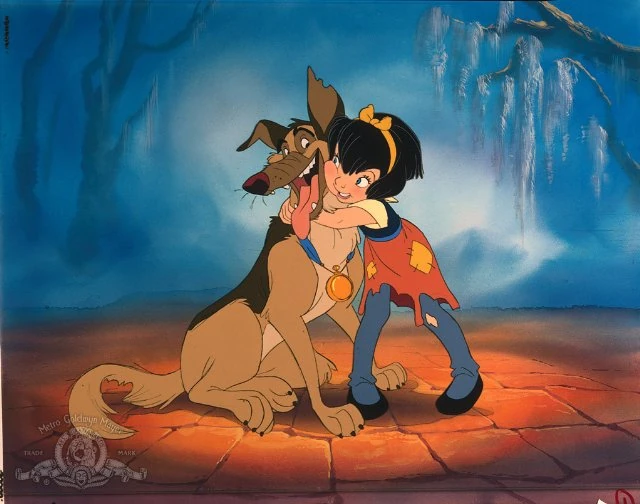
ALL DOGS GO TO HEAVEN: Despite its title, the gritty adventures of this film’s canine protagonist are anything but heavenly. The story begins with loveable con-man (or in this case dog) Charlie (Burt Reynolds) escaping from death-row at the pound with the help of his loyal but hapless best friend, Itchy (Dom Deluise). Upon tunneling their way to freedom the pair celebrate with their friends by drinking and carousing at the local rat-track, where Charlie is reunited with his former business partner, Carface. It seems like old times until Carface calls out a mob hit on Charlie in order to avoid having to share their joint profits. In a scheme straight out of The Godfather, Carface holds a party in Charlie’s honor, where he makes sure that Charlie becomes thoroughly inebriated, and lures Charlie out onto a fishing pier where two of his henchmen are waiting. In a shockingly graphic scene the film then unflinchingly shows how Carface’s thugs push a car over the pier and run a completely unsuspecting Charlie down. When Charlie awakens, he is mortified to find that he has literally died and gone to Heaven. Rather than appreciate his good fortune at avoiding Hell after a life of crime, he immediately hatches a plot to escape Heaven and return to Earth, even though the angels warn him that once he leaves Heaven he can never return. As soon as he rejoins the living, he sets about exacting his revenge on Carface by exploiting Anne Marie, a lonely orphan who possesses the ability to talk to animals, to fix horse and rat races in an effort to ruin Carface’s gambling enterprise. Eventually, Charlie does see the error of his ways, but only after such less than kid-friendly adventures as pick-pocketing, opening a casino (complete with what is implied to be a topless dog review), dodging Carface’s raygun, and escaping cannibalistic sewer rats, all while consistently manipulating Little Orphan Annie-esque Anne Marie (Judith Barsi). And then there’s always Charlie’s doggy-Hell nightmare sequence which still haunts this reviewer twenty years on. While the film can be viewed as an apt tribute to classic gangster films of the 1930’s with charmingly scrappy crook, Charlie (Burt Reynolds) standing in for James Cagney (whom Charlie even quotes at one point) and his ruthless bulldog partner acting as an animated equivalent of Edward G Robinson (cigar chomping and all), the question remains; what is the purpose of making a gangster film for children? It could be argued that, much like its classic counterparts, the film attempts to teach viewers that crime does not pay through Charlie’s punishment and eventual redemption. This lesson is undermined, however, by the film’s noirish sensibility which portrays Charlie’s criminal lifestyle as a misguided attempt to find the American Dream amidst the desperation of the Great Depression. Regardless of how and why this film made it past the storyboard phase, one thing remains certain; director Don Bluth took the children’s entertainment to a dark and complex place that it has rarely gone before or since. For a journey into the back alleys of family filmmaking look no further than All Dogs Go To Heaven.

Clearly the work of a troubled mind
RETURN TO OZ: Easily the most disturbing entry on this list, 1985’s Return to Oz takes everything that we loved and thought we knew about the land of Oz and twists it into a Tim Burton worthy nightmare. The film picks up where the 1939 classic left off with Dorothy recovering from tornado induced head trauma as her aunt and uncle struggle to rebuild their devastated farm. When Dorothy continues to talk to her family about her adventuress in Oz the Gayle’s start to suspect that their niece isn’t just a lonely child with an active imagination. Aunt Em decides that Dorothy’s imaginings are the result of a mental disturbance brought on by her recent head trauma and packs the unsuspecting girl up for a trip to the local insane asylum. In keeping with the film’s 1800’s setting the local psychiatrist determines that ‘new electric healing’ a/k/a electroshock treatment is the best medicine. The film then descends into a phantasm of Kubrick-esque horror with a nurse reminiscent of Nurse Ratched, deranged patients, terrifying orderlies and some of the most barbaric medical equipment this side of the Middle Ages. Her only hope seems to be another young girl who is also being held as a patient against her will. Before young viewers can breathe a sigh of relief, however, the film shatters this one glimmer of hope by implying that the girl is a manifestation of Dorothy’s disassociated personality. Fortunately, with the mysterious girl’s help Dorothy does escape to the supposed safety of Oz only to find that it has become a deserted wasteland. Making matters worse, the film employs the same literary device as the 1939 film by having the characters in Oz mirrors those that she encounters in her waking life…which in this instance leaves Oz populated with a mind stealing headless witch (the nurse), gangs of her wheeled henchmen (the orderlies), and a rock giant known as the Nome King (the psychiatrist). After such terrifying adventures as exploring the witch’s head gallery and a deadly guessing game with the Nome King, Dorothy finally restores freedom to Oz and returns to Kansas. Upon returning home, she learns that the asylum caught fire after being struck by lightning in a rain storm and that the psychiatrist was killed in the fire while the nurse has since been arrested. At the film’s close she resumes her former life with one exception; she has now learned to keep Oz and all of her imaginings safely to herself. Part horror tale, and part examination of the disturbing early days of psychiatric treatment Return to Oz is a far cry from either Kansas or that land over the rainbow that we thought we knew.

Don't be fooled by the sunshine and flowers...
THE LAST UNICORN: Adapted from a fantasy novel written for adults, The Last Unicorn was never meant for young audiences, a fact that becomes painfully obvious as the 1982 animated film progresses. The film begins with a nameless unicorn setting out on a quest to discover others of her kind after she overhears a group of hunters discussing how unicorns have disappeared from the world. Shortly after leaving the safety of her forest, she is captured by a traveling carnival run by a witch called Mommy Fortuna, her hunchback assistant, Ruhk, and incompetent aspiring magician Schmendrick. The carnival is populated by animals that Fortuna disguises to look like magical creatures which she presents in a sideshow to unsuspecting villagers as the real thing. The two exceptions in the carnival are the unicorn and the harpy Celaeno; a half woman half bird creature with three ample breasts which the film makes a point to consistently expose. With the help of Schmendrick, the unicorn escapes the carnival, but in doing so accidentally frees the harpy, leading to a particularly brutal scene in which the harpy devours a resigned Fortuna. The duo then continue on their quest and encounter Molly Grue, the common-law wife of a local outlaw who is seriously regretting her life choices. After Molly rants at the unicorn, who she for some reason seems to blame for her lackluster existence, she insists upon joining the unicorn and Schmendrick on their journey. Before their travels can continue, however, Schmendrick’s magic goes awry and accidentally brings a tree to life….prompting the tree for no explained reason to grow human breasts and set about attempting to seduce Schmendrick. Fortunately, he is able to resist the tree’s bizarre charms and the quest resumes with the trio arriving at the castle of King Haggard, who is using the mysterious monster known as the Red Bull to imprison the world’s unicorns who he claims provide him with his only joy. Before they can enter the castle, however, they are ambushed by the Red Bull, an utterly terrifying creature who with hits white hot eyes, flamed hooves, and sharp fangs is a creature straight out of Hell itself. In order to rescue the unicorn from the Red Bull’s detection, Schmendrick is forced to transform her into a sultry…and completely naked, young woman, and pretend that she is his orphan niece. Eventually, the do reach the castle and Schmendrick is offered the position of court magician for the morbidly depressed Haggard while Molly assumes work as castle cook. Meanwhile, the king’s adopted son, Lir, sets about pursuing the unicorn, now called Lady Amalthea, through such romantic gestures as slaying a dragon and presenting her with its severed head. Over time the pair kindle a romance as the unicorn begins to lose memory of her former life and her mission. The film finally reaches a climax that is equal parts nonsensical and traumatizing. This final act includes such less than child friendly episodes as tempting an alcoholic skeleton with wine and  Lir’s brutal death after being stampeded by the Red Bull before the reappearance of the unicorns (who apparently could have fought off the Red Bull themselves all along by…just angrily pointing their horns at it?). Lir is fortunately revived by the unicorn in the final scene and reluctantly lets the unicorn go to resume her former life, though both are plagued by regret at what might have been. Sexually charged, brutally violent, and morally ambiguous, The Last Unicorn makes for an excellent entry into cinema’s fantasy cannon, so long as it is aimed at the adult audience it was originally written for.

Sunday, January 15, 2017

Classics: A Review of Nine To Five By Lauren Ennis

From the time that we enter school we are encouraged to pursue our dreams and instilled with the belief that if we with hard work we will grow up to do what we love. Unfortunately, for all too many of us, life in the working world is not the vision of opportunity that we imagined and is instead a matter of putting in our time and taking home a paycheck. While it is disheartening to work in a job that we find mundane or lacking in opportunity these very real drawbacks can be countered by a healthy working environment. In too many workplaces, however, the working environment is one plagued by office politics that can make an eight hour day feel like eighteen hours or more. For readers who know all too well just how toxic a work environment can become, however, there is a film that can provide just the escapism, empowerment, and inspiration that you need; the 1980 black comedy Nine To Five.
These secretaries are total bosses

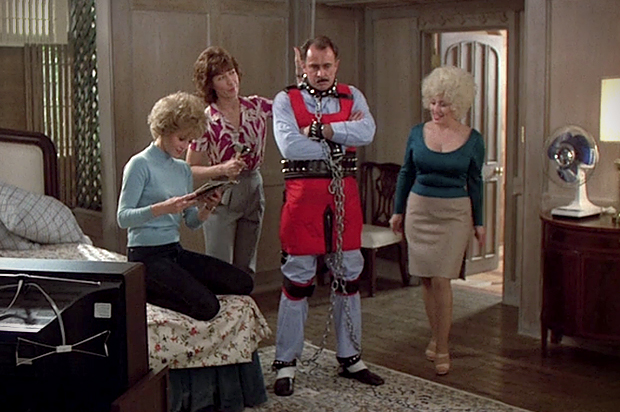
The story begins with timid secretary Judy (Jane Fonda) beginning a new job at Consolidated Companies. Almost as soon as she begins training Judy is exposed to the corruption and incompetence that dominate the office as she witnesses the ways in which her co-workers’are gossiped about and harassed on a regular basis. Eventually, she finds allies in no-nonsense office manager Violet (Lily Tomlin) and misunderstood secretary Doralee (Dolly Parton), who have both reached their breaking points. After their boss, Frank Hart (Dabney Coleman) discriminates against Violet, sexually harrasses Doralee, and fires one of Judy’s friends all in the same day, the trio meet at the local watering hole to vent their frustrations. While they form a true friendship over drinks and mutual grievances, the next morning the women return to work as miserable as ever...until they realize that Violet has accidentally flavored Mr. Hart's coffee with rat poisoning.  After a series of misunderstandings, mishaps, and madcaps hijinks they manage to take Mr. Hart captive and institute a series of progressive reforms that increase both productivity and office morale. Just as the office begins to become a truly healthy working environment however, the trio finds their plan in danger of becoming exposed.

Despite the film’s constant laughs, its subject matter was and remains a serious indictment of the modern working world. Throughout the film talent, ambition, and dedication are liabilities at the fictional Consolidated Companies while incompetence, underhandedness, and sycophancy are rewarded as company assets. Similarly, employees of real companies in every industry continue to face adversity despite their best efforts, while colleagues who may not work as hard or possess as much ingenuity are able to advance due to their ability to maneuver office politics. Although sexual harassment and office bullying are areas in which ample progress has been made, they continue to remain issues that arise all too often in the workplace, even thirty-six years after the film’s release. Similarly, while offices have begun to institute the reforms championed in the film, all too many workers are routinely forced to endure demoralizing conditions and toxic work environments. Despite the film’s comedic tone it remains a rallying cry for a workplace that is worth more than a paycheck.
Now about that promotion...

The film’s talented cast ensures that the story strikes just the right balance between zany laughs and scathing social commentary. Jane Fonda is nearly unrecognizable as the naïve and meek Judy, and expertly portrays her character’s evolution to empowered employee. Lily Tomlin is a force of nature in her role as blunt and world weary Violet and captures the toll that years of pent-up frustration have taken upon her character. Dolly Parton is an endearing combination of effervescent charm and streetwise grit in her role as unfairly maligned office bombshell Doralee, and lends her talent to the film’s hit title song. Dabney Coleman is a villain viewers will love to hate as “sexist, lying, hypocritical, bigot” Frank Hart in a turn that is equal parts dark and comic.

While numerous changes have been made to the modern workplace since its 1980 release, Nine to Five remains an apt examination of working life at its worst. Through its biting script and expert comedic performances, the film reminds us of the advances that have been made in the workforce and sheds much needed light on the many ways in which the modern workplace continues to remain sorely lacking. With a combination of brilliant comedic performances, biting barbs, and scathing social commentary Nine to Five has earned its place in film history as well as within the hearts of many a working man and woman.
Who's harrassing who?!

Monday, January 2, 2017

Classics: A Review of Julie and Julia By Lauren Ennis

The start of a new year is a time for reflection and reinvention as we examine the events of the past 365 days and look forward to all that is to come in the year ahead. It is at this time that many of us pursue new goals and resolutions in hopes of fulfilling the potential of a fresh new year. The 2009 film Julie and Julia explores the ways in which two very different women use resolutions great and small of their own to ring in a year of reinvention.
Nothing short of scrumptious

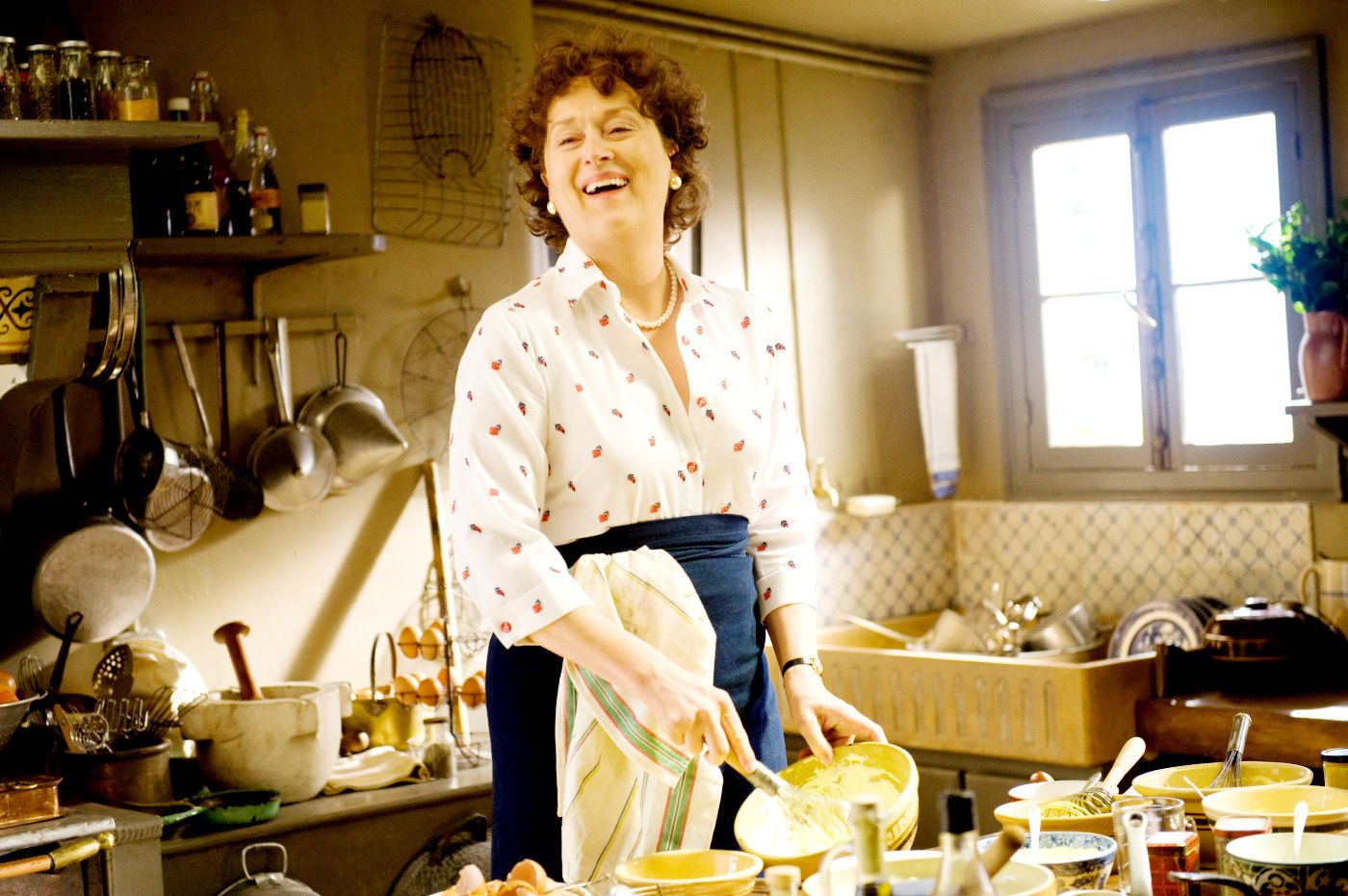
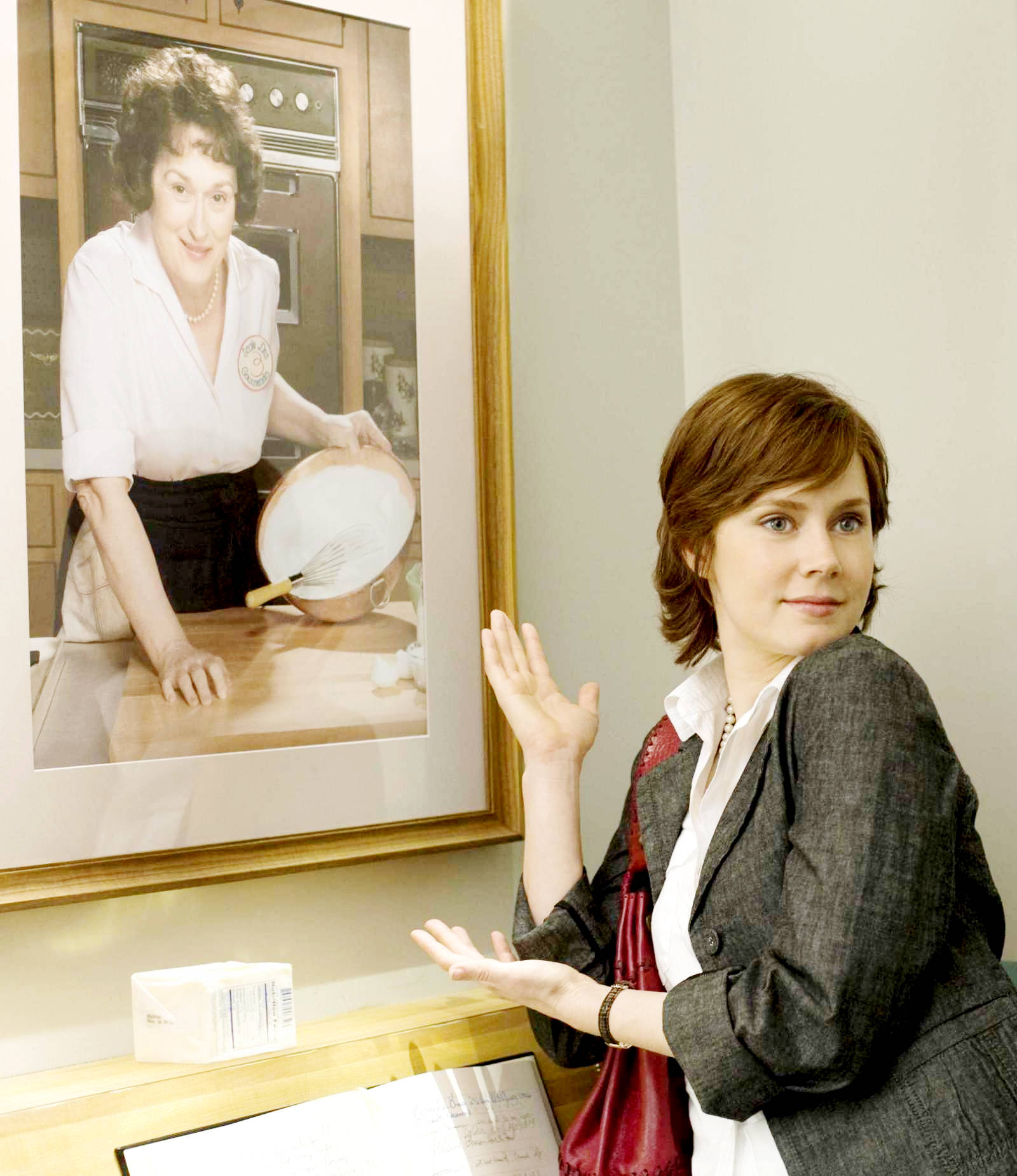
The story begins in 2002 Queens with Julie Powell reevaluating her life after reading about the recent literary success of her former classmate. Determined to reignite the passion that is lacking in her life, she starts a blog inspired by Julia Child’s classic cookbook Mastering the Art of French Cooking. With the encouragement of her husband she embarks upon the daunting task of completing all 524 recipes in just 365 days, marking the beginning of a truly delicious journey of self-discovery. Meanwhile, in 1950’s Paris Julia Child searches for something to occupy her after the end of World War II effectively ended her career in the CIA’s predecessor OSS. After trying various hobbies without success she finally settles upon learning how to cook the French cuisine she possesses a passion for. After learning to master the art of French cooking herself, she is inspired to spread her knowledge and passion to other Americans and begins the project that will become her classic bestselling cookbook.
An example we could all aspire to

Through its infectious optimism and pioneering spirit Julie and Julia is an ideal film to begin a new year or any new pursuit with. Throughout the film both women meet success and failure with equal aplomb, lending viewers apt lessons in how to face our own triumphs and travails with grace. That is not to say, however, that the film portrays either Julie or Julia as unobtainable or perfect, as both women face their fair share of setbacks and make plenty of mistakes along the way, reminding us that failure is a crucial stop on the road to success as long as we are able to learn from it. As a result, the film remains both inspiring and relevant to audiences as it reminds us of the importance of maintaining passion and purpose in our lives despite whatever risks or difficulties that may entail.

The deceptively simple tale of two women finding success while trying to find themselves would not have lit up the screen as it does without its talented and charming cast. Stanley Tucci brings an amiable mix of understated strength, nurturing, and humor to his role as Julia’s devoted husband, Paul, providing viewers with apt insight into the couple’s marriage. Similarly Chris Messina imbues his role as Julie’s supportive husband, Eric, with wry humor, and charm while still maintaining a modern grit which reveals the ways in which the dynamics of modern marriage have changed. Amy Adams is nothing short of loveable in her role as Julie, whom she portrays with such spunk and enthusiasm that viewers can’t help rooting for her through every one of her mishaps both of the culinary and domestic varieties. Meryl Streep is overflowing with effervescent charm in her by turns comic and dramatic performance as cooking pioneer Julia Child, leaving viewers with little wonder as to how the larger than life chef won over the American public.

Biography, journey of self-discovery, and inspirational tale all these things and more can be found in Julie and Julia. Through its truly uplifting true-life stories the film offers an optimistic tale of what can be accomplished with hard work, passion, and loving support. With a winning cast, witty script, and delightful premise the film will, like the best dishes, leave you hungry for more. For inspiration and reinvention at any time of the year Julie and Julia is the perfect ingredient.
Nothing as sweet as a girl and her idol

Thursday, December 22, 2016

Das Film Junkie's Favorite Films of 2016

Confessions of a Film Junkie: Das Film Junkies Favorite Films of 2016

A Video Review by Brian Cotnoir

Hey All, since I decided to not do my annual SPLATTER! Awards This year, I wanted to do a Year End Special Review where I talk about all the films that I liked this year.  Have a Great Holiday and Happy New Year Everyone

Love,

Das Film Junkie


Sunday, December 18, 2016

Classics: A Review of The Bishop's Wife By Lauren Ennis

The holidays are a time associated with fun, laughter, and plenty of seasonal stress. Between increasingly complicated decorations, parties to plan and attend, and of course the shopping rush, many of us are left wishing the season would end almost as soon as it’s begun. In the midst of our efforts to make the season just right, we all too often forget just what it is that we’re celebrating and even the people we’re celebrating with. The 1948 classic The Bishop’s Wife explores what happens when a bishop forgets that his church is more than just a building and that Christmas is more than a day for opening the presents under the tree.
There's always one humbug in every family

The story begins with title bishop Henry Brougham (David Niven) collecting funds to build a new cathedral for his parish. In the midst of his pursuit of the funds, however, he has lost sight of what his parish really needs and finds himself in need of spiritual guidance. Desperate to raise the funds in time to build the cathedral, he prays for guidance and is stunned when his prayers are answered with the arrival of angel Dudley (Carey Grant). Rather than a robed heavenly being, however, Dudley, much to Henry’s disapproval, is a suave and sophisticated man who charms everyone he comes in contact with, particularly Henry’s neglected wife, Julia (Loretta Young). During his stay on earth Dudley sets about inspiring those around him to improve their lives, with a special focus upon donating to every worthy charity except Henry’s cathedral project. Complication ensue, however, when Dudley becomes conflicted between his divine mission and the all too human feelings he develops for Julia. By the film’s finish both men learn valuable lessons in the power of giving and the true meaning of Christmas.

Despite its heavenly hero, The Bishop’s Wife’s status as a classic is owed to its entirely human themes. While the characters are all presented as essentially decent people, the film portrays each of them as having flaws and weaknesses that they need to improve upon. In this way, the film ensures that viewers relate to the characters and their struggles, which are entirely reminiscent of our efforts to overcome our own shortcomings. Similarly, the film’s central conflicts between work and family and love and duty remain timeless as they continue to resonate with people from diverse walks of life today. Perhaps the film’s greatest strength is its ability to remind us that it truly is the small details that can make the greatest difference in our lives. Dudley’s actions don’t change the course of history, but through such simple efforts as encouraging a struggling writer to finish his book, renewing interest in the choir of a struggling church, and reminding a lonely woman that she is a person of worth and value, he alters the lives of those around him for the better. It is this refreshing emphasis upon the seemingly mundane moments in life that sheds light upon the ways both great and small that we can make a difference in our own lives as well as those of the people around us. With such a timeless tale to tell its hardly surprising that the film was successfully remade as the 1996 Whitney Houston and Denzel Washington hit The Preacher's Wife.
Denzel's got nothing on you, Cary

The delightful cast brings the story to life with a charm and good cheer that are nothing short of infectious. The supporting performances add color and authenticity to the film’s portrayal of small town life with Monty Woolley and Elsa Lancaster earning particular note in their comic roles as a bombastic professor and a flirtatious housekeeper. David Niven successfully makes his stodgy bishop an endearing character who wins audiences over as the compassion that lies just beneath his strict exterior is revealed. Loretta Young is luminous in her role as Henry’s devoted wife, and makes Julia a truly vibrant woman who deserves far better than the secondary role that her husband relegates her to. Despite the uniformly strong ensemble performances, however, the film belongs entirely to Grant, who imbues Dudley with such an effervescent charm and natural optimism that he seems to embody the Christmas spirit at its most warm and welcoming.

Through its witty script, lively performances, and effortless charm The Bishop’s Wife pulls double duty as one of the finest in both romantic comedy and holiday films.  Through its lessons in life, love, and the little things in life, the film is truly one with something for the whole family that will hold new charms for every age and generation. For a Christmas film that will resonate throughout the year join Dudley and The Bishop’s Wife.
The sort of angel any girl would be happy to find by her tree