Sunday, August 28, 2016

Classics: A Review of The King and I By Lauren Ennis

The weather is growing cooler and the nights are growing shorter; that can mean only one thing; autumn is on its way and summer vacation is reaching its inevitable end. In keeping with the season, this week’s review will focus upon a tale of teachers and students that reminds us that we all could learn a lesson or two no matter who we are or how old we grow. Combining the elements of the biography and musical genres, 1956’s The King and I is a sumptuous feast for the senses that is also a study of cultural and gender clashes. Featuring powerhouse performances from Yul Brynner and Deborah Kerr, and an iconic Rogers and Hammerstein score The King and I is an example of the movie musical at its most entertaining, which continues to teach and inspire audiences sixty years after its release.
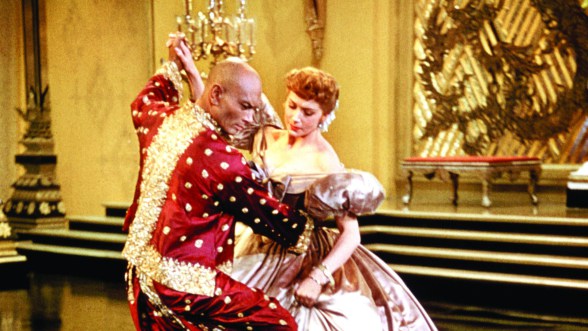
Pure movie magic

The story begins in 1860’s Bangkok as English widow Anna Leonowens (Kerr) arrives to assume her new position teaching English to the many children of King Mongkut (Brynner). Although she experiences culture shock upon entering Siam, willful Anna refuses to adhere to the local cultural norms, which demand subservience from women. She even goes so far as to argue with the king when he breaks the terms of her contract and refuses to provide her with a residence adjoining the palace for her and her young son (Rex Thompson). Despite her initial difficulties, however, Anna becomes devoted to her work and teaches both the royal children and harem lessons that extend far beyond the facts and figures of the classroom. Although the two continue to question the mores and values of each other’s cultures Anna and the King form a begrudging respect for one another as she comes to admire his progressive ambitions and he learns to appreciate her independence and intelligence. As time goes on, Anna even takes on the role of advisor to the King as he consults her in his efforts to modernize his nation. The delicate balance between teacher and ruler is put to the ultimate test, however, when the pair is faced with conflicts both foreign and domestic that bring their fundamental differences to the fore.

What makes The King and I stand out amongst other classic musicals is its approach to its subject matter, which seemed to defy every standard set for the genre. While many musicals of the era utilized plot merely as an excuse to showcase elaborate song and dance numbers, the music in The King and I serves as a means of enhancing the story, which remains the film’s central focus. Similarly the characters are all written with depth and sympathy in a way that avoids the black and white characterizations that were so prevalent in early musicals. Furthermore, the film avoids genre clichés by focusing upon the complicated friendship between Anna and the King, rather than forcing the pair into a forced, conventional Hollywood romance and finishes on a hopeful, but still far from happy, ending.

Perhaps the film’s greatest strength, however, is its emphasis upon education as a means of both personal and societal growth. Throughout the film, the King declares his intention that Siam become a modern nation and wisely recognizes that education is the best means of achieving this goal. The film takes this notion a step further by showing that in spite of their many cultural differences, the one thing that truly sets modern and independent Anna apart from her tradition-bound charges is her education, which has provided her with the knowledge and skills to build a life for herself as a single mother in a distant land. Similarly the King’s tireless efforts to further educate himself remind us that learning is a lifelong necessity and the crucial starting point in changing the world around us. While the film does not feature the genre staples of inner city youth, test scores, or administrative interference, The King and I is a testament to the enduring value of education in all its forms.
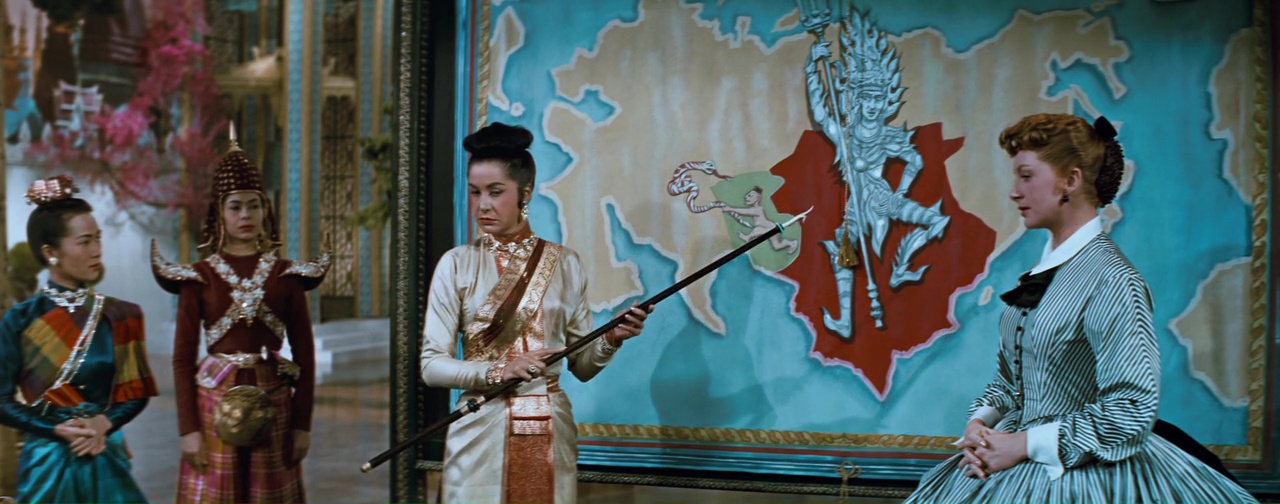
This map illustrates our need for updated school supplies

The film’s star studded cast ensured a successful transition from stage to screen by breathing fresh life into the well-known tale. Rita Moreno brings a haunted quality to her unwilling concubine in her portrayal of Tuptim’s isolation as a foreign consort in the King’s harem. Similarly Carlos Rivas infuses Lun Tha with depth as he highlights the dignitary’s conflict between his love for Tuptim and his duty to his country. Terry Saunders lends warmth and intelligence to her role as the King’s head wife, Lady Thiang and Martin Benson is appropriately formidable as the King’s traditionally-minded right hand man, Kralahome. Deborah Kerr’s Anna is a woman who is truly ahead of her time as she infuses Anna with an endearing combination of warmth, dignity, charm, and ferocity that leave little wonder as to how she is able to win over the King, his children, and his harem while still remaining true to herself. Yul Brynner is in short made for his role as King Mongkut as he brings the role he originated on Broadway to life in all of its nuance and complexity. Even as he continually expresses views and makes decisions that are in direct contrast with today’s mores and social advancements, Brynner’s charisma, ironic humor, and commanding presence ensure that his King remains a character audiences can’t help but root for.


Through its combination of signature songs, captivating performances and thought provoking story, The King and I is a prime example of the magic of the movie musical. Through its dazzling costumes and sets the film successfully transports viewers to 1860’s Bangkok, while its layered performances and well written script ensure that there is plenty for modern audiences to ponder and relate to. With a score including such Broadway standards as “Getting to Know You”, “Hello Young Lovers”, and “Shall We Dance” the film will be sure to have you tapping your toes before the final credits role. Through its musical journey into the importance of education The King and I is a film that belongs on every teacher and student’s back to school list. 
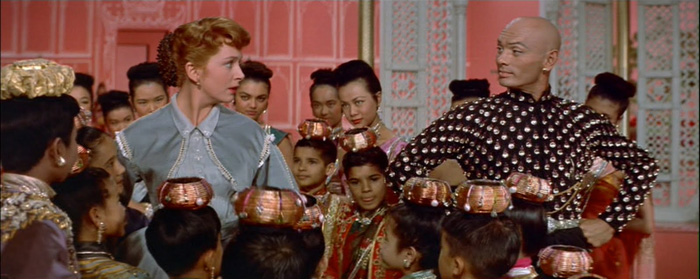
106 children...and you thought modern classes were too big!

Classics: A Review of The King and I By Lauren Ennis

The weather is growing cooler and the nights are growing shorter; that can mean only one thing; autumn is on its way and summer vacation is reaching its inevitable end. In keeping with the season, this week’s review will focus upon a tale of teachers and students that reminds us that we all could learn a lesson or two no matter who we are or how old we grow. Combining the elements of the biography and musical genres, 1956’s The King and I is a sumptuous feast for the senses that is also a study of cultural and gender clashes. Featuring powerhouse performances from Yul Brynner and Deborah Kerr, and an iconic Rogers and Hammerstein score The King and I is an example of the movie musical at its most entertaining, which continues to teach and inspire audiences sixty years after its release.
Pure movie magic

The story begins in 1860’s Bangkok as English widow Anna Leonowens (Kerr) arrives to assume her new position teaching English to the many children of King Mongkut (Brynner). Although she experiences culture shock upon entering Siam, willful Anna refuses to adhere to the local cultural norms, which demand subservience from women. She even goes so far as to argue with the king when he breaks the terms of her contract and refuses to provide her with a residence adjoining the palace for her and her young son (Rex Thompson). Despite her initial difficulties, however, Anna becomes devoted to her work and teaches both the royal children and harem lessons that extend far beyond the facts and figures of the classroom. Although the two continue to question the mores and values of each other’s cultures Anna and the King form a begrudging respect for one another as she comes to admire his progressive ambitions and he learns to appreciate her independence and intelligence. As time goes on, Anna even takes on the role of advisor to the King as he consults her in his efforts to modernize his nation. The delicate balance between teacher and ruler is put to the ultimate test, however, when the pair is faced with conflicts both foreign and domestic that bring their fundamental differences to the fore.

What makes The King and I stand out amongst other classic musicals is its approach to its subject matter, which seemed to defy every standard set for the genre. While many musicals of the era utilized plot merely as an excuse to showcase elaborate song and dance numbers, the music in The King and I serves as a means of enhancing the story, which remains the film’s central focus. Similarly the characters are all written with depth and sympathy in a way that avoids the black and white characterizations that were so prevalent in early musicals. Furthermore, the film avoids genre clichés by focusing upon the complicated friendship between Anna and the King, rather than forcing the pair into a forced, conventional Hollywood romance and finishes on a hopeful, but still far from happy, ending.

Perhaps the film’s greatest strength, however, is its emphasis upon education as a means of both personal and societal growth. Throughout the film, the King declares his intention that Siam become a modern nation and wisely recognizes that education is the best means of achieving this goal. The film takes this notion a step further by showing that in spite of their many cultural differences, the one thing that truly sets modern and independent Anna apart from her tradition-bound charges is her education, which has provided her with the knowledge and skills to build a life for herself as a single mother in a distant land. Similarly the King’s tireless efforts to further educate himself remind us that learning is a lifelong necessity and the crucial starting point in changing the world around us. While the film does not feature the genre staples of inner city youth, test scores, or administrative interference, The King and I is a testament to the enduring value of education in all its forms.
This map illustrates our need for updated school supplies

The film’s star studded cast ensured a successful transition from stage to screen by breathing fresh life into the well-known tale. Rita Moreno brings a haunted quality to her unwilling concubine in her portrayal of Tuptim’s isolation as a foreign consort in the King’s harem. Similarly Carlos Rivas infuses Lun Tha with depth as he highlights the dignitary’s conflict between his love for Tuptim and his duty to his country. Terry Saunders lends warmth and intelligence to her role as the King’s head wife, Lady Thiang and Martin Benson is appropriately formidable as the King’s traditionally-minded right hand man, Kralahome. Deborah Kerr’s Anna is a woman who is truly ahead of her time as she infuses Anna with an endearing combination of warmth, dignity, charm, and ferocity that leave little wonder as to how she is able to win over the King, his children, and his harem while still remaining true to herself. Yul Brynner is in short made for his role as King Mongkut as he brings the role he originated on Broadway to life in all of its nuance and complexity. Even as he continually expresses views and makes decisions that are in direct contrast with today’s mores and social advancements, Brynner’s charisma, ironic humor, and commanding presence ensure that his King remains a character audiences can’t help but root for.


Through its combination of signature songs, captivating performances and thought provoking story, The King and I is a prime example of the magic of the movie musical. Through its dazzling costumes and sets the film successfully transports viewers to 1860’s Bangkok, while its layered performances and well written script ensure that there is plenty for modern audiences to ponder and relate to. With a score including such Broadway standards as “Getting to Know You”, “Hello Young Lovers”, and “Shall We Dance” the film will be sure to have you tapping your toes before the final credits role. Through its musical journey into the importance of education The King and I is a film that belongs on every teacher and student’s back to school list. 
106 children...and you thought modern classes were too big!

Sunday, August 14, 2016

Classics: A Review of Mr. Selfridge By Lauren Ennis

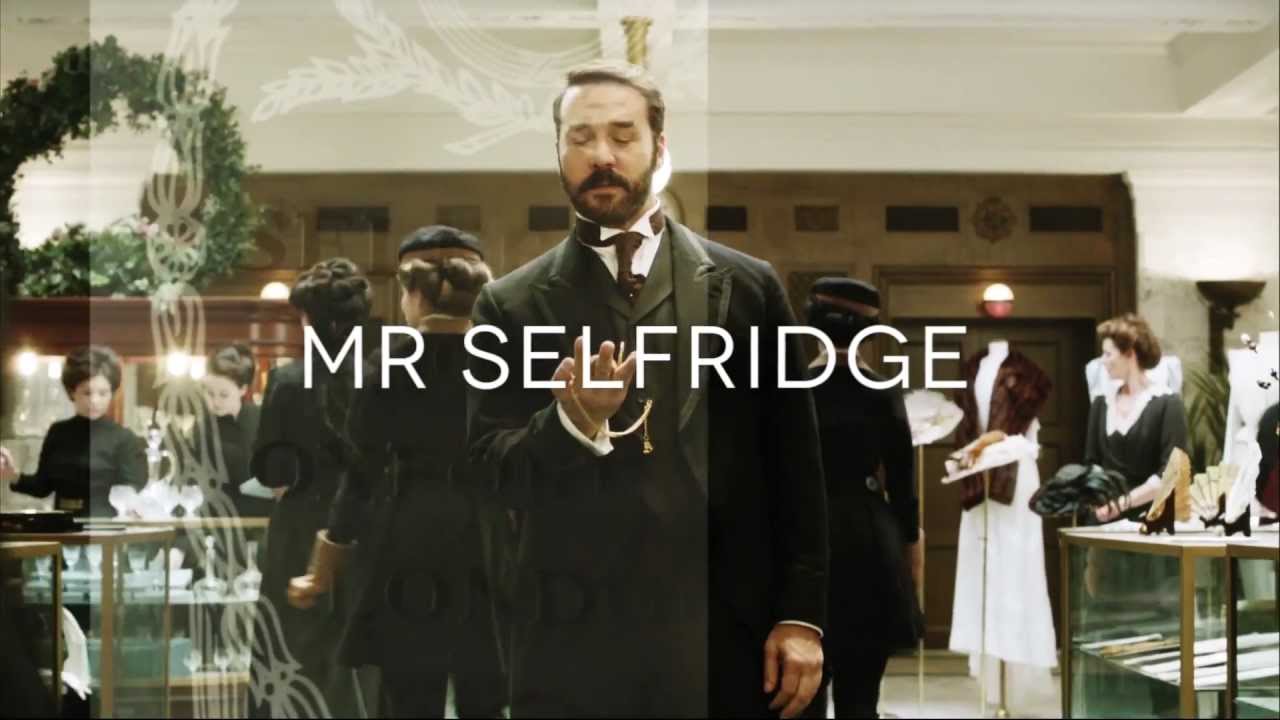
Some stories are tailor-made for film with a clear story arc that can neatly can be contained within just a few hours of cinema. Some stories, however, are so complex and epic in scale that they require entire seasons to contain all of the drama, suspense, and passion that they entail. Such is the case with the biography of larger than life turn of the century entrepreneur Harry Gordon Selfridge, the man who started a retail revolution when he founded the London department store Selfridge’s. Beginning in 1909 and ending in 1929, the ITV series Mr. Selfridge chronicles the personal struggles and social changes that swept through Selfridge’s doors as the Edwardian era gave way to the upheaval of World War I and eventually the fast living modernism of the 1920’s. Part biography, part historical drama, Mr Selfridge is as enticing as an upscale window display and as addictive as shopping itself.
One day at work you won't want to be late for

The Story: The story begins in 1909 as Harry Selfridge (Jeremy Piven) arrives in London driven by a singular ambition; to open the world’s greatest department store. He soon encounters resistance, however, when his prospective partner withdraws funding and London society rejects his project as an affront to the status quo. Eventually, however, he enlists the aid of savvy reporter Frank Edwards (Samuel West) and shrewd socialite Lady Mae (Katherine Kelly) to land the new backer and public interest needed to take Selfridge’s from an innovative idea to a glittering reality. Through the dogged persistence of Harry and his talented staff, the store opens to a successful debut that marks the beginning of his reign as the ‘Earl of Oxford Street’. As season one continues, he continues to build upon the store’s success, even as his personal life becomes a casualty to his taste for life in the fast lane, and his staff face a host of personal crises of their own. Season two begins on an uncertain note five years later as Harry struggles to rebuild his family while he and his staff brace for the arrival of World War I. Season three picks up at the end of the war and chronicles the myriad of ways in which the aftermath of war continues to impact the store in the wake of trauma and loss. Season four brings the story full circle as Harry struggles to hold onto his crumbling empire as personal loss drives him to revert to his old, self-destructive, habits. From political upheaval and sweeping social change to personal triumphs and tragedies the series relates a historical tale that still manages to be cutting edge in true Selfridge’s fashion.
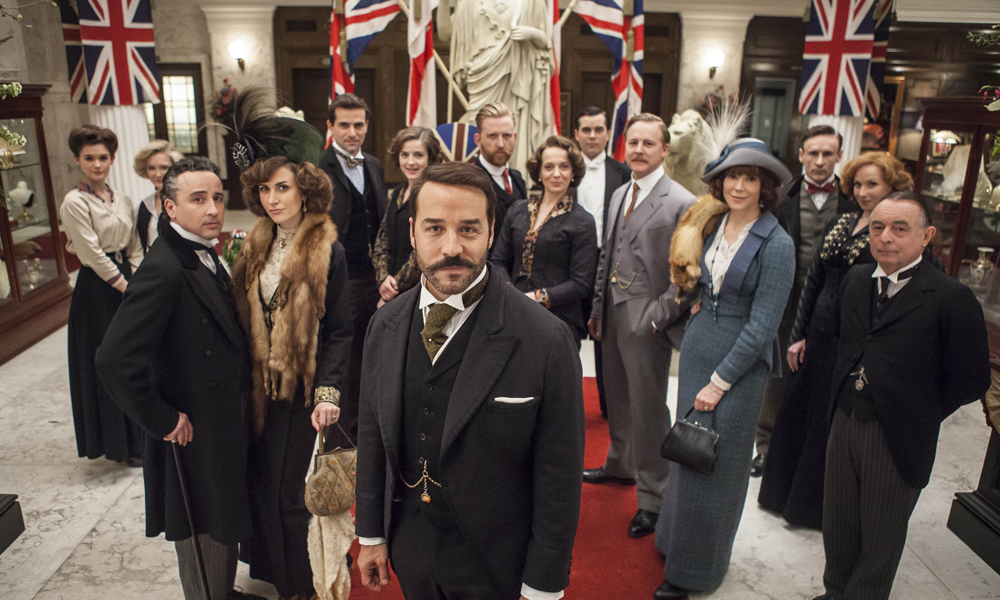
You can't keep a good cast down

The Characters: Although the plot contains plenty of twists and turns, the thing that kept this reviewer consistently coming back for more was the rich characterizations of each member of the Selfridge family and the store’s staff. Jeremy Piven superbly brings the larger than life Harry Selfridge to life with all of his complexities and demons fully intact. Through Piven’s performance, Harry is revealed to be a man who is always on the lookout for the next big thing in both his professional and personal life, as he continually gambles on new store innovations as well as with his family life. Even as he indulges in such vices as gambling, drinking, and extramarital dalliances, however, he remains a character audiences will root for as he grows and learns from his many mistakes and displays a consistent generosity, kindness, and understanding. Although the series is set in the male dominated world of early twentieth century commerce, one of Mr. Selfridge’s greatest assets is its array of independent and strong-minded female characters. At the start of the series, Harry’s wife, Rose (Frances O’Connor), seems to embody the ideals of her era as she tirelessly supports her husband and devotes herself to their children. As season one continues, however, she becomes discontented with her relegated role in the background and steadily gains her own voice as she becomes determined to take control of her marriage and live life on her own terms. Similarly, shop-girl Agnes Towler (Aisling Loftus) begins the series as a meek, put-upon, heroine worthy of Dickens, but eventually develops a quiet strength and confidence that take her to the coveted role of head of the store’s art department. Agnes’ first boss, outwardly formidable but inwardly insecure head of accessories Josie Mardel (Amanda Abbington), also evolves in fascinating but believable ways as she develops a sense of self-worth beyond her career and allows herself to live her tumultuous life to the fullest. Even mean-girl Kitty (Amy Beth Hayes) develops as the series continues until she ends season four as a still strong-willed, but more mature and compassionate woman. While the ever sassy Lady Mae is already a force to be reckoned with in the show’s pilot episode, insights into her difficult personal life reveal her to be a far more complex and multifaceted character than her early one-liner’s would suggest, and make her one of the series’ most watchable characters. The show’s excellent writing isn’t restricted to its female characters, however, as its male cast continue to evolve right along with their female counterparts. Agnes’ love interest, waiter Victor Colleano (Trystan Gravelle), begins the series as an ambitious and charming young man, but hardens as his eyes are opened by a series of heartbreaks and the traumas of World War I. Similarly, Harry’s best friend and head of display, dashing Henri Leclair (Gregory Fitoussi), is humbled after his attempt to start over in New York fails and is eventually forced to redefine himself after returning from World War I with PTSD. Even Agnes’ childishly naïve younger brother, George (Calum Callaghan), develops his own inner strength and remains true to his moral code as he works both in and out of the store and becomes a family man. Perhaps the male character who undergoes the most drastic change is the stodgy chief of staff Roger Grove (Tom Goodman-Hill), as he finally begins to see life beyond black and white and recognize his own failings as he learns to forgive the faults of others.


The Relevance: British television is full of period pieces, but Mr. Selfridge stands out amongst these popular and critically acclaimed programs through its ability to be startlingly relevant even as it remains true to history. From the struggle between work and family, to addiction, to domestic violence, to racial and gender tensions, Mr. Selfridge regularly explores social issues that hold just as much relevance today as when Selfridge’s first opened. Through a combination of razor sharp writing, rich performances, dazzling sets, and vibrant costuming, Mr. Selfridge ensure's that 20th century London is every bit as entertaining as a Selfridge’s promotion. At once innovative and classically timeless, Mr. Selfridge is an apt tribute to its namesake character and the store he founded.
Far more than just pretty faces

Tuesday, August 2, 2016

Classics: A Review of Meet Joe Black By Lauren Ennis

The late 1990’s and early 2000’s saw the rise of a unique cinematic trend as Hollywood turned to both the scientific and spiritual. With conspiracy theories surrounding the impending start of a new millennium and new technology all around society began to look both inward and upward as it considered the future that awaited. It was this thirst for all things both futuristic and mystic that led to the release of such films as Vanilla Sky, The Matrix, and What Dreams May Come, among many others. One film that particularly stands out in this niche genre is the 1998 fantasy drama Meet Joe Black, which through its mediations upon life and death, maintains a timelessness that continues to resonate long after Y2K has been reduced to a mere footnote in pop culture.
Leave it to Brad Pitt to make death look dreamy

The story begins with media tycoon Bill Parrish (Anthony Hopkins) preparing for his sixty-fifth birthday. After a glimpse into his wealthy lifestyle, successful business, and happy family life viewers are left with the impression that Bill is a man who truly has it all, until a fateful visit from a stranger who is truly out of this realm. One night a young man arrives at the Parrish mansion and is revealed to be none other than Death himself (Brad Pitt), but rather than fulfill his duty and collect Bill’s soul then and there Death offers Bill a proposition that even the shrewd mogul can’t refuse. The deal at first appears simple enough; Bill will offer his guest a tour of life as a mortal and in exchange Death will postpone Bill’s demise. As Death, renamed Joe Black, becomes acclimated to mortal life, however, he also becomes subject to human emotions as he develops an unusual friendship with Bill and faces temptation in the form of Bill’s beautiful physician daughter, Susan (Clarie Forlani). Eventually, Joe and Bill face the unknown together as Joe experiences life in all its complications and wonder for the first time, while Bill simultaneously comes to terms with leaving those same experiences behind.

Although the film’s entire premise and central character are built around death, Meet Joe the Black is at its heart a cinematic celebration of life. While a long line of uplifting and inspirational films preceded its release, the film stands apart through its unique approach in examining life from Death’s perspective. For new arrival Joe, every day is an adventure into the unknown, as even such simple acts as crossing the street and eating peanut butter inspire child-like wonder in him. As a result, the film reminds audiences of thrills and surprises that we are so often too busy to notice. While Joe’s enthusiasm encourages a fresh perspective upon the joys of everyday living, Bill’s struggle to come to terms with his inevitable death reminds viewers of just how fleeting and precious those simple moments are. Despite the consistent focus upon life’s many highs, however, death literally remains a consistent presence, with Joe serving as a sobering reminder of the inevitable end that awaits all of us. Yet even in its exploration of the characters’ attempts to cope with loss the film approaches its subject matter with a sensitivity and optimism that ultimately highlights the value of a life well lived and a death approached with dignity.
A deadly dynamic duo

The film’s uniformly superb cast brings the unusual story to life in a way that keeps the largely fantastic plot grounded. Marcia Gay Harden and Jeffrey Tambor lend apt support in their by turns comic and heartfelt performances as Bill’s older, extroverted, daughter, Allison, and her inept, but desperate to please husband, Quince. Jake Weber is appropriately smarmy as Susan’s boyfriend and Bill’s treacherous second-in-command, Drew without ever falling into stock villain caricature.  In Clarie Forlani’s hands Susan is more than an idealized love interest as she captures the vulnerability beneath Susan’s self-sufficient exterior. Even in the midst of these excellent performances, however, the film belongs to Brad Pitt and Anthony Hopkins. Pitt shows he is capable of far more than pretty boy charm as his Joe evolves from socially awkward and almost childlike during his early scenes to a fully fleshed and conflicted character as the film reaches its finish. Similarly Hopkins makes the most of what easily could have been a one-note role as the warm-hearted everyman, and infuses Bill with a pathos that keeps audiences invested in his journey long after we learn what its outcome will be.


A fantasy with real life resonance, Meet Joe Black is a lesson in life and love for every generation. The film’s excellent script approaches an infamously dark subject with a light touch and relays a first rate fantasy while still telling an all too human tale. The superb cast breathes fresh life into age old questions concerning life and death and lends depth and poignancy to each performances. Philosophical journey, romantic drama, and fantasy, are just a few of the things you’ll find when you Meet Joe Black
Don't fear the reaper...

Monday, July 18, 2016

Classics: A Review of Algiers by Lauren Ennis

Atmosphere, intrigue, romance, and suspense are all in a day’s work for France’s most notorious jewel thief, Pepe Le Moko. In the classic romantic thriller Algiers, Pepe’s exploits showed audiences just how right it could feel to be on the wrong side of the law. Released in 1938, the film is one of the earliest examples of the emerging film noir genre, which highlighted the isolation, paranoia, and existential ennui of modern life, even in the midst of the exotic underworld of the Algerian capital.
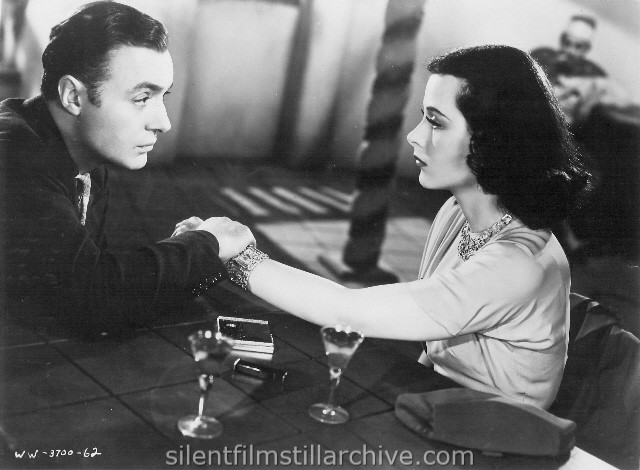
A bad boy with a heart of 14 karat gold to be exact

The story begins with police tracking Pepe (Charles Boyer) in the most recent in a long line of unsuccessful sting efforts. Recently arrived Commissioner Janvier (Paul Harvey) is humiliated when his strong-arm techniques fail and scoffs as veteran officer Inspector Slimane (Joseph Calleia) continues to maintain a strangely amiable game of cat and mouse with the elusive thief. As his criminal associates celebrate their latest success against the local authorities, however, Pepe remains aloof. It is then revealed that despite his latest victory against the authorities Pepe is in fact already a prisoner, albeit in a cell of his own making. Regardless of however many victories he may have against local inspectors, he is all too aware that should he leave the native quarter known as the Casbah he will find himself at the mercy of the full force of the French police, whom even he can’t elude forever. After years resigned to his fate he meets the alluring French tourist, Gaby (Hedy Lamarr), who is similarly trapped by her own efforts to enter high society through an impending loveless marriage. Invigorated by the first genuine connection that either of the mercenary duo have felt Pepe and Gaby hatch a plan to escape not just the Casbah but the lives of quiet desperation that they have resigned themselves to, no matter what the cost.

While at first glance Algiers appears to be just another exotic romantic drama, upon closer observation the film is revealed to be an innovative catalyst in Hollywood filmmaking. Perhaps best remembered today for inspiring amorous cartoon skunk Pepe Le Pew, the remake of the French hit Pepe Le Moko was one of America’s first efforts to integrate European techniques since the use of German Expressionism during the silent era. With its claustrophobic settings, murky morals, and existential outlook, the film introduced the philosophical and social themes prominent in European films, while still maintaining the cleverly entertaining guise of a romantic adventure. The film also successfully merged American and European cinema through its gritty focus upon the criminal lifestyle reminiscent of the American gangster film, while still maintaining its core European sensibility. Although produced four years after the enforcement of the Hays Code, the film managed to lend viewers a frank look at modern sexuality through its portrayals of Pepe’s relationships with both local beauty Ines (Sigrid Gurie) and kept woman Gaby, without condescending to pass judgment on its complicated cast of characters. The film also offered a starkly modern finale in an interesting twist on the typical crime film by presenting Pepe’s tragic end not as an example of the ways in which ‘crime doesn’t pay’, but instead as the ultimate form of freedom. The film featured breakout performances for both Charles Boyer and Hedy Lamarr (who made her Hollywood debut in her role as Gaby) and went on to inspire a host of thinly veiled imitations, including the now classic Casablanca. In fact, it is reported that when screenwriters Philip and Julius Epstein persuaded producer David O Selznick to loan out Ingrid Bergman’s contract to Warner Brothers for the role of Ilsa, they only succeeded after describing Casablanca as “A lot of s*** like Algiers”.
It's all about the bling

Although a faithful remake of Pepe Le Moko, Algiers became a classic in its own right through its truly star-making performances. Joseph Calleia exudes a fascinating combination of world weariness and sly charm in his role as Pepe’s greatest ally and most dangerous foe, Inspector Slimane. Sigrid Gurie takes what could have been a one-note role as Pepe’s scorned mistress and transforms Ines into a truly complicated woman who is at once the epitome of worldly sensuality and the picture of damaged vulnerability. Hedy Lamarr is luminous in her role as the elusive Gaby, aptly capturing both Gaby’s ambition and desperation while still maintaining a sophisticated façade. In the scenes that she shares with Boyer she perfectly embodies the playful excitement and anxious hesitance of new love with such nuance that it is little wonder that she quickly became a household name. Despite the multi-faceted performances surrounding him, the film truly belongs to Charles Boyer, whose charismatic anti-hero is at once a Robin Hood-esque rogue and a tragic figure. While Boyer himself felt that his performance paled in comparison to Jean Gabin’s, modern audiences continue to hear the name Pepe Le Moko and immediately picture Charles Boyer, and with good reason.


At once a captivating tale of romance and adventure and a psychological study of a life on the run, Algiers is a classic film with a modern edge. Through its clever dialogue, layered characterizations, and entrancing atmosphere Algiers is a journey into the good old, bad old days which audiences continue to return to. So what are you waiting for, follow Charles Boyer and Hedy Lamarr into the labyrinth of mystery, intrigue, and passion that is Pepe’s Casbah.
A jewel thief's greatest match; a gold-digger

Monday, July 4, 2016

Classics: An Independence Day Tribute By Lauren Ennis

Today marks the 240th anniversary of the signing of the Declaration of Independence. In honor of this milestone, I will be reviewing three films that capture the innovative and pioneering spirit that the United States was founded upon. Happy Independence Day!
A little frontier justice
The Man Who Shot Liberty Valance: Few genres are as unique to American culture as the Western and few actors are as synonymous with America as John Wayne. This 1961 film provided a unique take on the western that exposed the grit and lawlessness that made up life in the early West and left the genre forever altered. The film begins with US Senator Ransom “Ranse” Stoddard (James Stewart) traveling from Washington with his wife, Hallie (Vera Miles), to attend the funeral of rancher Tom Doniphon (John Wayne) in Shinbone (a fictional town in an unnamed state). When a reporter questions why a senator would go to so much trouble to pay respects to a rancher the film launches into a flashback of the incident that put Ranse on the path to political success.  The film then chronicles law-abiding Ranse’s efforts to rid Shinbone of local gunslinger Liberty Valance (Lee Marvin), while still remaining within the boundaries of the law. What begins as a simple story of citizens versus gunslingers quickly spirals into a masterfully told tale of a region coming to grips with its place in an emerging nation, as the citizens of Shinbone contemplate impending statehood. The film excellently depicts the democratic process at work through its portrayal of town hall meetings, political debates, and a free press. While the plot focuses upon the benefits of statehood and the American political system, it reveals the resistance that statehood was often met with and the ways in which the political system is all too often manipulated. The film also examines the meaning of bravery and grit through its focus upon the initially pacifist Ranse rather than his macho counterpart, Tom. Furthermore, the film turns the typical structure of the Western on its head as it argues in favor of restraint and rule of law and only shifts its focus to genre staple Wayne after his character defies genre expectations and sacrifices both the glory and the girl for the greater good. While the film does not shy away from America’s gritty past, it does highlight the principles that this nation was founded upon through its emphasis upon the best aspects of our legal and political system and reminds us of the hope and promise which those systems were founded upon.
Everywhere around the world, they're coming to America!
Moscow on the Hudson: This 1984 film portrays modern America from the perspective of a newly arrived immigrant. The film begins with musician Vladimir Ivanov (Robin Williams) trying to eke out a living amidst the financial hardships and political repression of 1980’s Moscow. Eventually he tours the world with a circus, and after his first glimpse of life beyond the iron curtain, he realizes that he can no longer stand the deprivations and repression of Soviet life. In a scene that is at once heartfelt, suspenseful, and comical Vladimir ultimately defects to the US in the middle of a Manhattan Macy’s. The film then chronicles his efforts to assimilate to US life and struggles to make a new life in a strange land. While the film does offer commentary on democracy vs. communism and is very much of the Cold War era in which it is set, Vladimir’s tale of immigration and assimilation is one that both recalls the immigrants who founded this country and those who continue to arrive today. The film realistically portrays the struggles with language and culture that many immigrants face as such simple activities as shopping at a supermarket inspire culture shock and Vladimir struggles to understand the slang used by his coworkers and roommates. Although the film is perforated with fish-out-of-water shenanigans, it also provides a serious look at the immigrant experience as Vladimir faces prejudice, isolation, and financial hardship and ultimately begins to question if defecting was the right decision after all. Throughout his various ups and downs, however, the film maintains an infectious sense of optimism and a central message that the freedom to live your own life, regardless of how difficult that life may be, is something to be cherished.

Who says tough guys can't dance?!

Yankee Doodle Dandy: No Independence Day film list would be complete without this 1942 musical biography. The film chronicles the life and work of turn of the century composer George M. Cohan (James Cagney), best known for such patriotic standards as “You’re a Fine Old Flag”, Over There”, and of course “Yankee Doodle Boy”. The films begins towards the end of Cohan’s career as he meets President Franklin Roosevelt and is awarded the Congressional Medal of Honor in recognition of his contribution to American music. The film then launches into a flashback starting with Cohan’s birth to Irish immigrant vaudeville performers (Walter Huston and Mary Decamp) on, of all days, the fourth of July. The film then chronicles his years as part of the family vaudeville act alongside his parents and sister (Cagney’s real-life sister Jeanne) and the trouble the family faces when his adolescent arrogance gets them blacklisted by producers and directors. Eventually he sets out on his own and attempts to sell his songs while courting a struggling chorus girl (Joan Leslie), before finding success and humbly asking his family to rejoin him onstage. While the film’s focus is upon Cohan’s life and career, it is permeated with the same patriotic spirit found in Cohan’s music in its celebration of both American music and the American Dream. Interestingly, the film’s emphasis upon Cohan’s patriotism was in part inspired by Cagney’s efforts to highlight his own patriotism after the House on Un-American Activities Committee unjustly accused Cagney of being a communist. In an effort to redeem his public image, it is reported that Cagney overcame his personal dislike for Cohan, who had sided with producers during a 1919 Actors Equity Strike, and set out to make the “goddamnest patriotic picture ever made”. One viewing of Cagney and company’s stellar performances, and it is there is no doubt that Cagney succeeded in doing just that.

Sunday, June 12, 2016

Classics: A Review of The Birdcage By Lauren Ennis

This week, I was planning on writing a Father’s Day themed review highlighting inspiring father figures in cinema. In light of the terrorist attack on Pulse nightclub in Orlando, FL, however, I have decided to alter this review to show support for the LGBT community, while still paying tribute to a pair of dads we could all learn something from. This week’s film, the 1996 comedy classic The Birdcage is at once a celebration of diversity, political satire, and an exploration of the modern American family.
There's no place like home

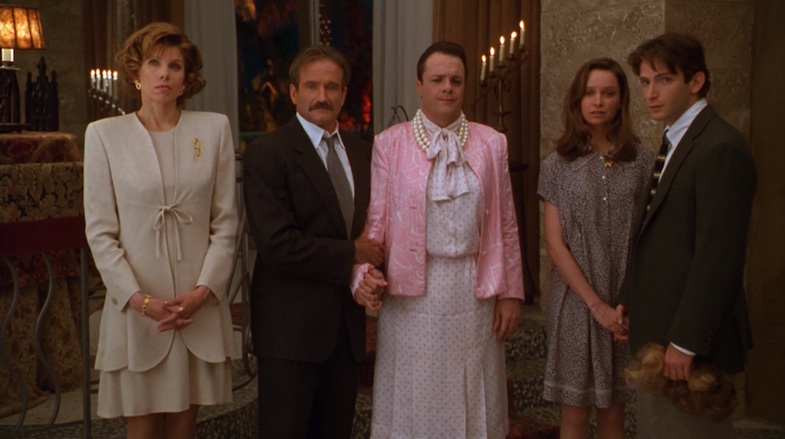
The story begins with nightclub owner Armand (Robin Williams) maneuvering yet another domestic spat with his temperamental partner, Albert (Nathan Lane) who is also the club’s star drag queen. In the midst of balancing Albert’s latest bout of hysterics and the club’s many demands, Armand is faced with a family crisis when his son from a previous relationship, Val (Dan Futterman), arrives and announces his impending marriage. Already uneasy with his son’s choice to marry before finishing college, Armand is mortified to learn that the bride-to-be’s parents are an ultra-conservative politician and his equally tradition-minded wife. While Armand initially balks when Val pleads with him to play it straight for one night to impress Val’s prospective in-law’s, he eventually relents. In preparation for the big event, Armand and Albert attempt to reinvent themselves as a traditional family with predictably hilarious results. By the film’s finish, both families learn the true meaning of family and the importance of being true to yourself.

Although marketed as a racy comedy, The Birdcage is at its heart a family film. At first, the central question seems to be can Armand and Albert trick Val’s future in-law’s into believing that they’re a traditional family, but as the plot progresses another, much more complicated, question comes to the fore; are they really so different from what is considered a traditional American family after all. Although both of Val’s parents are men it becomes clear that he has grown up with two parents who understand the meaning of parental guidance and sacrifice as they throw themselves into one uncomfortable situation after another, all to ensure his happiness. Similarly, both men also show an understanding of the fine line that a parent must walk as they advise Val that it would be more prudent to wait before getting married, but ultimately support his decision. The functionality of Val’s unconventional family is further highlighted by the dysfunction of his fiancée’s conformist parents. While Val immediately tells his parents about his fiancée and her family, even though his parents may disapprove, Barbara (Calista Flockhart) feels unable to openly communicate with her parents and concocts a series of elaborate lies for fear that they will try to interfere with her marriage. Although utilized as a springboard for much of the plot, Barbara’s lies also reveal the lack of trust and understanding in her relationship with her parents. The damaged dynamics of her family are further highlighted when Barbara’s parents (Dianne Weist and Gene Hackman) pressure her to move up the marriage as soon as possible to distract from a political scandal, after previously advising her to wait and reconsider. As a result, the film implies that Barbara’s parents are more concerned with their own public image than with their daughter’s future happiness. This juxtaposition of the two very different families in turn reveals that while they may defy popular convention, Armand and Albert understand the true meaning of family, perhaps better than their more conventional counterparts.
 
And which one if the fifth wheel?
Although the film follows the long tradition of Hollywood screwball comedies, its message of embracing your individuality in the face of public pressure to conform is a crucial one that continues to resonate. Throughout the film, Armand and Albert face pressure to conform to traditional gender norms, with their continued failure to do so played for slapstick laughs. It is only when the couple are open and honest with themselves and those around them, however, that they are able to set things right. In the film, the pair face adversity in the form of Val’s comically ultra-conservative in-law’s, in an apt satire on 1990’s American politics. While the film’s sharp humor may be viewed in a softer light in the wake of recent developments in gay and transgender rights, Armand and Albert’s struggle for acceptance continues to resonate in the face of an all too real foe; radical Islamic terrorism. As ISIS and other radical Islamic terrorist groups have continued to gain notoriety, the western world has witnessed the ways in which radical Islam regards homosexuals, bisexuals, and transgenders not only as second class citizens, but as living affronts to their warped belief system who must ultimately be eliminated. In the counties in which terror groups dominate, members of the LGBT community are routinely prosecuted, tortured, and executed, merely for being themselves. In articles chronicling last night’s attack the notion of clubs as a ‘safe place’ for members of the LGBT community has been continually discussed. Following the attack, however, we have all been reminded once again that the world has become an increasingly dangerous place. Still, we cannot let this attack and all of the many that have preceded it alter our allegiance to our own way of life, lest we let the terrorists succeed in making our lives ruled by fear. By the same token, however, while it is crucial that we hold fast to our beliefs and way of living, it is just as, if not even more, imperative that we acknowledge the fact that terrorism is a problem facing all people who value freedom regardless of race, religion, sex, nationality, ethnicity, gender identification, political affiliation, or sexual orientation.


The Birdcage is a film that reminds us of just how fundamental the freedom to live and love as you choose truly is. It is a film that celebrates families from all walks of life and encourages us to live life to the fullest regardless of any adversity we may face as a result. At the film’s finish there is a scene that is at once comical and heartfelt as both families come together during the club’s rendition of ‘We Are Family’. As we continue to cope with the devastating effects of this latest attack we should take an example from the film’s characters and come together as individuals, families, communities, and a society and stand against the ideology of hate, intolerance, and violence that continues to threaten all that we hold dear.
A truly happy couple