Saturday, June 29, 2024

Classics: A Review of Return to Oz By Lauren Ennis

 In 1939 MGM Studios took viewers on an unforgettable journey to the merry old land of Oz. It was not for another forty-six years, however, that Hollywood returned to the Emerald City. 1985's cult classic Return to Oz transports viewers back to Oz for a whole new adventure. At once a celebration of L. Frank Baum's beloved series and a dark fantasy the likes of which only the 1980's could deliver, Return to Oz remains one of the most terrifying and thrilling adventures in family filmmaking. 

Sometimes you wanna go where everybody knows you're name...

The story begins six months after Dorothy's return from Oz. Despite returning to Kansas she is haunted by her experiences and develops insomnia. Concerned for her health Aunt Em and Uncle Henry opt to seek psychiatric help for her and bring her to a nearby mental institution. After recounting her adventures in Oz the hospital staff diagnose her as suffering from mental illness and determine that the best course of treatment is electro-convulsive therapy. Before the treatment can begin, however, a storm arrives and the hospital is struck by lighting. In the ensuing chaos Dorothy escapes with another young patient. While being pursued by the hospital staff the girls are separated and Dorothy is knocked unconscious after she nearly drowns. When she regains consciousness she finds herself in Oz with her one of the chickens from her family's farm, Belina, at her side. While she is initially overjoyed she soon realizes that this is a very different Oz that she has returned to. In the months since her first adventure the land has fallen under the control of the wicked Gnome King who, along with his henchmen Princess Mombie and the Wheelers, rules Oz with an iron grip. It's up to Dorothy, Belina, and the friends that they meet along the way to stop the Gnome King and free the people of Oz.

In the lead-up to the film's release critics and audiences eagerly anticipated what they were sure would be a continuation of the 1939 classic. Unfortunately for them, the film derived its inspiration not from its iconic predecessor, but instead from the arguably darker, more mature, series of books upon which it is based. As a result, audiences and critics alike were dismayed by what they saw on screen. In the years since the film's release, however, it has gained a cult following with generations of children falling under its dark spell. While no film can compare with the 1939 juggernaut, the 1985 sequel makes for an engrossing and enchanting work of its own. Unlike its musical counterpart, Return to Oz relates a mature tale of the dangers of escapism, the oppression of conformity, and abuse of power through the lens of a fantastic adventure. As a result, the film aptly captures the eerie combination of wonder, imagination, and anxiety that define childhood. In this way, the film challenges young viewers by introducing them to weighty themes within the context of family friendly entertainment. Through this approach the film grows with its audience by offering an entertaining adventure to keep younger viewers engaged while raising vital questions about the world around us that they can grapple with as they grow older. For a film that will appeal to the minds as well as hearts of the whole family book a trip to Return to Oz.

I'm looking at the man in the mirror....

The film transports viewers to the wonder and magic of Oz thanks to the performances of its cast. Piper Laurie captures the world-weariness of overworked Aunt Em. Matt Clark aptly portrays the inner conflict of Uncle Henry. Emma Ridley perfectly captures the regal majesty of Empress Ozma in a performance that belies her young years. Lyle Conway imbues the Gump with warmth and humor. Brian Henson personifies childlike innocence in his charming turn as Jack Pumpkinhead. Sean Barret personifies courage as mechanical soldier Tik Tok. Pons Maar is nothing short of terrifying as both the sadistic nameless hospital assistant and the vicious leader of the wheelers. Jean Marsh steals each scene in which she appears as both the merciless witch Mombie and the hospital's callous head nurse. Denise Bryer lends gruff humor worthy of Thelma Ritter as Billina. Nicol Williamson aptly blends manipulative charm and menace as both the Gnome King and Doctor Worley. Fairuza Balk performs the Herculean task of stepping into Judy Garland's ruby slippers with a winning combination of innocence, sincerity, wonder, and infectious charm. 

At once a celebration of the classic Oz books and a contemporary fantasy Return to Oz is a tribute to the power of imagination. The script blends history, whimsy, and wonder to relate a dark fantasy that viewers will be hard pressed to forget. The superb work of the cast brings the classic world of Oz to vibrant life with a dark, modern edge. Join Dorothy and Belina for the journey of a lifetime and Return to Oz.

Only the 80's could come up with this one


Tuesday, June 11, 2024

Classics: A Review of A Gentleman in Moscow By Lauren Ennis

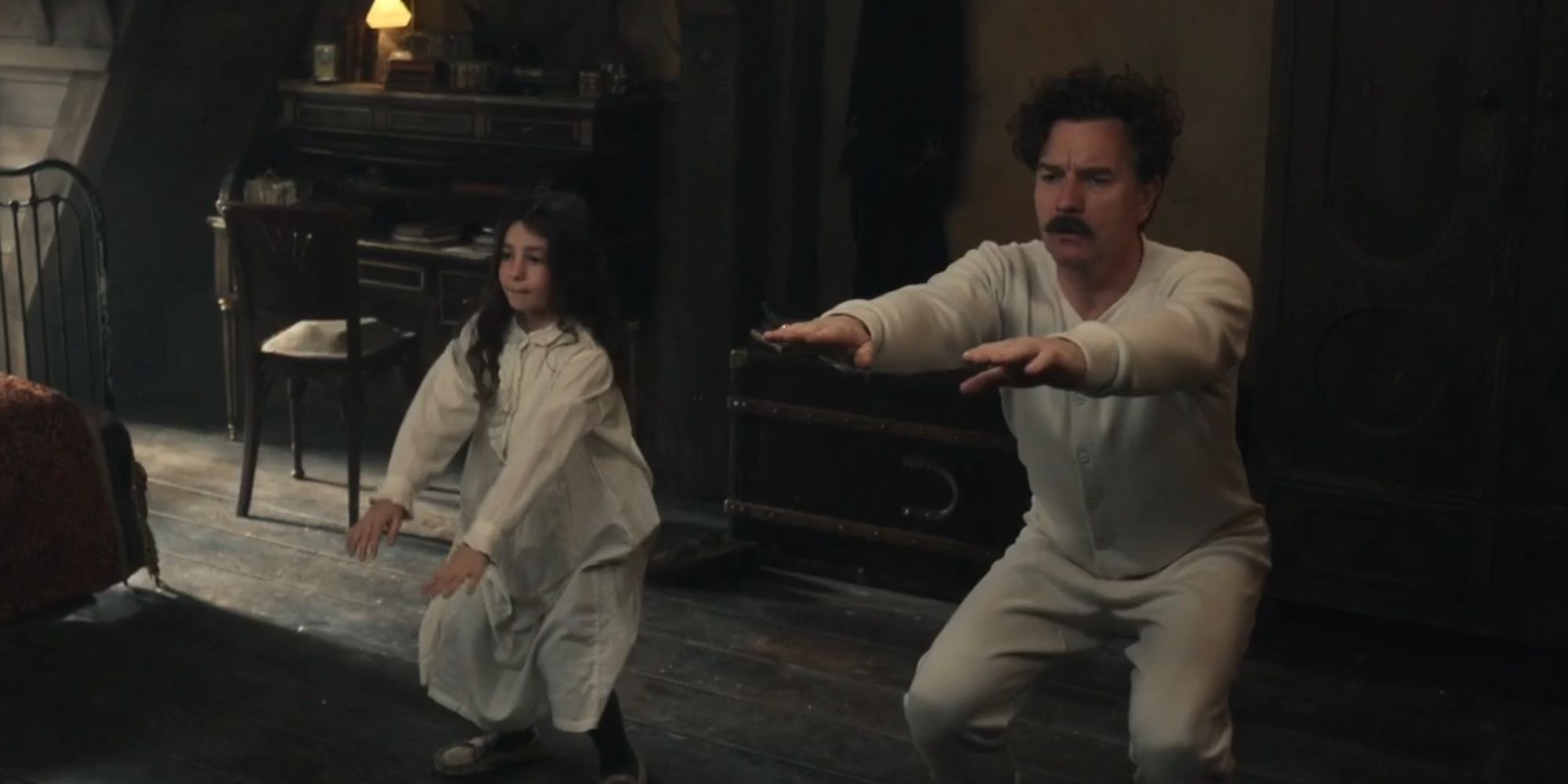
 "A man must master his circumstances or otherwise be mastered by them" is a lesson that Count Alexander Rostov lives by. Based upon the 2016 bestselling novel of the same name Showtime's miniseries A Gentleman in Moscow follows the count as he finds this lesson put to the ultimate test. Placed under house arrest by the Bolsheviks the count finds himself in the most unusual of circumstances as he experiences three decades of Russian history from his gilded cage. Perhaps most unusual of these circumstances are the ones that see him grow from gentleman of leisure to friend, unlikely ally, and even father to the hotel's staff and guests. This Father's Day join the count for a trip that you'll be hard pressed to return from in A Gentleman in Moscow.


The story begins in 1922 with the Romanov Dynasty having finally given way to the rise of the Soviet Union. In the midst of this upheaval the aristocratic count finds himself caught in the crosshairs of the new regime who designate him a 'social parasite'. Through a twist of fate and friendship his life is spared and instead of execution he is sentenced to spend the rest of his days in the servant's quarters of the Metropol Hotel. Separated from his home, his family, and his way of life he sets out to defy the regime by mastering his circumstances. Along the way he encounters old friends, unlikely allies, and new loves, forming a new family and life for himself. His existence is upended once again, however, when a young orphaned girl arrives at the hotel, changing the course of both of their lives forever.

At various points in the novel Alexander considers what it means to be a 'man of purpose'. The series similarly captures the way in which he loses any sense of purpose and meaning in his life upon his arrest. Cut off from everything that he had ever known and loved he finds himself faced with the prospect of a lifetime of empty, directionless, days ahead of him. Rather than succumb to despair he instead opts to create a life of purpose through the bonds he forms with the people around him. Even as he forms deep and meaningful relationships with various guests and staff at the hotel it is the parental bonds he forms with young guest Nina, and later her orphaned daughter, Sofia, that ultimately change his life. Through his friendship and mentorship of Nina he learns to see his predicament through the eyes of a child and find freedom and a sense of adventure within the hotel's walls. Similarly, he offers her wisdom and tries to show her a world beyond the oppression of the USSR. He is ultimately unable to protect Nina from the horrors of Stalin's purges, and finds himself at a crossroads when he is entrusted with the care of her orphaned daughter, Sofia. Although he is initially overwhelmed by this unexpected responsibility, when the state threatens to send Sofia to an orphanage he risks his own safety to ensure that they remain together. As the years pass he becomes the father she lost and she eases the pain of the loss of his younger sister. He consistently risks his own life to ensure her safety and places her happiness above his own, even if it means that he will have to let her go. Throughout the series Count Alexander Rostov is a nobleman and gentleman, but it is only through his role as a father that he becomes truly noble. This Father's Day enjoy the amenities of the Metropol courtesy of A Gentleman in Moscow.


The series transports viewers to Soviet Russia thanks to the brilliant work of its cast. Johnny Harris lends depth and surprising humanity to his portrayal of Alexander's jailer turned ally, Osip. Alexa Goodall and Leah Balmforth aptly capture Nina's journey from precocious child to disillusioned woman. Fehinti Balogun personifies idealism betrayed as Bolshevik turned dissident Mishka. Real life sisters Beau Gadsdon and Billie Gadsdon convey Sofia's growth from lost child to promising prodigy warmth and charm. Mary Elizabeth Winstead steals each scene in which she appears in her magnetic turn as Alexander's equal parts sultry and savvy love interest, screen siren Anna. Even in the midst of enthralling performances the series belongs to Ewan MacGregor as Alexander Rostov. Blending old world charm, wit, and warmth he brings the count to life with an earnest optimism that is nothing short of infectious.

Upon its 2016 release the bestselling novel A Gentleman in Moscow was hailed by critics as 'charming', 'inspiring', and 'life-affirming'. Showtime's adaptation manages what readers feared was almost impossible as it not only does justice to but in some ways even improves upon its source material. The script captures the novel's blend of history, social commentary, political intrigue, romance, and optimism while still adhering to the limits of the screen. The cast transport viewers to the tumult of the early twentieth century through nuanced performances that bring the world of the Metropol to vibrant life. Take the trip of a lifetime with the count in A Gentleman in Moscow.


Thursday, May 30, 2024

Classics: A Review of Millenium Actress By Lauren Ennis

 How far would you go to chase a dream? Would that chase still be worthwhile even iv you never reached your final goal? These are the questions that lie at the heart of the 2003 animated masterpiece Millennium Actress. At once a portrayal of one woman's impossible dream and a universal homage to creative pursuit. Millennium Actress is truly a story for the ages.

Running up that road, running up that hill...

The story begins in present-day Japan with director Genya and cameraman Kyoji traveling to the home of celebrated actress Chiyoko Fujiwara. In her youth Chiyoko was an iconic performer, but at the height of her career she mysteriously turned her back on cinema, becoming a recluse. Intrigued by his promise to return something that she had lost to her Chiyoko agrees to allow them to interview her. Devoted fan turned successful director Genya begins the interview by presenting her with a worn key, prompting her to reflect upon her career and the inspiration that propelled it. So begins a surreal journey that blurs the lines between memory and fiction, and past and present to relate a tale of love, loss, and the creative spirit.

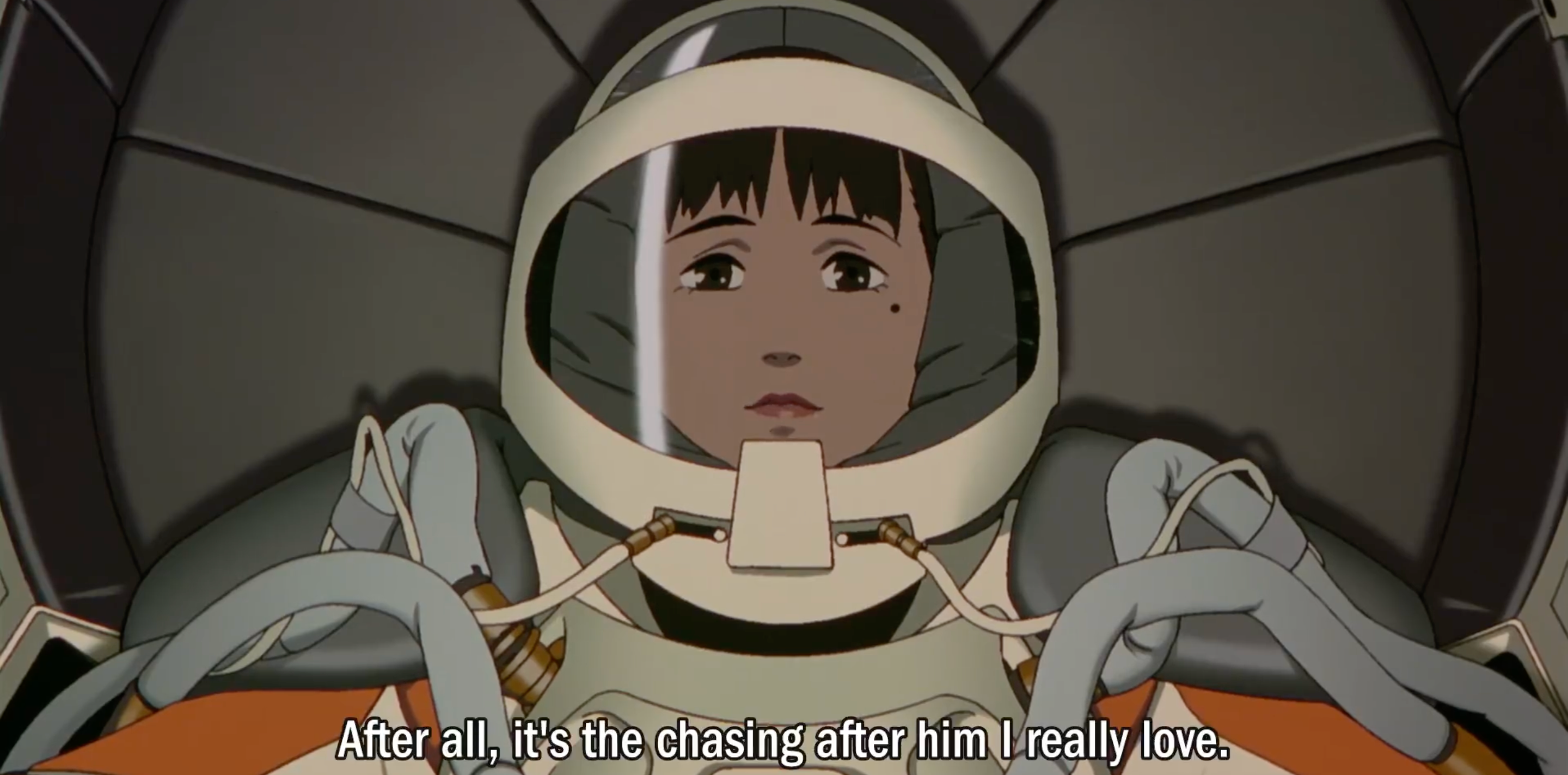
Satoshi Kon's signature surreal style is utilized to dazzling effect in this allegory of creative pursuit. On the surface, the film follows a deceptively simple tale of one woman's efforts to find the man she loves. As Chiyoko's adventure unfolds, however, it becomes clear that the film's subject is actually a different,  more complex, journey. She begins her story by recalling how she was discovered by a local film studio. Although she is excited at the opportunity her mother forbids her from accepting the studio's offer. After her chance meeting with the mysterious dissident painter, however, she is determined to pursue an acting career in an effort to one day reunite with him. Over the course of her career it is her desire to find him and return his key to "the most important thing" that drives her to keep moving forward. In this way the painter and his key serve as apt metaphors for inspiration and artistic fulfillment. When viewed in this context the film takes on a deeper, bittersweet, meaning as Chiyoko follows her inspiration through cinematic history with her dream of artistic fulfillment always just out of reach. In this way, the film aptly captures the trials and triumphs of creative pursuit in which an artist is forever chasing the next part, story, or project with fulfillment always promised around the next corner. In the film's divisive finale she reveals that it is the pursuit of the painter rather than the man himself that she truly loves. This poignant parting line perfectly captures the bittersweet nature of the artist's journey as she comes to terms with the impossibility of her destination while looking ahead to the next step of her journey. In this way, the film serves as more than just a meditation upon creative pursuit and instead offers a universal reminder that "It's not the destination, its the journey". In the midst of its philosophical musings the film also serves as a loving homage to Japanese cinema as it follows Chiyoko's career through parts that clearly recall everything from war-time melodramas to Kurasawa's samurai films, to the Godzilla franchise. As a result, the film works equally well as Kon's personal tribute to his own inspiration and a universal ode to creative pursuit. Join Chiyoko for the journey of a lifetime in Millennium Actress.

The film serves a feast for the eyes and heart through its breathtaking animation and engaging performances. Koichi Yamadera fuses somber realism with romantic idealism to alluring effect as the nameless painter. Shoko Tsuda perfectly captures the outward haughtiness and inner vulnerability of Chiyoko's rival, screen siren Eiko. Masaya Onosaka offers plenty of dry humor as cynical camerman Kyoji. Shozo lizuka is utterly endearing as Chiyoko's most devoted fan and former colleague, Ghenya. Miyoko Shoji, Mami Koyama, and Fumiko Orikasa take viewers on an unforgettable journey as they bring each of Chiyoko's ages to vibrant life. The animation showcases Kon's signature style while paying apt tribute to Japanese cinema. The character designs keep the often surreal story grounded by depicting the characters as looking like real people rather than the idealized faces and figures so often seen in modern anime. Even as the character designs remind us that we're in the real world, the film's ability to seamlessly transition between settings and styles lend the story an otherworldly sensibility. The animation's blending of various cinematic styles transports viewers into each of Chiyoko's films and the era in cinematic history that they represent. Experience the magic of the movies with Chiyoko in Millennium Actress.

Millennium Actress is a must-watch for cinephiles, artists, and anyone who has ever chased a dream. The film's dizzying animation and entrancing vocal performances take viewers on a journey through cinematic history and into the depths of the human heart. The script offers a poignant tale of personal and artistic passion that resonates across the ages. Fall in love with Chiyoko, the movies, and above all the journey in Millennium Actress.


Tuesday, May 14, 2024

Classics: A Review of They Live By Lauren Ennis

 "The whole deal is like some kind of crazy game" laments drifter Jon Nada about modern life. In 1988's action horror comedy They Live Nada learns all about the rigged game that is modern society and just how high the stakes of that game are. At once a biting satire of modern America and a call to action, They Live remains one of the most subversive and relevant films in cinema. Join Nada on an action packed thrill ride in They Live.

The story begins with drifter Nada arriving in Los Angeles. soon after his arrival he finds temporary construction work and befriends fellow transient, Frank. Frank takes him to a nearby soup kitchen run by the mysterious Gilbert. After listening to a local street preacher warning that "they" are recruiting the rich and powerful to enslave humanity. The next day broadcasts across the city are hacked to show a message that echoes the preacher's warning. When he sees the preacher meeting with Gilbert Nada follows them to a church. Inside the church he witnesses the meeting of a secretive group which includes Gilbert, the preacher, and the man who hacked the broadcast. Later that night, the police raid the church, leaving no evidence of the group except for a box of sunglasses. When Nada puts on a pair of the sunglasses he sees reality for the first time and makes a terrifying realization. So begins his quest to expose the truth and free humanity before its too late.

Released as a scathing critique of Reagan-era America, the film manages to be even more relevant and biting today. The film aptly satirizes the pervasive presence of mass media through its depiction of coded subliminal messages surrounding the characters at every turn. While the depictions of mass media's efforts to promote conformity, subservience, and above all their own profits resonated upon the film's release they are even more crucial in the era of social media. While in the 1980's corporations and politicians would utilize their influence to own benefit, in today's society private citizens unwittingly spread that influence for them, free of charge.  For example, while in the film Nada sees subliminal messages urging people to marry and have children to support the state in today's society one need only open a friend's social media page to be bombarded with images carefully curated domestic bliss. Similarly, throughout the film the characters are brainwashed into spending their money on frivolous luxury items and told that their worth depends upon their ability to make those purchases. While advertisers have always sought to increase sales the marketing campaigns of the past are dwarfed by the reach of self-styled social media influencers who promote everything from their personal brand to individual products to idealized lifestyles to their fan base. Additionally, the film highlights the way in which our human need for connection and belonging is weaponized by political regimes, religions, and society as a whole in order to ensure obedience. This demand for conformity has become nothing short of militant in the advent of cancel culture in which people have been ostracized for merely questioning the accepted narrative. Finally, the film's portrayal of society's elites as space aliens is more bitingly ironic than ever in an era in which those in power continuously prove themselves to be out of touch with and alienated from their fellow citizens.

The film is brought to life thanks to the out of this world work of its cast. Keith David aptly captures the decency and honesty of Frank. Meg Foster combines cool charisma with cold calculation to create a femme fatale for the modern era as Nada's love interest, Holly. Even in the midst of apt ensemble performances the film belongs to Roddy Piper as unlikely hero, Nada, who blends deadpan humor, raw physicality, and roguish charm to be the hero we may not have wanted but just might need.

At once an action-packed adventure and a scathing satire They Live is a film that, much like the world behind Nada's sunglasses, must be seen to be believed. The script serves up one of the most sharply written critiques of modern society to have ever been put to celluloid and manages to cut even deeper today. The cast bring each of their characters to colorful life with humor and charisma. Pack up your bubblegum and prepare to kick some ass courtesy of They Live.


Friday, April 26, 2024

Classics: A Review of Wolf Children By Lauren Ennis

 As Mother's Day approaches we reflect upon the mothers and mother figures in our lives who have shaped who we are and will continue to guide who we become. Few films capture the trials and triumphs, love and loss, of motherhood with the poignancy of 2012's animated family fantasy Wolf Children. This Mother's Day take a walk on the wild side with Wolf Children.

The story begins in late 1990's Tokyo. Shy college student Hana falls for an unnamed classmate who seems to be the man of her dreams. Her dream threatens to turn into a nightmare, however, when her love interest reveals that he is a werewolf. Hana accepts him without hesitation and the two eventually marry. The couple soon have two children, Yuki and Ame, who both inherit their father's lycanthropy. Soon after their second child is born, tragedy strikes when he is killed in an accident while hunting for the family's food. The grief of Hana's loss and struggle of single motherhood are further complicated by her children's unusual abilities. Despite their best efforts both Yuki and Ame struggle to control their wolf form, prompting their mother to hide them from the outside world. When their reclusive lifestyle raises the suspicions of social services she opts to move the family into the countryside, away from prying eyes. The film then follows Hana's efforts to build a life for herself and her children as all three navigate the confusion of growing up and confront the pain of letting go.

The film expertly utilizes its unique premise to explore universal themes. Hana's realization that he has fallen in love with a werewolf adds a supernatural intrigue to what begins as a straight forward love story. While this twist recalls classic horror and trendy teen romances alike the film focuses upon the ramifications of this realization rather than its initial shock. In this way, the film is able to use Hana's unusual dilemma as a stand-in for real life complications including disabilities, mental illness, and cultural differences. In this way, the film allows viewers to not only sympathize but empathize with its central couple, making their eventual parting all the more impactful. Similarly, the film cleverly uses the children's mixed identity to symbolize their outsider status. The children's abilities and their struggles to control them additionally act as apt stand-ins for a variety of unique real-life challenges while mirroring the universal growing pains that all children face. In its depiction of Hana's efforts to guide her children the film expertly captures the hardships and sacrifice that define motherhood while reminding viewers of the love and fulfillment that make it all worthwhile. As a result, this modern fairytale relates one of the most surprisingly grounded depictions of motherhood in all of cinema. This Mother's Day join the pack with Hana and her Wolf Children.

The world of Wolf Children is brought to enchanting life thanks to its animation. The film utilizes both traditional 2D and computerized 3D CGI to highlight the story's fairytale atmosphere. The depictions of the city hold a severe modern beauty while the portrayal of the countryside is lush and vibrant. This setting design perfectly illustrates the film's central conflict between the children's civilized, human,  and  feral, wolf, halves. The character designs infuse each of the characters with expression and individuality. The dual wolf and human designs of the children and their father particularly stand out for the way in which they each capture the characters' unique personalities regardless of which form they are in. Experience the animated beauty and wonder of the wild world of Wolf Children.

At once refreshingly unique and universally relatable Wolf Children is a film for parents and children alike. The script explores the joys and sorrows of motherhood with tenderness without veering into sugary sentimentality. The gorgeous animation transports viewers to a lush world that they will be hard-pressed to leave. Celebrate the mothers in your life with a viewing of Wolf Children.


Sunday, April 14, 2024

Classics: A Review of Lost in Translation By Lauren Ennis

The 1990's sitcom Seinfeld proudly described itself as "a show about nothing". In many ways, this same description could apply to the 2003 hit drama Lost in Translation. This deceptively simple tale follows the brief acquaintance of two travelers and not much else. It is a film devoid of action with minimal stakes in which all of the drama is strictly internal. In spite of its simplicity, however, the film remains one of the most poignant films in modern cinema. Find the hidden meaning Lost in Translation.

The story begins with aging Hollywood star Bob Harris arriving in Japan to shoot a whiskey commercial. He experiences a series of comic misunderstandings as he struggles to adjust to culture shock and jet lag. Simultaneously, his brief calls home offer insight into the deteriorating marriage and floundering career that have left in in the midst of a mid-life crisis. Meanwhile, newlywed American tourist Charlotte arrives at the same hotel Bob is staying in with her photographer husband. Despite her youth and new marriage she is revealed to be in the midst of an existential crisis of her own that has her questioning her relationship and her life's direction. After a series of chance meetings the two travelers embark upon an unlikely friendship that will leave them both changed for the better.

Despite its minimalistic plot the film tackles such heady topics as the longing for connection, the search for meaning, and the inevitable approach of mortality with depth and nuance. Through its depiction of Bob's distant relationship with his wife and Charlotte's mismatched marriage, the film aptly demonstrates the importance of making meaningful connections. While both characters are checking the societal boxes of being married neither are fulfilled by their relationships. Ironically, both find greater connection in their brief interactions with each other than in their marriages. In this way, the film highlights the importance of true connection in its portrait of two people who are at their loneliest when they are around others. Similarly, the film explores the vital need for meaning by focusing upon the lack of meaning in its characters' lives. While both Bob and Charlotte are leading existences that are successful on paper, neither feels any passion or sense of purpose. As a result, while both are alive neither is truly living. The need to live a purposeful existence while we can is further emphasized by the film's depiction of Bob's struggle to overcome his mid-life crisis and Charlotte's efforts to come to terms with entering adulthood. Eve as it meditates upon these weighty topics the film still offers laughs and what just might be love along the way. Lose yourself in the magnetic melancholy of Lost in Translation.

The film is brilliantly brough to life thanks to the stellar work of its cast. Anna Faris is hilariously vapid as Charlotte's husband's celebrity client, Kelly. Catherine Lambert is equal parts sultry and pathetic as the unnamed lounge singer with whom Bob has a one-night-stand. Giovanni Ribisi perfectly captures Charlotte's husband, John's, desperate need to belong. Even in the midst of adept supporting performances the film belongs to Bill Murray and Scarlett Johansson as Bob and Charlotte. Murray showcases his signature dry humor but infuses with with just enough melancholy to hint at Bob's inner turmoil. Similarly, Johansson perfectly conveys the naivete, confusion, frustration, and anxiety of young adulthood with intelligence and charm. Together, the two share a surprising chemistry and make for a compelling, if unusual, pairing.

At once a unique slice of life and a universal meditation upon life and love Lost in Translation continues to stir the mind and heart. The script aptly blends humor with raw emotion to relate a poignant tale that anyone who has ever felt lost will relate to. The performances bring the characters to aching life. Lose yourself in the beauty of Lost in Translation.


Sunday, April 7, 2024

Classics: A Review of Oliver & Company By Lauren Ennis

 Following the death of its visionary founder in 1966 the Walt Disney Company entered what is commonly known as "the Disney Dark Age". In this era the studio's reputation and industry dominance faltered as a result of lowered animation standards and lack luster scripts. While the majority of the studio's effort at this time proved middling at best, there were a select few film released during this time that still held he sparkle of Disney magic. One such film is the 1988 animated adventure Oliver & Company. This modern take on the classic Dickens novel Oliver Twist. is sure to leave viewers saying, "I want some more".


The story begins on New York City's 5th Avenue as a litter of kittens are being offered to passerby. All of the kittens quickly find new homes except for one, Oliver. After a rain storm washes away the cardboard box he was living in he finds himself alone in the big city. While searching for food he meets street wise terrier, Dodger, who proposes hat they work together to steal from a local street vendor. After Dodger double crosses him, Oliver follows the dog back to the abandoned barge where Dodger makes his home with homeless Fagin and his gang of stray dogs. Orphaned Oliver soon finds himself at the center of the strays' makeshift gamily and part of their gang of furry thieves. When one of the gang's schemes goes awry he's separated from them and welcomed into the luxurious home of a wealthy and lonely little girl named Jenny. When Fagin is threatened by a ruthless loan shark he concocts a scheme that will place Oliver's new life and the gang's future in danger. It's up to Oliver and both of his found families to save the day with a bit of street savoir faire.

While contemporary critics offered middling reviews, audiences have fallen in love with Oliver and Dodger in the decades since the film's release. The film was a stark departure from the fairytale formula that marked the successes of Disney's so-called Golden Age and the Disney Renaissance of the 1990's. Rather than focusing upon fantastical adventures in a far away land the film explored the exploits of stray animals in urban America. As a result, the characters and world in which they live made for more relatable viewing. Similarly, the film used its modern setting to explore such real world issues homelessness, crime, and abandonment. In this way, the film offered apt insight into complex issues that society continues to grapple with today. Even as it delves into the difficult subjects, however, the film's clever use of animals as stand-ins for their human counterparts keeps the story from becoming too dark for younger audiences. The film additionally deviates from Disney's earlier efforts by exploring such universal themes as the value of family, the importance of friendship, and the courage of everyday people. In this way the film continues to resonate with audiences of all ages by reminding us all of what is most important in our own world and the ways in which we can work to make it a better place. For family fun with some big city soul leave your worries behind with Dodger and Oliver & Company.


The film brings the hustle and bustle of the big apple to life thanks to the work of its star studded vocal cast. Taurean Blacque and Carl Weintraub perfectly capture the arrogance and aggression of loan shark Sykes' Dobermans, Roscoe and Desoto. Robert Loggin conveys quiet menace as Sykes. Sheryl Lee Ralph offers an equal parts sultry and sassy turn as street smart Saluki, Rita. Roscoe Lee Brown turns in a hilariously pretentious performance worthy of Frasier Crane as cultured Bulldog, Francis. Richard Mulligan is a loveable lunkhead as the dim-witted but big-hearted Great Dane, Einstein. Cheech Marin steals each scene in which he appears as little Chihuahua with a big attitude, Tito. Bette Midler is a villain who viewers will love to hate as Jenny's haughty show-Poodle, Georgette. Dom DeLuise balances heart and hilarity at the hapless Fagin. Natalie Gregory imbues Jenny with sweetness and sincerity. William Glover infuses Jenny's overwhelmed butler, Winston, with warmth and charm. Joey Lawrence captures Oliver's courage, tenacity, and vulnerability in a mature performance that belies his young years. Even in a supporting role the film belongs to the effortless cool and finesse of Billy Joel as Dodger. Joel brings his signature bravura and charisma to the film in a way that ensures that Dodger, and the film as a whole, truly rock.

At once an homage to Dickens, a tribute to classic Disney, and a fresh tale of modern city life, this film will have you wanting to join Oliver & Company. The script offers an action-packed adventure that the whole family will love. The animation, music, and vocal performances bring the dog-eat-dog world of the big city to vibrant life. For fun for the whole family, hit the streets with Oliver & Company.

Why should we worry, why should we care?