Tuesday, April 4, 2023

Classics: A Review of Perry Mason By Lauren Ennis

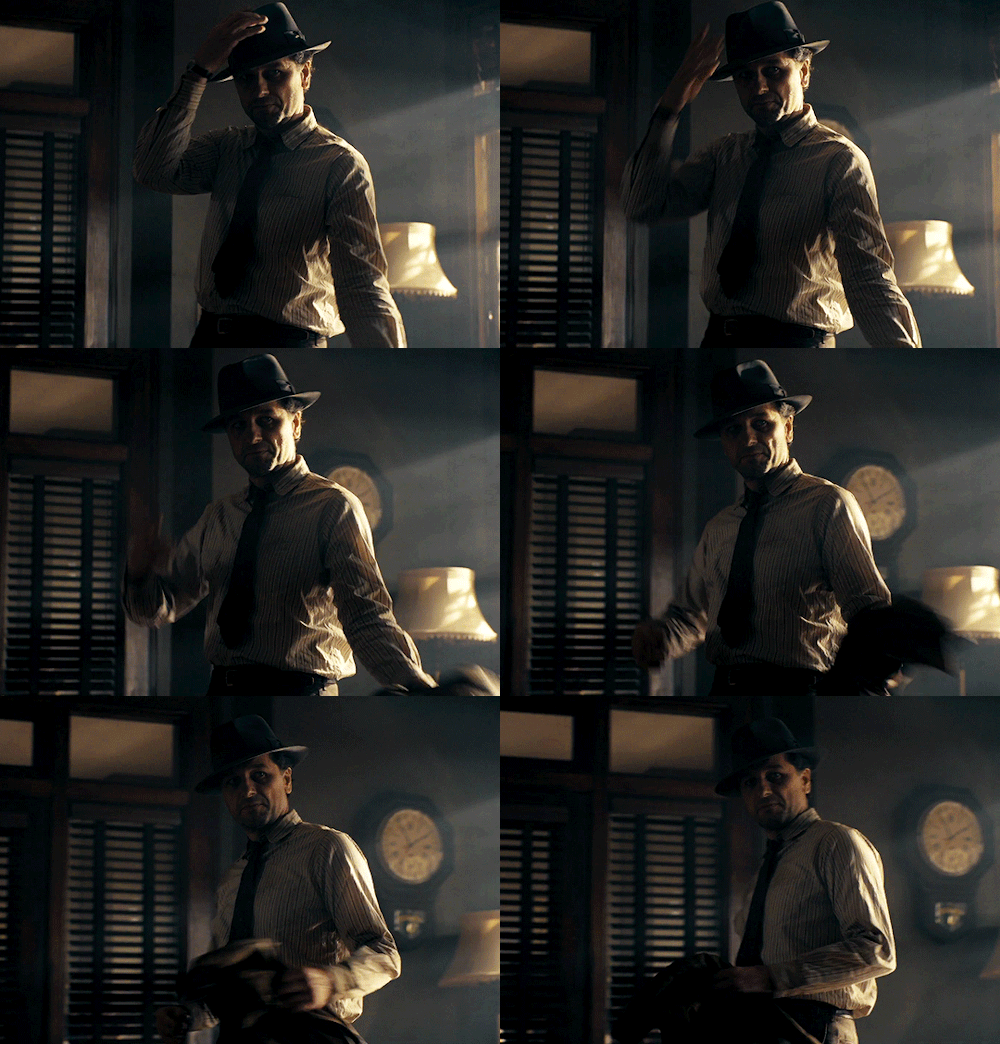
From 1957 to 1966 one name was synonymous with integrity, ingenuity, and the rule of law; Perry Mason. The classic series followed the brilliant defense attorney as he tackled one convoluted case after another, always managing to reach a winning verdict before the end of the hour. In 2020's HBO adaptation Mason could not be more different from his beloved predecessor, and is all the better for it. This noirish reboot follows its reluctant hero on a twisting journey through the gritty streets of Depression era L.A. that is guaranteed to leave viewers guessing until its final reveal. At once an apt tribute to the early television classic and a refreshingly original standalone piece Perry Mason is guilty of being one of the most entertaining legal dramas to ever grace the small screen.

The story begins in 1932 as Matthew and Emily Dodson race to pay the ransom for their kidnapped infant son, Charlie. The couple gladly pay the ransom only to make the devastating realization that Charlie was killed during the course of the kidnapping. Police suspicions quickly fall on the Dodsons, prompting Matthew's father,  powerful industrialist Herman Baggerly to intervene on their behalf. Meanwhile, Perry Mason is working as a private investigator for his mentor, attorney E. B. White. White's firm agrees to take on the Dodson case as a favor to Baggerly, setting its staff on a collision course with the LAPD, the rising Evangelist movement, and the political establishment. White, Mason, and their secretary, Della, soon find themselves put to the ultimate test as the case leads them down a trail of murder, corruption, and coverups that is just the stuff film noir is made of. 

In this modern retelling the squeaky clean attorney of old is all but abandoned in favor of a morally murky and all too human hero for our times. The series wisely moves the action from the original's post-war setting to the early 1930's. Even as it moves the story back in time the altered setting actually makes the series feel more modern as it uses the backdrop of the Great Depression to explore such timely themes as economic uncertainty, racial and gender tensions, the impending threat of war and institutional corruption. This change also allows the script to act as an origin story in its exploration of Mason's humble beginnings as a struggling private investigator coping with trauma from World War I. In this way, Mason is transformed from a near genius in the style of Sherlock Holmes to an everyman who viewers will find themselves relating to and rooting for. Similarly, the series invests each member of the supporting cast with backstories and conflicts that ensures that they are fully realized characters rather than the stock types and plot devices that characters were reduced to in the original hourly series. The series also aptly utilizes the aesthetic of classic noir to to highlight the morally grey subject matter while placing the plot firmly within the context of the early thirties. In this way the series serves as an accurate historical drama while offering an atmospheric crime story that will appeal to the jaded taste of modern viewers. For a drama that delivers style and substance in equal measure take a stroll down the dark alleys of 1930's L. A. with Perry Mason.
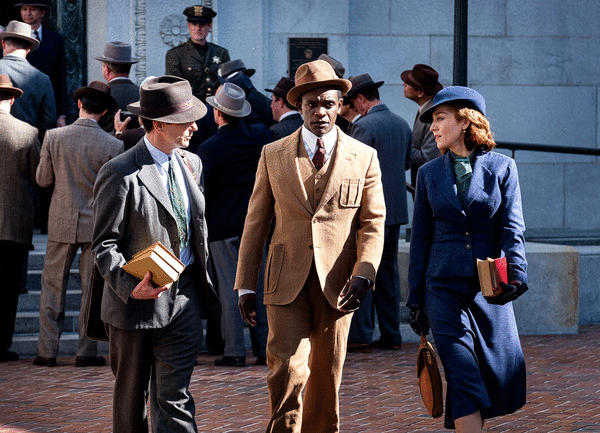
The series brings the gritty streets of Depression-era Los Angeles to life thanks to the brilliant work of its cast. Gayle Rankin perfectly blends the contradictory small town naivete and disillusioned world weariness that define Emily Dodson. Nate Corddry aptly conveys Matthew's devastation at the loss of his son and betrayal of his wife. Andrew Howard is nothing short of chilling in his ruthless portrayal of corrupt cop Joe Ennis. Eric Lange depicts Ennis' equally compromised partner, Gene Holcomb, with subtle menace and cold calculation.  Veronica Falcon infuses pilot turned speakeasy owner Lupe with shrewdness, humor, and a sizzling sensuality worth of Marlene Dietrich. Tatiana Manslany is mesmerizing as magnetic preacher Sister Alice McKeegan. Chris Chalk aptly portrays the inner conflict of honest police officer Paul Drake in his depiction of Drake's efforts to maneuver the corruption surrounding him. Juliet Rylance infuses Mason's secretary turned attorney Della Street with wit, warmth, and charm in a performance that rival's Barbara Hale's iconic turn in the original series. Even in the midst of a superior supporting cast the series belongs to Matthew Rhys as Perry Mason. In Rhys hands' the too good to be true attorney of the original series is transformed into an all too human everyman struggling to hold onto his principles in an increasingly unprincipled world.

At once an inspired tribute to both its predecessor and classic noir and a refreshingly original mystery Perry Mason aptly raises the standard of modern television. The script expertly balances the grit and atmosphere of classic noir with a modern sensibility to create a viewing experience that is nothing short of gripping. The expert performances of the cast transport viewers to the dust ridden streets of 1930's Los Angeles and the darkest corners of the human soul. The verdict is in Perry Mason is one of the most riveting dramas to appear on the small screen.





Monday, February 20, 2023

Classics: A Review of The Prince of Egypt By Lauren Ennis

Genocide, slavery, family conflict, and religion are all topics that are best left out of polite conversation. Yet, 1998's The Prince of Egypt manages to weave these same controversial topics into an animated tapestry that is certain to enthrall children and parents alike. While the film relates the familiar tale of the Book of Exodus, it utilizes breathtaking animation, complex characters, and soaring songs to infuse new life into the ancient tale. This Passover and Easter season relive the triumph and tragedy of The Prince of Egypt.

The story begins with Pharaoh Seti I ordering the execution of all male Hebrew infants in an effort to prevent his slaves from outnumbering and eventually overthrowing their masters. In the midst of the carnage one slave, Yocheved, defies her masters and puts her infant son into a woven basket in the Nile. The child's older sister, Miriam, watches as her younger brother is found floating in the river by Seti's wife, Queen Tuya, who proceeds to adopt him despite his heritage. Decades later the baby, Moses, has grown into a young man and prince of Egypt. Moses leads a life of ease and privilege until a chance meeting with his biological siblings leads to the revelation that his entire life has been a lie. After he reluctantly accepts his true identity he feels compelled to intervene when he sees a slave being abused. In the ensuing struggle he accidentally kills one of the Egyptian overseers, prompting him to retreat into the desert. During his self-imposed exile he rebuilds his life as a shepherd and marries a Midian shepherdess. Just when he is sure that he has left the ghosts of his past behind, however, he receives a vision from God and becomes determined to return to Egypt and set his people free. He then embarks upon an epic struggle that will pit him against the home he knew and the family he loved in one of the greatest fights for freedom the world has ever known.

While Western animation is often reduced to juvenile fare The Prince of Egypt is the rare animated film that the whole family will truly enjoy. The film relates the tale of the Book of Exodus with a gravity and depth that is rarely found in American animation. The film manages to balance between exploring the story's mature themes and remaining geared towards a young audience, ensuring that it appeals equally to both children and their parents. The film particularly shines in its efforts to relate its tale on an epic scale without sacrificing any of its humanity. While classic epics of Old Hollywood portrayed their heroes as larger than life figures The Prince of Egypt sets itself apart by making a conscious point to show each of its characters on both sides of the conflict as flawed, complex, and entirely relatable. As a result, their struggles carry greater emotional resonance and audiences are more invested in the outcomes. The film's animation is never less than gorgeous as it showcases grand landscapes and character close ups with equal skill. The animation brilliantly transports viewers to the majesty of ancient Egypt with surprising historical accuracy while relaying the plot's supernatural events with awe inspiring beauty. Similarly, the musical score soars as it superbly conveys each of the characters' emotions and provides the film with its beating heart. Join Moses on a journey for the ages in The Prince of Egypt.

The book of Exodus is brilliantly brought to animated life thanks to the stellar work of the vocal cast. Sandra Bullock infuses Moses' sister, Miriam, with her signature plucky charm. Jeff Goldblum expertly captures the toll of life in bondage as Moses' brother, Aaron. Danny Glover lends warmth and humor in his boisterous turn as Moses' father in law, Jethro. Patrick Stewart perfectly captures the duality of Seti as both a ruthless ruler and a loving father. Helen Mirren portrays Queen Tuya with maternal warmth. Ofra Haza is nothing short of heart breaking in her brief appearance as Moses' biological mother, Yocheved. Michelle Pfeiffer blends her signature sensuality with sass in her turn as Moses' strong willed wife, Tzipporah. Even in the midst of its star studded supporting cast the film belongs to Val Kilmer and Ralph Fiennes as brothers turned enemies Moses and Rameses. In Fiennes' hands Rameses is one of the most sympathetic and complicated villains in cinema as he struggles between his love for his brother and his desire to live up to their father's legacy as Pharaoh. Similarly, Kilmer portrays Moses as a well meaning, but ultimately flawed and all too human man and the story is all the richer for it. Together, Fiennes and Kilmer ensure that The Prince of Egypt is one of the most emotionally resonant, mature, and moving stories ever put to animation.

Through its masterful storytelling The Prince of Egypt relates one of the only animated tales that could be considered truly epic. The film's animation brilliantly transports viewers to the grandeur of ancient Egypt while offering vital insight into its characters. The music propels the story forward while infusing its familiar tale with with emotion and atmosphere. The star studded vocal cast brings the film's colorful array of characters to vibrant life with charm, complexity, and humanity. This Passover and Easter gather the whole family around The Prince of Egypt.


Wednesday, February 15, 2023

Classics: A Review of What Dreams May Come By Lauren Ennis

How far would you go for the one you love? That is the question that lies at the heart of 1998's romantic drama What Dreams May Come. At once an apt retelling of the Orpheus and Eurydice myth and a universal tale of love and loss the film is a testament to the power of the human heart. Through its exploration of one man's journey to hell and back the film relates a powerful tale of the transformative power of love even in the face of death itself. This Valentine's Day enjoy a corner of cinematic heaven with What Dreams May Come.


The story begins with Chris and Annie's chance meeting when their boats collide on a lake in Switzerland. The two experience an instant connection and are soon married. Years later, they are enjoying an idyllic life with their two teenage children. Their tranquil existence is shattered when tragedy strikes and both of their children are killed in a car accident. Just when they begin to pick up the pieces of their lives and marriage their world is upended once again when Chris is run down while trying to act as a good Samaritan. Chris is instantly transported to heaven where he is reunited with his children, mentor, and dog leaving Annie to cope with her grief alone. Consumed with loss, she eventually commits suicide, but rather than reuniting with Chris she remains trapped within the hell of her own mind. Chris then sets out on a journey into Hell itself to be reunited with her even if it means losing his place in heaven forever.

At once a spiritual meditation on life, loss, and all that lay beyond and an ode to the redemptive power of human connection What Dreams May Come is a film that is truly out of this world. The film sets itself apart from other romantic dramas by using its central love story to explore such weighty topics as death, grief, suicide, and the afterlife.  The film treats each of these topics with sensitivity and gravity, but avoids collapsing under the weight of its subject matter. Instead, the film uses these weighty topics to relate a tale of redemption and healing that offers a beacon of hope in the darkest of times. Through its exploration of Chris and Annie's journeys the film highlights the ways in which our love of others allows us to live on even in the face of death itself. At once entirely original and wholly universal What Dreams May Come is the stuff that cinematic dreams are made of.

The film is brought to vibrant life than to the heavenly performances of its cast. Jessica Brooks Grant aptly combines tomboy sass with vulnerability as Chris and Annie's daughter, Marie. Josh Paddock portrays Chris and Annie's son, Ian with an intelligence, earnestness, and maturity that belie his young years. Cuba Gooding Jr. portrays Chris' mentor, Albert with gentle humor and infectious charm. Max von Sydow portrays Chris' guide through the afterlife with gravitas and mystique. Even in the midst of ample supporting performances the film belongs to Robin Williams and Annabella Sciorra as Chris and Annie. Sciorra portrays Annie's grief with a raw emotion that is nothing short of devastating without sacrificing any of the warmth and charisma that continues to draw Chris to her. Williams infuses Chris with his signature humor and charm while turning in one of the most complex performances of his legendary career.

Over the course of its two hours What Dreams May Come takes viewers on an unforgettable journey from the heights of heaven to the deepest depths of the human heart. The film's combination of breathtaking visuals and innovative storytelling make for a bold cinematic vision. The stellar performances of the cast bring each of the film's characters to vibrant life. Fall in love with Chris and Annie in What Dreams May Come.


Tuesday, January 31, 2023

Classics: A Review of Office Space By Lauren Ennis

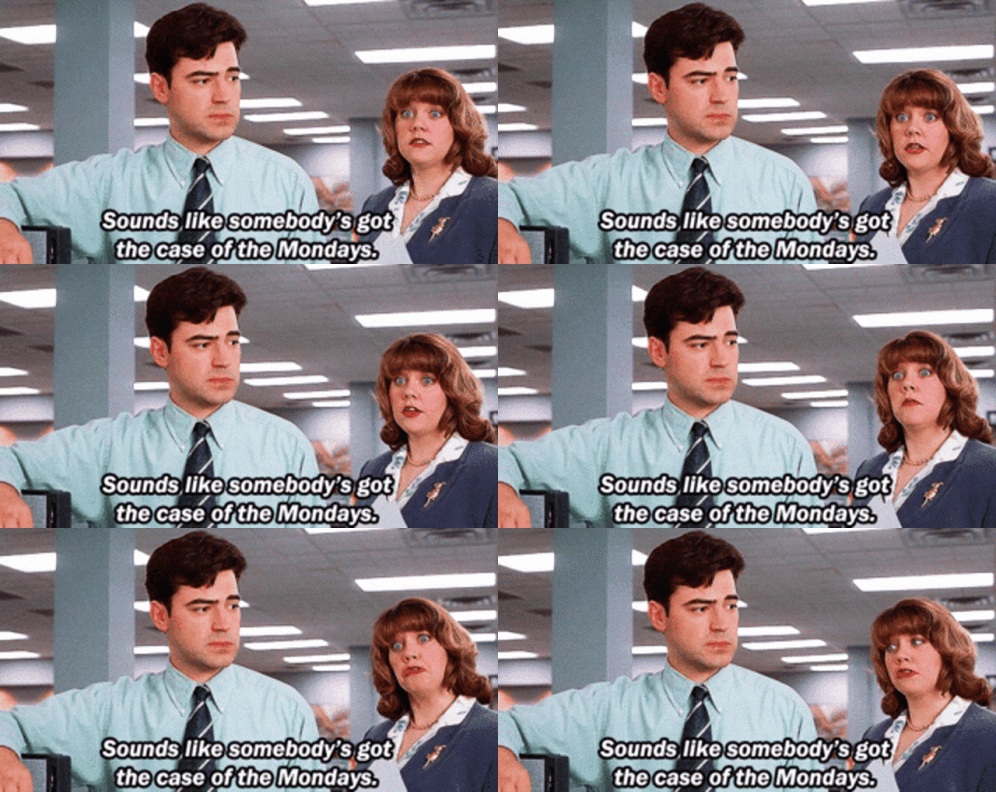
 The average American spends roughly 2,080 hours at their job. That's over two-thousand hours of micromanagers, office politics, and the ever dreaded 'case of the Mondays'. 1999's cult classic sendup of corporate culture Office Space perfectly captures the modern office environment at its most absurd. Nearly a quarter century after its release this hilariously brutal satire of white collar work  continues to resonate with every employee who has ever had the misfortune to sit in a cubicle.

The story begins with computer programmer Peter facing an existential crisis. While he has a decent wage, a nice apartment, and a stable relationship he begins to realize that he takes no joy in the life that he worked so hard for. He soon determines that his greatest problem is the soul-sucking nature of his job where he faces an inability to advance, a demanding boss, and an endless stack of monotonous paperwork. He becomes so depressed by his work that he finally seeks the help of a hypnotherapist who successfully places him in a blissful state. Hijinks ensue, however, when the hypnotherapist dies mid-session, leaving Peter perpetually in a carefree state. He then breaks up with his nagging girlfriend and becomes completely indifferent to his work, living purely for today. The more that he slacks the more quickly that he finds himself ascending the corporate ladder, even as his hardworking colleagues continue to struggle. When he learns that two of his friends are about to be laid off he leads them in a plot to topple their company and abscond some corporate funds along the way.

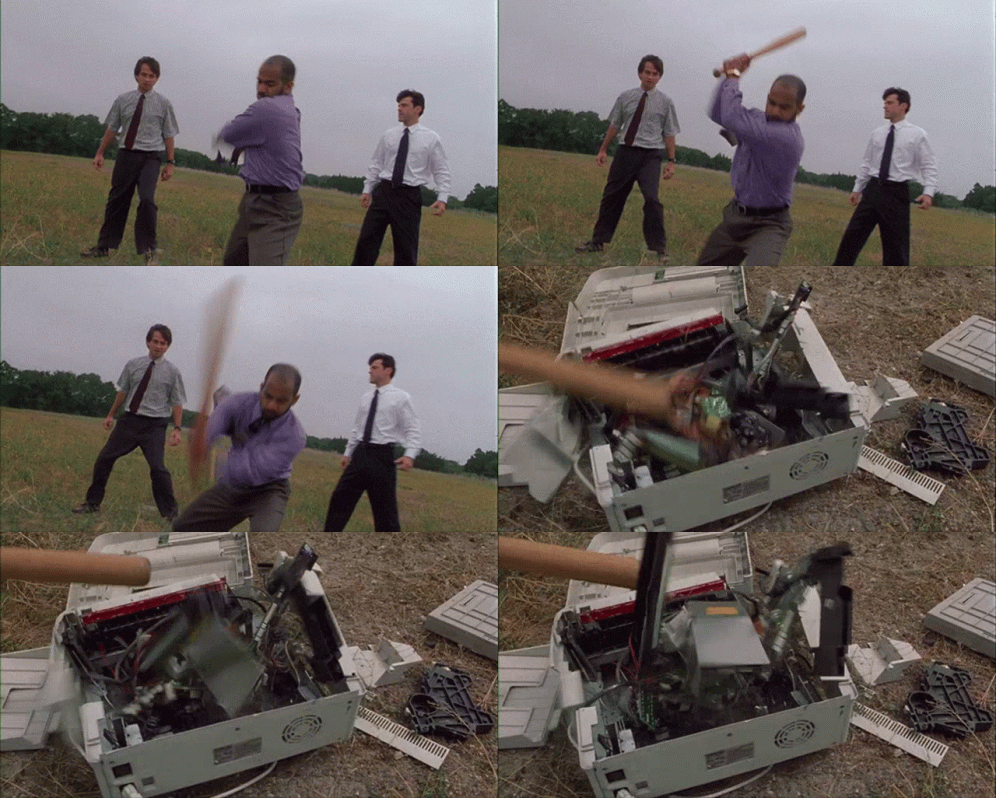
While it was a commercial failure upon its 1999 release Office Space has since gone on to become widely regarded as a modern comedic classic. In its exploration of Peter's journey from depressed, but dedicated, office drone to Zen slacker the film perfectly captures the trials and triumphs of the office experience. The depiction of the callousness that he endures at the hands of his insufferable manager aptly portrays the ways in which all too many companies undervalue and overwork their employees, Similarly, the ways in which Michael, Samir, and Milton are discarded by management highlights the ways in which employees are too often treated as disposable. Peter's unlikely rise up the corporate ladder also stands out for its uncannily accurate depiction of the phenomenon of 'failing up' in which some employees' poor performance and bad behavior are rewarded, with the least capable often rising to the highest levels of a company. Even as it explores the darkness lurking beneath the white collars the film manages to remain as light as an office window and as sharp as a brand new stapler. Through its wonderfully over the top depictions of the frustrations of failing office equipment and eye rolling  efforts at boosting office morale the film expertly sends up office culture at its most inane. The film's portrayal of the daily grind paints an apt portrait of work at the end of the millennium while also eerily predicting such modern phenomenon as 'quiet quitting' and 'the great resignation'. For the ultimate workplace comedy pull up a keyboard in Office Space.

The film is brough to uproarious life thanks to the brilliant work of its cast. Stephen Root steals each scene in which he appears as abused office grunt Milton. Ajay Naidu infuses straight laced Samir with amiability and optimism. David Herman is wonderfully outrageous as rage prone Michael. Diedrich Bader is a comic marvel as Peter's unfiltered neighbor, Lawrence. Jennifer Anniston conveys warmth and girl next door charm as Peter's love interest, Joanna. Gary Cole is the boss everyone loves to hate as Peter's smarmy manager and arch nemesis, Bill Lumbergh. Even in the midst of outstanding supporting performances the film belongs to Ron Livingston as everyman Peter, as he perfectly captures Peter's journey from desperate office drone to satisfied slacker with charm, wit, and relatability.

At once a scathing satire of corporate culture and a call to break out of the cubicle Office Space is nothing short of comedic gold. The film perfectly captures the everyday absurdities of the modern office while hinting at the darkness lurking just beneath the the shiny desktop surface. The cast brilliantly brings the story to uproarious life, with wit and charm. For essential comedic viewing punch in to Office Space.

Damn it feels good to be a gangsta


Sunday, January 22, 2023

Classics: A Review of Perfect Blue By Lauren Ennis

 "Who are you?" That is the question that lies at the heart of 1997's Perfect Blue. As it follows a young woman's journey from successful singer to struggling actress this psychological drama blurs the lines between fiction and reality and the boundaries between the private life and the public persona to ask if any of us are really who we think we are. Through its twisting, almost surreal, plot the film explores the high price of fame, the cost of creative pursuit, and the fragility of the human psyche in a manner that is nothing short of haunting. Embark upon the dangerous pursuit of perfection with Perfect Blue.

I always feel like somebody's watching me...

The story begins in 1990's Japan with pop singer Mima relenting to pressure from her agent to leave her girl group, Cham, and pursue an acting career. The transition from music to movies proves a difficult one, which is made even worse when her agent begins pushing her to accept racy roles and engage in risque photo shoots. Making matters worse, her struggle between her conflicting desires to succeed in her new career and maintain her principles plays out in full view of the public eye, drawing ridicule from her former fans. In the midst of her internal ordeal she is confronted with the external threat of a fan turned stalker, who is determined that she return to her former pop glory at any cost.  What ensues is a mind bending journey into the darkest depths of the human psyche with Mima driven to the brink of insanity as she finds herself fighting for  her career, integrity, and even her very life.

The film sets itself apart from the youthful adventures and slapstick antics Westerners have come to associate with anime by delivering a psychological drama of Hitchcockian proportions. The film offers plenty of chills courtesy of the cat and mouse dynamic between Mima and her stalker's horrific efforts to preserve his ideal vision of her. What could have been an apt but standard suspense story, however, is transformed into psychological horror through the film's exploration of the terrifying puzzle that is Mima's increasingly fractured mental state as she crumbles beneath the weight of internal and external pressures. Even as it takes viewers on a mind bending journey into its heroine's broken psyche the film offers commentary on the entertainment industry and the price of fame. The portrayal of the ways in which Mima is forced to compromise herself and her principles in order to pursue acting highlights the predatory nature of the entertainment industry that was present long before the 'Me Too' era. Similarly, the backlash from her fans following her career change captures the fickle nature of celebrity and the ways in which fandom can turn into fanaticism. The film's depiction of the use of the internet to create false narratives about, harass, and even surveil Mima eerily mirrors the dangers of internet celebrity and social media decades before their inception. Find the perfect blend of suspense, social commentary, and psychological drama in Perfect Blue.

Every breath you take, every move you make, I'll be stalking you

Mima's haunting journey is brought to visceral life thanks to Satoshi Kon's animation. In keeping with his signature style the characters are designed with a realism that is rarely seen in a genre dominated by characters with enormous eyes, impossible proportions, and hair colors in every shade of the rainbow. Instead of the fantasy ideals that populate most anime, Kon's characters are designed in the various shapes, ages, and sizes of actual people. As a result, the characters feel like they belong in our own world, making their stories that much more resonant. This is particularly felt during the film's many scenes of graphic violence, which are every bit as disturbing as if they were performed by live actors. This stark realism in turn adds to the film's sense of suspense and is sure to leave viewers leaving the lights on in the real world. Even as it keeps the characters grounded in realism the animation allows the film to move between reality, the fictional world of Mima's roles, her stalker's fantasies, and her own paranoid delusions with seamless fluidity. This constant, almost instantaneous, change in perceptions leaves viewers experiencing the film from a disorienting, fractured, view that perfectly mirrors Mima's shattered perspective. As a result, the animation effectively places viewers into Mima's mind, forcing them to experience her confusion and terror along with her. If you've ever doubted that animation could be for adults look no further than Perfect Blue.

At once an utterly unique exploration of one woman's journey to the brink of madness and back and a universal cautionary tale of the dangers of celebrity Perfect Blue is never less than unforgettable. Through its original approach to storytelling the script expertly transports viewers into the glaring spotlight of modern celebrity and the darkest corners of Mima's fractured mind.  Through its blend of the realistic and the fantastic the film's animation brings its tale of media, murder, and madness to visceral, haunting, life. Step into the spotlight in Perfect Blue...if you dare.


Tuesday, January 3, 2023

Classics: A Review of Blade Runner By Lauren Ennis

What is the true meaning of being human? What is it that separates us from animals, or better yet, machines? These are the questions that lie at the heart of the 1983 epic Blade Runner. Blending the technology and adventure of science fiction and the existential ennui of film noir the film relates a tale that is truly out of this world. At once a fantastic vision of the future and a dire warning for the present the film acts as an ode to the human experience and raises questions that will have you thinking long after its final credits fade. Party like its 2019 with Blade Runner.

The story begins in a dystopian vision of the year 2019 in which Earth has decayed into an urban wasteland following a nuclear war. The seedy streets of Los Angeles are populated with world weary humans and their automated counterparts known as Replicants. The Replicants are virtually identical to humans but possess superhuman strength, a lack of empathy, an inability to control impulses, and a lifespan of just four years. After six replicants make a bloody escape from 'off world' and land on earth former detective or 'blade runner' Rick Deckard is forced out of retirement to capture and execute them before they can wreak further havoc. The Replicants then set out to locate the scientist who created them in hopes of finding a way to stave off their imminent expiration, with Deckard following their trail every step of the way. What should be a simple case is soon complicated when Deckard meets Rachel, a Replicant who was programmed to believe that she's actually human. As he forms a connection with her he finds himself questioning his mission and wondering if Replicants might be closer to human than he thought. 

While Blade Runner was uniformly considered a commercial and critical failure upon its release, the film has since gone on to achieve widespread acclaim, and its easy to see why. Even as it transports viewers to the future, the film offers vital warnings for the present. For example, through its depiction of the aftermath of nuclear conflict the film recalls Cold War fears while speaking to escalating global tensions that have resurrected the specter of nuclear apocalypse. Similarly, the film's questions regarding the ethical concerns regarding artificial intelligence could have been ripped from today's headlines. Twenty twenty-two alone has seen explosive developments courtesy of Elon Musk's Neuralink, the deployment of AI caregivers in South Korea, and even allegations that Google's artificial intelligence has become sentient. In the wake of such developments the distant world of Blade Runner seems not only possible but likely and frighteningly near.

Although Blade Runner's prescience ensures that it remains more relevant than ever, it is its exploration of the human experience that makes it truly timeless. Through its depiction of Deckard the film aptly portrays the toll that social isolation, moral decay, and trauma take. Rather than truly living his life Deckard goes from performing one assigned task to another, much in the same way as the Replicants he hunts. His gruff interactions with his colleagues and personal isolation also hint at an inability to relate to others that his automated counterparts could appreciate. After years of executing Replicants he has become desensitized to the violence surrounding him and lost any sense of the value of life. In short after years of working as a Blade Runner he has become little different from the Replicants he hunts. It is only when he finds an unlikely human connection with Rachel that he finally begins to think for himself and feel for others. Through its portrayal of Deckard's regaining of his humanity the film transcends both science fiction and noir by asking the vital question of what it means to be human and forces viewers to question if they are truly living or merely existing. Journey across the stars and into the depths of the human soul with Blade Runner.

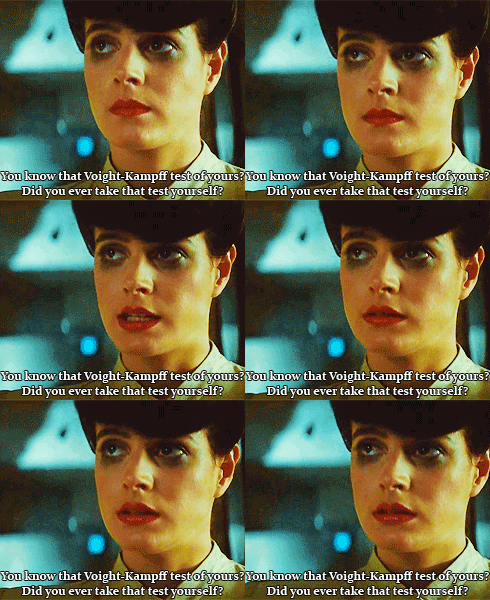
The film transports viewers into its dystopian world thanks to the stellar work of its cast. Daryl Hannah expertly balances sensuality and vulnerability as 'pleasure model' Replicant, Priss. Brion James is appropriately menacing as Replicant strongman Leon. Joseph Turkel expertly portrays the callousness and hubris of the Replicants' creator, Dr. Tyrell. Edward James Olmos lends knowing humor as Deckard's enigmatic colleague, Gaff. Joanna Cassidy gives a heartbreaking peeformance in her brief appearance as runaway Replicant Zhora. William Sanderson aptly conveys the loneliness, and innocence of prematurely aging genetic engineer J. F. Sebastian. M. Emmet Walsh expertly depicts the sleaze of corrupt policeman, Lt. Bryant. Rutger Hauer steals each scene in which he appears as the rogue Replicants' charismatic leader, Roy. Sean Young turns in the best performance of her career as she balances Rachel's blend of Replicant cool confidence with aching vulnerability. Harrison Ford plays against type and earns his place in noir history as the morally conflicted Deckard.

In the decades since its release Blade Runner has earned its place in modern culture. Through its at once gritty and poetic script the film takes viewers on an unforgettable journey into a dark future while asking essential questions about our own present. The cast brilliantly bring the film's dystopian world to life through their multi-faceted performances. For a film that will make you think, feel, and long for those moments lost like 'tears in the rain' take the case with Deckard in Blade Runner.


Tuesday, December 27, 2022

Classics: A Review of Metropolitan By Lauren Ennis

 When Tom Townsend is confronted with the reality of his favorite philosopher's failed utopia he retorts 'Everyone ceases to exist. Doesn't mean everyone's a failure'. Over the course of one debutante season Tom and his friends in Manhattan's elite struggle with the inevitable end to the existence of their childhoods, their youthful illusions, and their entire way of life. At once a love letter to a not so distant time and place and a timeless commentary on the agony and exhilaration of growing up, 1990's Metropolitan is sure to resonate with viewers across the social spectrum. Start your New Year with the smart set in Metropolitan.

The story begins between Christmas and New Year's 'not so long ago' with a group of young debutantes and their escorts en route to a seasonal gala. When they mistakenly think that they have stolen a cab ride from passerby Tom the group eagerly attempt to make amends. The group, known as the 'Sally Fowler Rat Pack' proceed take the college freshman under their wing and introduce him to the perks of high society. Despite his vocal objection to everything that his new friends represent, he quickly finds himself caught up in the intrigue and pageantry of the debutante season. The film then follows the group as they maneuver the trials and triumphs of friendship, romance, and growing up with all of the discreet charm of the bourgeoisie.

Through its deceptively simple story this slice of life brilliantly brings that all too brief interlude between adolescence and adulthood to the silver screen. In its efforts to follow the foibles and flirtations of its characters the film offers fascinating insight into the mores and manners that defined the upper crust not so long ago. In this way, the film acts as a love letter to a time and place gone by while still offering gentle critiques of its failings. Simultaneously, even as it explores  a specific time and place the film offers a universal portrait of the young adult experience. Through its unusual blend of heady intellect and petty gossip the script perfectly captures the exchanges between college students first experiencing wider concepts and trying out new belief systems. The depiction of characters' after-party exchanges aptly highlights the ways in which young adults seek to distinguish themselves from their peers all while struggling to fit in with them. As we witness the characters maneuver  fast friendships, unrequited love, existential anxiety, and the looming presence of an uncertain future its impossible not to be drawn in to their daily dramas and remember our own youth. Relive sweep, melodrama, and comedy of growing up in style in Metropolitan.

The film transports viewers to the exclusive salons of New York's elite thanks to the compelling work of its cast of unknowns. Bryan Leder lends comic charm in his turn as ever inebriated Fred. Taylor Nichols conveys insecurity, sincerity, intellect, and humor in his affable turn as Charlie. Ellia Thompson infuses Tom's ex-girlfriend Serena with the perfect blend of sophistication and callousness. Isabel Gillies perfectly captures group adventurer Cynthia's reckless restlessness. Will Kempe makes for an ideal villain as the equal parts alluring and loathsome lothario Rick. Dylan Hundley exudes cool charisma as group leader and namesake Sally. Christopher Eigerman steals each scene in which he appears as wickedly witty cynic Nick. Edward Clements makes for an insider's outsider who would make F. Scott Fitzgerald himself proud as Tom. Carolyn Farina personifies loveliness as bookish but charming wallflower Audrey.

Even as it follows its characters from one penthouse to the next Metropolitan remains a film that will appeal to anyone who remembers the promise, urgency, and sense of possibility of early adulthood. Through its brilliantly witty script the film perfectly captures the earnestness, vulnerability, and intensity that mark the end of adolescence and the beginning of all that lay beyond. The inexperienced cast turn in surprisingly nuanced and compelling performances and bring the world of New York's high society to vibrant life. Keep it classy with the Sally Fowler Rat Pack in Metropolitan