Thursday, December 22, 2016

Das Film Junkie's Favorite Films of 2016

Confessions of a Film Junkie: Das Film Junkies Favorite Films of 2016

A Video Review by Brian Cotnoir

Hey All, since I decided to not do my annual SPLATTER! Awards This year, I wanted to do a Year End Special Review where I talk about all the films that I liked this year.  Have a Great Holiday and Happy New Year Everyone

Love,

Das Film Junkie


Sunday, December 18, 2016

Classics: A Review of The Bishop's Wife By Lauren Ennis

The holidays are a time associated with fun, laughter, and plenty of seasonal stress. Between increasingly complicated decorations, parties to plan and attend, and of course the shopping rush, many of us are left wishing the season would end almost as soon as it’s begun. In the midst of our efforts to make the season just right, we all too often forget just what it is that we’re celebrating and even the people we’re celebrating with. The 1948 classic The Bishop’s Wife explores what happens when a bishop forgets that his church is more than just a building and that Christmas is more than a day for opening the presents under the tree.
There's always one humbug in every family

The story begins with title bishop Henry Brougham (David Niven) collecting funds to build a new cathedral for his parish. In the midst of his pursuit of the funds, however, he has lost sight of what his parish really needs and finds himself in need of spiritual guidance. Desperate to raise the funds in time to build the cathedral, he prays for guidance and is stunned when his prayers are answered with the arrival of angel Dudley (Carey Grant). Rather than a robed heavenly being, however, Dudley, much to Henry’s disapproval, is a suave and sophisticated man who charms everyone he comes in contact with, particularly Henry’s neglected wife, Julia (Loretta Young). During his stay on earth Dudley sets about inspiring those around him to improve their lives, with a special focus upon donating to every worthy charity except Henry’s cathedral project. Complication ensue, however, when Dudley becomes conflicted between his divine mission and the all too human feelings he develops for Julia. By the film’s finish both men learn valuable lessons in the power of giving and the true meaning of Christmas.

Despite its heavenly hero, The Bishop’s Wife’s status as a classic is owed to its entirely human themes. While the characters are all presented as essentially decent people, the film portrays each of them as having flaws and weaknesses that they need to improve upon. In this way, the film ensures that viewers relate to the characters and their struggles, which are entirely reminiscent of our efforts to overcome our own shortcomings. Similarly, the film’s central conflicts between work and family and love and duty remain timeless as they continue to resonate with people from diverse walks of life today. Perhaps the film’s greatest strength is its ability to remind us that it truly is the small details that can make the greatest difference in our lives. Dudley’s actions don’t change the course of history, but through such simple efforts as encouraging a struggling writer to finish his book, renewing interest in the choir of a struggling church, and reminding a lonely woman that she is a person of worth and value, he alters the lives of those around him for the better. It is this refreshing emphasis upon the seemingly mundane moments in life that sheds light upon the ways both great and small that we can make a difference in our own lives as well as those of the people around us. With such a timeless tale to tell its hardly surprising that the film was successfully remade as the 1996 Whitney Houston and Denzel Washington hit The Preacher's Wife.
Denzel's got nothing on you, Cary

The delightful cast brings the story to life with a charm and good cheer that are nothing short of infectious. The supporting performances add color and authenticity to the film’s portrayal of small town life with Monty Woolley and Elsa Lancaster earning particular note in their comic roles as a bombastic professor and a flirtatious housekeeper. David Niven successfully makes his stodgy bishop an endearing character who wins audiences over as the compassion that lies just beneath his strict exterior is revealed. Loretta Young is luminous in her role as Henry’s devoted wife, and makes Julia a truly vibrant woman who deserves far better than the secondary role that her husband relegates her to. Despite the uniformly strong ensemble performances, however, the film belongs entirely to Grant, who imbues Dudley with such an effervescent charm and natural optimism that he seems to embody the Christmas spirit at its most warm and welcoming.

Through its witty script, lively performances, and effortless charm The Bishop’s Wife pulls double duty as one of the finest in both romantic comedy and holiday films.  Through its lessons in life, love, and the little things in life, the film is truly one with something for the whole family that will hold new charms for every age and generation. For a Christmas film that will resonate throughout the year join Dudley and The Bishop’s Wife.
The sort of angel any girl would be happy to find by her tree

Monday, December 5, 2016

Classics: Three Holiday Films that Will Make Your Hair Stand On End By Lauren Ennis

Popularly referred to as ‘the most wonderful time of the year’ the holiday season is one which is most often associated with joy, laughter, and family fun. Despite the emphasis placed upon forgiveness, charity, and togetherness during this season, however, some of the most beloved holiday films are surprisingly dark in their emphasis upon the prejudices, greed, and malice that all too often consume humanity through all seasons. This week, I will be reviewing three films from masters of holiday animation Rankin Bass that will take you on a journey to the darkness that lies just beyond the holiday lights.
Who you callin' misfits?!

Rudolph The Red Nosed Reindeer:
No list of unsettling holiday tales would be complete with this most beloved and notorious film. While the film appears to be an anti-bullying parable on its surface, a closer look will reveal that the film actually perpetuates the very cruel behavior it is supposed to denounce. Throughout the film, Rudolph is subjected to bullying from virtually everyone he meets from his parents, to his teachers, to his classmates, and most disturbingly from Santa himself. From the moment of his birth he is singled out for his unique appearance which earns him instant contempt from both his father, Donner and Santa (whose constant misery makes Charlie Brown look upbeat). Making matters worse, Rudolph’s mother (who is tellingly never given a name) enables all of Donner’s efforts to decimate their son’s self-esteem without raising a single word in Rudolph’s defense. When he enters school he is met with similar disdain by his teacher and classmates alike despite the fact that he excels in his studies and is nothing but kind and pleasant to his classmates. Rudolph suffers what is perhaps his most devastating blow when Santa scouts his class for talent and rejects Rudolph after just one glimpse of his noteworthy nose before going on to publicly blame Rudolph’s parents for his supposed handicap. While schoolyard bullies and difficult teachers are familiar staples of children’s entertainment, the uniform ridicule that he is subjected goes above and beyond mere growing pains to the point that he is regarded as a social pariah for a defect that he is in no way responsible for. Although he does find solace in the friendship of fellow outsiders prospector Yukon Cornelius and Hermey the elf, Rudolph continues to blame himself for his inability to fit in and eventually resigns himself to a life of solitude where he imagines his nose won’t be able to cause any trouble. Although his nose eventually allows him to save the day when Santa needs a light to guide him through the fog, the film fails to deliver upon its promise of denouncing bullying as no one apologizes to Rudolph for their treatment of him and his former enemies praise him for his ability to be of use to them rather than because they have learned valuable lessons in tolerance. This lack of contrition is hardly surprising, however, when viewers consider the fact that the prejudices Christmas Town's residents extends beyond reindeer to defective toys who are exiled to a distant island in a social policy straight out of the Third Reich. Most of us dreamed of visiting the North Pole as children, but one viewing of this holiday classic will have you seeing the winter wonderland as the stuff of childhood nightmares.
Let's just say he's ahead of the fashion curve...

Nestor The Long-Eared Christmas Donkey: Marketed as a child-friendly take on the biblical tale of Christ’s birth, this film could best be described as Rudolph on steroids. Much like Rudolph, the title hero is an animal whose physical appearance makes him the subject of constant ridicule. While unlike Rudolph’s nose Nestor’s long ears are an actual nuisance which regularly cause him to trip and fall, the treatment he receives from his fellow barn animals is almost identical to that which Rudolph is subjected to. The one advantage Nestor seems to have over his reindeer counterpart is the unconditional love and support of his mother. Despite his mother’s attempts to protect him, however, he is revealed to be a victim of animal abuse when early in the film his ears earn him a beating from his breeder and he is forcibly thrown out of his barn to freeze to death in a snow storm. As if this portrayal of animal abuse isn’t unsettling enough, all of the characters seem unfazed by the breeder’s behavior, implying that animal abuse is just another part of life in the Roman Empire. Nestor’s mother courageously comes to his aid when she kicks the breeder and breaks out of the barn to rush to his side. Tragically, in her effort to protect him she makes the ultimate sacrifice as she freezes to death trying to use her own body heat to keep him alive. Devastated by his loss and convinced that his mother’s death was his fault, he gives up on life until he meets Tilly, a cherub trying to earn her place in heaven. In the style of It’s a Wonderful Life, she takes him on a journey that she promises will show him the purpose and meaning of his life…and promptly leaves him in the care of a smarmy livestock salesman to once again be ridiculed by the surrounding animals. Nestor does find his calling, however, when he is sold to Joseph and Mary and transports the heavily pregnant Mary to Bethlehem. The climax in which Nestor braves a sandstorm to transport the couple is sure to have you reaching for a Kleenex as the ghost of his mother guides him to safety. At the film’s conclusion all seems to be well with Nestor as he takes on the world with a new sense of self-worth and confidence…until the epilogue in which he is shown gleefully returning to his old farm where he jumps into his abusive breeder’s open arms. While Nestor may have found a divine use for his unusual ears, the troubling final scene would seem to indicate that even after his heavenly adventure there is no escaping the hellish cycle of abuse that he was born into.
He makes JD Salinger look social

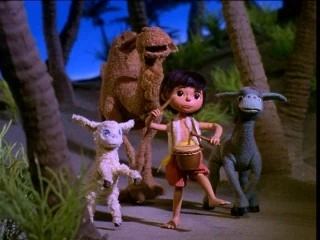
The Little Drummer Boy: Easily the most disturbing film on this list, The Little Drummer Boy is a powerful tale of trauma, loss, and redemption that had no business being marketed to small children. The film begins with recently orphaned Aaron traveling the desert alone except for three animals from his parents’ farm after being left to fend for himself by a society that apparently has no concept of child services. While fiercely loyal to and protective of his animals, he is quickly revealed to be distrustful of people to the point of misanthropy. As the story unfolds, it is difficult for audiences to argue with Aaron’s view of humanity as he is continually met with greed, violence, and cruelty. His misadventures begin when con-men Ben Haramad and Ali witness Aaron’s ability to communicate with his animals and make them dance to the beat of his drum. Seeing a financial opportunity, the pair kidnap the boy and take him to Jerusalem where he is held captive and forced to work as a street performer. During one of his performances he suffers a post-traumatic flashback, which reveals how his parents were brutally murdered when bandits raided the family's farm and razed their house to the ground while his parents were still inside. While the majority of the violence takes place off-screen it is still a shocking moment that would seem straight out of a news story about ISIS rather than the backstory for a children’s film. The flashback causes Aaron to fly into a rage and violently lash out at the audience, prompting Ben and Ali to flee the city with Aaron and his animals in tow. When Ben and Ali sell Aaron’s beloved camel to none other than the magi, Aaron reaches his breaking point and escapes with his lamb and donkey. Just as he is reunited with his camel, however, he is confronted with tragedy once again when his beloved lamb is critically injured after being struck by a passing chariot in a hit and run accident. While the lamb is eventually restored to good health, it is not through an act of human kindness but through a miracle when Aaron encounters the magi who encourage him to play for the newborn Jesus.  Although this climax is powerful from a spiritual perspective it is completely undermined by the fact that it reinforces Aaron’s poor view of humanity as the only kindness he encounters is from a divine being. The ending also suffers from the fact that the only one who learns anything or grows to become a better person is victim Aaron. Ben and Ali never face repercussions for kidnapping a minor and forcing him into indentured servitude, the bandits who murdered Aaron’s parents are never caught, and the chariot driver is never held responsible for almost fatally injuring an animal. As a result, while the film continually repeats that there is goodness in the world it fails to reinforce this message through its characterizations, leaving viewers to conclude that Aaron’s world is every bit as bleak and cold as he perceives it to be. Finally, at the film’s conclusion Aaron is still alone, leading viewers to assume that his story goes full circle with him resuming his solitary existence with his animals even after his supposed lessons in compassion and forgiveness. One viewing of this childhood classic will forever leave its namesake song with the echo of loneliness.

Monday, November 21, 2016

Classics: A Review of Anastasia By Lauren Ennis

Animated film buffs often consider the 1990’s Disney’s  renaissance, as over the course of that decade the studio effectively regained its former domination of animated film making. Despite the studio’s unquestionable success, however, other studios continued to produce quality films that rivaled even the most highly praised work of their famous counterpart. Such is the case with the 1997 musical adventure Anastasia, which takes the well-worn princess formula and adds a dark sensibility and historical twist to create a wholly unique work that is truly in a category of its own. Using the tumult and tragedy of the Russian Revolution as a springboard, the film weaves a twentieth century fairy-tale that truly has something for the whole family.
One princess you won't find waiting around for a prince

The story begins in 1916 St. Petersburg, as Czar Nicholas II holds a tricentennial ball at the Catherine Palace. Suddenly, the ball is interrupted by the appearance of the recently banished former imperial advisor Rasputin. In an act of vengeance, Rasputin (Christopher Lloyd) uses black magic to place a curse upon the entire Romanov dynasty, which ultimately culminates in the start of the Russian Revolution and the siege of the palace by communist forces. With the help of a servant boy the Czar’s youngest daughter, Anastasia (Kirsten Dunst), manages to escape, and she and her grandmother, Dowager Empress Marie, are the only surviving members of the immediate royal family. After the physical and emotional trauma of the siege Anastasia suffers from amnesia and spends the remainder of her childhood in an orphanage under the name Anya without any knowledge of her true identity. Ten years pass and Russia has fallen under communist rule and become the USSR, but hopeful rumors of the princess’ survival persist and the Dowager Empress (Angela Lansbury) offers a ten million ruble reward for information leading to her reunion with Anastasia. Capitalizing on the rumor, con-man Dmitri (John Cusack) and his partner Vladimir (Kelsey Grammer) concoct a scheme to train a convincing look-alike to pass as Anastasia and split the reward money three ways. Just as the pair give up on their auditions for a potential ‘Anastasia’, however, they encounter Anya (Meg Ryan) and convince her that she really is the missing princess, all while remaining unaware of her true identity. The trio then embark upon a journey to Paris to meet the Dowager Empress, with the vengeful ghost of Rasputin following behind in close pursuit.

While marketed as a typical animated princess tale, Anastasia is a far darker and more complex take on the traditional formula. The most obvious example is the inclusion of a rotting corpse as the villain, which would have been deemed too graphic for most children’s films. More significantly, the film’s premise also diverges greatly from tradition in that it is derived from the real life incident in which a former mental patient was semi-successfully presented as the real Anastasia. This historical context gives the story just enough grounding in reality to set it apart from its ‘far away land’ counterparts, and the real life upheaval that engulfed Russia during the revolution provides a distinctly gritty backdrop for the film’s fictional proceedings., Although the film largely abandons history in favor of fantasy beyond that initial premise, the depiction of its heroine’s attempts to cope with the all too real displacement and loss faced by people across revolutionary Russia, is far more resonant in any era than the problems explored in most family entertainment.
And that is how you throw a party

Beyond its historical setting, the depth with which the film imbues its characters outshines even many of Disney’s most beloved classics. For example, while most princess films focus upon a heroine struggling to find love Anastasia’s journey refreshingly focuses upon her efforts to find herself, and her eventual romance is just one step in her larger quest for self-discovery. Similarly, the film’s protagonists are flawed characters with Dmitri and Vladimir eking out a living by deceiving others, Anya exhibiting an immature haughtiness, and Empress Marie becoming jaded after years of loss and disappointment. Yet it these same flaws that make the characters entirely human and make their eventual growth over the course of their adventures so rewarding. Through its emphasis upon its cast of lovable misfits, the film contains the heart to rise above its vast historical inaccuracies and fairy-tale trappings. As a result, while the film may have been designed to profit off of the popularity of fairy-tales, the story is at its heart one of average people trying to make the best of a world turned upside down by the sweep of history, which owes as much to such historical epics as Doctor Zhivago as to traditional fairy-tales such as Snow White.


The film’s combination of effective performances, breath-taking animation, and memorable songs successfully weave a spell that is nothing short of cinema magic. The character designs, while reminiscent of Disney are largely more realistic, lending the film a more mature touch before the first line of dialogue is even spoken. The settings cleverly incorporate the artistic styles of the era with the trio’s arrival in Paris particularly standing out for its use of modernist art and cameos by various historical figures. The fantasy ballroom sequence in which the decrepit Winter Palace is briefly restored to its pre-revolution glory is truly stunning and every bit as breathtaking as Beauty and the Beast’s more well-known ballroom scene. The songs are also consistently catchy with waltz “Once Upon a December” proving nothing short of haunting as it captures Anya’s desperate struggle to reclaim her past. The voice actors all lend apt performances with John Cusack and Meg Ryan each providing multifaceted turns and bringing plenty of spark to their animated pairing as Dmitri and Anya. Angela Lansbury brings a world-weariness and pathos to her role as the Dowager Empress that ensures her performance ranks on par with any live action role in her legendary career. Kelsey Grammer and Bernadette Peters lend apt comic performances in their supporting roles and imbue Vladimir and his ex-girlfriend turned Dowager Empress’ lady in waiting Sophie with plenty of charm. Christopher Lloyd is appropriately sinister, while his interactions with talking bat sidekick, Bartock (Hank Azaria), provide welcome comic relief for young viewers.
No fairy tale would be complete without a happy ending

Through its compelling story, hypnotizing score and dazzling visuals, Anastasia proves that animation isn’t just for kids. While its certainly no historical text, the layered characters and detailed animation brings the world of early twentieth century to Europe to vibrant life, and sheds a family friendly light on one of history’s most notorious mysteries. For a modern fairy tale, few films are as utterly enchanting as Anastasia.

Monday, November 7, 2016

Classics: A Tribute to Vivien Leigh By Lauren Ennis

November 5, 2016 marked what would have been the 103rd birthday of film icon Vivien Leigh. Best known for her Oscar-winning turn as the iron-willed Scarlett O’Hara, Leigh was a versatile actress whose career on the stage and screen spanned nearly thirty years. Her preference for theater acting led to her appearing in a surprisingly limited number of films, which in turn has caused her legacy amongst contemporary filmgoers to virtually begin and end with Gone with the Wind. While her performance as Scarlett is indeed one that would be the crowning achievement of any actor’s career, to limit her recognition to one role would be an injustice to both Leigh and her contribution to the performing arts. In honor of this truly stellar actress, this week I will be featuring three of Leigh’s most varied and accomplished film roles, which prove that she was an artist certainly worth giving a damn about.
If Winston Churchill's wrong I just don't wanna be right
That Hamilton Woman: Released in the midst of World War II, this historical epic is often noted for its reported status as a favorite film of both Winston Churchill and Joseph Stalin; a status that was likely owed to Leigh’s captivating performance as the title heroine. The story follows the true tale of the meteoric rise and tragic fall of chorus girl, turned aristocrat, turned penniless prisoner Emma Hamilton. The story begins with an elderly, and now alcoholic, Emma reflecting upon her whirlwind life as she spends her final years in a debtor’s prison. The film then flashes back to her  beginnings as a struggling actress before revealing the by turns cruel and fortunate fate that eventually led to her becoming Lady Emma Hamilton, one of England’s most well-known and sought after socialites. In these early scenes Leigh successfully charts Emma’s development from vivacious and naïve girl to cynical and resilient woman, playing both extremes with a nuance and aplomb that ensures her character develops with engaging realism. As the story continues, the film evolves from a straight-forward biography to a historical romance and political allegory as Emma meets and shares a tragic love with naval hero Admiral Horatio Nelson in the midst of the Napoleonic wars. The scenes following the pair’s hesitant courtship and eventual passionate affair contain a particular sparkle due to the sizzling chemistry between newlyweds Leigh and Lawrence Olivier, who appear to be falling in love before the viewers’ eyes. Similarly, Leigh portrays Emma’s conflict between her impossible love for the unhappily married Nelson and her loveless, but secure, marriage to Lord Hamilton with a depth that ensures viewers will empathize with her heroine’s plight, even as Emma breaks one moral and social code after another. When Emma is finally forced to give Nelson up for the good of her country as England confronts the threat of Napoleon, Leigh successfully captures the self-sacrifice driving her without resorting to the maudlin histrionics so often found in war-time propaganda films. It is her natural approach that provides the film’s conclusion with the crucial subtlety that successfully keeps the film grounded within its own historical context, while recalling the all too present threat that audiences were facing from Nazi Germany. Through her by turns triumphant and tragic performance as one of history’s most notorious women Vivien Leigh ensured that audiences would remember, That Hamilton Woman.

Just how many tricks did you turn?!

Waterloo Bridge:
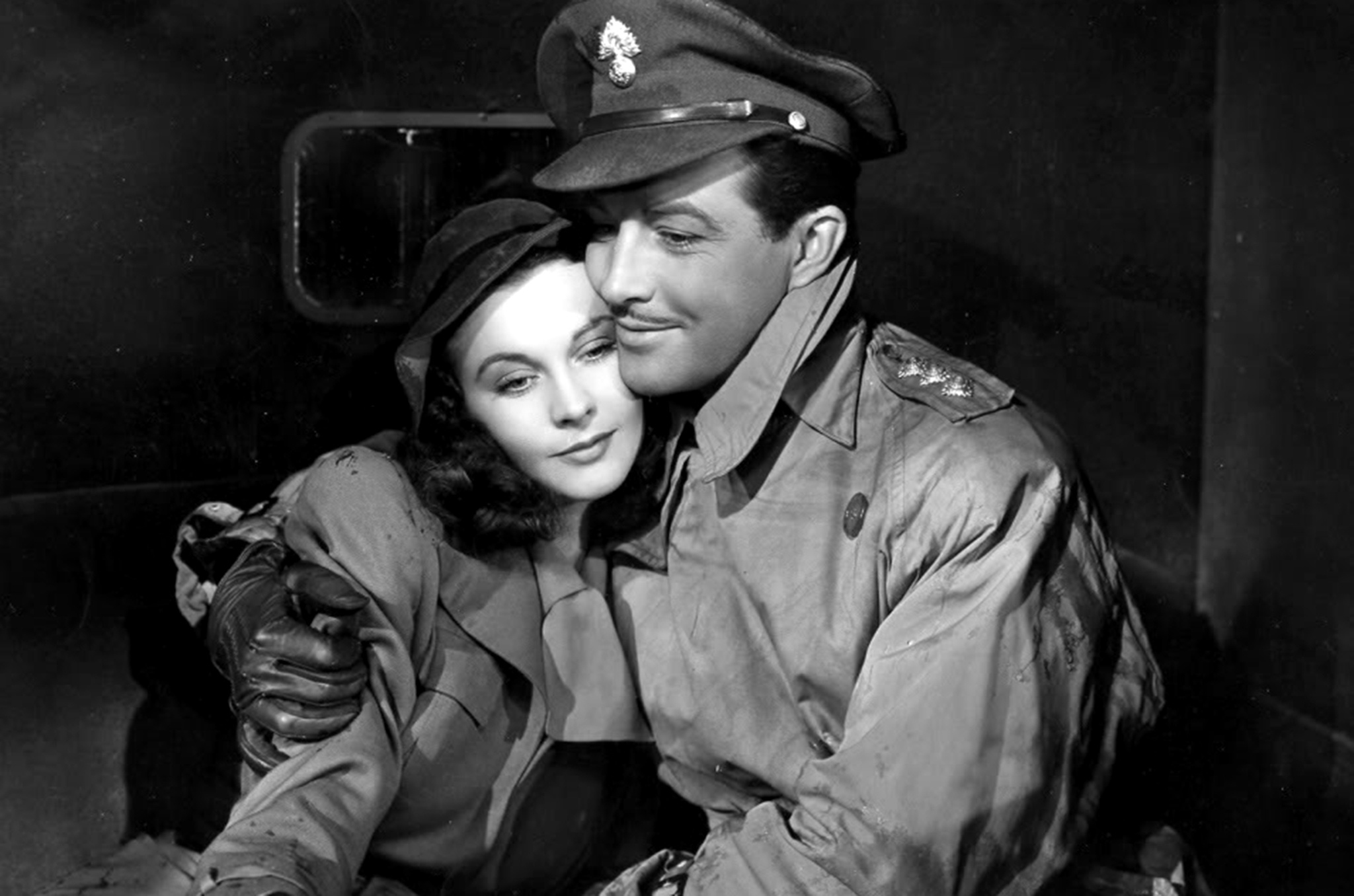
Adapted from a 1930 stage hit (which was first brought to the screen in 1931), this 1940 crowd pleaser puts the ‘tragic’ in tragic romance. The film chronicles the ill-fated love affair between an American soldier on leave in London and a British ballerina set against the backdrop of World War I. Leigh begins the film as a portrait of youthful idealism and portrays ambitious dancer Mayra with an effervescent charm that leaves little wonder as to why Robert Taylor’s Roy falls for her as quickly and passionately as he does. The chemistry between the two is nothing short of infectious and ensures that audiences will root for their whirlwind romance to succeed. Leigh is equally adept in her gritty portrayal of Mayra’s downward spiral after she first loses her job and later is misled into believing that Roy has been killed at the front. Her portrayal of Mayra’s determination to survive even in the face of devastating personal loss and degradation is nearly as inspiring as Scarlett O’Hara’s similar efforts to overcome war-time adversity, which in turn makes her ultimate plunge to rock bottom all the more heartbreaking. With one downcast glance of her despondent eyes as Mayra resorts to a life of prostitution Leigh captures the disillusionment and resignation of World War I’s ‘lost generation’. When Roy returns seeking to resume their relationship, Mayra is shaken to her core yet again as she struggles to grasp what may be her final chance at happiness, even as her past continues to haunt her. It is in this final section of the film that Leigh truly shines, as she merges both Mayra’s former vivaciousness and romantic idealism with her eventual world weariness and guilt as she attempts to resume her former life while continuing to struggle with the effects of life-altering trauma. While the film’s tragic conclusion may come as little surprise, Leigh’s devastating performance ensured that this reviewer remained completely transfixed until the final heartrending reel. For a journey into love’s joys and tragedies, join Vivien Leigh for a stroll along Waterloo Bridge.  
I don't think we're at Tara anymore, Toto...
A Streetcar Named Desire: While the first thing that comes to many a filmgoer’s mind at the mention of this film is Marlon Brando’s anguished cry of “Stella!”, the driving force behind this streetcar is Leigh’s performance as Stella’s tormented sister, Blanche. Fleeing scandal and poverty, displaced Blanche Dubois arrives in New Orleans for a temporary stay with her sister and her sister’s husband, Stanley. Still clinging to the genteel southern belle lifestyle of a bygone era, Blanche is mortified when she meets the cruel and vulgar Stanley and is expected to adapt to the volatile lifestyle that he and Stella enjoy. Leigh’s tortured performance is a fascinating glimpse into arrested development and the dark side of nostalgia as Blanche fervently struggles to hold onto the romantic ideals of her youth, even after those very misplaced notions have led her completely astray. Her wilting flower portrayal of Blanche is a perfect counterpoint to the sensuality and ‘live in the moment’ philosophy that define Stanley, and ensures that audiences will empathize with Blanche even after her sordid history is fully revealed. Similarly, her nuanced and subtle performance stands in brilliant contrast to Brando’s brash method acting and serves to highlight the ways in which Blanche’s struggles with one taboo social ill after another has forced her to lead a shadowed life. Even after the final reveal of her shocking behavior before reaching New Orleans, Leigh’s performance ensures that viewers won’t want to judge the tarnished belle too harshly. Interestingly, the role was in many ways art imitating life, as Leigh herself struggled with bipolar disorder and was known to engage in some of the same risky behaviors that Blanche misguidedly seeks salvation in. In this way, Leigh’s empathetic portrayal serves as both an artistic and social triumph as it not only brings a tormented character to vibrant life, but also provides viewers with insight into the all too real torments that those living with mental illness must face every day. For a tour of acting at its finest step onto A Streetcar Named Desire.

Monday, October 24, 2016

Classics: Three Halloween Treats For the Young and Young at Heart By Lauren Ennis

Halloween is the one day out of each year in which the rules of polite society cease to apply. It is a day in which clothes are meant to be outrageous, balanced meals are exchanged for sugary gluttony, and a good scare at a friend’s expense is not only accepted but expected. In short, it is a holiday that is tailor-made for children. This week I’ll be celebrating the cinematic thrills and chills that made so many children wonder what might be lurking under the bed and what it is that goes bump in the night.
You say 'witch' like its a bad thing...

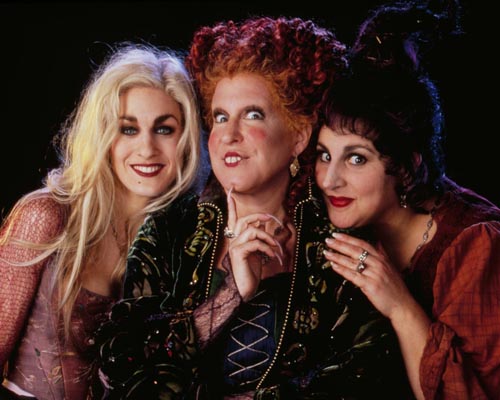
Hocus Pocus: This 1993 comedy drama successfully blends the best of the supernatural and the whimsical to create a film that is at once a horror spoof, an apt warning, and a paranormal thrill ride. The film focuses upon the efforts of a modern teen, his sultry classmate, and his quirky younger sister to stop a trio of seventeenth century witches from wreaking havoc upon the city that condemned them to hanging centuries earlier. The film takes a classic Halloween premise of ancient evil returning to haunt the present and successfully adapts it with a gen-x attitude. It is through its distinctly 1990’s setting that the film adds a comic dimension with its three witches, the Sanderson sisters, embarking upon a hilariously inept journey to adapt to life in 1990’s Massachusetts as its hero, Max, simultaneously engages in his own fish out of water antics as he struggles to fit in at his new school. Through its two comic subplots the film offers biting social commentary for teen and adult viewers as it highlights the absurdities of both modern life and the adolescent experience in ways that continue to resonate even if it’s, “tubular” slang and feels as outdated as the Sanderson sisters’ fashion choices.  Despite the shenanigans that populate the characters’ adventures, the film’s premise is a surprisingly dark one for a children’s film, even by Halloween standards, as its central struggle serves as an apt allegory for the threat of child abduction. The film immediately launches into its central metaphor by beginning with the witches luring and abducting a young girl who they proceed to, “drain the life from” as part of a spell to preserve their own youth. While the scene avoids any graphic violence, it is all too obvious that the girl was a victim of both kidnapping and murder. The film continues with its emphasis upon ‘stranger danger’ as it shows Max complaining when he is charged with chaperoning his little sister during trick-or-treating, only for him to later realize just how frighteningly real the dangers his parents warned them both about really are. The special effects are by turns comically grotesque and visually dazzling, ensuring that viewers will remain engaged in the fantastic plot without leaving younger viewers too scared. The acting is uniformly excellent with a young Thora Birch particularly standing out as Max’s precocious younger sister, Danny and Sean Murray bringing depth and pathos to the otherwise outlandish plot as the guilt wracked Thackery Binx, and Omri Katz imbuing Max with the equal parts charm and restlessness that make him an entirely relatable protagonist. Bette Midler, Sarah Jessica Parker, and Kathy Najimy nearly steal the film in their by turns comical and chilling performances that make the Sanderson sisters villains that viewers love to watch as much as they love to hate. It just isn’t Halloween without a little Hocus Pocus.
Christina Ricci ain't afraid of no ghost!


Casper: Like Hocus Pocus, Casper focuses upon a teen grappling with adolescence, but unlike its counterpart includes the fascinating twist that the ghosts are in many ways more human than their mortal counterparts. The film follows the adventures of friendly ghost Casper as he befriends a lonely girl struggling with moving to a new town following the death of her mother. Kat arrives at the eerie Whipstaff Manor after her professional ghost hunter father is hired to ferret out the spirits residing there by the greedy heiress who inherited the house. Father and daughter quickly learn that there’s more truth to the rumors of paranormal activity than they expected when they realize that they are sharing the house with an entire family of ghosts made up of Casper and his three ghastly uncles known as the ‘ghostly trio’. Although initially frightened by his uncles’ antics, Kat quickly befriends the welcoming Casper whom she learns is the ghost of a boy her own age who is struggling to recapture his lost memories of his mortal life. Over the course of the film the unlikely pair learn crucial lessons from one another as the deceased Casper inspires the grieving Kat to embrace life, and she in turn helps him to come to terms with his past and prepare to move forward to the afterlife. It is these universal lessons that sets the film apart from typical Halloween fare aimed at either children or adults. The performances are uniformly engaging with the ghostly trio (Joe Nipoty, Joe Alaskey, and Brad Garrett ) lending plenty of comic diversion while Christina Ricci and Bill Pullman keep the film firmly grounded despite its fantastic plot, and Malchi Pearson provides the film with its emotional core as Casper. The effects are more designed for entertainment than traditional fear with the ghosts more closely resembling living cartoons than actual spirits and their adventures containing more comic gags than chills, but it is this very same light-handed approach that ensures the film will draw younger viewers into Casper’s world without scaring them off. Comedy, supernatural adventure, and coming of age story, all of these elements come together to make a film that is truly friendly to the whole family in Casper.
No stranger than believing that Charlie Brown might actually kick that football
It’s the Great Pumpkin, Charlie Brown: No holiday film list would be complete without an entry from the Peanuts gang, and It’s the Great Pumpkin Charlie Brown is one of the best of the franchise. In the tradition of the best of Peanuts, the film remains engaging for children across generations, even while it remains permeated with a dry wit and mature sensibility that viewers will gain an even deeper appreciation for as they grow older. The film focuses upon Linus and Charlie Brown each pursuing what they anticipate to be the greatest Halloween of their young lives. Like so many of us, however the pair each face their fair share of disappointments as Charlie Brown goes trick-or treating, only to be given rocks at not just one but every house that he stops at, and Linus spends his night waiting in vain for a visit from ‘the great pumpkin’ (a Halloween twist on Santa in which a magical giant pumpkin appears in pumpkin patches to visit children who truly believe in it). While this melancholy tale familiar to the franchise could have easily lent the film a jaded edge, the story instead takes an uplifting turn as both Charlie Brown and Linus remain hopeful that they will have a better Halloween next year if they persevere. The film’s climax in which Linus vows that he will see the great pumpkin next year by becoming even more dedicated and believing even harder is a testament to the power of faith and the resilience of youth that becomes more inspirational as viewers reach adulthood. The film includes the original writing and directing team of Charles Schultz and Bill Melendez and features all of the original voice actors making it a true Peanuts classic. The film is also notable for its introduction of Snoopy’s first fantasy sequence as he dons his WWI flying ace costume and assumes his alter ego for the first time. Whether its kicking that elusive ball or waiting for the great pumpkin It’s the Great Pumpkin, Charlie Brown reminds us all of the fundamental importance of believing in our dreams regardless of how impossible they might seem and remains a symbol of the magic and mischief of Halloween.

Saturday, October 8, 2016

Classics: Three Remakes that are Arguably Better than the Original By Lauren Ennis

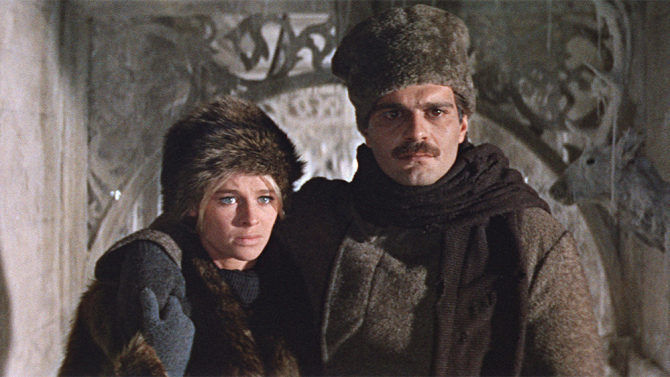
Move over Julie Christie...
Remakes are often derided as unoriginal and unnecessary efforts that undermine the very qualities that made an original film a classic. With the plethora of films that remake everything from sitcoms, to children’s shows, to video games which are regularly released to reviews that are mixed at best, it is easy to see how remakes have been stereotyped as shorthand for ‘not worth your ticket’. In some cases, however, a remake can provide a fresh look at material in a way that makes an old story relevant for a whole new generation. In such instances, a remake can provide additional insight that enriches the viewing experience for fans of the original film, while still holding resonance for new viewers. This week’s review will explore three films that will have you rethinking the reputation of the remake.
Don't look now, but we just got outdone

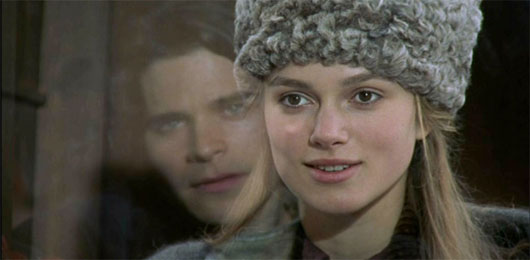
Doctor Zhivago: Like its predecessor, this 2002 BBC miniseries follows the tumultuous romance of poet and doctor, Yuri Zhivago, and his tormented nurse and muse, Lara Antipova, amidst the upheaval and turmoil of the Russian Revolution. While the 1965 adaptation of the Boris Pasternak novel is rightly regarded as a classic, the more recent adaptation brings the novel to life with a grittiness and realism that highlights the tragedy of the lovers’ doomed affair as well as that of the world that is crumbling all around them. For example, the miniseries utilizes actual newsreel footage from World War I and the early days of the Soviet Union to place the events portrayed on screen within the context of Russian history. The miniseries also utilizes location shots, as well as authentic Russian music and historically accurate costumes that bring the distant world of the characters to vibrant life. Beyond the aesthetics, the film also utilizes a miniseries length script that allows the characters time to evolve and adds additional insight into each character's backstory. For example, while the 1965 film portrayed Lara’s (Julie Christie in the 1965 film and Keira Knightley in the miniseries) affair with her mother’s lover, Victor Komarovsky (Rod Steiger and Sam Neill ), as a mercenary attempt to escape her impoverished existence, the miniseries accurately portrays the relationship to be one of sexual abuse. The miniseries adds further insight into Lara’s mentality by portraying her relationship with her mother (Adrienne Corri  and Maryam d'Abo), who encourages Komarovsky’s abuse in an effort to ensure he continues providing them financial support. Through this emphasis upon her formative years, the film offers a more complex perspective of its heroine that portrays her as a resilient woman struggling with the guilt and shame commonly experienced by abuse victims, rather than an opportunistic femme fatale. Similarly, the film contains several flashbacks to Yuri’s (Omar Sharif and Hans Matheson) childhood that highlight Komarovsky’s role in his father’s suicide. These flashbacks further emphasize Komarovsky's cunning and lend credibility to Yuri’s otherwise confounding refusal to accept Komarovsky’s help in escaping the Soviet Union in the film’s tragic final act. The film also successfully imbues Lara’s boy next door boyfriend turned ruthless commissar husband, Pasha (Tom Courtenay and Kris Marshall), and Yuri’s adopted sister turned wife, Tonia (Geraldine Chaplin and Alexandra Maria Lara), with much needed depth by portraying them as three dimensional people worthy of the audience’s sympathy. In this way, the audience remains fully aware of the ramifications of Yuri and Lara’s affair, even while rooting for the pair to find happiness. Thus, while less glamorous than its predecessor, the BBC miniseries of Doctor Zhivago relays all the romance and tragedy of the original novel with a truly epic scope.
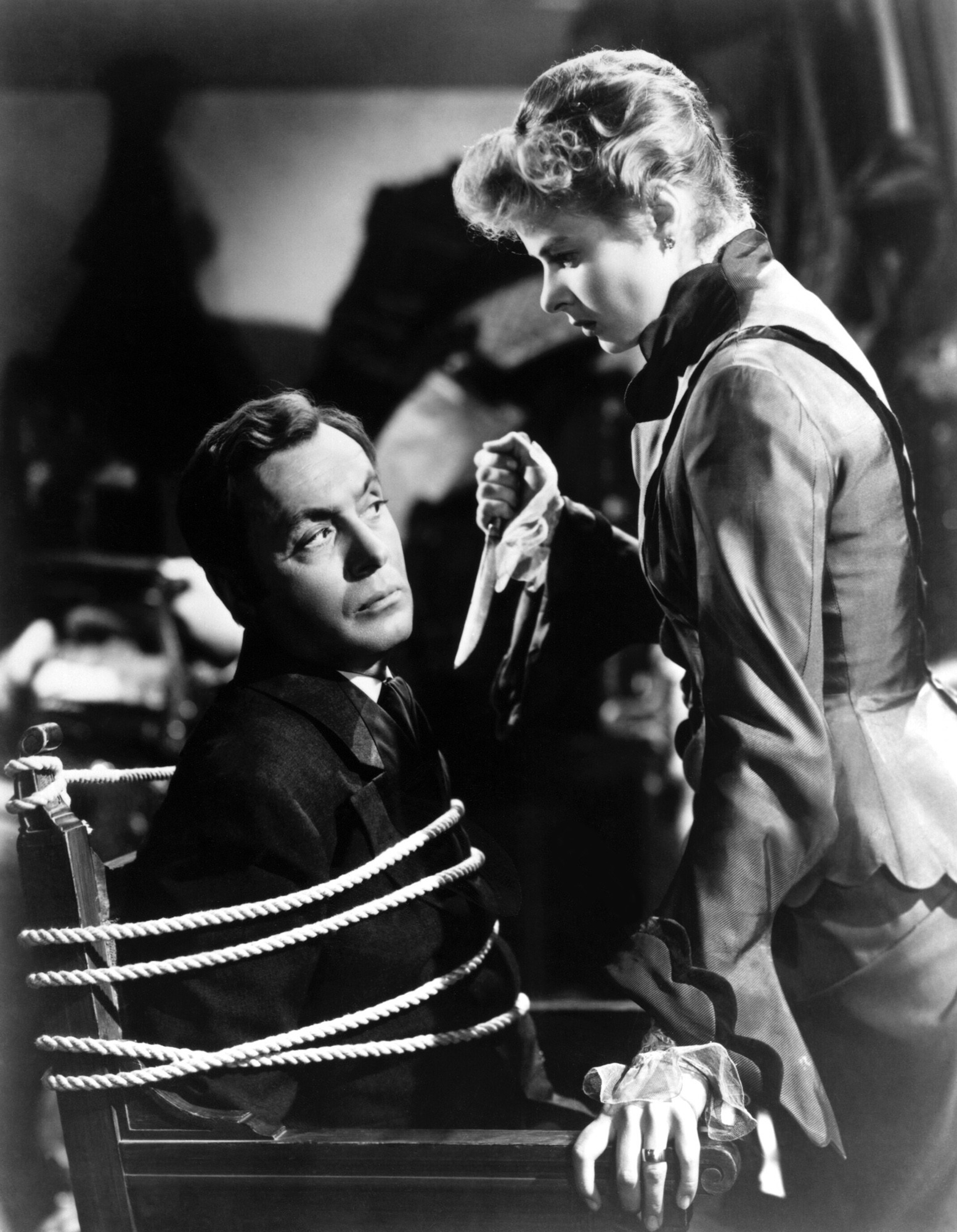
Damn that Bergman and Boyer!

Gaslight: Originally adapted from the stage hit Angel Street, Gaslight is unique example in which each adaptation only seems to make the story that much more thrilling. While the 1940 British adaptation and the 1944 Hollywood adaptation both follow the basic plot of Angel Street, the Hollywood treatment made this beloved thriller a genre staple that has since entered the realm of popular vernacular. In both stories, a naïve newlywed is systematically driven insane by her manipulative husband as part of his scheme to cover up his past crimes and regain a lost fortune. In the original film, Bella (Diana Wynyard) is a starry-eyed bride who blindly follows her husband’s orders in accordance with the norms of Edwardian London. In the 1944 film, Paula (Ingrid Bergman) is a vivacious, but haunted woman whose past is marked by tragedy following the death of her parents and later the gruesome murder of her aunt. While Paula does play a secondary role in her relationship with her husband, her submissiveness is due the fact that unlike Bella she is entering her marriage in a foreign country whose customs she is unfamiliar with, and is married to a much older man who in many ways fills the void of her lost family. As a result, Paula is a heroine audiences empathize with, and eventually root for as she finally takes steps to reclaim her life. Bella, by contrast, is unreasonably meek to the point of appearing childlike and offers virtually no resistance against her husband’s machinations, leaving audiences wondering if there really might be some merit to her husband’s accusations of mental illness after all. Similarly, in the 1940 film Paul (Anton Walbrook) is a volatile man who continuously belittles Bella when he isn’t engaging in adulterous affairs with both prostitutes and the household maid. Paul’s one-dimensional villainy leaves viewers baffled as to what made Bella fall in love with him and what it is that maintains her blind faith in both him and their marriage. In the 1944 film, however, viewers follow Paula and Gregory (Charles Boyer) on their whirlwind courtship and witness the passion and charm that first draws her to him. Even after the couple settle into their new home and Gregory sets his malicious plans in motion, Charles Boyer continues to infuse the role with a sly humor and smooth charm that provide viewers with necessary insight into Paula’s continued trust in and attraction to him. The role of the persevering police officer (Frank Pettingrell in the 1940 film and Joseph Cotton in the 1944 remake) who solves the central mystery is also given greater weight and a backstory in the 1944 version, making him more than merely a necessary plot device. Finally, the final reveal contains greater shock value in the 1944 version by tying Paula’s tortured present directly to her troubled past in a way that is never forced and remains satisfying. In short, as both a mystery and a psychological study of an abusive relationship, the 1940 adaptation does not hold a candle to its 1944 successor.
The days before divorce was an option...


Say hello...
Scarface: The image of Al Pacino as Tony Montana brandishing a tommy-gun and shouting “Say hello to my little friend” is so ingrained in popular culture that many viewers have forgotten that the 1983 gangland classic is actually a remake. Written as a combination of a 1930’s take on the Borgia’s and a thinly veiled portrait of notorious Chicago gangster Al Capone, Scarface was first released in 1932. In the first version, Tony Camonte (Paul Muni) is a brutish rising gangster in 1930’s Chicago who makes his way to the top of the illegal liquor trade, leaving chaos in his wake. The 1983 film updates the well-worn mafia angle to 1980’s Miami amidst the backdrop of the Cuban immigration wave. The 1983 film, remains surprisingly faithful to its predecessor by incorporating both Tony’s pursuit of his boss’ haughty mob moll (Karen Morely in the 1932 film and Michelle Pfeiffer in the 1983 update) and his protective relationship with his younger sister (Anne Dvorak and Mary Elizabeth Mastrontonio), which borders on incestuous, into his bloody rise to power. The ways in which the remake bests the original are almost entirely due to its updated setting. While numerous films and television series have been set in the treacherous world of prohibition era organized crime, films about the emerging drug trade were cutting edge at the time of the 1983 film’s release, which ensured that the remake would carry all of the shock and cautionary warnings of the original, while still drawing in a new generation. This updated setting also provided an excellent opportunity for the thriller to serve double duty as social commentary with Tony arriving in America only to fall fast and hard for all of the excesses of the 1980’s high life. The inclusion of Tony’s backstory as a Cuban refugee was a particularly inspired addition as it provided viewers with insight into the oppression and trauma that made Tony the ruthless man that he is, while his efforts to embrace American capitalism provide an apt motive for his eventual entrance into the drug trade. This added dimension to Tony’s history makes him more than just another screen criminal and instead reveals him to be, much like Michael Corleone and Jay Gatsby before him, an American Dreamer led brutally and tragically astray. While both versions of the lurid tale offer their own thrills, for a modern take on the classic gangster genre look no further than 1983’s Scarface.
To my little friend!