Monday, August 22, 2022

Classics: A Review of Touch of Evil By Lauren Ennis

 Crime, corruption, poverty, and desperation are just another part of life along the US' southern border. 1958's noir classic Touch of Evil follows a criminal investigation in a Mexican border town and takes viewers on an unforgettable journey into the darkest depths of the human soul in the process. At once a classic tale of crime and punishment and an exploration of race relations, corruption, and abuse of power that was decades ahead of its time Touch of Evil is easily one of the most challenging and fascinating films of its era. For a touch of life on the wild side follow the clues in Touch of Evil.

The story starts in the gritty Mexican town of Los Robles. What begins as just another night of debauchery soon takes a darker turn when two unsuspecting tourists drive across the border into the US only for their vehicle to explode in a car bombing. The ensuing investigation enlists an international team including Mexican drug enforcement officer Miguel 'Mike' Vargas and American detective Hank Quinlan. Over the course of the investigation Vargas and Quinlan find themselves on opposite sides of the law as they search for two very different versions of justice. When Vargas' American wife finds herself between Quinlan's manipulations and the crosshairs of a vicious street gang the case becomes a matter of life and death and good versus evil.

Though dismissed as 'B-movie' that prioritized style over substance Touch of Evil has since gained belated acclaim from fans and critics alike. The film departs from classic noir by taking audiences out of the back alley and forcing them to face the darkness lurking in plain sight. The films explores such uncomfortable topics as race relations, border security, and police corruption in a way that exposes the rot lying at the core of our most trusted institutions and the darkness within ourselves. The film inverts the popular tradition of the genre by casting veteran detective Hank Quinlan as its villain. The focus upon Quinlan's trauma induced descent into corruption and vigilantism makes for a compelling tragedy that raises vital questions concerning the meaning of justice and the nature of evil. The film offers plenty of the requisite noir elements including dazzling cinematography, morally murky characters, and a plot that will leave viewers guessing until its final frame. Even as it adheres to genre conventions, however, the film challenges viewers expectations by taking them on a nightmarish journey into the full brutality of life in a border town. In this way, the film highlights the ways in which border towns all too often "bring out the worst in a country" and fall prey to the dangers of gang violence, addiction, and human trafficking. In this way the film eerily predicts the turmoil that is dominating the southern border of the US and border communities across the world. Similarly, the film's depiction of the warped sense of justice that drives Quinlan into the depths of personal and professional corruption is uncannily prescient as headlines concerning politically motivated policing dominate the news cycle. At once a classic of bygone cinema and a vital warning for today Touch of Evil continues to make for wickedly good viewing.
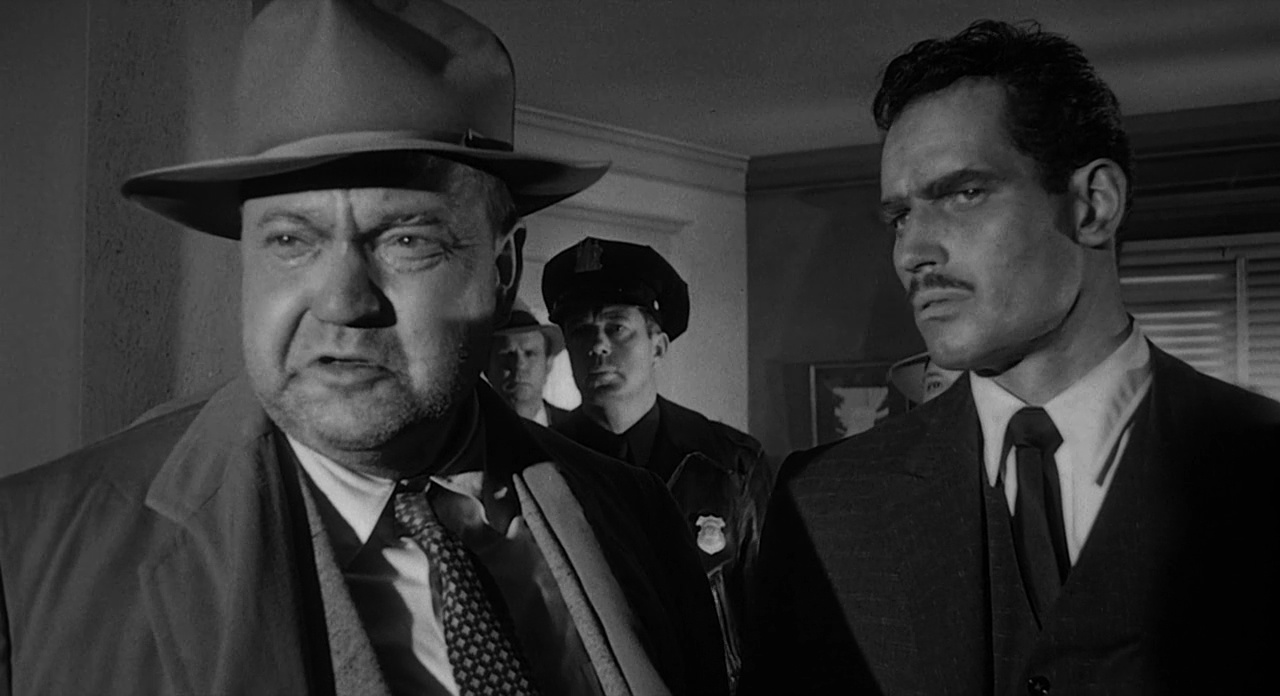

The film sets the standard for classic noir thanks to the stellar work of its star-studded cast. Akim Tamiroff exudes sinister smarm as local crime boss Joe Grandi. Joseph Calleia aptly portrays the disillusionment of Quinlan's devoted friend turned betrayer, Sergeant Menzies. Marlene Dietrich steals each scene in which she appears in her brief role as Quinlan's former flame, street wise madam Tana. Janet Leigh expertly balances vulnerability, intelligence, innocence, and resilience as Vargas' devoted wife, Susie. Even in the midst of superb supporting performances the film belongs to Charlton Heston and Orson Welles as Vargas and Quinlan. Heston personifies the strength, integrity, and self-sacrifice that we hope to find in our police while still infusing his performance with depth and nuance. Welles turns in one of the best performances of his legendary career as he acts as a dark foil to Vargas' 'good cop' while compellingly relating Quinlan's tragic fall. 

Over sixty years after its release Touch of Evil has more than earned its place amongst cinema's classics. Through its equal parts gritty and gripping script the film relates a harrowing tale of corruption and desperation that continues to resonate today. The film's stars turn in some of the greatest performances of their storied careers as they bring each of the colorful cast of characters to visceral life. Step across the border of good and evil with Orson Welles and Charlton Heston in Touch of Evil.


Tuesday, August 9, 2022

Classics: A Review of Shadow of Doubt By Lauren Ennis

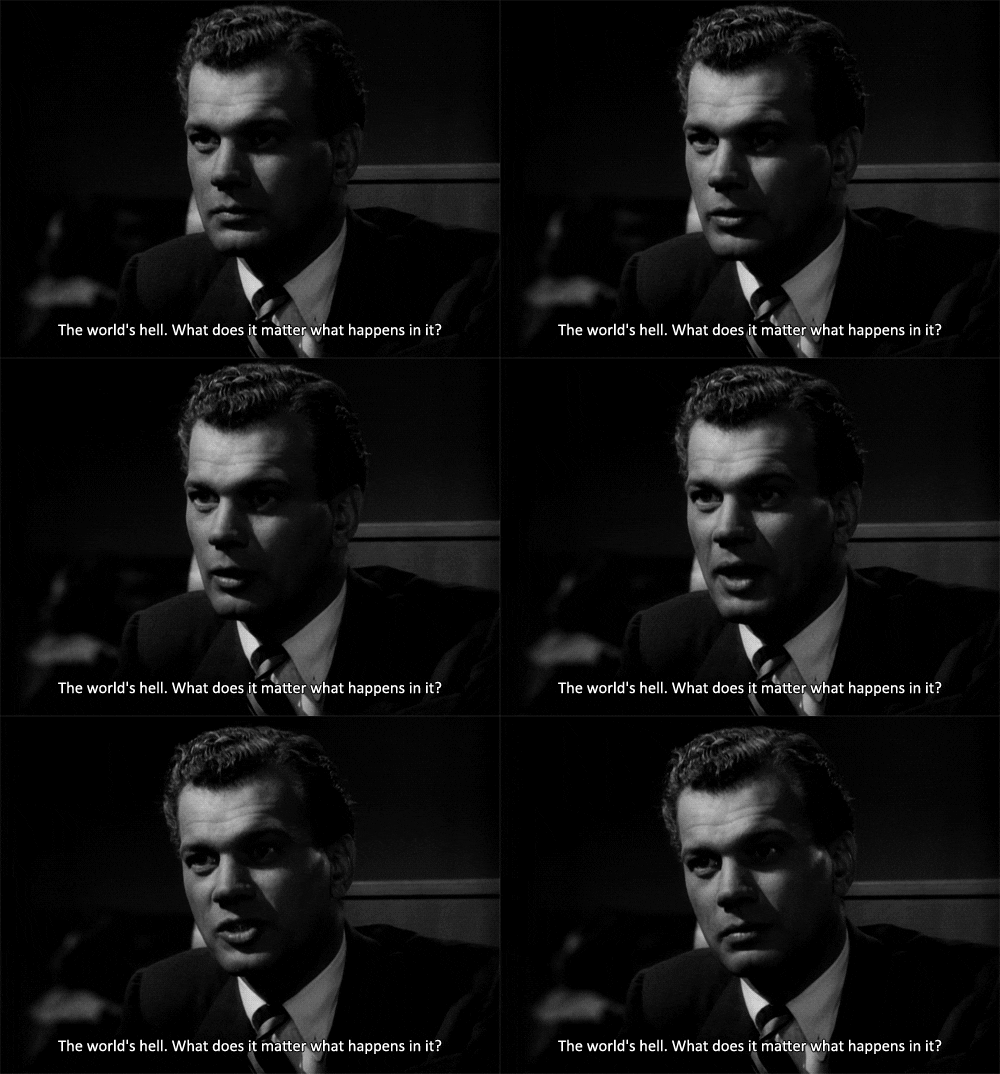
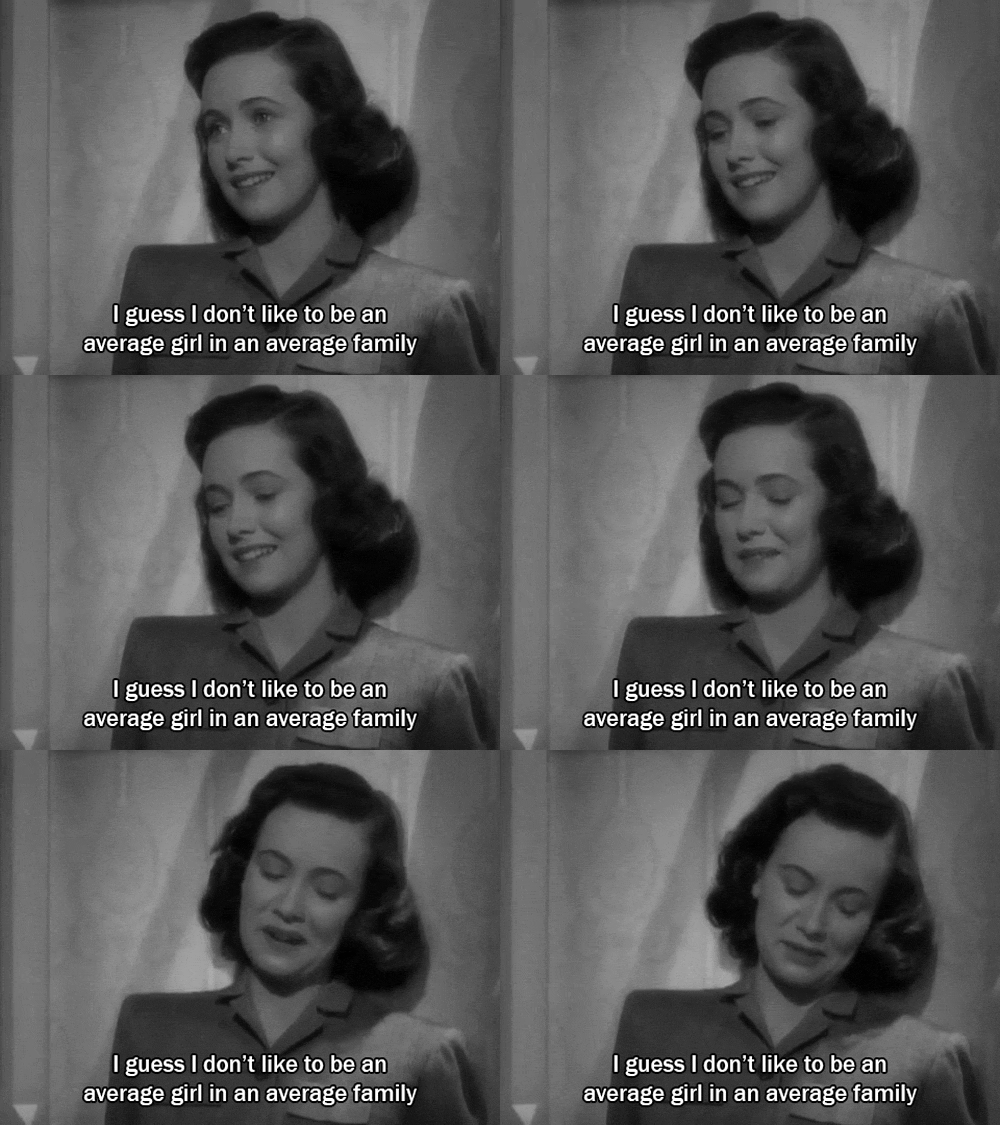
"I don't like to be an average girl in an average family" laments Charlie Newton in Alfred Hitchcock's noir classic Shadow of a Doubt. With the arrival of her enigmatic uncle, however, she makes the terrifying realization that her family might not be so average after all. Reportedly Hitchcock's personal favorite of all of his films, this 1943 drama marks one of the director's most subversive, cynical, and ultimately satisfying outings. Follow Charlie on a thrilling journey into the shadows lurking within every town and every heart in Shadow of a Doubt.

The story begins with small town teen Charlotte "Charlie" Newton preparing for the impending arrival of her beloved uncle Charles. When Charles arrives Charlie and her family are impressed by his wealth, worldliness, and charisma. As time goes on, however, Charlie starts noticing unusual things about him that neither he nor the rest of the family can fully explain. When a pair of alleged census workers arrive at the home asking to profile the 'typical American family' Charles' behavior becomes increasingly erratic. When Charlie learns that the census workers are actually detectives pursuing the notorious 'Merry Widow Murderer' she is forced to confront the possibility that the person she admires most could be a killer. When Charles' own suspicions are raised a thrilling game of cat and mouse ensues the likes of which only Alfred Hitchcock could concoct.

The film offers plenty of Hitchcock's signature suspense while setting itself apart as perhaps the director's only true entry in the noir genre. The film discards the convoluted plots that the director is most associated with, instead offering a straightforward mystery that remains firmly focused upon its morally murky characters. Similarly, the film avoids the glamour and action sequences of his later work by relating a tale of ordinary people faced with an extraordinary threat from within. The film particularly succeeds through the strength of its villain. Rather than merely menacing, Charles is presented with a mysterious charisma that leaves little wonder as to how he beguiles both his victims and family. As a result, the film subverts audience expectations and highlights the dangers that all too often lie beneath a charming surface. Even as it offers the thrills and moral ambiguity associated with noir the film inverts genre conventions by taking its villain out of the shadows of the back alley into the sunlit streets of small town America. The film additionally utilizes its setting to defy genre expectations and argues for the wholesome strength of small town values by pitting worldly, corrupted, city dweller Charles against innocent Charlie. Join Hitchcock on a journey into the shadowy realm of film noir in Shadow of a Doubt.

The film continues to keep viewers on the edge of their seats nearly eighty years after its' release thanks to the stellar work of its cast. MacDonald Carey acts as an ideal hero and excellent foil to Cotton's Charles as Detective Jack Graham. Patricia Colligne is delightfully daffy as Charlie's sheltered mother, Emmy. Ann Newton lends smart aleck humor as Charlie's precocious sister, Ann. Henry Travers offers an enjoyable and understated performance as Charlie's well meaning father. Hume Cronyn conveys nerdy charm as Joseph's true crime obsessed best friend, Herb. Even in the midst of ample supporting performances the film is dominated by Joseph Cotton and Theresa Wright as Charles and Charlie. Wright infuses Charlie with an innocence, vulnerability, resilience, and charm that will keep audiences rooting for her until the film's final frame. In Cotton's hands Charles is more than a mere villain as he provides viewers with a portrait of a killer while holding up a mirror to the darkness lurking within us all.

At once a twisting crime drama and a subversive exploration of the rot lurking just beneath society's surface Shadow of a Doubt is easily one of Alfred Hitchcock's most mesmerizing films. The film's script utilizes razor-sharp dialogue to maximal effect and offers a twisting plot that will leave viewers begging for more. Through its standout turns from Cotton and Wright the film presents a fascinating character study that serves as an expose of the American family and a glimpse into the mind of a sociopath. Take it from the man himself, Shadow of a Doubt is doubtlessly one of the greatest films that Hitchcock ever made.


Thursday, July 21, 2022

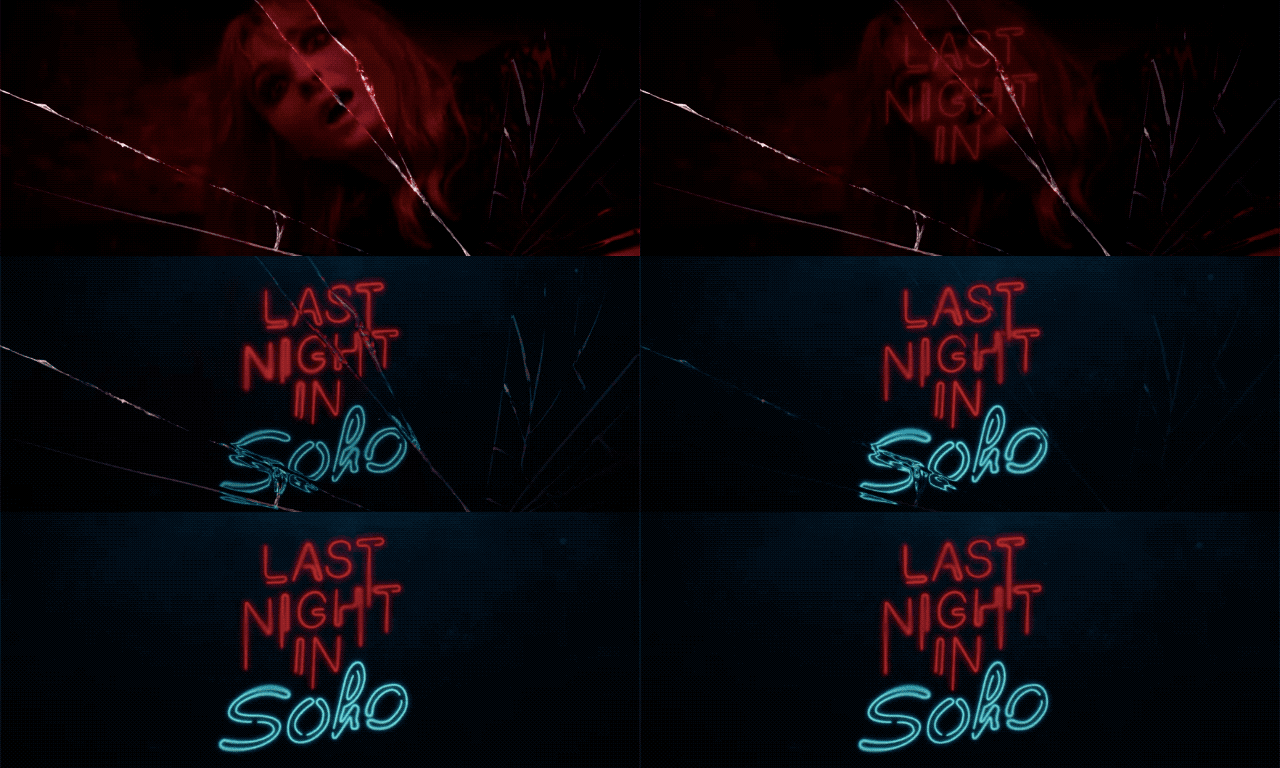
Classics: A Review of Last Night in Soho By Lauren Ennis

When you're alone and life is making you lonely you can always go downtown. But what happens when you find that the lights aren't necessarily brighter there? Sixties obsessed fashion student Eloise faces this very question in the 2021 psychological thriller Last Night in Soho. At once a supernatural suspense story in the vein of Alfred Hitchcock and a cautionary tale of exploitation and obsession the film relates a twisting tale that will haunt viewers on multiple levels. For a classic thriller with a modern twist follow Eloise through the darkest corners of Soho...if you dare.


The story begins by introducing viewers to aspiring fashion designer, Eloise. After losing her mother to suicide Eloise finds solace by retreating into the past through her infatuation with all things swinging sixties. It is also revealed that she possesses a psychic gift that allows her to see her mother's ghost. She is overjoyed when she learns that she has been accepted to a prestigious fashion school in London. Upon arriving, however, she is dismayed to learn that neither her school nor London are what she imagined. After suffering bullying at the hands of her caustic roommate she opts to move off campus into her own apartment. She is elated to find an apartment straight out of the vintage movies that she loves. She soon learns that her new home is not all that it seems, however, when she begins dreaming of Sandie, the glamorous woman who lived there decades earlier. While initially enchanted with these visions that seem straight out of old Hollywood her dreams soon descend into a nightmare that threatens to consume her.

At once a supernatural thriller, backstage drama, and coming of age story Last Night in Soho blends and bends genres to brilliant effect. In many ways the film acts as an antidote to such nostalgia focused stories as Midnight in Paris by highlighting the failings and even horrors of previous eras. Even as it showcases gorgeous sixties costumes and an addictive mod pop soundtrack the film expertly depicts both the glamour of the era and the rot lurking beneath its gilded surface. Whereas the hero in Midnight in Paris finds inspiration and a renewed lease on life through his time travelling, Eloise is faced with a bleak reality that stands in stark contrast to her vision of the 1960's. As she is confronted with Sandie's sixties experiences Eloise is forced to reevaluate her entire world view and redefine herself. In this way the film offers an apt warning against the dangers of nostalgia and a fresh interpretation of the coming of age story.

The script also stands out through its unique approach to horror. Perhaps the script's greatest strength lies in its exploration of the horrors lurking around the corners of everyday life. While the film does offer more traditional scares in its third act, the most visceral moments are those chronicling Sandie's descent into an abusive relationship and prostitution. In this way the film takes viewers on a terrifying journey into a personal hell more frightening than any monster or jump scare. The final twist in particular offers lasting and original thrills that challenge viewers' preconceptions and blur the line between victim and villain. Embark upon a night to remember with Eloise and Sandy in Last Night in Soho.


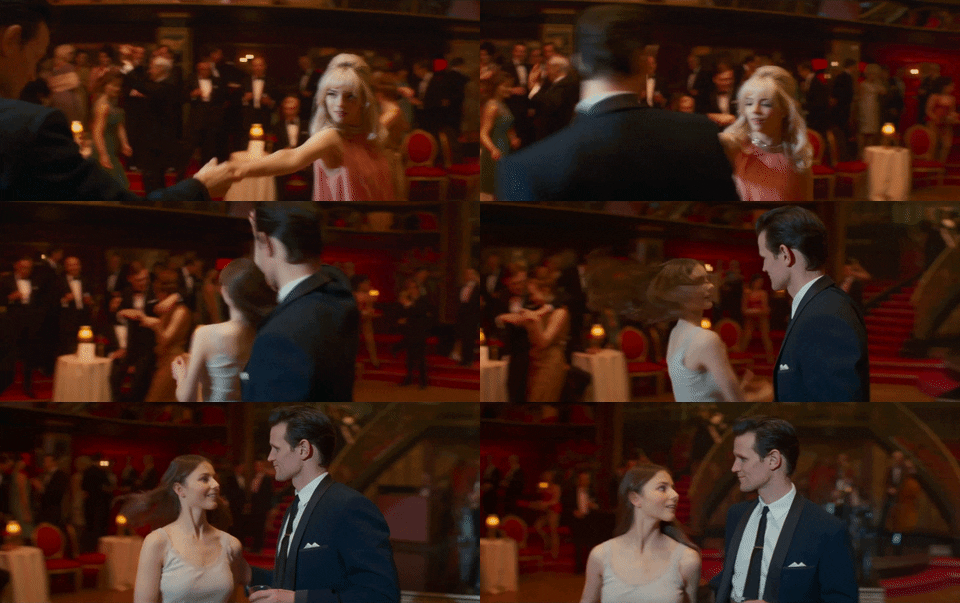
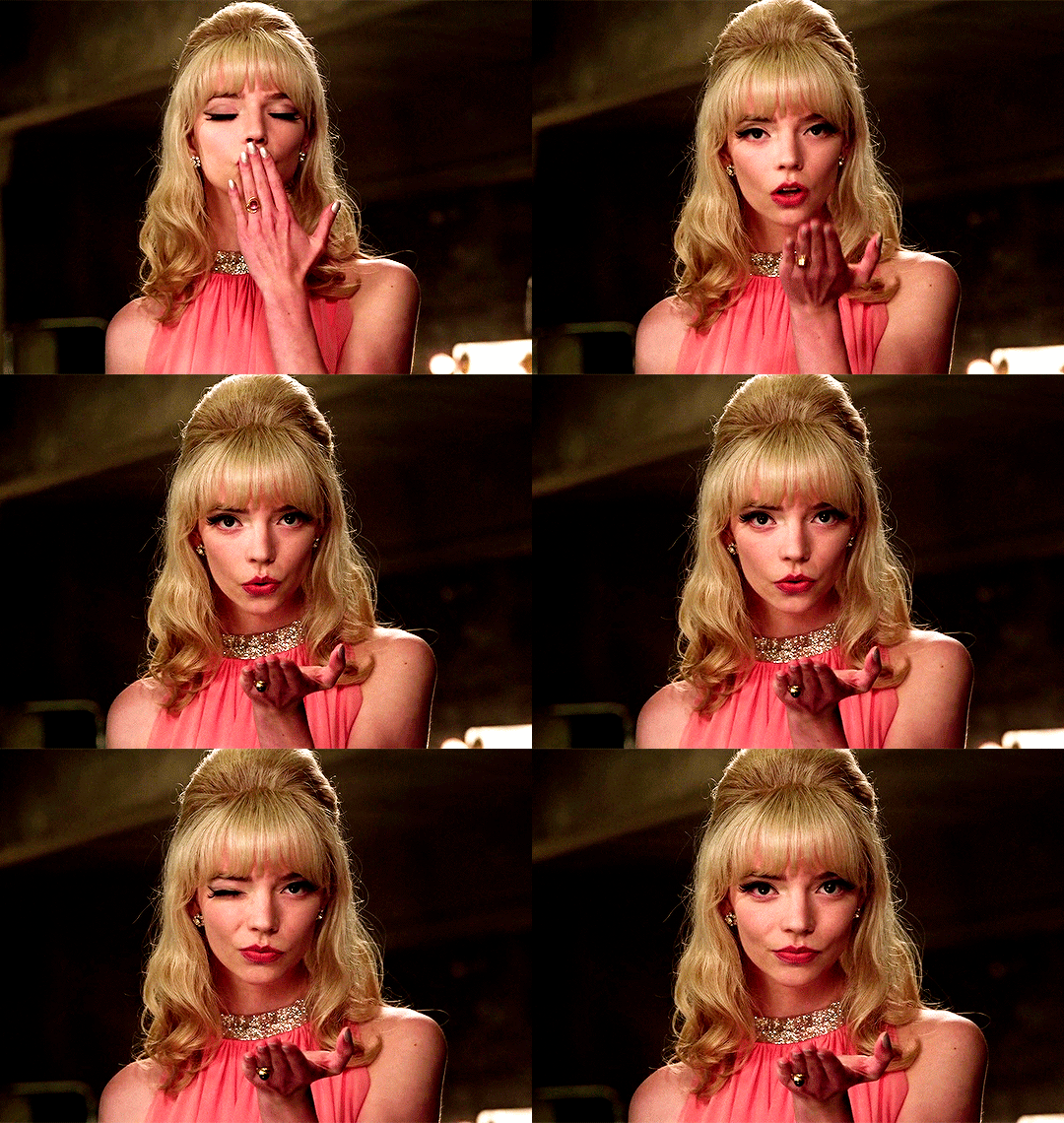
The film transports viewers to both the gritty streets of modern Soho and the swinging sixties thanks to the stellar work of its cast. Synnove Karlsen is a mean girl that viewers will love to hate as Eloise's vindictive roommate Jocasta. Michael Ajao personifies decency as Eloise's classmate and love interest, John. Former sixties starlet Rita Tushingham conveys warmth and understanding as Eloise's loving grandmother, Peggy. Terence Stamp lends mystery and menace in his enigmatic turn as policeman Lindsey. Diana Rigg perfectly captures the duality of her role as Eloise's curmudgeonly landlady Miss Collins. Matt Smith expertly balances the suave and the sinister as Sandie's boyfriend, Jack. Even in the midst of ample supporting performances the film belongs to Thomasin McKenzie and Anya Taylor-Joy as Eloise and Sandie. McKenzie portrays Eloise with an infectious blend of innocence, charm, and quirkiness that recall ultimate sixties 'it girl' Audrey Hepburn. Joy blends vampish sensuality and aching vulnerability in a performance that is nothing short of mesmerizing.

At once a cautionary tale of the dangers of nostalgia and a love letter to the sixties Last Night in Soho is a ghost story that is sure to haunt viewers long after the closing credits fade. Through its innovative, twisting, plot the film offers a unique thriller that will keep viewers guessing until its final reveal. The magnetic work of the cast masterfully transports viewers to the streets of Soho past and present. Forget all your troubles and forget all your cares with Eloise and Sandie downtown where everyone's waiting for you in Last Night in Soho.


Wednesday, July 13, 2022

Classics: A Review of Stranger Things Season 4 By Lauren Ennis

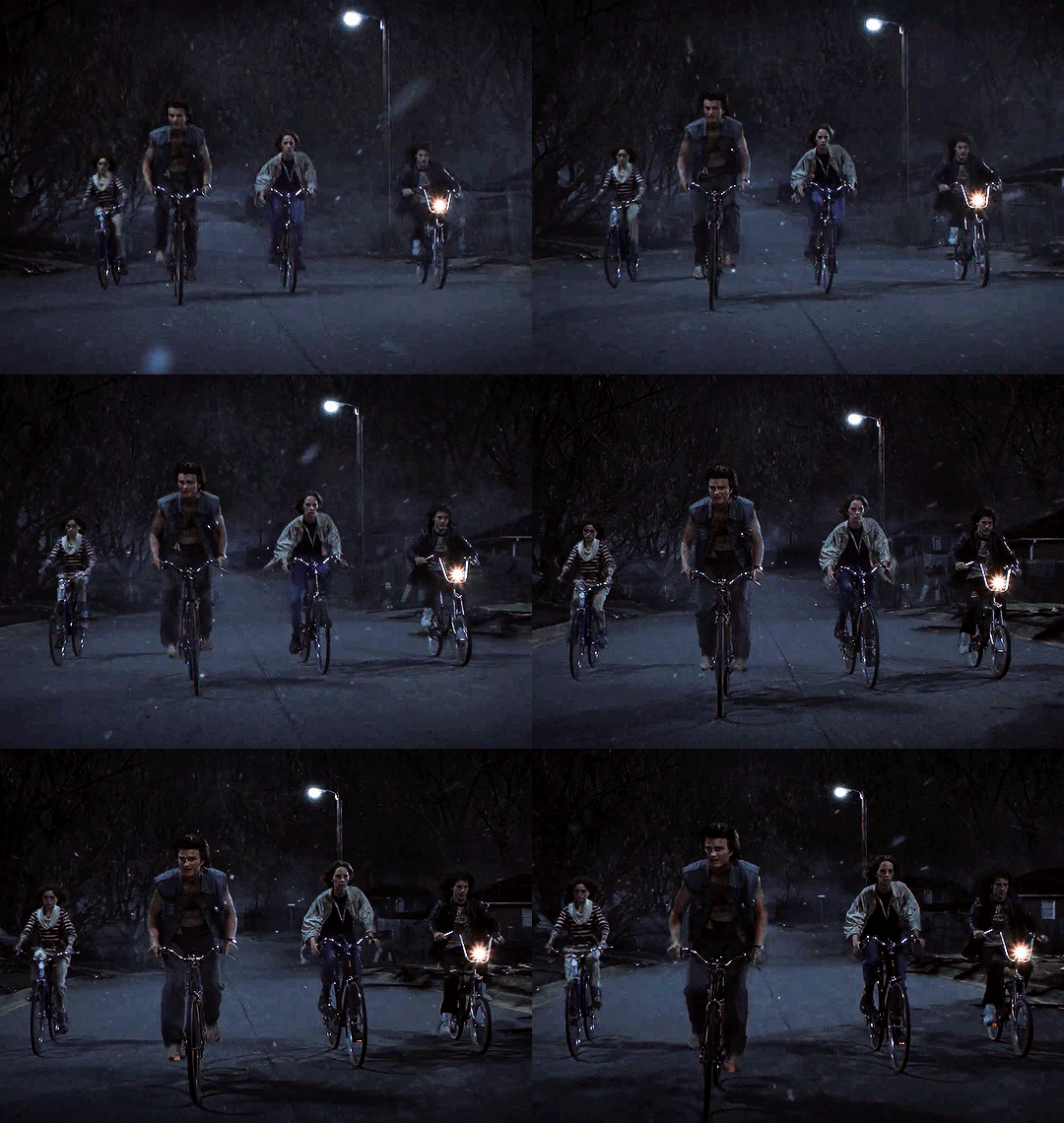
 Secretive government labs, political corruption, media hysteria, and a growing communist threat all add up to just another day in Hawkins, Indiana. After three years the wait is finally over and fans have been treated to the most explosive season yet of Netflix's hit series Stranger Things. In its fourth outing the series expands beyond Hawkins' borders and offers a transcontinental adventure that is nothing short of epic. Through an inventive plot, a decidedly darker tone, and exemplary performances this latest season breathes fresh life into the series and recaptures the magic that made Stranger Things a worldwide phenomenon. Join Eleven and company for an unforgettable journey into the darkest corners of the Upside Down in the fourth installment of Stranger Things.

Welcome back to Hawkins

The story picks up eight months after the end of season three. Eleven has moved to California with the Byers's and struggles to fit in at school as she grapples with understanding who she is without either her powers or her adoptive father. Hopper is revealed to have survived the explosion at the Starcourt mall, but is now in a fight for his life in a remote Soviet prison. Dustin and Mike adjust to high school and their estrangement from newly popular Lucas. Max remains haunted by Billy's death and distances herself from her friends as she copes with her grief. Hawkins seems to be finally beginning to heal from its recent tragedies until the community is shaken to its core by a series of gruesome murders targeting local teens. When Dustin and Mike's new friend, Eddie, is blamed for the murders the gang set out to prove his innocence and embark upon a mystery that leads them to the all too familiar horrors of the Upside Down.

In its fourth installment Stranger Things manages to top its previous successes to offer its most thrilling season yet. After three seasons of pitting its heroes against assorted inter-dimensional monsters the series presents viewers with what is sure to become an iconic villain in Vecna. Unlike the animalistic Demogorgon and Mindflayer, Vecna is akin to a supernatural antagonist in the vein of Freddy Kreuger. While the Demogorgon brutally devoured its victims and the Mindflayer consumed their minds Vecna feeds off of his victims inner turmoil. His weaponization of his victims' minds is eerily reminiscent of the devastating effects of depression and trauma and offers unsettling insight into the ways in which our own thoughts can be twisted against us. This disturbing ability paired with his gruesome killing method sets him apart from the series' other villains and will leave many viewers sleeping with the lights on.

While the series continues to offer plenty of action this season's greatest strength is the way in which it enriches each of the characters' individual stories by forcing them to face internal as well as external battles. Over the course of its nine episodes fans are able to see the ways in which each of the characters must cope with the devastating events of season three and adapt to this season's challenges. Lucas is provided one of the season's most relatable character arcs as he finds himself torn between his new, conventional and popular, friends on the school basketball team and his childhood friendships. Similarly, Steve adjusts to life in the 'real world' and struggles to find meaning beyond his empty romances and dead end job. Hopper undergoes a transformation as he comes to term with the loss and regrets of his past in the midst of his struggle to survive the tortures of the gulag. Unfortunately, however, Will and Jonathan's stories leave them floundering for the majority of the season with Jonathan reduced to a caricature of a stoner and Will left with little to do beyond lashing out at Eleven and pining for Mike. The Byers' brothers lack of development is particularly disappointing when compared with the rich storytelling that the other characters are afforded.

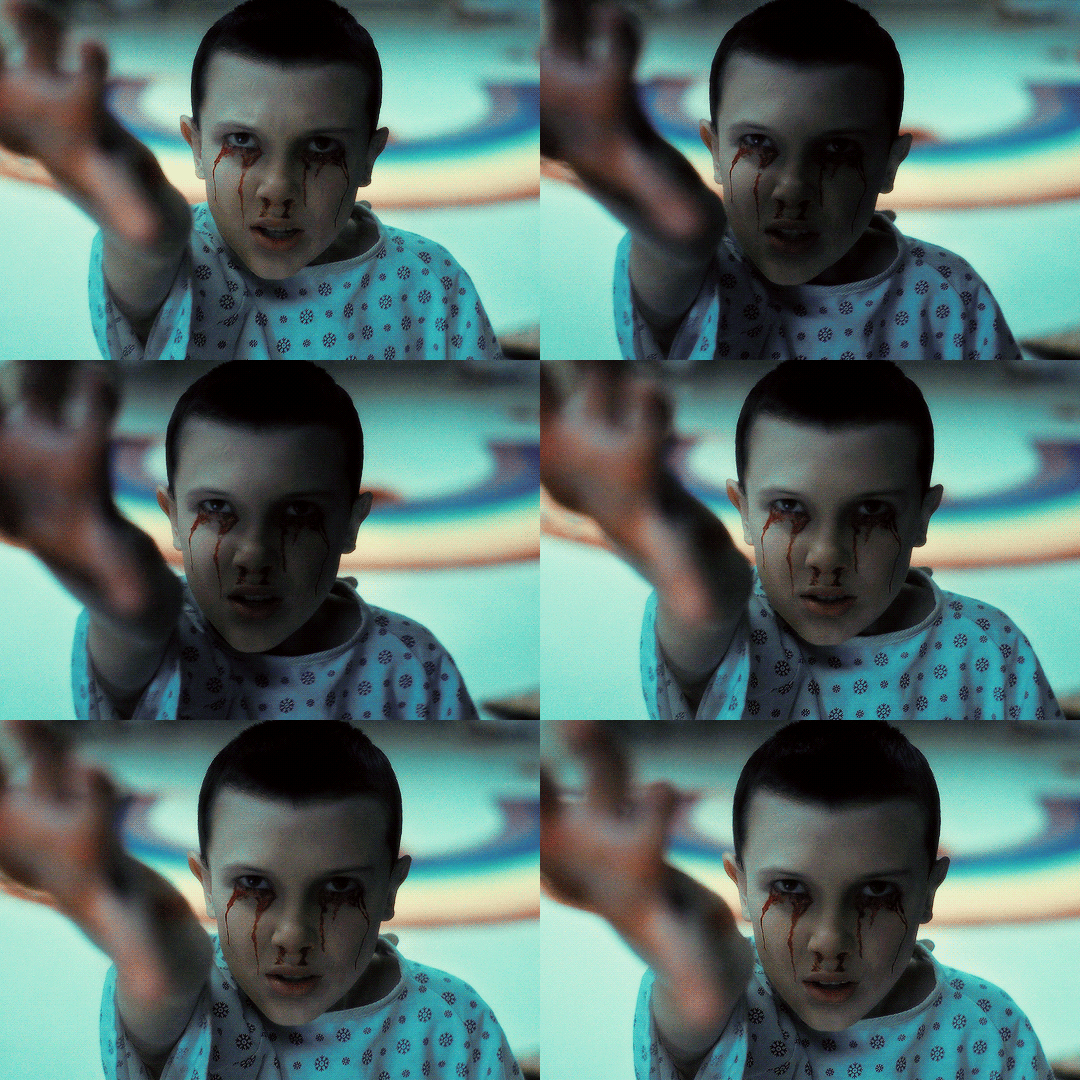
Even in the midst of the series' many memorable stories the most profound character arcs are reserved for Max and Eleven. While Max was one of the more grating characters in season three, this installment sees her blossom into one of the the series' most complex and compelling characters. Her efforts to cope with her contradicting feelings regarding the death of her abusive step-brother earn viewers' sympathy and place her in a relatable position. When combined with her ongoing battle against Vecna's manipulations, however, Max's grief becomes a harrowing struggle between life and death as she fights for her very soul. Similarly, Eleven's attempts to navigate life without her powers infuses her character with a humanity and vulnerability which ensure that she is more than just another 'superhero'. Along with learning to function without use of her powers she is forced to define herself beyond the telekinetic ability that her entire identity was based around. As a result, she must grapple with who she is and reconcile with the demons of her past in order to begin her journey to become who she wants to be. In this way, the series presents a unique twist upon the traditional coming of age story, while also offering vital insight into its enigmatic protagonist. Through its nuanced portrayal of both of its heroines the series challenges viewers along with its characters and presents some of the most compelling television in recent memory. Fall under the masterful spell of Eleven, Max, Vecna and the Hawkins' gang in the fourth season of Stranger Things.

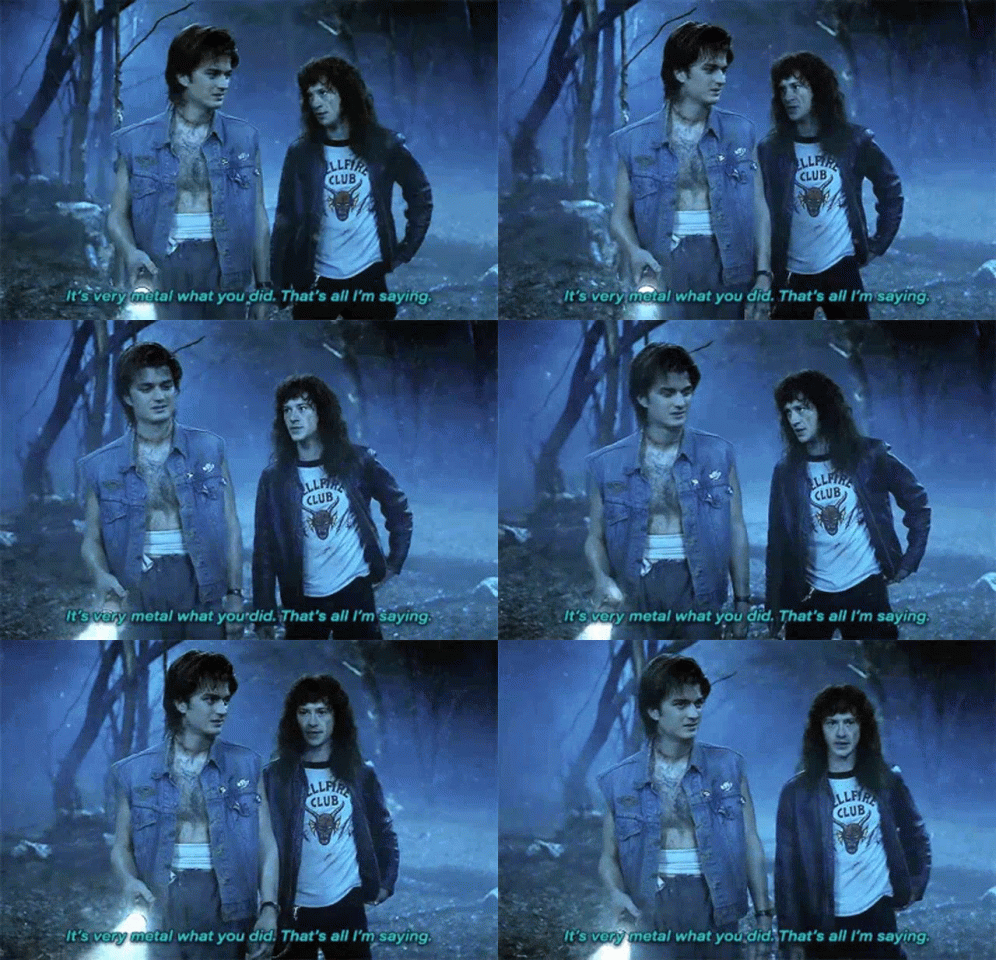
This season offers some of the most complex, charismatic, and engaging performances of the entire series thanks to the brilliant work of the cast. Sadie Sink and Joseph Quinn easily earn the titles of season MVP's in their magnetic portrayals of tormented Max and social outcast and series newcomer Eddie Munson. Winona Ryder and Brett Gelman make for a surprisingly ideal team as they lend comedy, grit, and emotional depth to Joyce and Murray's Russian adventures. Nikola Duricko perfectly balances comedy and sleaze as duplicitous Russian smuggler, Yuri. Tom Vlaschiha infuses street smart Soviet guard Dmitry with world weariness and roguish charm. David Harbour continues to remind viewers why you don't mess around with Jim as Hawkins' tortured police chief, Jim Hopper. Joe Keery turns on the charm as television's favorite babysitter and Hawkins' ultimate heartthrob, Steve Harrington. Maya Hawke combines wit, vulnerability and charisma as lovably neurotic Robin. Natalia Dyer lends a mature performance in her portrayal of Nancy's struggles to come to terms with the demons of her past as well as her present relationships. Caleb McLaughlin knocks it out of the park in what is easily his best season as he chronicles' Lucas' efforts to grapple with estranged relationships with both his friends and Max. Gaten Matarazzo infuses his performance as Dustin with raw emotion along with his usual laughs. Mason Dye perfectly balances righteousness and menace as Hawkins' fallen golden boy, Jason. Eduardo Franco might be this season's king of comedy as offbeat stoner Argyle. Charlie Heaton offers plenty of laughs in this season's surprisingly light hearted portrayal of Jonathan. Noah Schnapp aptly portrays Will's emotional conflicts, but the script leaves him underutilized throughout the season. Jamie Campbell Bower combines charisma, menace, intelligence, and viciousness in his hypnotic performance as Henry Creel. Millie Bobbie Brown lends her most nuanced and layered performance yet in her portrayal of Eleven's search for acceptance and identity. 

After a three year wait Hawkins offers fans a more than warm welcome. Season 4's blend of supernatural horror, personal demons, and real life oppression make for some of the series' richest storytelling to date. In the midst of the script's dark content the cast manage to shine their brightest and lend some of their most engaging performances to date. After four thrilling seasons Stranger Things continues to mystify and mesmerize as it breaks new ground yet again. Turn your television viewing up to an Eleven with the fourth season of Stranger Things.

Most metal season ever


Thursday, June 30, 2022

Classics: A Review of Harriet the Spy By Lauren Ennis

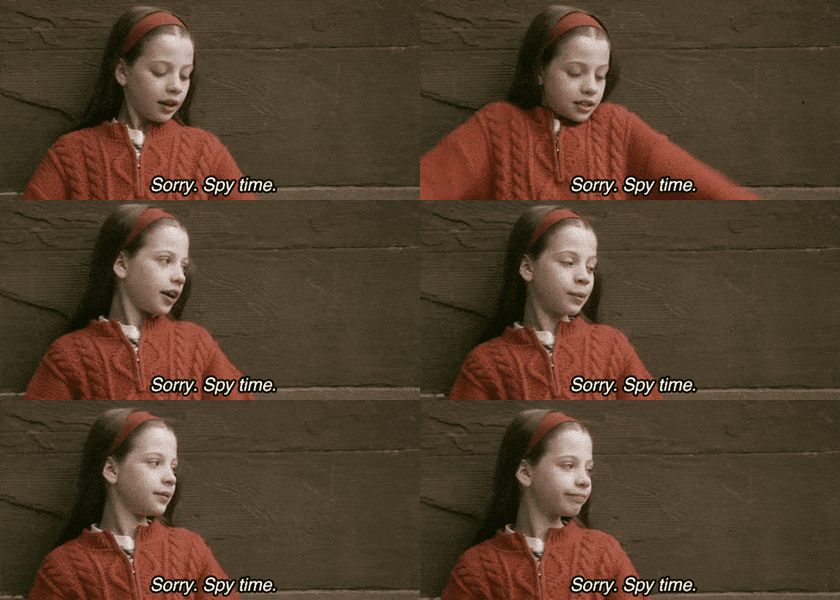
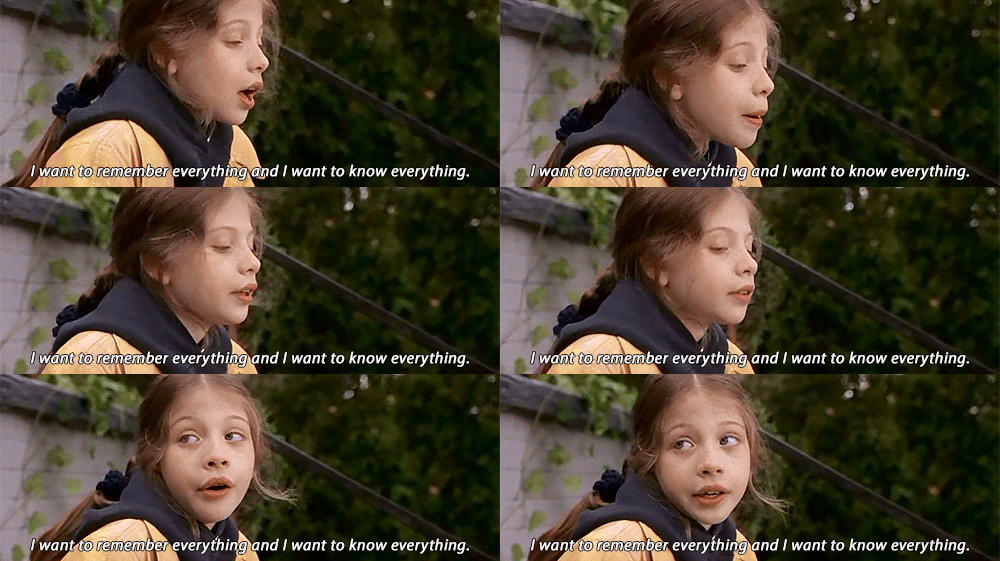
 "I want to learn everything I can and write down everything I see. If I want to be a writer someday I better start now, and that is why I am a spy" so says would be writer and full time spy Harriet. 1996's Harriet the Spy follows the adventures of its young heroine as she pursues her dream of becoming a writer and finds herself along the way. Every bit as feisty as its protagonist, the film presents an unflinching portrayal of the pain of growing up and the joys of discovering who you are and who you want to be. Join Harriet for a tale of the betrayals, intrigues, friendships, and lessons that define adolescence in Harriet the Spy.

The story follows precocious eleven year old Harriet Welsch over the course of a tumultuous school year.  Aspiring writer and self-professed 'spy' Harriet spends her days watching the eccentrics who populate her neighborhood and writing down her observations. With her parents engrossed in their careers and social lives she finds solace in the encouragement of her devoted nanny, Golly. After a misunderstanding leads to her parents firing Golly, Harriet enters a deep depression and retreats into her writing. When bully Marion discovers Harriet's notebook the young spy's brutally blunt observations are shared with their entire class. Separated from Golly and outcast at school she begins lashing out, leading her parents to ban her from writing. Just when she is certain that there is nowhere she can turn, however, she finds the inspiration to use her writing to "put beauty in this world" and learns valuable lessons about friendship, forgiveness, and the importance of giving people a second look.

Harriet the Spy brilliantly brings one of the most iconic characters in children's literature to life in all of her inspiring and infuriating glory. The film relates its tale from Harriet's viewpoint, allowing viewers  to see the world through the at once innocent and brutal eyes of a child on the verge of adolescence. As a result, the film refuses to speak down to young viewers and offers a refreshingly honest depiction of childhood that is rarely seen in family entertainment. The film follows Harriet through a series of misadventures in which she faces bullying from her classmates, and a lack of understanding from the adults in her life. Even as she finds herself outcast both at school and at home, however, the greatest struggle that she endures is the one within herself. Through its depiction of her efforts to come to terms with the person she is and attempts to become the person she wants to be the film offers a coming of age tale that is equally inspiring and relatable. Even as it maintains a firm focus upon its quirky heroine the film offers a colorful cast of engaging characters who highlight Golly's lesson that "there are as many ways to live in this world as their are people in this world and each one deserves a closer look". Gear up for an unforgettable adventure into adolescence and espionage with Harriet the Spy.


The film brings the characters from Louise Fitzhugh's 1964 classic novel to brilliant life thanks to the work of its cast. J. Smith Cameron and Robert Joy aptly portray the journey of Violetta and Ben Welsch from absent adults to involved parents. Vanessa Lee Chester is an eccentric delight as Harriet's aspiring scientist friend, Janie. Gregory Smith portrays Harriet's struggling friend, Sport, with a subtlety and skill that belies his years. Charlotte Sullivan earns her place amongst cinema's greatest mean girls as Marion. Rosie O'Donnell steals each scene in which she appears in her inspiring turn as Golly. Even in the midst of excellent supporting performances the film belongs to Michelle Trachtenberg in a performance that balances vulnerability, bravado, and pathos as the indomitable Harriet.

This portrait of the artist as a young spy is certain to delight young viewers and the young at heart. The film's intelligent script maintains the wit of the original novel while adding a dose of '90's attitude. The endearing performances bring each of the colorful characters to vibrant life. At once a tribute to childhood and a chronicle of the pain of growing up this film serves as an apt ode to the adventures of adolescence. For intrigue that the whole family can enjoy grab your binoculars and hit the spy route with Harriet the Spy.


Wednesday, June 8, 2022

Classics: A Review of The House on Carroll Street By Lauren Ennis

Corrupt federal agencies, government show trials, and political persecution are just democracy in progress according to the House on Un-American Activities Committee. 1988's The House on Carroll Street explores the impact of government overreach, the consequences of leaving federal agencies unchecked, and the need for dissenting voices all while relating one of the best thrillers that Hitchcock never made. At once an indictment of one of the darkest chapters in American history and a classic suspense story, the film raises provocative questions that continue to resonate today. For a thriller that is guaranteed to get your pulse and mind racing pay a visit to The House on Carroll Street.


The story begins in 1951 as Life magazine photo editor Emily Crane is forced to testify during a House on Un-American Activities Committee hearing. When she refuses to cooperate with the committee and name friends and colleagues she is fired and later finds employment as a companion to an elderly woman. Soon after starting her new job she notices strange things happening at the house next door. She tries to begin a friendship with a young refugee living in the house, but their brief acquaintance is brutally ended when he is murdered. Blaming herself for his death, she sets out to solve his murder and see that his killer is brought to justice. In her ensuing investigation she stumbles upon a devastating revelation that puts her at the center of a dangerous conspiracy that extends far beyond the confines of The House on Carroll Street.

The House on Carroll Street is in many ways more pertinent viewing now than at the time of its release over thirty years ago. Inspired by two of the darkest chapters in America's history the film offers vital lessons for our own politically fraught era. The story begins with Emily testifying in one the infamous House on Un-American Activities 'red scare' hearings and highlights the ways in which political overreach and forced consensus allowed the government to discredit, prosecute, and effectively blacklist citizens who held dissenting beliefs. Similarly, her ongoing harrassment at the hands of federal agents reveals the ways in which citizens were stripped of their rights and dignity. These elements of the film offer valid insight into the hysteria of the McCarthy era and bear an uncanny resemblance to the blacklisting efforts of  'cancel culture' and the increasing persecution of political opponents and dissenting voices in modern America. The film also draws ample inspiration from Operation Paperclip, the real-life CIA operation in which US intelligence relocated Nazi scientists and war criminals in an effort to combat the rising threat of the Soviet Union. The depiction of nefarious top secret operations and the lengths at which federal agencies go to conceal them serve as an apt warning against the dangers of unchecked government power and contain striking similarities to events dominating today's headlines. Even as it offers a vital political critique the film never resorts to heavy handedness and instead allows the actions of its characters and the ramifications of those actions to speak for themselves. In the midst of its provocative political and ethical questions the film never sacrifices any of its thrills or suspense and offers a twisting plot that would have made even Hitchcock himself proud. For a thriller that will get your heart racing and your mind reeling stop by The House on Carroll Street.


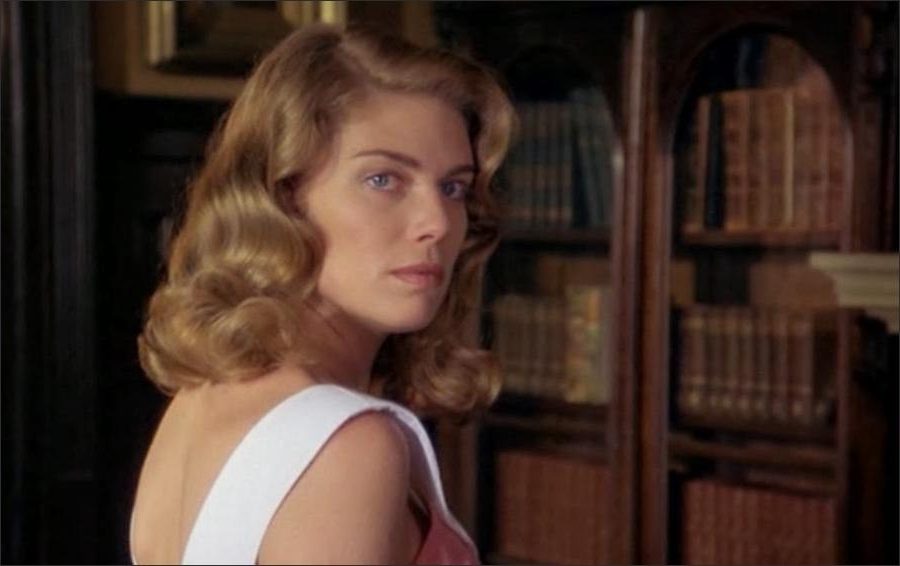
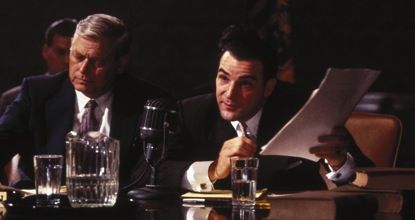
The film transports viewers to 1950's New York thanks to the brilliant work of its cast. Jessica Tandy proves an entertaining curmudgeon as Emily's elderly employer, Miss Venable. Christopher Buchholz personifies torment in his brief appearance as war refugee Stefan. Jeff Daniels conveys decency and charm as morally conflicted FBI agent Cochran. Mandy Patinkin steals each scene in which he appears as callous federal prosecutor Ray Salwen. Kelly McGillis shines in a multi-faceted performance worthy of Old Hollywood's leading ladies as the determined Emily.

The House on Carroll Street is an old school Hollywood thriller that remains eerily relevant today. The film's exploration of a largely hidden part of America's past sheds much needed light on one of the nation's darkest secrets and raises vital questions that we continue to wrestle with today. Through its uniformly engrossing performances the film weaves a twisting plot that is certain to have viewers on the edge of their seats. For a thriller that will keep you guessing until its final review and asking questions long after its final credits fade step inside The House on Carroll Street.


Tuesday, May 24, 2022

Classics: A Review of Goodbye Christopher Robin By Lauren Ennis

 For nearly a century Winnie the Pooh has enchanted generations of the young and young at heart. While readers around the world know the adventures of Pooh and his friends, less well known is the story of the father and son who inspired it. 2017's Goodbye Christopher Robin explores the story behind the beloved classic in an homage to the power of storytelling and the bond between fathers and sons. This Father's Day take a stroll in the Hundred Acre Wood with A. A. Milne and Christopher Robin.

We didn't realize we were making memories. We just knew we were having fun.

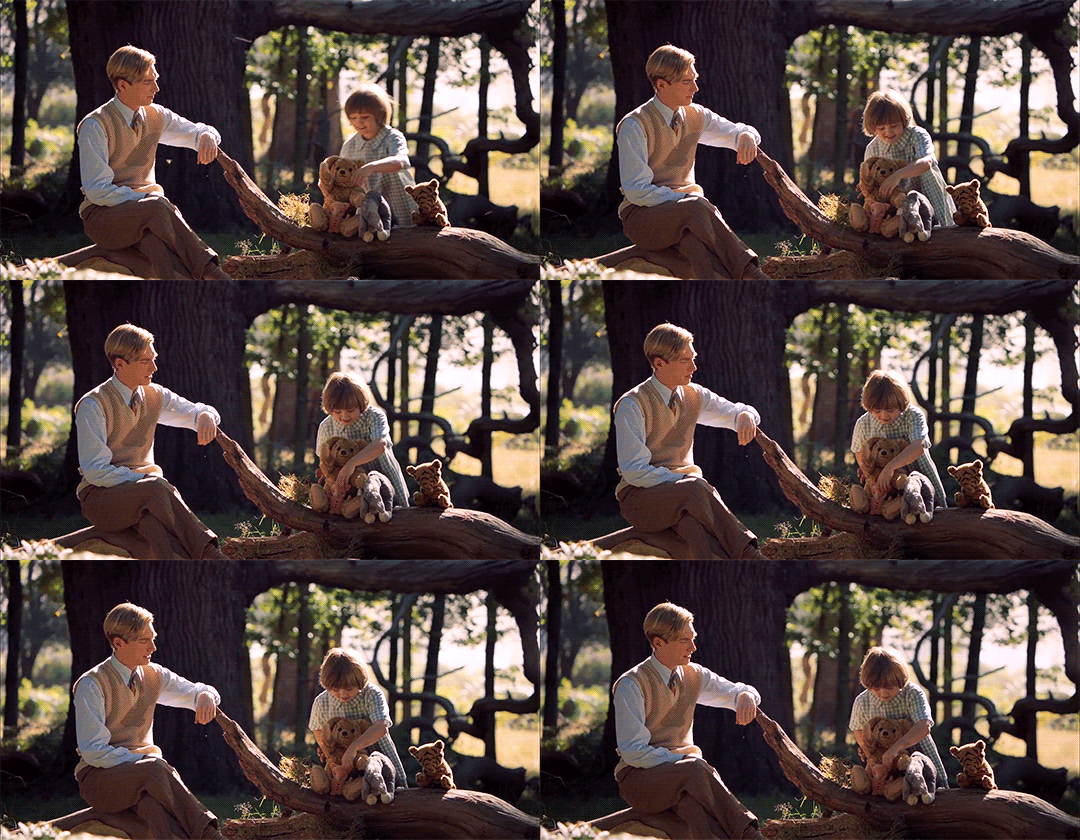
The story begins in 1941 with author A. A. Milne and his wife receiving a telegram telling them that their son, Christopher Robin, is missing in action. The film then flashes back decades earlier  and reveals the horrors that Milne witnessed while fighting in World War I. When the war ends he returns home to his socialite wife, Daphne, and struggles to readjust to civilian life. Despite his best efforts, however, he continues to suffer from 'shell shock', or what is now known as PTSD. In an effort to exorcize the demons of his past he becomes determined to write a compelling anti-war drama, much to the dismay of Daphne, who maintains that an anti-war piece will never sell enough to maintain their lavish lifestyle. While he struggles to resume writing she gives birth to their only child, Christopher Robin. Unfortunately, she spends more time partying than parenting and Milne's trauma leaves him unable to connect with his son. As a result, Christopher Robin develops distant relationships with both of his parents. When Christopher's nanny is forced to leave to care for her sick mother and Daphne is called away for a social engagement Milne is left alone with his son for the first time. Over the course of the ensuing weeks the two spend an idyllic summer playing with Christopher's stuffed animals and crafting the imaginative adventures that will become the basis for beloved best seller Winnie the Pooh. Just as father and son finally develop the bond that they both desperately need, however, they find their relationship threatened by the media frenzy surrounding the very story that had brought them together.

Through its portrayal of A. A. Milne's professional triumphs and personal trials the film offers a bittersweet portrayal of fathers and sons. Through its dual story arcs of Milne's attempts to overcome his wartime trauma and Christopher Robin's efforts to cope with the fallout from his unwanted fame the film offers a stark portrait of innocence lost. In its flashbacks to Milne's wartime experiences and its depiction of the war's lingering impact the film highlights the ways in which World War I shattered an entire generation. Similarly, the film's portrayal of Christopher's experiences bombarded by media and tormented by bullies relates the impact of personal trauma. Despite their distant relationship both find solace in their all too brief moments of bonding. It is during their summer together that Milne is finally able to relax enough to work through his writer's block and begin to leave the ghosts of his past behind. Similarly during this holiday Christopher gains confidence expands his imagination. When Milne allows his newfound success to consume his life, however, both he and his son suffer the consequences. It is only years later when both are finally able to come to terms with their pasts and forgive both themselves and each other that they begin to move forward with their lives. For a father-son outing that is guaranteed to not leave a dry eye in the house say Goodbye Christopher Robin.

As soon as I saw you I knew a grand adventure was about to happen

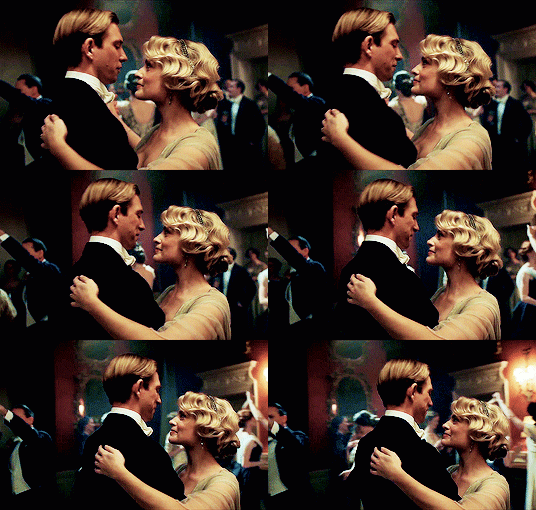
The film transports viewers from the desolate battlefields of France to the bustle of London, to the magic of the Hundred Acre Wood thanks to the brilliant work of its cast. Stephen Campbell Moore infuses his performance as Milne's fellow veteran and dedicated friend, illustrator Edward H. Shepherd with wit, understanding, and decency. Kelly MacDonald personifies loveliness in her warm portrayal of Christopher's devoted nanny, Olive. Margot Robbie perfectly balances effervescent charm with flightiness as self-absorbed Daphne. In the midst of stellar supporting performances the film belongs to Domhnall Gleeson and Will Tilston as Milne and Christopher Robin. Gleeson captures the dual nature of the outwardly cold and inwardly tormented Milne with depth, nuance, and a vital humanity. Similarly, Tilston is a portrait of childhood innocence as eight year old Christopher, while Alex Lawther expertly conveys teenage Christopher's desperation to escape the shadow of both his father and Winnie the Pooh.

Goodbye Christopher Robin is at once a unique story behind the story of a beloved children's classic and a universal tale of family, fame, and lost innocence. Through its deftly written script the film brilliantly relates the tale of how Winnie the Pooh came to be and the terrible cost to the boy who inspired it. The uniformly superb performances bring both the life and times of A. A. Milne and the adventures of Winnie the Pooh to vibrant life. This father's day join Milne and Christopher Robin for a visit to Pooh Corner in Goodbye Christopher Robin.

How lucky I am to have something that makes saying goodbye so hard