Saturday, May 14, 2022

Classics: A Review of Black Book By Lauren Ennis

 Cinema is rife with movies set during World War II. Few films, however, have portrayed the war with the unflinching grit of 2006's Black Book. Set against the backdrop of the German occupation of Holland this film offers none of the war time glory, home front heroism, or easy answers viewers have come to expect from World War II dramas. Instead, the film presents viewers with a morally murky, emotionally conflicting, and visceral view of war that is nothing short of haunting. For a war drama that is equally provocative and thought provoking take a page from Black Book.

The story begins in 1944 Holland with Jewish singer Rachel Stein hiding from the occupying Germans in a local farmhouse. She is forced to flee when the farmhouse is destroyed by an Allied bombing. She then reunites with her family and arranges to book passage with other refugees out of occupied territory. Before they can make their escape, however, their boat is ambushed in an attack by the SS that leaves Rachel the only survivor. Following the attack she abandons her plans to flee and becomes determined to exact revenge upon the regime that murdered her family. With the help of a family friend she contacts the Dutch resistance and sets out to join their ranks. Soon after joining the resistance several members of her cell are captured, and she is tasked with seducing the local SD Commander in order to learn their fate. As her mission unfolds, however, she starts falling for her intended target and finds herself at war with her own heart as well as with the Nazis. As the war draws to a close she's pitted against the Nazis, her fellow resistance fighters, and her own countrymen in a harrowing struggle for survival. 

Through its portrayal of ordinary people attempting to survive extraordinary times Black Book sets itself apart as an espionage drama that raises as many moral questions as it does thrills. Rather than a black and white tale of villains and heroes the film offers a complex tale of deeply flawed and compromised individuals forced to navigate devastating decisions. In its portrayal of Rachel as a Jewish woman infiltrating the upper echelons of the Third Reich the film inverts the conventions of Holocaust dramas and raises a series of ethical questions. By showing the story from Rachel's perspective the film places viewers in the uncomfortable position of wondering what they would do if they were in her compromised shoes. Her relationship with SD Commander Ludwig Muntze is particularly precarious as it shows characters from opposite sides of a genocide finding humanity, understanding, and even romance with the enemy. In this way the film reminds viewers of the individuals behind the flags in every war and forces viewers to confront the reality that even the most seemingly black and white conflicts contain shades of grey. The film's depiction of betrayal within the ranks of the resistance also offers a complex take on the all too human people behind even the most noble of causes. Similarly, the depiction of the anti-Semitism rampant across war-time Europe (both several resistance fighters and the family hiding Rachel display blatant anti-semitism) highlights the attitudes that made it all too easy for the Nazis to rise to power. Join Rachel on a journey into the darkest chapters of recent history and the murkiest corners of the human heart in Black Book.
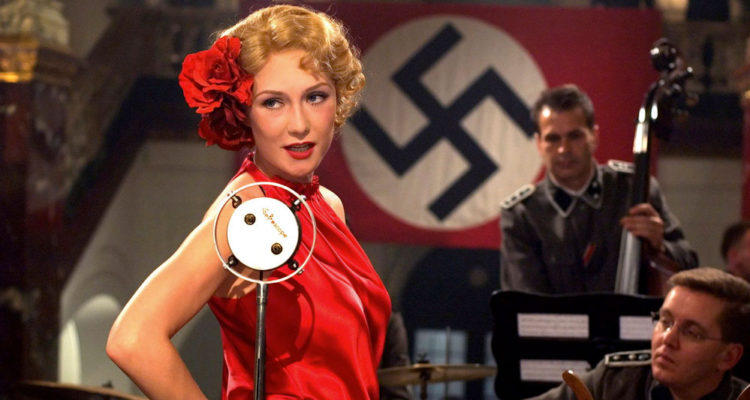

The films transports viewers to occupied Holland thanks to the stellar work of its cast. Helene Reijin is a saucy delight worthy of Mae West as Rachel's unlikely ally, SD secretary and SS Officer's mistress Ronnie. Thom Hoffman alternates between roguish charm and menace in his performance as resistance member Hans Akkerman. Waldemar Kobus makes for an ideal villain in his brutal turn as sadistic SS officer Gunther Franken. Derek de Lint is a portrait of tortured grief as resistance leader Gerben Kuipers. Sebastian Koch infuses Rachel's conflicted target turned love interest, Ludwig Muntze, with a humility, depth, and humanity that leave little question as to why she falls for him. Carice van Houten is a revelation in a performance that is at once seductive, witty, steely, tormented, and never less than compelling as Rachel.

At once a rollicking thriller and a harrowing portrait of the horror of war Black Book is not your parents' spy drama. Through its intricately plotted and emotionally raw script the film takes viewers on a devastating journey into the abyss that is war. The uniformly superb performances bring the film's cast of compromised characters to life with a subtlety and humanity that elevates the film beyond just another tale of heroes and villains. For a war-time thriller that will linger in your memory long after the closing credits fade flip through Rachel's little Black Book.






Tuesday, May 3, 2022

Classics: A Review of Mermaids By Lauren Ennis

The bond between mothers and daughters has been explored on screen since cinema's inception. The majority of these films showcase the ways in which mothers mold their daughters as they navigate life's trials and triumphs. One film, however, features a mother who has just has much growing up to do as her daughter. 1990's Mermaids introduces viewers to an unforgettably outrageous pair in the form of rigid Charlotte and spontaneous Rachel, both of whom have a lot to learn. At once a heartfelt drama and a quirky comedy this coming of age film is the perfect cinematic treat to dive into this Mother's Day. 

Just another all-American family

The story begins in 1963 with fifteen year old Charlotte leading a chaotic existence with her free spirited single mother, Rachel, and her younger half sister, Katie. The trio leads a nomadic existence with the family relocating every time that Rachel's latest relationship ends. At the film's start, the family is preparing to leave Oklahoma for Massachusetts following the end of her latest affair with her married employer. The constant changes lead Charlotte to become resentful of her mother and determined to shape herself into Rachel's polar opposite. As a result, she begins the film bent on becoming a Catholic nun in an effort to rebel against her mother's Jewish heritage and promiscuous lifestyle. The family's new home next to a New England convent seems like a perfect fit for her ambitions until she finds herself besotted by the convent's handsome young caretaker, Joe. While Charlotte struggles to make sense of her attraction to Joe, Rachel embarks upon an unlikely romance with divorced shoe store owner, Lou. A fateful series of events eventually forces mother and daughter to accept each other and themselves.

Expertly balancing between surreal comedy and domestic drama Mermaids celebrates mothers and daughters in all of their complex glory. Through its portrayal of two unique women grappling with everyday problems the film offers a take on motherhood that is at once refreshingly original and reassuringly universal. For example, Charlotte's dueling obsessions with her dream of becoming a nun and her fantasies of Joe make for a conflict that is rife with comedic potential. Simultaneously, however, this same conflict highlights Charlotte's resentment towards her mother and yearning for the stability and structure that she was always denied. In this way the film uses off beat humor to explore the darker side of mother-daughter relationships and the ways in which our parents shape who we don't want to be as much as who we are.  The film's narration from Charlotte's at once world weary and painfully naïve perspective also offers quirky humor, even as it relates her all too familiar struggles with growing up. Similarly, the film's depiction of Rachel's defiant nonconformity offers plenty of laughs as she raises eyebrows everywhere she goes, including at home with her own children. As the film delves into her backstory, however, it becomes apparent that there is a painful past behind her endearing eccentricity. Through its loving portrayal of its flawed heroines' efforts to accept themselves and each other the film serves as an apt reminder of the importance of family and shows that it is never too late to grow up. For a film that offers up laughter, tears, and plenty of mama make waves with Charlotte and Rachel in Mermaids.

The film transports viewers to 1960's New England thanks to the mesmerizing work of its cast. Michael Schoeffling infuses strong silent type Joe with an alluring blend of mystique and vulnerability. Christina Richie is delightfully deadpan as swimming obsessed Katie. Bob Hoskins conveys warmth, humor, and charm as Rachel's surprising suitor, Lou. Wynona Ryder and Cher dominate the film as indomitable duo Charlotte and Rachel. Ryder is a portrait of adolescent angst, yet manages to imbue her performance with a sincerity, wit, and intelligence that ensure that Charlotte is more than just another mopey teen. Cher steals each scene in which she appears as the vampish Rachel in a performance that perfectly blends her signature charisma with comedy, restlessness, and vulnerability.

At once a poignant family drama and an off beat coming of age story Mermaids is every bit as magical as the creature it is named for. Through its winning combination of quirky comedy, domestic drama, and vital life lessons the film proves itself to be one of the most memorable mother-daughter films to grace the silver screen. The superb performances of the stellar cast bring each of the film's endearingly eccentric characters to vibrant life. Make a splash this Mother's Day with Rachel and Charlotte in Mermaids.


Tuesday, April 19, 2022

Classics: A Review of Napoleon Dynamite By Lauren Ennis

 High school is a time marked by first loves, friendships, angst, trials and triumphs. As a result, its little wonder why high school has been a favorite topic of filmmakers since virtually the dawn of cinema. What filmmakers too often forget is that high school is also the most awkward period in many people's lives. The 2004 surprise hit comedy Napoleon Dynamite explores adolescence at its most uncomfortable, offbeat, and ultimately inspiring to hilarious effect. For what is easily the most uproarious, original, and unexpected high school movie ever put to celluloid pull up a desk next to Napoleon Dynamite.


The film follows the misadventures of gawky teen Napoleon Dynamite in rural Idaho. His eccentric interests, awkward manners, and refusal to adhere to social norms makes him a target for the ridicule of his peers. Despite the snickering of his classmates, however, he carries on with his life with total self-assurance and zero self-awareness. Napoleon's life is soon complicated when his grandmother is injured in a moped accident, leaving him and his chat-room addicted older brother, Kip, in the care of their uncle, Rico. After years wasting away in a van and obsessing over his high school glory days Uncle Rico eagerly accepts the opportunity to move in and immediately declares himself head of the household. While Uncle Rico enlists Kip in a series of hilariously unsuccessful 'get rich quick' schemes Napoleon sets about making friends with fellow misfits Deb and Pedro. Together, the terminally uncool trio launch Pedro's bid for class president in a campaign that is nothing short of comedy gold.

Nearly twenty years after its release Napoleon Dynamite remains a cult classic. With its low budget, unknown cast, minimal plot, off beat humor, and small town setting the film seemed destined to flop. Yet it its those same characteristics that would normally work against any film's chances of success that endeared Napoleon Dynamite to audiences. The film's minimal budget and unknown cast lends the central tale of small town life a sense of authenticity. The plot particularly sets the film apart by presenting a high school film that stands in cheerful defiance of all things high school movies stand for. While high school films generally glamorize adolescence Napoleon Dynamite presents a true to life account of teen life in all of its mundane glory. In place of gorgeous teen idols engaging in decadent behavior, the film displays ordinary adolescents doing their best to navigate the everyday struggles of high school. As a result, the antics of Napoleon and his friends prove far more relatable to the average viewer than the films that have come to define the teen film genre. The film also breaks with genre conventions by embracing the awkwardness of adolescence and the eccentricities of small town life through its portrayal of ultimate oddball Napoleon and his equally unusual friends. Instead of striving to be part of the 'in crowd' or keeping up with the latest social trends Napoleon, Deb, Kip, and Pedro take their outsider status in stride. While the film has plenty of fun with its characters' quirks the script's gentle humor ensures that viewers are laughing with the cast rather than at them. As a result, each of the characters' remains the hero in their own (outrageous) story, and none are reduced to punch lines or victims. In this way, the film acts as a love letter to the awkwardness and absurdity of adolescence and the misfit in all of us. "Follow your heart" and "make all of your wildest dreams come true" as only rural America can with Napoleon Dynamite.


The film transports viewers to Napoleon's whimsical world of rural Idaho thanks to the work of its cast. Haylie Duff personifies mean girl as class president favorite Summer Wheatley. Trevor Snarr makes for an ideal villain as the brutish bully Don. Shondrella Avery is a delight in her charming portrayal of Kip's big city love interest, Lafawnduh. Diedrich Bader packs the perfect comedic punch as stereotypical small town karate sensei Rex Kwon-Do. Jon Gries steals each scene in which he appears in his uproarious turn  the by turns hapless, smarmy, and overbearing Uncle Rico. Aaron Ruell perfectly blends slapstick, dry delivery, and sincerity in his portrayal of  Kip. Efren Ramirez is the ultimate fish out of water in his deadpan performance as Pedro. Tina Majorino infuses Deb with an endearing  girl next door charm as she portrays Deb's gradual journey from crippling shyness to confidence. Even in the midst of strong supporting performances the film is dominated by Jon Heder in his titular turn as Napoleon. In Heder's hands nerdy outcast Napoleon is not the victim or wannabe that any other teen film would regulate him to, but is instead the unlikeliest of heroes and the ultimate iconoclast.

Napoleon Dynamite is a comedy that is every bit as outrageous and original as its hero. Through its sly satire of high school movies and small town life the film offers dry humor that is guaranteed to leave even the most hardened of critics cracking a smile. Similarly, the by turns mundane and outlandish plot provide enough slapstick to leave comedy connoisseurs laughing out loud. The cast display expert comedic skill and sincerity which ensure that each of the film's oddball characters endear themselves to audiences. Put on your best moonboots and dance to the beat of your own drum with Napoleon Dynamite.


Saturday, April 9, 2022

Classics: A Review of Miracles from Heaven By Lauren Ennis

 Can you believe in something that defies explanation? How do you keep faith in a world that seems to test it every day? These are the questions that lie at the heart of 2016's Miracles from Heaven. This drama expertly balances faith and family to relate the true story of Annabel Beam, a terminally ill child who was miraculously cured by a near-death experience. As Easter approaches this tale of healing, hope, and renewal is a cinematic treat for the whole family.


The story begins with in Burleson, Texas in 2007. Ten year old Annabel "Anna" Beam is living an ordinary life on her family's farm with her parents and two sisters. Her life is suddenly turned upside down when she begins experiencing digestive troubles. After years of surgeries, treatments, and constant pain she is finally diagnosed with intestinal pseudo-obstruction, a rare and sometimes fatal digestive disorder. Complications of her illness leave her unable to eat without a feeding tube or engage in many normal activities, as well as suffering from excruciating pain. Her mother, Christy, then embarks upon a quest to find a physician who can treat Anna in a journey that takes the duo across the country to Boston Children's Hospital. After Anna's treatments stop working Christy resolves to take her home to spend what are likely her final days surrounded by family. Upon her return, Anna endures a harrowing near-death experience that alters the course of her life and leaves everyone around her questioning whether maybe miracles might be real after all.

Miracles from Heaven sets itself apart from other faith based films by telling a story that speaks to the devout and non-believers alike. Many films in the genre prioritize  message over story, leaving viewers feeling as though they are attending a sermon rather than immersed in a cinematic experience. As a result, mainstream audiences often find it difficult to engage in these films and leave the theater feeling alienated rather than inspired. By focusing upon the many ways in which the Beam family's faith is tested Miracles from Heaven acknowledges how easy it is to question or lose your faith. The film avoids presenting itself as patronizing or preachy as it invites viewers to reflect upon their own trials and the ways in which their own beliefs have been shaken. While the Beams' story is truly unique, their struggles remain entirely relatable. As a result, viewers from all walks of life will be hard pressed not to become invested in Anna and Christie's story. Through its at once heartbreaking, heartwarming, and ultimately uplifting story Miracles from Heaven takes viewers onto an unforgettable journey that will have the whole family believing in miracles.


Annabel Beam's miraculous true story is vividly brought to life thanks to the work of the film's stellar cast. Queen Latifah lends her signature wit and heartfelt charm to her portrayal of Angela, the Boston waitress who befriends Anna and Christy and offers them a tour of the city. Eugenio Derbez showcases a perfect bedside manner as Anna's gastroenterologist Dr. Nurko. Brighton Sharbino and Courtney Fansler lend realism, depth, and charm to their turns as Anna's sisters, Abbie and Adelynn. Martin Henderson imbues his performance as Anna's father with warmth and humility. Hannah Alligood conveys innocence and resilience with equal skill in her heartbreaking performance as Anna's hospital roommate, Haley. Wayne Pere captures the torment and eventual redemption of Hayley's skeptical father with eerie realism.  Even in the midst of excellent supporting performances, the film belongs to Jennifer Garner and Kylie Rogers as Christy and Anna. Garner personifies the term 'mama bear' in a portrayal that blends maternal warmth, steely resolve, and sacrifice as Christy. Rogers turns in a performance that belies her young years as she captures Anna's journey from carefree child, to terminally ill patient, to survivor with depth, sincerity, and realism.

At once a unique account of one family's experience to the brink and back again and a universal and a tale of faith and family Miracles from Heaven is Easter viewing for the whole family. Through its well written script the film avoids the clichés and pitfalls associated with faith based films and relates one family's trials and triumphs in a way that will engage the devout and non-believers alike. The uniformly superb performances bring the story to life in by turns wrenching and uplifting performances that viewers will be sure to relate to. This Easter have a little faith with Christy and Anna in Miracles from Heaven.


Tuesday, March 29, 2022

Classics: A Review of My Girl By Lauren Ennis

 "Life isn't just death. Don't ignore the living"; that is the lesson that lies at the heart of 1991's My Girl. At once a quirky slice of life story and a compelling coming of age drama My Girl captures the joys and pain of growing up with a wit, warmth, and honesty that is too often missing in family films. The film relates vital lessons for young viewers with a nostalgia that will leave adults longing for the lazy summers of childhood. Soak up some sunshine on a cloudy day with My Girl.

The story begins with eleven year old Vada Sultenfuss living with her widowed father, Harry, and ailing grandmother.  The absence of her deceased mother, her grandmother's mental deterioration, and her experiences growing up above her father's funeral parlor leave Vada living in the constant shadow of death. As a coping mechanism, she develops hypochondria and a morbid sensibility that makes it difficult for her to relate to children her own age. She finds solace in her friendship with neighbor Thomas J Sennett and a crush on her teacher, Mr. Bixler. In the summer of 1972, however, change arrives in the form of her father's new mortician, sultry cosmetologist Shelley. While Harry and Shelley embark upon a tentative romance, Vada struggles with growing pains. As the summer unfolds she learns painful lessons in love and loss as she makes the difficult journey from childhood to adolescence.

My Girl relates a familiar tale of the trials and triumphs of growing up with an originality and authenticity that sets it apart from other coming of age dramas. The film follows in the footsteps of such classics as Stand By Me through its depiction of childhood friendship, first crushes, and creative passions. The film adds a twist, however, by relating these milestones of life through the lens of mortality. As a result, the film highlights the importance of savoring each step of life's journey and bracing every moment with those you love. Through its depiction of loss the film teaches young viewers about death and offers vital lessons in coping that will resonate with viewers of any age. Even as it tackles difficult topics, the film maintains a warmth, humor, and hope that amplify its central message that life is for the living and is meant to be truly lived. Relive the laughter, love, and loss of growing up with My Girl.

The film brilliantly brings the by turns offbeat, heartbreaking, and ultimately inspiring story to life thanks to the work of its cast. Griffin Dunne conveys intellect and charm as Vada's crush and teacher, Mr. Bixler. Ann Nelson uncannily portrays the ravaging impact of Alzheimer's Disease as Vada's ill grandmother, Gramoo. Richard Masur provides vital comic relief as Vada's womanizing uncle, Phil. Dan Aykroyd shows his full acting range as he brings overworked and world weary Harry to life. Jamie Lee Curtis is a delight as she infuses Shelley with warmth and quirky charm. Maculey Culkin reminds viewers that he's more than just Kevin McCallister and turns in a performance as Vada's devoted best friend Thomas J. that is certain to leave viewers reaching for their tissues. Even in the midst of an outstanding ensemble cast the film belongs to Anna Chlumsky in what is easily one of the most complex, believable, and ultimately memorable children's performances in modern cinema.

At once refreshingly original and entirely universal this coming of age story will resonate with all who are familiar with the pain and beauty of growing up. Through its intelligent and heartfelt script the film relates difficult lessons in love and loss with gentle humor and offbeat charm. The excellent performances bring each of the film's characters to unique and vibrant life. Join Vada and Thomas J for a summer to remember in My Girl.


Wednesday, March 16, 2022

Classics: A Review of Vanilla Sky By Lauren Ennis

 The sweet is never as sweet without the sour. This is the essential truth that lies at the heart of the 2001 film Vanilla Sky. At once a morality play, a futuristic thriller, and a meditation upon the timeless themes of love, memory, regret, and mortality the film remains one of the most original films of the new millenium. Dismissed by critics at the time of its release, this complex puzzle of a film has proved to be eerily prescient in its exploration of questions that have become more urgent with each passing year. Open your eyes to the bittersweet beauty of Vanilla Sky.

The film begins with publishing heir David Aames living a seemingly perfect existence surrounded by wealth, yes-men, and beautiful women. After meeting the alluring Sofia, however, he realizes how unfulfilling his privileged existence actually is. Inspired by his flirtation with Sofia, he becomes determined to to 'turn it all around' and sets about trying to change his life for the better. He begins by trying to break off what he thought was a 'no strings' relationship with aspiring singer Julie, only to learn how deadly serious her attraction to him actually is. Rather than accept that the relationship is over, she lures him into her car for one final drive and then proceeds to careen over a bridge in an attempted murder-suicide. Miraculously, David survives but is left badly disfigured. He then falls into a deep depression until he crosses paths with Sofia and rekindles their relationship. Just as his dreams appear to finally be within reach, however, a series of haunting visions lead him into what is nothing short of a nightmare.

Spanning multiple genres and interlocking timelines Vanilla Sky is a film that offers something new with each viewing. At its start, the film relays a simple tale of love lost and then found. As the story continues, however, the plot integrates elements of mystery, philosophy, popular culture and science fiction to create twists that will have some viewers guessing even after the final credits fade. While contemporary audiences dismissed the film as confusing and uneven, upon closer observation it is apparent that the film is disjointed by design. While unsettling, the film's structure mirrors both the fractured state of David's psyche following the accident and the fragmented nature of modern society. In this way the film raises vital questions about the meaning of love, memory, and meaning in an era dominated by instant gratification and digital interactions. The film's shocking final reveal is also eerily resonant in an age in which people will sacrifice their freedoms, engage in questionable scientific research, and pay exorbitant sums all in an effort to extend or preserve what little time they have on earth. As a result, the film acts as a thought provoking meditation upon our fractured present and uncertain future while offering plenty of thrills along the way. At once universal and wholly original Vanilla Sky remains one of the new millenium's most provocative, fascinating, perplexing and ultimately haunting films. For a viewing experience that is anything but vanilla follow David into his Vanilla Sky.

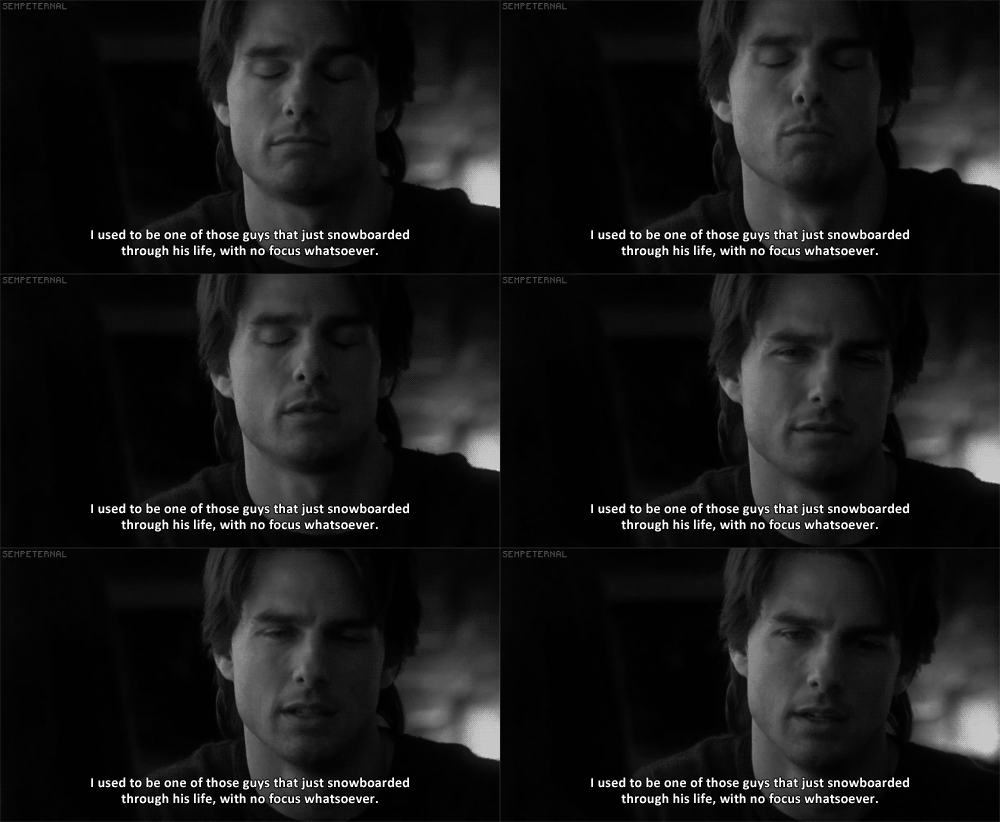
The film brings director Cameron Crowe's vision to visceral life thanks to the work of its stellar cast. Kurt Russell is the personification of integrity as David's understanding psychiatrist, Dr. McCabe. Jason Lee steals each scene in which he appears in his comical turn as David's best friend, Brian. Cameron Diaz turns in one of the best performances of her career as the tormented Julie. Penelope Cruz aptly reprises her role (she starred in the original Spanish version of the film) as Sofia, and infuses Sofia with an ethereal charm that leaves no wonder as to why David is instantly smitten with her. Tom Cruise dominates the film in one of his best performances as he captures David's devastating downward spiral with a fascinating combination of smug charm, naked vulnerability, and steely determination.

Through its mind-bending plot and haunting performances Vanilla Sky takes viewers onto an unforgettable journey through time, space, and the depths of the human soul. The film takes viewers onto a twisting thrill ride that is certain to leave them guessing while raising apt questions about love, memory, regret, and mortality. The star studded cast brings each of the film's twists and turns to brilliant life with performances that will linger with viewers long after the final credits fade. Embark upon a lucid dream that you won't soon forget with David and Sofia in Vanilla Sky.


Wednesday, March 2, 2022

Classics: A Review of Enemy at the Gates By Lauren Ennis

 War is hell and few moments in history personify this fact as well as the bloody Battle of Stalingrad. 2001's drama Enemy at the Gates relates the real life story of the Battle of Stalingrad and one of its most legendary heroes, sniper Vassili Zaitsev. At once a fascinating portrayal of one of the lesser known aspects of World War II and an exploration of the power of propaganda the film offers historical lessons that carry eerie relevance today. Step into one of the most harrowing chapters of modern history in Enemy at the Gates.

I've got my sights set on you

The story begins in 1942 as Hitler's army advances towards Stalingrad. The film begins with a harrowing battle sequence that recalls the infamous Normandy landing in Saving Private Ryan before focusing in on real life Soviet sniper Vassisli Zaitsev. When commissar Danilov witnesses Vassili kill five German soldiers with ease he devises a propaganda campaign using Vassili's heroic image to boost Soviet morale. The publicity brings Vassili to the attention of the Germans and prompts the Third Reich to enlist their own top marksman, Major Erwin Konig, to kill the sharpshooter and end the propaganda surrounding him. The film then becomes a deadly game of cat and mouse with Vassili and Konig matching bullets and wits in equal measure. What follows is a fascinating exploration of the conflicts between government and country and truth and propaganda, set against the epic battle two men and the regimes that they serve.

The film stands out amongst countless other war dramas by depicting a battle on World War II's eastern front and highlighting the impact of state propaganda. While Hollywood typically focuses upon the war's impact in France, England, and Germany, Enemy at the Gates portrays the war's devastating impact upon the Soviet Union. In its portrayal of the Battle of Stalingrad the film offers a unique perspective on WWII and highlights the ways in which it pitted ideologies as well as nations and people against one another. Through its portrayal of the central duel between Vassili and Konig the film offers a more complex view of the war as its two central characters are forced to represent the equally abhorrent ideologies of communism and fascism. Through its portrayal of Soviet propaganda the film also highlights the ways in which our understanding of current and historical events are all too often shaped by crafted narratives.  Donolov's propaganda portrays talented sniper and and apolitical Russian Vassili as a Soviet superman and symbol of communist might. While this depiction strays from the truth it serve's the regime's purpose of boosting Soviet morale and intimidating the enemy. Despite its strategic advantages, this narrative proves personally disastrous for Vassili as it places him personally under German scrutiny, putting him and everyone he cares for directly in harm's way. By showing the deadly consequences of Donolov's propaganda the film offers a scathing indictment of the ways in which government and media utilize propaganda to their advantage regardless of its impact upon everyday citizens. In this way, the film pits Vassili against two enemies as he struggles to survive his showdown with Konig while navigating the deadly channels of Soviet politics. As a result, he truly is a hero for our times as we ourselves are forced to navigate an increasingly uncertain economic and geopolitical future all while struggling in our own information war at home. For a war drama that is certain to satisfy history buffs and casual viewers alike step into battle with Vassili Zaitsev in Enemy at the Gates.

I always feel like somebody's watching me

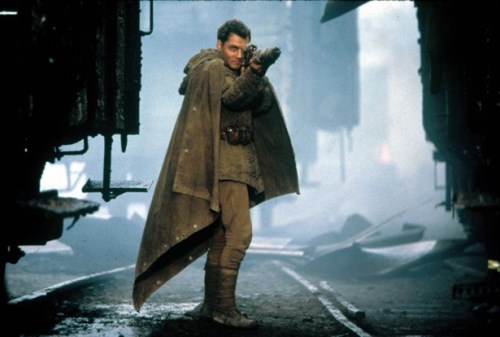
The film transports viewers to the bloody battle of Stalingrad thanks to the brilliant work of its cast. Bob Hoskins brings Soviet General and eventual Premier Nikita Kruschev to the screen in a bombastic performance that is nothing short of uncanny. Ron Perlman personifies grit as Vassili's world weary comrade, Koulikov. Gabriel Marshall Thomson's performance as Vassili's young neighbor, Sacha, belies his years in an unsentimental turn that captures the toll of war. Joseph Fiennes perfectly counters Law's boyish innocence in his cynical depiction of intellectual and propagandist Danilov. Rachel Weisz lights up the screen with a captivating combination of strength, intelligence, and charm as the object of both Danilov and Vassili's affections, Tania. Ed Harris blends cool professionalism with quiet menace to turn in a performance that is nothing short of chilling as Konig. Even in the midst of expert supporting performances the film belongs to Jude Law in one of the most mesmerizing performances of his career as reluctant hero Vassili. 

In it's unflinching portrayal of World War II's Eastern front Enemy at the Gates provides viewers with one of the most original and engrossing films in the war drama genre. Through its expert blend of historical sweep and personal drama the film brings the Battle of Stalingrad to visceral life. The uniformly superb performances infuse the characters with humanity and lend the story a beating heart even at its most brutal. The film's depiction of characters over caricature ensures that it rises above the propaganda that surrounds its characters, which all too many war dramas are reduced to. For an explosively engaging view of World War II join the battle with Vassili, Tania, and Donolov in Enemy at the Gates.

Moscow girls make me sing and shout