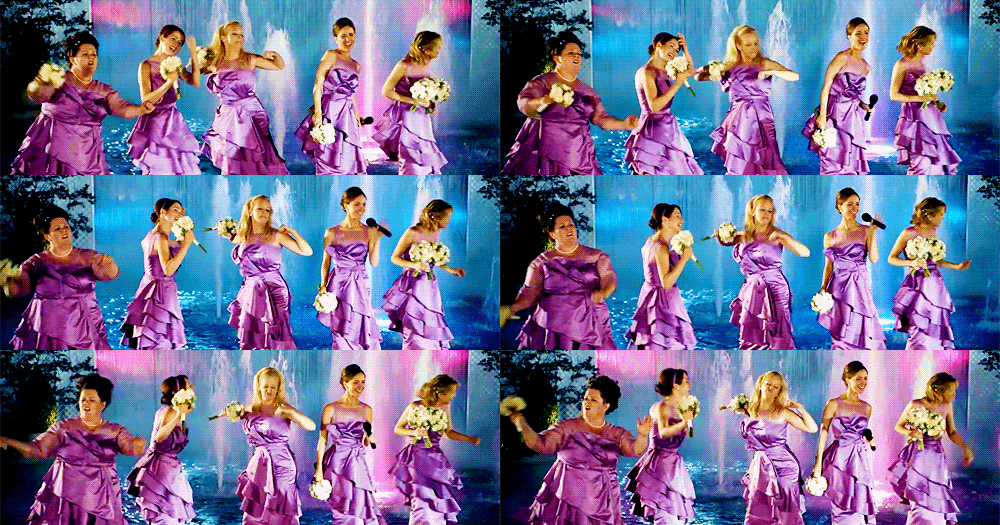
The moment that a friend asks you to be part of her bridal party is an honor. In this moment she is asking you to represent some of the best moments from her past while celebrating her future. This same moment is also one of horror as you brace yourself to boldly go where many women have gone before. In the uproarious 2011 comedy Bridesmaids one woman finds herself driven to the brink of sanity and back again all in preparation for her best friend's wedding. When Lillian asks Annie to be her maid of honor Annie happily accepts, blissfully unaware of just what she has signed herself up for. And so begins the epic journey of outrageous dresses, depleted bank accounts, and broken hearts that is the bridal party experience.
The story begins with Annie struggling to rebuild her life after losing her business and boyfriend all in one fell blow. Despite her setbacks, she does her best to carry on even as her dead end job and rent-skipping roommates threaten to hold her back. Her fragile existence is quickly upended, however, when her best friend, Lillian, announces her engagement and asks Annie to be her maid of honor. As if the ordinary stress of a planning a shower and bachelorette party weren't enough, she soon finds herself in direct competition with Lillian's seemingly perfect new friend, Helen.Even as she struggles to lead the perfect bridal party, Annie's best efforts are thwarted as Helen undermines her at every turn and transforms her modest but heartfelt plans into a catalog worthy monstrosity. It's up to Annie to reclaim her career, her love life, her best friend, and the coveted title of maid of honor before the big day. Along the way, Lillian, Helen, and Annie each learn valuable lessons in the true meaning of both success and friendship and discover that the 'perfect wedding' just might be overrated.
Upon its release, Bridesmaids was an instant hit and its little wonder why. The film manages to combine the most hilarious elements of slapstick comedy with time honored chick flick tropes to create a sharp witted, warm hearted, and side splitting comedy. Wedding films have long been a cinema staple, but rarely has a film so aptly or comically captured the mayhem that makes the big day possible. Annie could easily be dismissed as the 'maid of honor from Hell' as she leads the bridal party from one misadventure to the next, but thanks to the sympathetic script and Kristen Wiig's endearing performance, she is so much more. In Wiig's hands, she is the maid of honor that every woman is afraid of being, but all too often is as she struggles beneath the overwhelming pressure of her duties. Similarly, Rose Byrne's ice queen take on Helen captures the dark side of planning a 'perfect' wedding as she sabotages Annie's every idea, all in the name of perfection. The battle between the two highlights the impossibility of keeping up with increasingly outrageous wedding trends in the age of bridezilla. The duo's slapstick sparring also sheds light upon the ways in which today's competitive culture can lead even the most secure among us feeling unmoored.
Even at its most outrageous, however, Bridesmaids remains a tale of friendship. Annie struggles to come to terms with Lillian's impending marriage, not out out of jealousy, but our of fear that Lillian's new life may no longer have room for her in it. It is this fear that drives her from one misadventure to another as she misguidedly attempts to prove herself worthy of being Lillian's best friend and maid of honor. Through its portrayal of Annie's attempts to remain a relevant force in Lillian's changing life the film aptly portrays the ways in which time and all of the changes that it brings can threaten even the closest of friendships. By the film's conclusion you'll laugh, ugly cry, and even sing right along with Annie, Lillian, and Helen as they make the picture perfect comedy in Bridesmaids.
The film's funny script becomes the stuff of comedic gold in the hands of its talented cast. Ellie Kemper is endearingly naive without resorting to cutesiness as newlywed Becca. Wendi McLendon-Covey is the definition of desperate housewife in her caustically comic turn as frustrated Rita. Melissa McCarthy is boisterously bawdy in her riotous role as Lillian's unfiltered soon to be sister-in-law, Megan. Conniving has never looked so charming as in Rose Byrne's performance as controlling Helen. Chris O'Dowd conveys boyish charm as Annie's love interest, Officer Rhodes. Maya Rudolph brings a grounded realism to her relateable turn as bride to be Lillian. Even in the midst of stellar supporting performances, however, Kristen Wiig dominates her every scene with a physicality worthy of Lucille Ball and a dose of self-deprecation in the style of Carol Burnett.
At the time of its release Bridesmaids was marketed as 'a gross out comedy for girls', but the film is so much more. Even in the midst of its most broad humor the film offers sharp insight into female friendships, the ways in which society pits women against each other, and the toxic effects of society's obsession with 'the perfect wedding'. Through its spot-on script and expert comedic cast the film effectively sends up modern wedding mania with hilarious results. For a guaranteed laugh, get your girls together and raise a glass along with Annie, Lillian, and Helen in Bridesmaids.
Saturday, February 15, 2020
Saturday, February 1, 2020
What I Did For Love: A Valentine's Review By Lauren Ennis
Since the advent of cinema no topic has been explored as often or in as many ways as love. few things can inspire, fulfill, torment, and transform us as profoundly as love. On screen it is a force so consuming, so passionate, and so powerful that it can conquer all; in short, it is the stuff of movie magic. What is too often left off screen, however, is the sacrifice and selflessness are needed to keep the magic in any relationship alive. This week, I'll be turning the spotlight on three films that explore what happens after happily ever after and pay homage to love at its most trying and triumphant. This Valentine's Day curl up with your best chocolates, a box of tissues, and fall in love with some of cinema's most poignant love stories.
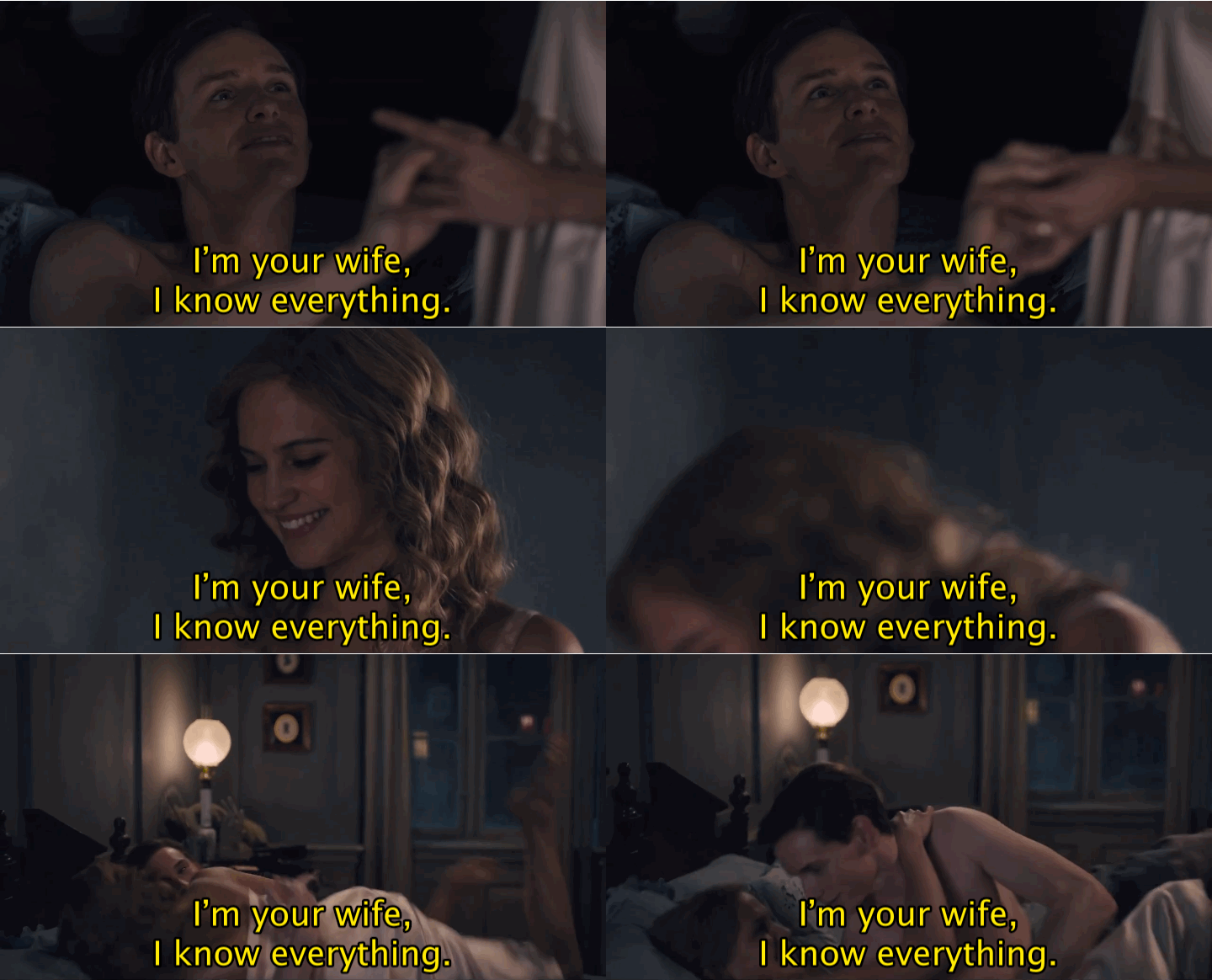
The Danish Girl: Gerda Wegener had it all, a chic bohemian lifestyle, a successful career as an artist, and a loving marriage to the man of her dreams. All of that changed, however, when the man of her dreams decided to become a woman. Based upon the biography of transgender pioneer Einer Wegener/Lili Elbe The Danish Girl explores the ways in which one woman's love survived the ultimate test. When one of her models cancels a sitting at the last minute Gerda is relieved to have her husband dress up and pose in the model's place. When the resulting painting becomes a surprise hit, she's thrilled to suddenly have an in demand model at her disposal free of charge. She even goes so far as to use this unusual development to promote her work by having Einer appear at her exhibition dressed as her mysterious model 'Lili' for a publicity stunt. As Lili is called upon to make increasing appearances, however, the line between male and female is blurred as Einer finds himself identifying as his female alter-ego. When Einer reveals his gender identity crisis Gerda is understandably devastated, but refuses to give up on a marriage that most women even today would have considered to be over. Instead, she defies all expectations and remains firmly at her husband's side. When medical experts deem him mentally disturbed she dismisses their diagnoses and continues to advocate for him. As their financial resources dwindle she tirelessly works to secure the funds needed for his treatment. She even resists temptation and remains a faithful wife after the physical aspect of her marriage ends. In short, Gerda repeatedly proves herself to be Einer's greatest confidante, ally, and champion. All of this she does for the sake of a love which, although profoundly changed, remains as strong as ever. Throughout the film, she continually puts her husband's needs above her own as she helps him to pursue a new life, all the while aware that this new life may be one without her. Many films remind us of the importance of putting our own happiness aside for those we love, but rarely has a film shown how agonizingly difficult it can be to do so. This timely and topical story garnered viewers and critics' notice with its unusual premise, but earned their admiration through its poignant portrayal of two truly remarkable women.

The Notebook: Can love survive once its been forgotten? That is the question that lies at the heart of this 2004 crowd-pleaser. The deceptively simple tale follows an elderly man as he visits a nursing home patient and reads her the story of two star-crossed lovers in 1940's South Carolina. The man's tale of love lost and found features all of the expected obstacles (family interference, war, and temptation), which are ultimately overcome in a fairy tale worthy conclusion. Despite the young couple's seemingly happy ending, however, it becomes obvious that happily ever isn't the whole story. Early on, the film reveals that the young man in the story, Noah is the elderly man reading the story and that the woman in the story, Ally, is the woman to whom he reads each day. Although their young love was able to withstand every obstacle in its path neither Ally nor Noah can do anything to slow or cure the Alzheimer's Disease from which she is suffering. As a result, Noah,is forced to helplessly watch as the love of his life forgets the life that they built together. Despite the impossibility of its success he carries out a quixotic mission by moving into the nursing home with her and reading the story of their romance to her every day in hopes that she'll become lucid enough to recognize him, even if only for a moment. When their children visit and beg him to return home he dismisses their pleas without hesitation saying, "That's my sweetheart in there. Wherever she is, that's where my home is". For Noah, there is no point in returning to his home or resuming his former life because without Ally both are empty. At first glance the tale of a man watching his wife succumb to Alzheimer's Disease is a depressing reality that is far from the stuff of movie magic. Upon closer observation, however, this story actually personifies what love is all about. Ally and Noah's youthful passion captures all of the exhilaration of young love at its most romantic. Similarly, Noah's quiet devotion, invokes the less glamorous, but ultimately deeper, love that comes from years of shared struggles, sacrifices, and triumphs. These combined narratives weave a compelling emotional tapestry that sets apart what easily could have been just another tale of summer love. For a true love story for the ages take a page from The Notebook.
Up: An animated children's film is probably the last thing that most audiences think of when they hear the word 'romantic'. Yet, within its opening minutes this Pixar hit brings to the screen one of the most achingly poignant love stories ever put to celluloid. The film begins with shy young Carl meeting the tomboy next door, Ellie. While the two could not be more different they form a fast friendship, which blossoms into something more when they grow up. The film then treats viewers to the highlights of the couple's life together with a masterful montage that shows them facing marriage's many triumphs and struggles together. Throughout this series of scenes the film shows the couple planning for their future family and their 'bucket list' trip to the lost land of Paradise Falls. Unfortunately, by the montage's conclusion it is revealed that they were unable to have children and that by the time they were finally able to save for the trip of their dreams Ellie had become ill. When the story begins in the present day she has succumbed to her illness, leaving Carl to pick up the shattered pieces of the life that they had built together. Although Ellie is afforded precious little screen time her presence is felt throughout the film. At the story's start, Carl is hardened by grief and has given up on both the outside world and everyone in it. While his neighborhood is steadily torn down and replaced by new flashy skyscrapers he insists on remaining in his home and keeping everything it exactly the same as when Ellie was alive. After he accidentally injures a construction worker he is deemed a 'public menace' and ordered to move to a retirement home. Rather than relinquish what was his late wife's 'dream house' Carl opts to pursue her childhood fantasy of living on a house at the edge of Paradise Falls. He then uses thousands of balloons (he used to be a balloon salesman) to make the house into an improvised airship, sets off into the sky, and sets his course for Paradise Falls. Along the way, he makes a host of new friends, faces a surprising foe, and finally begins to feel alive again. Even as he starts to move forward with his life, Ellie's memory remains with him provides him with a guiding light as he comes to term with his grief. When all seems lost and he contemplates giving up it is her indomitable example along with her final message urging him to go and have a new adventure that gives him the strength to carry on. Carl and Ellie's story shows that love need not be only till death do us part, because we are never truly parted from those we love as long as we keep their memory within our hearts. Carl's continued devotion to Ellie's memory serves as an apt reminder of the ways that love can continue to influence and transform our lives, even after death. For a love story that is guaranteed to have you looking up, join Carl and Ellie for the adventure of a lifetime in Up.
![]() |
| Yea...about that... |
The Danish Girl: Gerda Wegener had it all, a chic bohemian lifestyle, a successful career as an artist, and a loving marriage to the man of her dreams. All of that changed, however, when the man of her dreams decided to become a woman. Based upon the biography of transgender pioneer Einer Wegener/Lili Elbe The Danish Girl explores the ways in which one woman's love survived the ultimate test. When one of her models cancels a sitting at the last minute Gerda is relieved to have her husband dress up and pose in the model's place. When the resulting painting becomes a surprise hit, she's thrilled to suddenly have an in demand model at her disposal free of charge. She even goes so far as to use this unusual development to promote her work by having Einer appear at her exhibition dressed as her mysterious model 'Lili' for a publicity stunt. As Lili is called upon to make increasing appearances, however, the line between male and female is blurred as Einer finds himself identifying as his female alter-ego. When Einer reveals his gender identity crisis Gerda is understandably devastated, but refuses to give up on a marriage that most women even today would have considered to be over. Instead, she defies all expectations and remains firmly at her husband's side. When medical experts deem him mentally disturbed she dismisses their diagnoses and continues to advocate for him. As their financial resources dwindle she tirelessly works to secure the funds needed for his treatment. She even resists temptation and remains a faithful wife after the physical aspect of her marriage ends. In short, Gerda repeatedly proves herself to be Einer's greatest confidante, ally, and champion. All of this she does for the sake of a love which, although profoundly changed, remains as strong as ever. Throughout the film, she continually puts her husband's needs above her own as she helps him to pursue a new life, all the while aware that this new life may be one without her. Many films remind us of the importance of putting our own happiness aside for those we love, but rarely has a film shown how agonizingly difficult it can be to do so. This timely and topical story garnered viewers and critics' notice with its unusual premise, but earned their admiration through its poignant portrayal of two truly remarkable women.
![]() |
| I can't decide if that sounds romantic or just exhausting |
The Notebook: Can love survive once its been forgotten? That is the question that lies at the heart of this 2004 crowd-pleaser. The deceptively simple tale follows an elderly man as he visits a nursing home patient and reads her the story of two star-crossed lovers in 1940's South Carolina. The man's tale of love lost and found features all of the expected obstacles (family interference, war, and temptation), which are ultimately overcome in a fairy tale worthy conclusion. Despite the young couple's seemingly happy ending, however, it becomes obvious that happily ever isn't the whole story. Early on, the film reveals that the young man in the story, Noah is the elderly man reading the story and that the woman in the story, Ally, is the woman to whom he reads each day. Although their young love was able to withstand every obstacle in its path neither Ally nor Noah can do anything to slow or cure the Alzheimer's Disease from which she is suffering. As a result, Noah,is forced to helplessly watch as the love of his life forgets the life that they built together. Despite the impossibility of its success he carries out a quixotic mission by moving into the nursing home with her and reading the story of their romance to her every day in hopes that she'll become lucid enough to recognize him, even if only for a moment. When their children visit and beg him to return home he dismisses their pleas without hesitation saying, "That's my sweetheart in there. Wherever she is, that's where my home is". For Noah, there is no point in returning to his home or resuming his former life because without Ally both are empty. At first glance the tale of a man watching his wife succumb to Alzheimer's Disease is a depressing reality that is far from the stuff of movie magic. Upon closer observation, however, this story actually personifies what love is all about. Ally and Noah's youthful passion captures all of the exhilaration of young love at its most romantic. Similarly, Noah's quiet devotion, invokes the less glamorous, but ultimately deeper, love that comes from years of shared struggles, sacrifices, and triumphs. These combined narratives weave a compelling emotional tapestry that sets apart what easily could have been just another tale of summer love. For a true love story for the ages take a page from The Notebook.
![]() |
| You're never too old for a new adventure |
Up: An animated children's film is probably the last thing that most audiences think of when they hear the word 'romantic'. Yet, within its opening minutes this Pixar hit brings to the screen one of the most achingly poignant love stories ever put to celluloid. The film begins with shy young Carl meeting the tomboy next door, Ellie. While the two could not be more different they form a fast friendship, which blossoms into something more when they grow up. The film then treats viewers to the highlights of the couple's life together with a masterful montage that shows them facing marriage's many triumphs and struggles together. Throughout this series of scenes the film shows the couple planning for their future family and their 'bucket list' trip to the lost land of Paradise Falls. Unfortunately, by the montage's conclusion it is revealed that they were unable to have children and that by the time they were finally able to save for the trip of their dreams Ellie had become ill. When the story begins in the present day she has succumbed to her illness, leaving Carl to pick up the shattered pieces of the life that they had built together. Although Ellie is afforded precious little screen time her presence is felt throughout the film. At the story's start, Carl is hardened by grief and has given up on both the outside world and everyone in it. While his neighborhood is steadily torn down and replaced by new flashy skyscrapers he insists on remaining in his home and keeping everything it exactly the same as when Ellie was alive. After he accidentally injures a construction worker he is deemed a 'public menace' and ordered to move to a retirement home. Rather than relinquish what was his late wife's 'dream house' Carl opts to pursue her childhood fantasy of living on a house at the edge of Paradise Falls. He then uses thousands of balloons (he used to be a balloon salesman) to make the house into an improvised airship, sets off into the sky, and sets his course for Paradise Falls. Along the way, he makes a host of new friends, faces a surprising foe, and finally begins to feel alive again. Even as he starts to move forward with his life, Ellie's memory remains with him provides him with a guiding light as he comes to term with his grief. When all seems lost and he contemplates giving up it is her indomitable example along with her final message urging him to go and have a new adventure that gives him the strength to carry on. Carl and Ellie's story shows that love need not be only till death do us part, because we are never truly parted from those we love as long as we keep their memory within our hearts. Carl's continued devotion to Ellie's memory serves as an apt reminder of the ways that love can continue to influence and transform our lives, even after death. For a love story that is guaranteed to have you looking up, join Carl and Ellie for the adventure of a lifetime in Up.

Sunday, January 19, 2020
Classics: A Review of Pride and Prejudice By Lauren Ennis
It is a truth universally acknowledged that each generation of film goers must be in want of their own version of Jane Austen's Pride and Prejudice. Fortunately for today's viewers, Hollywood's most recent outing with Mr. Darcy and Miss Bennett might be its best to date. This 2005 take on the classic novel acts as a faithful adaption that will satisfy even the most ardent of Austen's readers while still offering plenty of charms for the casual viewer. Through its wicked wit, swoon worthy romance, and star making performances the film more than earns its status as a modern classic.
The story begins with the Bennetts, a struggling family with five daughters and no male heirs, learning that their new neighbor is the wealthy and eligible Mr. Bingley. Upon receiving this news Mrs. Bennett immediately launches a campaign to match Bingley with her oldest daughter, Jane. When Jane attends the Bingley's ball her younger sister Lizzie accompanies her and meets Bingley's best friend, the even wealthier and more sought after Mr. Darcy. While Jane and Bingley find themselves immediately attracted to one another Lizzie and Darcy are instantly repelled by each other. After overhearing socially inept Darcy describing her as appearance as 'tolerable' at best Lizzie dismisses him as proud and snobbish. The stage is then set for a series of misunderstandings, entanglements, break ups, and make ups that are the stuff that romantic comedies are made of as the Bennett girls and their beauxs each find that somewhere between pride and prejudice there just might be love.
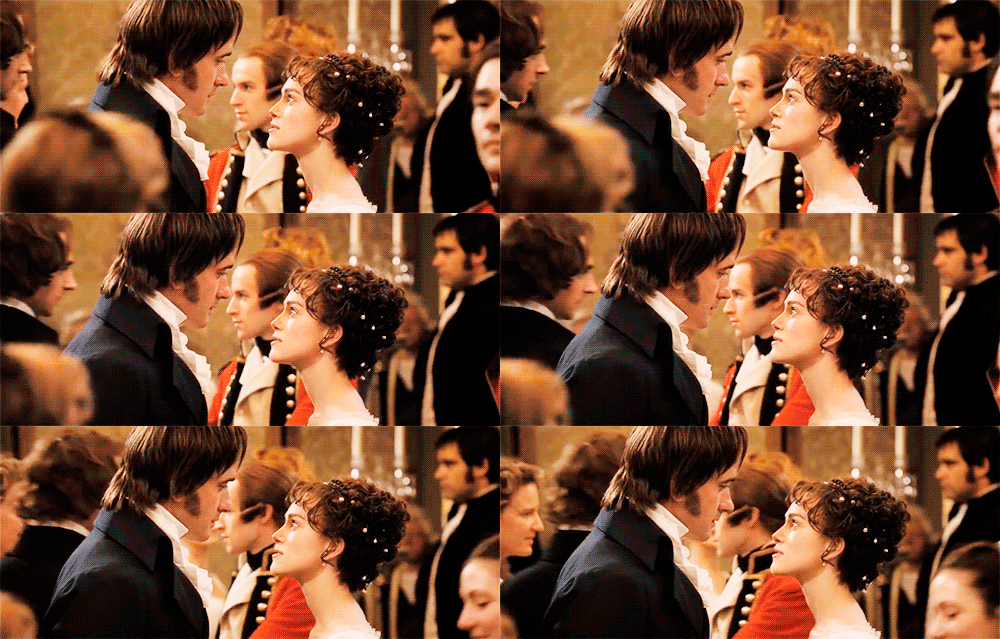
Since the advent of cinema, Austen's work has been a screen staple, with Pride and Prejudice having been adapted for the big and small screen at least once per generation. What stands out about the 2005 adaptation is the way in which it brings Austen's novel to life rather than merely following its familiar plot. Instead of following the well worn period piece path of showcasing elaborate costumes and impeccable manners this Pride and Prejudice shows Regency era England in all of its splendor and squalor. From the film's opening shot of Lizzie wandering past puddles and pigs and into her chaotic home it is obvious that this is not your mother's Austen. The film's use of historically accurate settings and costumes places the characters perfectly within the context of their era, and subtly highlights the class divisions that lay at the heart of Austen's biting social commentary. Similarly, the dialogue maintains all of the novel's intelligence and wit without resorting to the impeccable manners or stuffiness of a Masterpiece production. By infusing the story with warmth and humor, the film ensures that characters come across less like the literary idols that we were taught to view them as in high school than more like the flawed and multifaceted people who populate our own world. This emphasis upon the characters' fundamental humanity allows viewers to relate to, empathize with, and invest in their struggles . As a result, when Lizzie and Darcy finally put both their pride and prejudices aside viewers will find themselves rooting for the couple's happy ending much as we would for the happiness of our own friends.
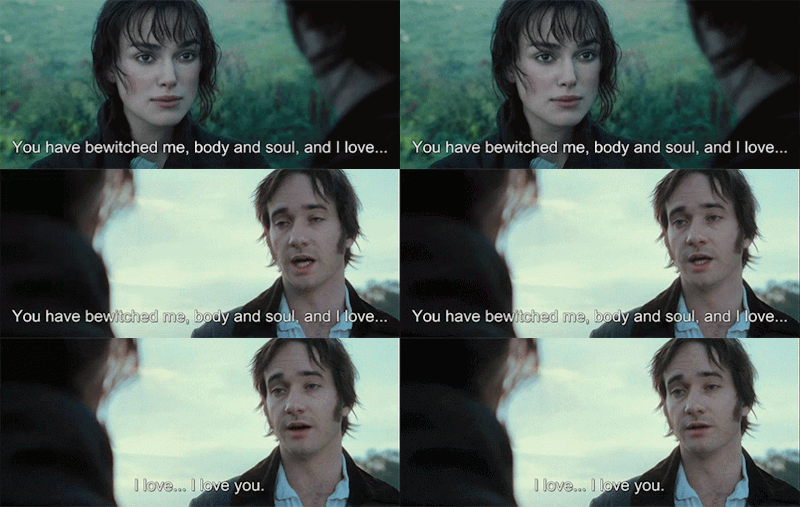
Austen's classic is vividly realized thanks in large part to the work of the film's stellar cast. Carey Mulligan, Jena Malone, and Talulah Riley are perfectly cast as Lizzie's three younger sisters, frivolous flirts Kitty, Lydia, and Mary. Simon Woods conveys an endearing awkwardness worthy of Hugh Grant as Mr. Bingley. Rosamund Pike personified loveliness as reserved but passionate Jane. Brenda Blethyn is delightfully daffy in her uproarious turn as social climbing Mrs. Bennett. Donald Sutherland makes for an excellent foil to Blethyn by infusing Mr. Bennett with warmth and wit. Rupert Friend turns on the con man charm as the rakish Mr. Wickham. Kelly Reilly and Judi Dench make for wonderfully wicked mean girls as Caroline Bingley and Lady Catherine. Matthew Macfayden is the stuff that crushes are made of in his layered performance as the brooding but honorable Mr. Darcy. Keira Knightley strikes an ideal balance between light-hearted wit and spirited ferocity in her turn as Lizzie. Together, the pair share a chemistry that is so palpable that viewers could be forgiven for thinking that Austen wrote the parts of Lizzie and Darcy just for them.
2005's Pride and Prejudice transforms the classic novel into classic cinema. Through its detailed costumes and sets the film transports viewers into the very heart of Austen's England. The sparkling wit of the script and the endlessly engaging performances bring the novel to vibrant life and takes viewers onto a delightful journey into the depths of the human heart from which they won't wish to return. All prejudices aside, Pride and Prejudice is a film which its cast and crew more than deserve to take pride in.
![]() |
| The glare that launched a thousand rom-coms |
The story begins with the Bennetts, a struggling family with five daughters and no male heirs, learning that their new neighbor is the wealthy and eligible Mr. Bingley. Upon receiving this news Mrs. Bennett immediately launches a campaign to match Bingley with her oldest daughter, Jane. When Jane attends the Bingley's ball her younger sister Lizzie accompanies her and meets Bingley's best friend, the even wealthier and more sought after Mr. Darcy. While Jane and Bingley find themselves immediately attracted to one another Lizzie and Darcy are instantly repelled by each other. After overhearing socially inept Darcy describing her as appearance as 'tolerable' at best Lizzie dismisses him as proud and snobbish. The stage is then set for a series of misunderstandings, entanglements, break ups, and make ups that are the stuff that romantic comedies are made of as the Bennett girls and their beauxs each find that somewhere between pride and prejudice there just might be love.
Since the advent of cinema, Austen's work has been a screen staple, with Pride and Prejudice having been adapted for the big and small screen at least once per generation. What stands out about the 2005 adaptation is the way in which it brings Austen's novel to life rather than merely following its familiar plot. Instead of following the well worn period piece path of showcasing elaborate costumes and impeccable manners this Pride and Prejudice shows Regency era England in all of its splendor and squalor. From the film's opening shot of Lizzie wandering past puddles and pigs and into her chaotic home it is obvious that this is not your mother's Austen. The film's use of historically accurate settings and costumes places the characters perfectly within the context of their era, and subtly highlights the class divisions that lay at the heart of Austen's biting social commentary. Similarly, the dialogue maintains all of the novel's intelligence and wit without resorting to the impeccable manners or stuffiness of a Masterpiece production. By infusing the story with warmth and humor, the film ensures that characters come across less like the literary idols that we were taught to view them as in high school than more like the flawed and multifaceted people who populate our own world. This emphasis upon the characters' fundamental humanity allows viewers to relate to, empathize with, and invest in their struggles . As a result, when Lizzie and Darcy finally put both their pride and prejudices aside viewers will find themselves rooting for the couple's happy ending much as we would for the happiness of our own friends.
| And...swoon! |
2005's Pride and Prejudice transforms the classic novel into classic cinema. Through its detailed costumes and sets the film transports viewers into the very heart of Austen's England. The sparkling wit of the script and the endlessly engaging performances bring the novel to vibrant life and takes viewers onto a delightful journey into the depths of the human heart from which they won't wish to return. All prejudices aside, Pride and Prejudice is a film which its cast and crew more than deserve to take pride in.
Saturday, January 4, 2020
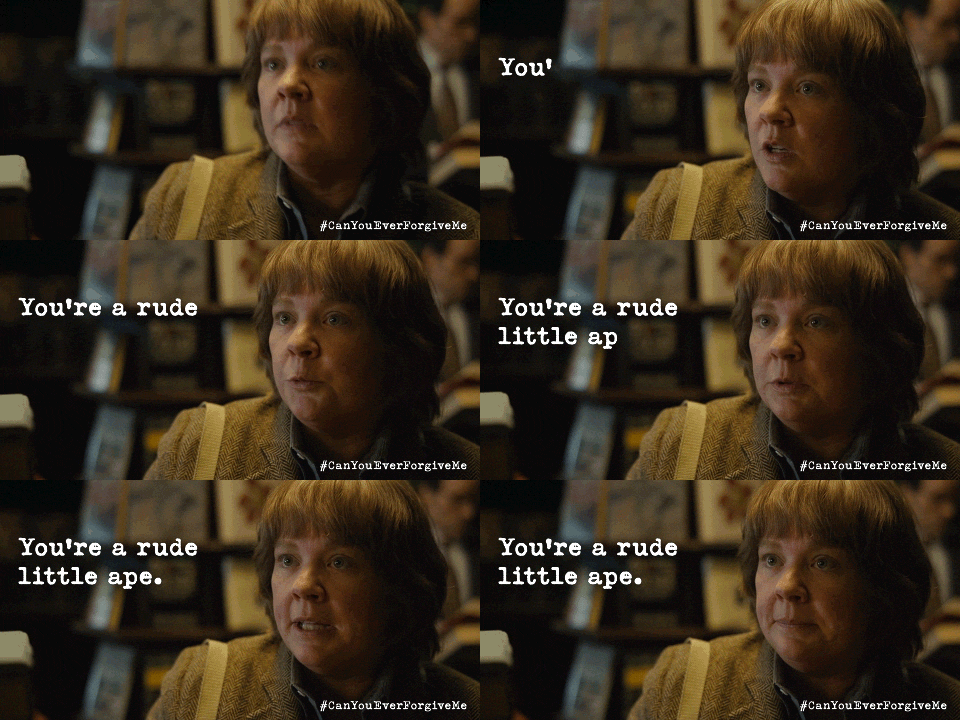
Classics: A Review of Can You Ever Forgive Me By Lauren Ennis
‘Never let the facts get in the way of a good story’
is an adage that seemed to sum up the life philosophy of biographer turned
forger Lee Israel. After her literary career reached a standstill, Israel began
a downward spiral that ultimately culminated in her embarking upon a criminal
second act. This reinvention of herself as fabricator and forger of the stars
is a crime caper so offbeat, outrageous, and fascinating that it truly is
stranger than any fiction that she was ever able to devise. The 2018 drama Can You Ever Forgive Me chronicles
Israel’s exploits in all of their gritty glory with a caustic wit and darkly
comedic sensibility worthy of its infamous anti-heroine.
The story begins with Israel hovering dangerously
close to rock bottom as she faces unemployment, mounting debts, and alcoholism.
Despite her troubles, however, she desperately clings to her brief success as a
celebrity biographer and stubbornly refuses to accept that her literary career
may be at an end. When her agent declines to represent her any longer she finds
herself running out of career options for “a fifty-one year old who likes cats
better than people”. In the midst of this downward spiral, her landlord begins
threatening to evict her and her veterinarian refuses to treat her sick,
elderly, cat until she pays her outstanding bills. Desperate for fast cash she
sells a letter from Katherine Hepburn thanking her for her work on Hepburn’s
biography. The letter sells for more than she had expected, and with that one
transaction the seeds of a criminal enterprise is planted. Soon, Israel begins
forging letters from some of the most beloved stars of the early twentieth
century and selling them for a quick profit. Over time, she is able to pay off
her debts and make a steady, if illegal, living without once having to punch a
time clock. As she continues to make ever more outrageous claims in her letters
and demands increasingly high prices, however, she raises the suspicions of
customers and law enforcement alike and soon finds her illicit enterprise under
threat.
Few characters seem as unlikely to garner audience sympathy as Lee Israel and her accomplice Jack Hock, but few adventures are as oddly addictive and strangely enjoyable as Can You Ever Forgive Me? At its heart, the film is a story of two misfits in desperate search of a way to matter if not exactly belong. As Israel faces commercial failure and critical irrelevance it is difficult not to understand her sense of displacement and isolation. Similarly, after witnessing the various ways in which her financial and personal lives are unraveling audiences will be hard pressed not to empathize with her plight. As a result, when she finally finds a means through which to sell her writing it is all too tempting to root for her illicit enterprise's success. Fortunately, even as the film humanizes both Israel and Hock it never loses sight of how large a role each of them played in creating their own problems or of just how far askew each of their moral compasses are. The film refuses to take the easy way out and either champion or chastise its wayward characters and instead, much like Israel herself did in her biographies, objectively relates their story in a way that allows both characters to speak for themselves. In this way the film allows audiences to make up their own minds as they watch the delinquent duo careen from one misadventure to another, thumbing their noses at the society that rejected them all along the way. For a darkly comic journey into the rotten side of the Big Apple join Israel and Hock in Can You Ever Forgive Me?
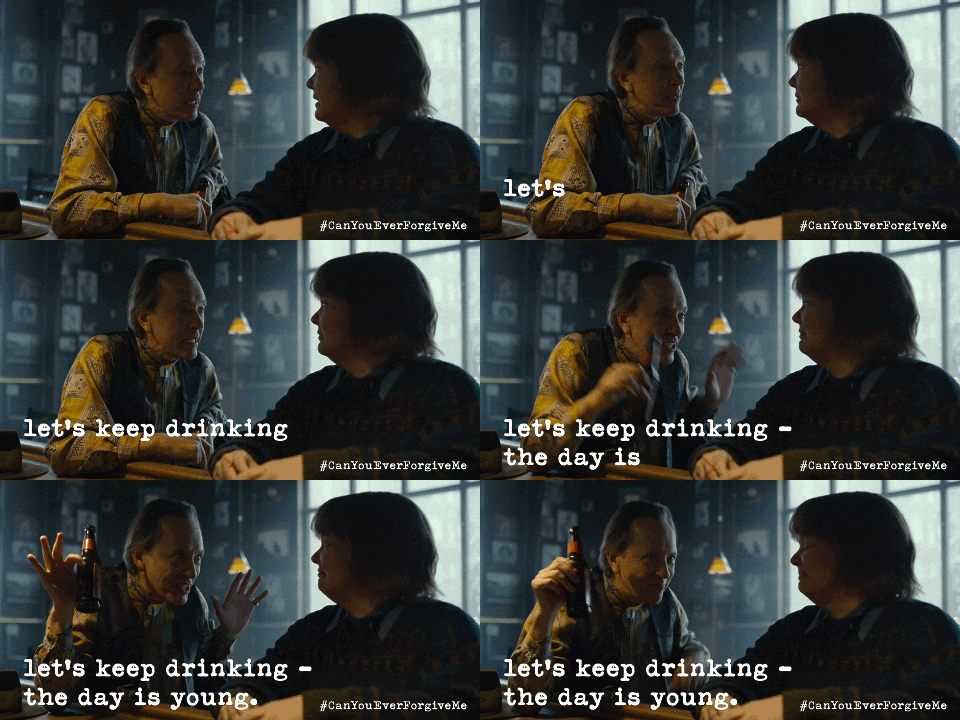
The film primarily functions as a character study of Israel and Hock, and as a result hinges upon the performances of Melissa McCarthy and Richard E Grant as the deviant duo. Thankfully, both actors are more than up for the job with McCarthy proving that she is capable of far more than stock comedy roles and Grant lending the gritty proceedings comic relief and sophisticated charm. In McCarthy's hands Israel remains every bit as unlikeable as she was in life, but she is far more relateable than a curmudgeonly criminal ought to be. Rather than transform the arguably pathetic Israel into either an object of pity or parody, McCarthy opts for a more difficult and far more compelling approach by infusing her anti-heroine with a pathos that will have viewers if not actually rooting for her success at least nodding in understanding. Grant, meanwhile, nearly steals the film in his infectiously charming portrayal of the gleefully amoral Jack. The chemistry between the two is nothing short of sparkling as they breeze from one misdeed to another all while offering up some of the most crackling one-liners this side of Dorothy Parker.
Can You Ever Forgive Me? sticks to its facts but still manages to tell a story that is not just good, but great. Through its intelligent script and wickedly witty performances the film brings the life and times of Lee Israel to vivid life in all of their grotesque glory. The film faithfully relates Israel's self-destructive odyssey without passing judgment upon or making excuses for its anti-heroine as it allows Israel to speak for her unapologetically amoral self. For a biography with a bite join Lee and Jack on the caper of a lifetime in Can You Ever Forgive Me?
Friday, December 20, 2019
Classics: A Very Merry Holiday TV Review By Lauren Ennis
The holiday rush is nearly over, but in the midst of
all of the season’s hustle and bustle it can be all too easy to lose sight of
just what it is that we’re celebrating. With all of the time spent preparing
for the holidays we often miss out on the very thing that we should be
celebrating; time with those closest to us. This year, take a break with your
nearest and dearest for a crash course in the true meaning of the holidays
courtesy of three holiday specials that are sure to entertain and enlighten the
whole family.
![]() |
| Keep tissues handy for this one... |
Hey
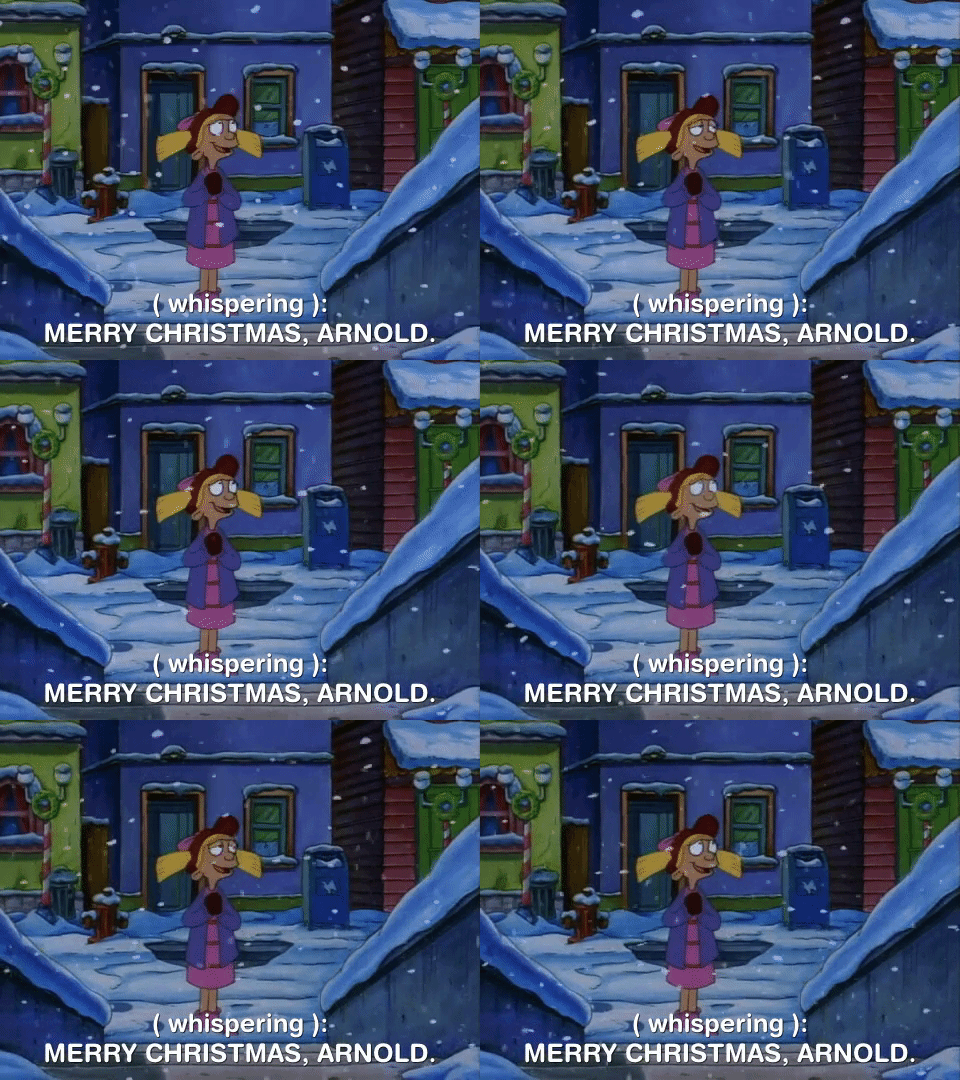
Arnold-Arnold’s Christmas: This Nickelodeon series ran for
five seasons but only featured one holiday episode. Thankfully, what this
single episode lacks in quantity it more than makes up for in quality.
Recalling holiday classics while relating a refreshingly unique and entirely
heartwarming tale 1996’s “Arnold’s Christmas” is ideal holiday viewing for the
young and young at heart. The episode cleverly juxtaposes idealist Arnold’s and
bully Helga’s very different attempts to create the perfect Christmas.
Unsurprisingly, materialistic Helga, who describes Christmas as an excuse to
‘shop like a barbarian’ and ‘get yours before the other guy gets his’ is
fixated upon obtaining this year’s must have gift, a pair of Nancy Spumoni snow
boots. Meanwhile, Arnold struggles to think of a gift to give neighbor Mr.
Hyunh for the boarding house’s annual Secret Santa. While trying to coax ideas
out of Mr. Hyunh, Arnold is shocked to learn that what his neighbor wants most
is to be reunited with the daughter he sent to America in an effort to protect
her during the fall of Saigon. After learning Mr. Hyunh’s wrenching backstory
Arnold becomes determined to make a Christmas miracle come true and reunite Mr.
Hyunh with his now grown daughter, Mai. Through a series of misadventures
Arnold and Helga’s holidays intersect just in time to ensure that the Hyunh’s
receive the ultimate gift. Through its equal parts mature and original approach
“Arnold’s Christmas” stands apart from the myriad of derivative and surgery
specials that are aired each holiday season. Although the episode reaches a
happy conclusion it refuses to shy away from such harsh realities as war and
loss and even takes pause to reflect upon the ways in which the holidays can be
painful and lonely for many. In this way, the episode shows the true range of
Christmas experiences along with the expected true meaning of Christmas. Even
the episode’s depiction of the requisite humbugs contains nuance as Helga and
private investigator Mr. Bailey are shown to be not villains but instead
average people who find themselves caught up in the consumerism and stress of
the season. Helga’s redemption at the end of the episode proves almost as
rewarding as the Hyunh’s reunion as she learns that the most cherished gifts
are those that don’t come in boxes and it is truly better to give than receive,
even when it means giving without trying to receive any credit for it. For
viewing that is guaranteed to warm your heart no matter how cold the winter
winds blow tune in to Hey Arnold’s “Arnold’s
Christmas”.
| Please tell me these decorators are available for hire... |
A
Charlie Brown Christmas: The holiday season hasn't really started until this 1965 classic has aired. In the nearly fifty-five years since it first premiered this deceptively simple tale of lovable loser Charlie Brown and his unusual choice of a Christmas tree has worked its magic on several generations. The story follows the Peanuts gang as they eagerly prepare for Christmas. While his friends focus upon finding the most expensive presents and elaborate decorations Charlie Brown finds himself unable to muster much enthusiasm for what he sees as the commercialization of Christmas. When Lucy offers to let him direct their class' Christmas pageant he's thrilled at the opportunity and sets about creating an authentic nativity play. Unfortunately, his friends have other plans and he soon finds his 'by the book' production peppered with everything from pop culture references to randomly placed musical interludes that have nothing to do with the nativity. At the urging of his friends he reluctantly hands over his directorial duties to Lucy and resigns himself to his limited role of picking the pageant tree. Much to the rest of the gang's disappointment he passes over the elaborate aluminum trees and instead picks the smallest and least impressive tree that he can find. When he returns with his tree his friends laugh at the supposed failure. Frustrated, he demands to know if any of them knows or cares about the true meaning of Christmas, to which Linus famously replies by quoting the story of the nativity from the Gospel of Luke. The story functions as a series of character studies rather than an action packed plot of the sort that today's viewers are accustomed to. The animation was considered crude even upon the special's release in the early days of color television. The score seems more at home in a jazz club than in a holiday special. Even the amateur voice performances made up of a cast of untrained child actors seem out of place among today's polished and edited productions. So what then is it about this holiday special, which even its creators were certain would be a sure flop, that makes it so special? The answer is that the very quality which executives were certain would guarantee the special's failure, its unpretentious unassuming simplicity, is the very thing that continues to endear it to viewers and critics alike. Through its refusal to rely upon glossy production values, elaborate plots, or holiday tropes the special personifies its own message to embrace the true meaning of Christmas. In this way the special aptly reminds us to see flash of the mass marketing sensation that Christmas has become and take a closer look at just what it is that we're celebrating. While its focus upon the holiday's religious aspects tempted controversy even upon its 1965, release it is this emphasis that lends the film its emotional core as it hearkens back to the holy day's message of peace on earth and good will. Get your season started in classic fashion with the Peanuts gang in A Charlie Brown Christmas.
Saturday, December 7, 2019
Classics: A Review of Memoirs of a Geisha By Lauren Ennis
What is it that allows some to triumph over tragedy while others succumb to it? How are some able to rise above adverse circumstances while others remain oppressed by them? These questions lie at the heart of the 2005 drama Memoirs of a Geisha. Set against the tumultuous backdrop of 20th century Japan the film follows an ordinary girl as she struggles to maneuver the by turns glamorous and treacherous life of a geisha in an era of extraordinary change. Adapted from the 1997 bestselling novel of the same name the film takes viewers on an unforgettable journey into the elusive world of Japan's geishas while relating a timeless tale of resilience and reinvention.
The story begins along the Japanese coast during the 1930's as nine year old Chiyo and her sister, Satsu, tend to their terminally ill mother. While bracing themselves for their mother's impending death, the girls are devastated to learn that their father has sold them in order to pay the family's debts. The siblings are then torn from everything that they've ever known, including each other, as they are taken to Kyoto where older, plainer, Satsu is sent to a brothel while prettier Chiyo enters a geisha house. Although she is spared the sexual abuse that Satsu is forced to endure Chiyo, suffers constant physical and psychological abuse at the geisha house, particularly at the hands of vindictive geisha Hatsumomo. After several failed attempts to reunite with her sister, all seems lost until fate intervenes and Chiyo is transformed into Sayuri, Kyoto's most celebrated geisha. She soon learns, however, that her success is not all that she had hoped for as she finds herself facing the pressures and constraints of life as a geisha. When World War II breaks out she is forced to reinvent herself once again as she struggles to find her voice and make her own way in a drastically changing world.
At first glance, Memoirs of a Geisha is a Japanese take on the familiar Cinderella story. As the story unfolds, however, the film evolves into a compelling exploration of resilience and self-discovery. While marketed as an exotic romance, the film's central focus is actually Sayuri's struggle to obtain her elusive goal; not to win a man's affections or earn status as a geisha, but to lead a life that is truly her own. It is this overarching desire that fuels her determination to make the most of the difficulties that life continually places within her path, and motivates her to forge ahead when others might accept defeat. Even when faced with the loss of her fortune, her career, or her loved ones she never loses her sense of self as she stubbornly presses on. Much like Scarlett O'Hara, Sayuri remains standing tall even as the world around her threatens to crumble in the rubble of war and reconstruction. Throughout her training she is told that the work of a geisha is an art. While she may succeed in all of the arts expected of a geisha her true art form is the art of survival as she rises from the devastation surrounding her again and again only to emerge stronger and more determined than when she started. In this way, the story subverts audience expectations by providing its seemingly helpless heroine with an internal transformation that surpasses any make-over a fairy god-mother might provide. As a result, the film defies period piece tropes by relating an empowering and refreshingly modern story of individuality and independence that will resonate in any culture or era.
While the film was subject to controversy due to its casting of several Chinese performers in Japanese roles, the cast bring Arthur Golden's novel to vivid life. Gong Li steals each scene in which she appears as the fiery Hatsumomo, expertly balancing seductive charm, cold cunning, and bitter desperation. Michelle Yeoh resonates warmth and maternal wisdom and makes for an excellent foil to Li's villain in her turn as Sayuri's mentor, celebrated geisha Mameha. Youki Kudoh is by turns endearing and heart breaking in her role as Sayuri's best-friend turned reluctant rival, Pumpkin. Ken Watanabe exudes charm in his role as Sayuri's love interest, while Koji Yakusho lends pathos and world-weariness to his role as her rejected suitor. Even in the midst of excellent supporting performances the film belongs to Suzuka Ohgo and Ziyi Zhang as they infuse their performances with an innocence, intelligence, and determination that brilliantly transfer Golden's complex heroine to the silver screen.
At the film's conclusion Sayuri describes her unconventional happy ending and reminds viewers that "these are not the memoirs of an empress, nor of a queen"; what they are are is something infinitely more moving and fascinating. At once a unique tale of a young woman coming of age in an era of cultural change and a universal story of resilience and redemption Memoirs of a Geisha is nothing short of inspiring. Through its intelligent script, enchanting visuals, and engaging performances the film not only transports viewers into the heart of the mysterious world of Japan's geishas, but also brings its alluring inhabitants to vibrant life. During her grueling training to become a geisha Mameha advises Sayuri that "to be a geisha is to be judged as a moving work of art", a task at which this film more than succeeds.
And as a bonus be sure to check out the skating program that inspired this review!
The story begins along the Japanese coast during the 1930's as nine year old Chiyo and her sister, Satsu, tend to their terminally ill mother. While bracing themselves for their mother's impending death, the girls are devastated to learn that their father has sold them in order to pay the family's debts. The siblings are then torn from everything that they've ever known, including each other, as they are taken to Kyoto where older, plainer, Satsu is sent to a brothel while prettier Chiyo enters a geisha house. Although she is spared the sexual abuse that Satsu is forced to endure Chiyo, suffers constant physical and psychological abuse at the geisha house, particularly at the hands of vindictive geisha Hatsumomo. After several failed attempts to reunite with her sister, all seems lost until fate intervenes and Chiyo is transformed into Sayuri, Kyoto's most celebrated geisha. She soon learns, however, that her success is not all that she had hoped for as she finds herself facing the pressures and constraints of life as a geisha. When World War II breaks out she is forced to reinvent herself once again as she struggles to find her voice and make her own way in a drastically changing world.
At first glance, Memoirs of a Geisha is a Japanese take on the familiar Cinderella story. As the story unfolds, however, the film evolves into a compelling exploration of resilience and self-discovery. While marketed as an exotic romance, the film's central focus is actually Sayuri's struggle to obtain her elusive goal; not to win a man's affections or earn status as a geisha, but to lead a life that is truly her own. It is this overarching desire that fuels her determination to make the most of the difficulties that life continually places within her path, and motivates her to forge ahead when others might accept defeat. Even when faced with the loss of her fortune, her career, or her loved ones she never loses her sense of self as she stubbornly presses on. Much like Scarlett O'Hara, Sayuri remains standing tall even as the world around her threatens to crumble in the rubble of war and reconstruction. Throughout her training she is told that the work of a geisha is an art. While she may succeed in all of the arts expected of a geisha her true art form is the art of survival as she rises from the devastation surrounding her again and again only to emerge stronger and more determined than when she started. In this way, the story subverts audience expectations by providing its seemingly helpless heroine with an internal transformation that surpasses any make-over a fairy god-mother might provide. As a result, the film defies period piece tropes by relating an empowering and refreshingly modern story of individuality and independence that will resonate in any culture or era.
While the film was subject to controversy due to its casting of several Chinese performers in Japanese roles, the cast bring Arthur Golden's novel to vivid life. Gong Li steals each scene in which she appears as the fiery Hatsumomo, expertly balancing seductive charm, cold cunning, and bitter desperation. Michelle Yeoh resonates warmth and maternal wisdom and makes for an excellent foil to Li's villain in her turn as Sayuri's mentor, celebrated geisha Mameha. Youki Kudoh is by turns endearing and heart breaking in her role as Sayuri's best-friend turned reluctant rival, Pumpkin. Ken Watanabe exudes charm in his role as Sayuri's love interest, while Koji Yakusho lends pathos and world-weariness to his role as her rejected suitor. Even in the midst of excellent supporting performances the film belongs to Suzuka Ohgo and Ziyi Zhang as they infuse their performances with an innocence, intelligence, and determination that brilliantly transfer Golden's complex heroine to the silver screen.
At the film's conclusion Sayuri describes her unconventional happy ending and reminds viewers that "these are not the memoirs of an empress, nor of a queen"; what they are are is something infinitely more moving and fascinating. At once a unique tale of a young woman coming of age in an era of cultural change and a universal story of resilience and redemption Memoirs of a Geisha is nothing short of inspiring. Through its intelligent script, enchanting visuals, and engaging performances the film not only transports viewers into the heart of the mysterious world of Japan's geishas, but also brings its alluring inhabitants to vibrant life. During her grueling training to become a geisha Mameha advises Sayuri that "to be a geisha is to be judged as a moving work of art", a task at which this film more than succeeds.
And as a bonus be sure to check out the skating program that inspired this review!
Saturday, November 23, 2019
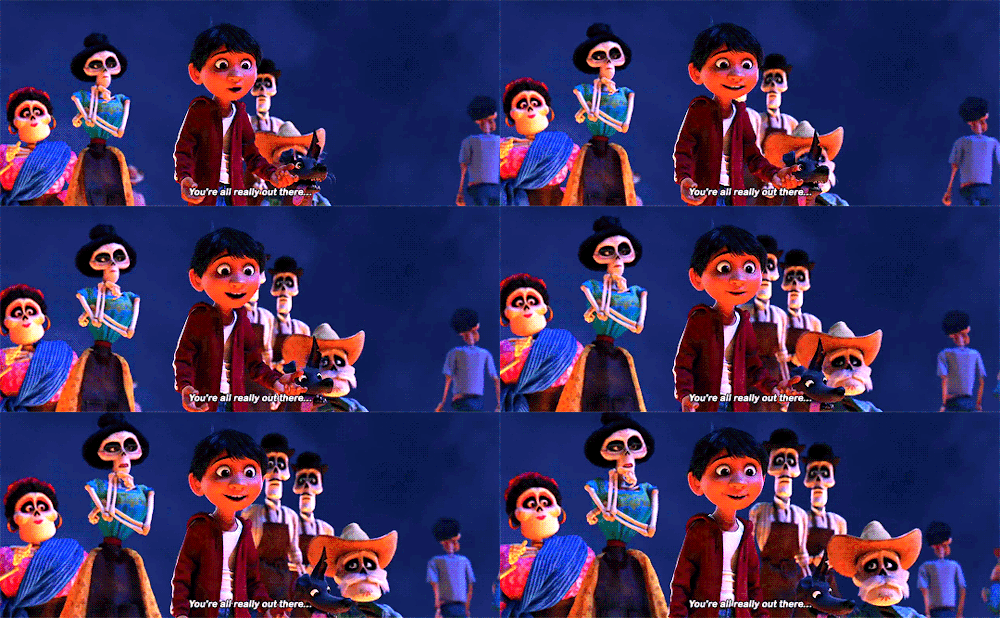
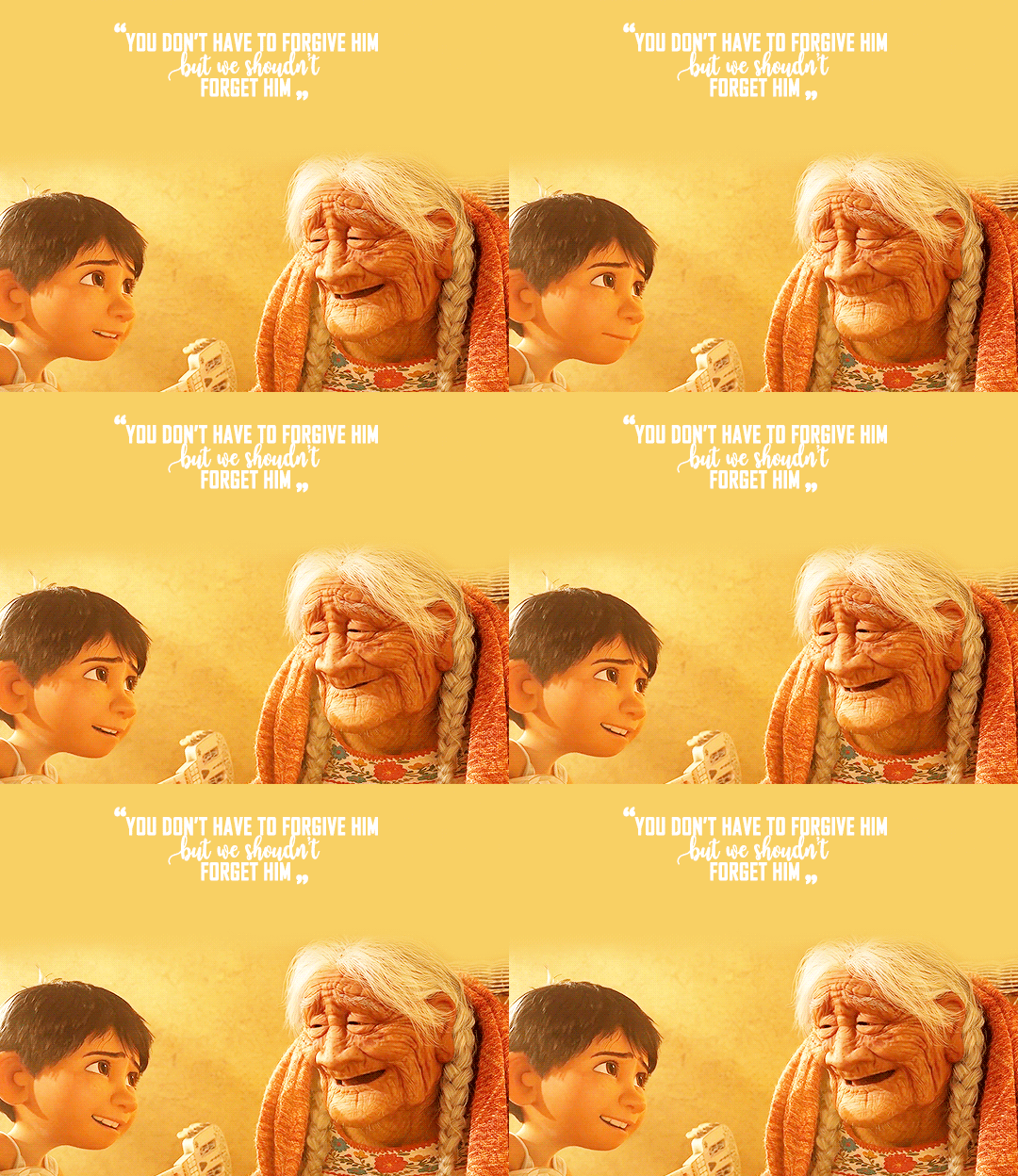
Classics: A Review of Coco By Lauren Ennis
Thanksgiving is a time that has become synonymous with
food, festivities, and football. It is a time to gather together and give
thanks for those most dear to us and reflect upon those we have lost. In
keeping with the spirit of the season there is no better film to kick off
Thanksgiving with your family with than 2017’s Coco. Set against the vibrant backdrop of Mexico’s Day of the Dead
celebration, Coco tells a coming of
age story about family, remembrance, and music that is guaranteed to get your
toes tapping and your eyes welling up.
The story begins with aspiring musician Miguel
relating the tale of how his family came to be “the only family in Mexico who
hates music”. Several generations ago Miguel’s musician great great grandfather
disappeared, abandoning his family to presumably pursue a musical career. Rather
than despair, Miguel’s resilient great great grandmother, Mama Imelda, raised
her young daughter, Coco, alone and built a successful shoe business that
Miguel’s family continues to run. Her husband’s betrayal left Mama Imelda with
a bitter contempt for music that carried down to all of her descendants, except
of course for Miguel. Despite his family’s prohibition of all things musical,
he longs to break with his family’s traditions and become a musician, just like
his famous idol Ernesto De La Cruz. Family tensions reach a breaking point when
Miguel refuses to take his place in the family business and finds a clue that
may link his mysterious great great grandfather to De La Cruz. And so begins a
journey that will take Miguel to the land of the dead where he meets both his
ancestors and his idol and learns the importance of family and the power of
music.
For a movie in which half of its characters are dead, Coco is surprisingly life-affirming. Rather than focusing upon the grief or
suffering of death the film instead keeps in the spirit of the Day of the Dead
and celebrates the lives and afterlives of its characters. Through its
depiction of Miguel’s journey to the land of the dead and back again the film
assures viewers that death doesn’t have to be an ending and that the surest way
to keep part of our loved ones alive is to remember and commemorate them. As a
result, the film acts as a gentle introduction to the concept of death for
young viewers and provides an excellent outlet for coping with loss that
viewers of all ages can relate to. Simultaneously, the film’s focus upon the
afterlife reminds us of just how limited our time on earth is, and of the
importance of using what time we do have to devote ourselves to the people and
things that matter most. In this way, the story encourages viewers to chase
their dreams and passions, while also warning against the dangers of losing
sight of our loved ones and responsibilities along the way. The film’s emphasis
upon such weighty themes as life, death, family, and duty allows it to offer
surprisingly adult lessons all while maintaining a warmth, wit, and tenderness
that ensures it remains entirely kid
friendly.
Through a combination of dazzling animation, infectious songs, and engaging voice acting Coco brings both modern Mexico and the Day of the Dead to brilliant life. the animation marks a new high for Pixar as the lush scenery transports viewers from the streets of Mexico to the land of the dead. Even while surrounded by breathtaking visuals the expressiveness and realism of the character design ensures that the characters remain at center stage. This ode to all things music more than delivers on its score which combines Mexican classics with original songs. The unique score lends authenticity to the setting while propelling the story forward with an infectiousness that is guaranteed to leave viewers humming. The film's array of memorable characters are vividly realized by the talented voice performers with Anthony Gonzalez, Benjamin Bratt, and Gael Garcia Bernal earning particular note in their roles as Miguel, de la Cruz, and Hector.
By turns heart warming and heart breaking, Coco is a prime example of family entertainment at its finest. Through its captivating animation, enchanting score, and engaging performances the film casts a spell that is nothing short of cinematic magic. By its final reel Coco will have you laughing, singing, and even crying with its characters as it takes you on an epic journey that you are guaranteed to remember.
Subscribe to:
Posts (Atom)