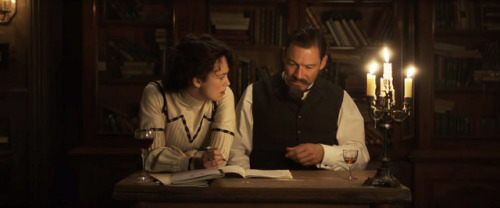
After a summer of fun in the sun school is back in session For many students the start of the school year means the start of three hundred sixty five days in the classroom. Life offers another education, however, outside of the classroom, which is found in new experiences rather than books. In the 2009 hit An Education, sixteen year old Jenny finds herself torn between her formal education and the school of life when a handsome stranger upends her staid existence. By the film's conclusion, she has learned lessons both in and out of the classroom that ultimately prepare her to cross the threshold between childhood and all that lays beyond.
The story begins with Jenny (Carey Mulligan) enjoying the life of an average teen in early '60's London. She spends her days following her parents strict regimen of school, studying, and music lessons all while pursuing their dream for her to attend Oxford University. She becomes inevitably stifled by this repressed existence until life intervenes in the form of suave and worldly David. Although thirty something David (Peter Sarsgaard) is over twice her age the two begin a whirlwind romance that seems to promise all of the passion and excitement that she had been seeking. All is not as it seems, however, and she soon finds herself learning difficult lessons that call her relationship with David, her education, and her future into question.
This deceptively simple story proves itself to be one of the most unique and effective films about the value of education. Rather than resort to the familiar teacher movie trope of focusing upon a students' inspiring time in the classroom, An Education highlights the importance of Jenny's education by showing her what her life would be like without it. At first she sees a school-free existence with her older beau to be an ideal. As time wears on, however, she realizes that the jet-set lifestyle that David and his friends enjoy is an entertaining but ultimately empty way of life. The vapid quality of Jenny's new lifestyle is perfectly personified in the character of David's friend, Helen, who relies upon the men in her life to finance her lavish spending while relegating herself to the role of a mere ornament. In this way, Helen acts as a bookend to Jenny's mother, Marjorie, who is also forced to rely upon the man in her life due to social constraints and her own lack of an education. These dual examples, combined with the inspiring influence of her self-sufficient single teacher, Miss Stubbs, show Jenny that a life without an education all too often means a life without independence. This basic truth is further highlighted when Jenny makes the painful discovery that David is a married man whose career is a series of con schemes, rather than the stable provider that he presented himself as. When their engagement ends she finds herself faced with the harsh reality that despite how 'hard and boring' she thought school was, a life without an education is infinitely more difficult. Through its poignant exploration of one teen's journey, An Education serves as an apt reminder that you're never too cool for school and a degree is the key to opening doors far beyond the classroom.
Lynne Barber's memoir is vividly brought to life by the film's talented cast. Cara Seymour aptly portrays Marjorie in a performance that captures her maternal desire to provider her daughter with a better life while hinting at the dreams she put aside along the away. Alfred Molina steals each scene in which he appears as Jenny's comically conservative father, Jack. Rosamund Pike exudes a girlish charm worthy of Marilyn Monroe as Helen. Dominic Cooper is magnetic in his grittily charming turn as David's friend and business partner, Danny. Emma Thompson personifies schoolmarm in her role as Jenny's brittle headmistress. Olivia Williams is nothing short of inspiring in her understated performance as Miss Stubbs. Peter Sarsgaard lends a dynamic and layered turn as the mysterious David, exuding con man charm even as he reveals David's darker side. Even in the midst of the film's stellar performances the film belongs to Cary Mulligan as Jenny as she strikes the ideal balance between maturity and naivete.
For its unusual approach to the school drama An Education earns a definite 'A'. Through its nuanced script the film relates a compelling tale of one girls' lessons in life and love while highlighting universal truths about the necessity and value of an education. The talented cast brings the story to vibrant life in a way that ensures that viewers remain invested and guessing until its final frame. Start this school year right; hit the books with Jenny in An Education.
Tuesday, July 30, 2019
Friday, July 19, 2019
Classics: A Review of Pretty in Pink By Lauren Ennis
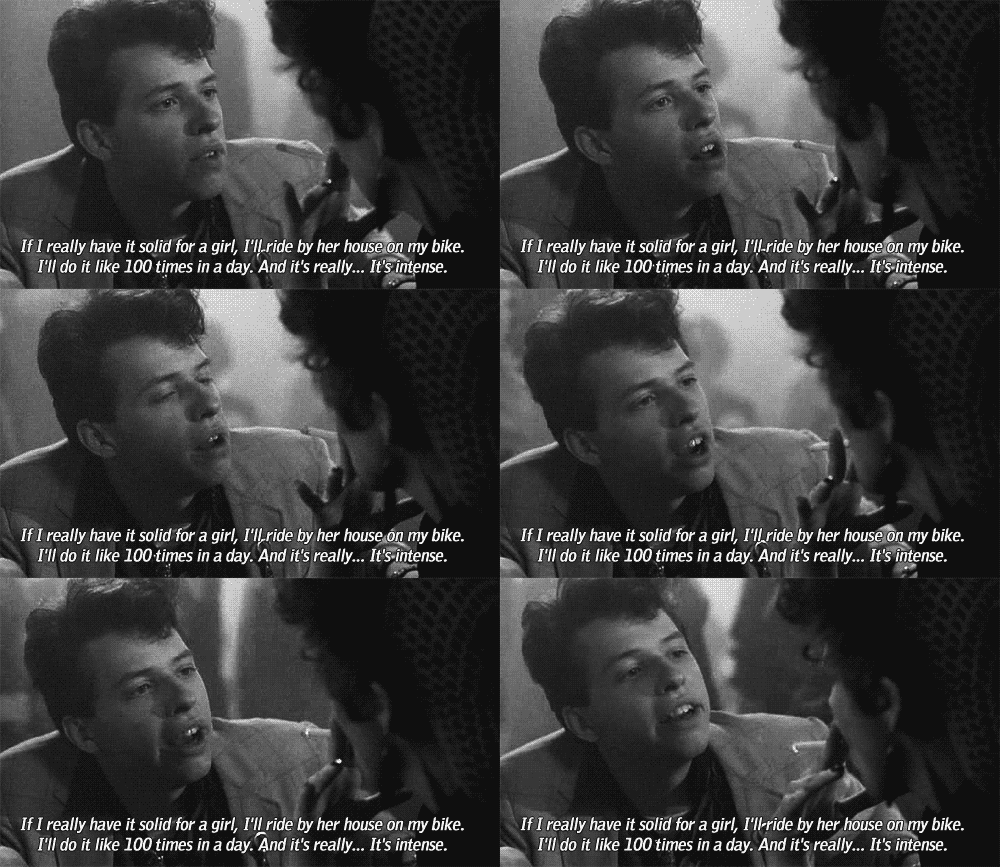
'Do you want to go to the prom?' is a deceptively simple question that has been a source of anxiety, anticipation, hope, and heartbreak for generations of adolescents. Unsurprisingly, this same question lies at the heart of many a teen film. Few films, however, capture the full drama of prom season and adolescence at large with the depth and authenticity of 1986's Pretty in Pink. A retro hit that continues to resonate today, Pretty in Pink is a must see for anyone who ever felt like an outsider, and everyone who remembers their high school prom.
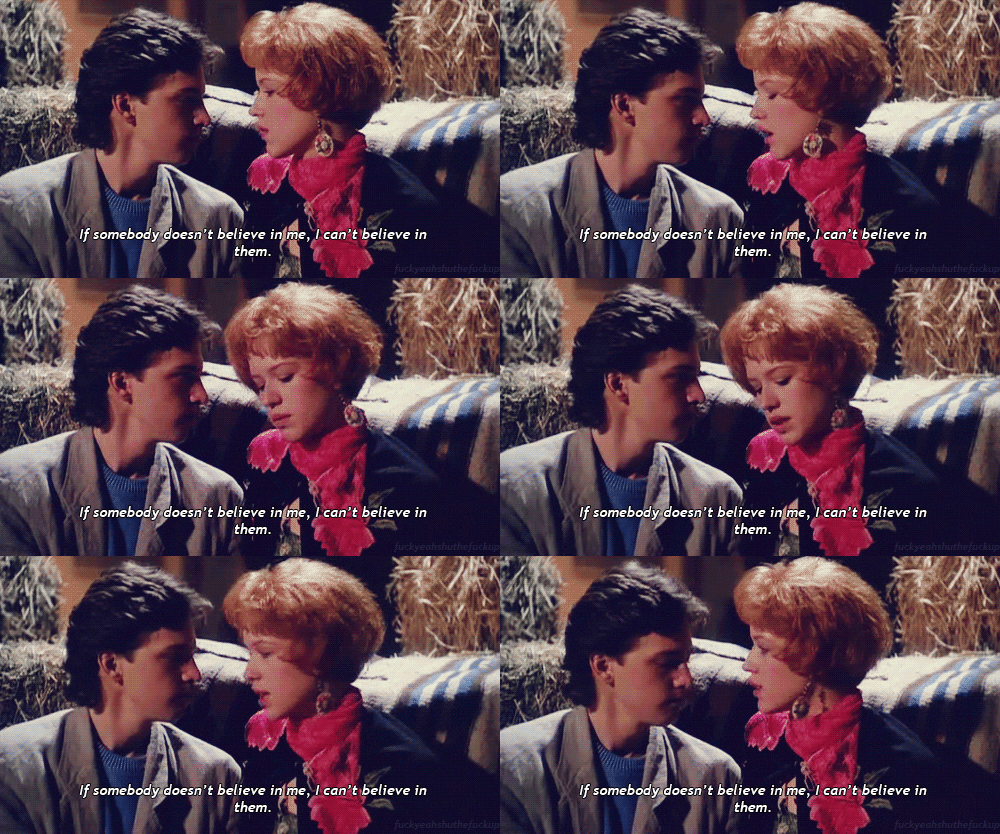
This suburban Cinderella story begins with artsy outsider Andie (Molly Ringwald) determined that she will not attend her senior prom. When she begins an unlikely romance with her graduating class' answer to Prince Charming, Blane (Andrew McCarthy), however, she begins to rethink her stance on this 'stupid school tradition'. Complications ensue, however, when insecurities, miscommunications, and classroom cliques collide to threaten the couple's budding romance just as it begins.
Pretty in Pink was released in an era when teen film topped the box office, but unlike its awesomely '80's counterparts remains relevant and resonant today. The film has aged surprisingly well by avoiding genre cliches that have left other films of its era badly dated. Most significantly, the film seems to begin with an all-too familiar love triangle between underdog Andie, popular Blane, and Andie's geeky best friend, Duckie, but then subverts this cliche set-up by infusing the characters with complexity and offering fresh plot twists. Rather than simply waiting to see which beau Andie will choose, audiences are treated to three individual character arcs that see all three leads learning and growing over the course of prom season. As a result, what easily could have been a by the numbers teen romance is elevated to a poignant coming of age story. The film earns particular note for the way in which it presents each of its three leads as three-dimensional people with weaknesses as well as strengths. For example, while Andie's confidence, maturity, and creativity make her an excellent role model her vulnerability and bitterness towards the school's entitled elites make her both relateable and realistic. Similarly, although Blane possesses the requisite looks, charm, and wealth expected of a the 'in-crowd', he is revealed to be just as insecure as overcompensating Duckie. Blane's struggle to overcome his weaknesses and stand up to the toxic peer pressure surrounding him proves to be one of the film's most satisfying elements which lends emotional weight to the central love triangle and ultimately results in a more satisfying ending. Duckie undergoes an equally engaging transformation as he struggles to come to terms with Andie's rejection of his affections. At the film's start, his adoration of her is innocent and endearing. As the story progresses, however, he attempts to act on his feelings in all of the wrong ways including pettily insulting and attempting to manipulate her when she dares to date someone else. When he finally opts for an 'all or nothing' mentality and ends their friendship the film takes a surprising turn as it becomes apparent that the geek won't get the girl unless he does some serious growing up. Duckie's journey, while bittersweet, proves to be a scene stealer as he learns to put Andie's happiness before his own and finally sees the value of the friendship that never seemed to be enough. While the film concludes with an overall happy ending, the growth that each character undergoes ensures that it is a satisfying and earned resolution rather than an instance of idealized wish fulfillment. Pretty in Pink has earned its place sitting pretty as a modern classic not because it is a story of who gets the girl, but because it is a tale of discovering who we are and who we want to be, earning it a place
The film expertly captures the angst, awkwardness, and drama of the high school experience thanks to the work of its talented cast. James Spader oozes entitles smarm as Blane's scheming friend, Steff. Jon Cryer puts a fresh twist on the '80's nerd cliche by portraying Andie's friend Duckie with a mix of endearing earnestness and a desperation that hints at something darker. Annie Potts is a comedic delight as Andie's eccentric employer, Iona. Harry Dean Stanton lends humanity to his performance as Andie's beleaguered father and aptly portrays his struggle to cope with his divorce from Andie's mother. Andrew McCarthy personifies boyish charm while still lending intelligence and depth to conflicted golden boy Blane. Molly Ringwald is at her peak in her multifaceted turn as Andie, in which she exudes a maturity and nuance that surpasses her more famous performances in The Breakfast Club and Sixteen Candles.
Through its nuanced script and mature performances Pretty in Pink takes the 'brat' out of the 'brat pack'. The film captures the chaos that is adolescence in all of its awkwardness, exhilaration, hope, and heartbreak with aching realism. The film's combination of romantic drama, slapstick comedy, and coming of age story ensure that it is far more than mere kids' stuff. For more than just another teen movie turn on the VHS player and tune into Pretty in Pink.
![]() |
| Who says redheads can't wear pink?! |
This suburban Cinderella story begins with artsy outsider Andie (Molly Ringwald) determined that she will not attend her senior prom. When she begins an unlikely romance with her graduating class' answer to Prince Charming, Blane (Andrew McCarthy), however, she begins to rethink her stance on this 'stupid school tradition'. Complications ensue, however, when insecurities, miscommunications, and classroom cliques collide to threaten the couple's budding romance just as it begins.
Pretty in Pink was released in an era when teen film topped the box office, but unlike its awesomely '80's counterparts remains relevant and resonant today. The film has aged surprisingly well by avoiding genre cliches that have left other films of its era badly dated. Most significantly, the film seems to begin with an all-too familiar love triangle between underdog Andie, popular Blane, and Andie's geeky best friend, Duckie, but then subverts this cliche set-up by infusing the characters with complexity and offering fresh plot twists. Rather than simply waiting to see which beau Andie will choose, audiences are treated to three individual character arcs that see all three leads learning and growing over the course of prom season. As a result, what easily could have been a by the numbers teen romance is elevated to a poignant coming of age story. The film earns particular note for the way in which it presents each of its three leads as three-dimensional people with weaknesses as well as strengths. For example, while Andie's confidence, maturity, and creativity make her an excellent role model her vulnerability and bitterness towards the school's entitled elites make her both relateable and realistic. Similarly, although Blane possesses the requisite looks, charm, and wealth expected of a the 'in-crowd', he is revealed to be just as insecure as overcompensating Duckie. Blane's struggle to overcome his weaknesses and stand up to the toxic peer pressure surrounding him proves to be one of the film's most satisfying elements which lends emotional weight to the central love triangle and ultimately results in a more satisfying ending. Duckie undergoes an equally engaging transformation as he struggles to come to terms with Andie's rejection of his affections. At the film's start, his adoration of her is innocent and endearing. As the story progresses, however, he attempts to act on his feelings in all of the wrong ways including pettily insulting and attempting to manipulate her when she dares to date someone else. When he finally opts for an 'all or nothing' mentality and ends their friendship the film takes a surprising turn as it becomes apparent that the geek won't get the girl unless he does some serious growing up. Duckie's journey, while bittersweet, proves to be a scene stealer as he learns to put Andie's happiness before his own and finally sees the value of the friendship that never seemed to be enough. While the film concludes with an overall happy ending, the growth that each character undergoes ensures that it is a satisfying and earned resolution rather than an instance of idealized wish fulfillment. Pretty in Pink has earned its place sitting pretty as a modern classic not because it is a story of who gets the girl, but because it is a tale of discovering who we are and who we want to be, earning it a place
![]() |
The film expertly captures the angst, awkwardness, and drama of the high school experience thanks to the work of its talented cast. James Spader oozes entitles smarm as Blane's scheming friend, Steff. Jon Cryer puts a fresh twist on the '80's nerd cliche by portraying Andie's friend Duckie with a mix of endearing earnestness and a desperation that hints at something darker. Annie Potts is a comedic delight as Andie's eccentric employer, Iona. Harry Dean Stanton lends humanity to his performance as Andie's beleaguered father and aptly portrays his struggle to cope with his divorce from Andie's mother. Andrew McCarthy personifies boyish charm while still lending intelligence and depth to conflicted golden boy Blane. Molly Ringwald is at her peak in her multifaceted turn as Andie, in which she exudes a maturity and nuance that surpasses her more famous performances in The Breakfast Club and Sixteen Candles.
Through its nuanced script and mature performances Pretty in Pink takes the 'brat' out of the 'brat pack'. The film captures the chaos that is adolescence in all of its awkwardness, exhilaration, hope, and heartbreak with aching realism. The film's combination of romantic drama, slapstick comedy, and coming of age story ensure that it is far more than mere kids' stuff. For more than just another teen movie turn on the VHS player and tune into Pretty in Pink.
Sunday, July 7, 2019
Classics: A Review of The Help By Lauren Ennis
It is often said that the pen is mightier than the sword. In the 2011 hit drama The Help, a group of Mississippi women learn just how powerful the pen can be when they take up their pens in the fight for civil rights. At once an indictment of the prejudices that tear us apart and a celebration of the bonds that unite us, The Help lends viewers an apt view into American history while relaying vital lessons that continue to resonate today. With its empowering script, inspiring characters, and engaging performances, it is little wonder that this film has become a crowd pleasing audience favorite.
The story begins in 1960's Jackson, Mississippi in the midst of the Civil Rights Movement. Recent college graduate Eugenia 'Skeeter' Phelan (Emma Stone) experiences culture shock upon returning home as she struggles to reconcile the modern ideas regarding racial and gender equality that she learned in school with the oppression that continues to dominate much of the American south. She eventually finds work writing a housekeeping column for a local paper, but longs to write something meaningful. In order to lend authenticity to her column she enlists the aid of local housekeeper, Aibileen (Viola Davis), and as the two get to know one another Skeeter realizes that the 'big story' she's been looking for has been right in front of her all along. She then sets out on an assignment of a very different sort; compiling a collection of the personal stories of the unique women whom those around her dismiss as 'the help'. Through this project, each of the women ultimately finds their voice as they use the power of storytelling to speak out against the injustice surrounding them.
While The Help is firmly set in 1960's Mississippi, its messages concerning the power of self-expression and community transcend both time and place. Throughout the film, characters from all walks of life struggle to find their own voice in a culture dominated by discrimination and conformity. Most obviously, the city's African American population are prohibited from exercising even their most basic of civil rights and are marginalized as second-class citizens. This discrimination is aptly shown in the depiction of long suffering Aibileen who poignantly states that "no one ever asked what it's like to be me". The film also highlights the consequences faced by those who spoke out against segregation in its depiction of Minnie, who is fired and blacklisted after defying her racist employer. Minnie's story also emphasizes the gender inequality that dominated the era as she struggles to escape her abusive marriage. Even such seemingly privileged characters as Skeeter and wealthy housewife Celia struggle against class and social barriers that leave them ostracized by their own community. While many films have depicted injustices past and present The Help stands out for its emphasis upon the ways in which its characters find and embrace their respective voices in order to rise above the various prejudices surrounding them. By focusing upon the characters' triumphs over bigotry and hatred the film presents a message of help and aptly reminds viewers that every effort, no matter how seemingly small, does make a difference. the film's depiction of its diverse heroines serves as an equally poignant reminder of the bonds that bring people together and the power that even the most seemingly powerless hold when they unite in a common cause. Even in the midst of portraying historical events The Help offers powerful messages that remain every bit as relevant, resonant, and helpful today as they would have been during the Civil Rights Movement.
The film transports viewers into the heart of the Civil Rights movement era south thanks to the stellar work of its cast. Bryce Dallas Howard is wonderfully wicked as local mean girl turned society maven Hilly. Jessica Chastain conveys an infectious charm and aching vulnerability worth of Marilyn Monroe as wrongfully maligned town bombshell Celia. Viola Davis personified dignity and resilience in her portrayal of persevering Aibileen. Octavia Spencer is at once inspiring and uproarious as Aibileen's best friend, straight-talking Minnie. Emma Stone makes for a heroine that viewers can relate to as well as root for as she portrays Skeeter's journey of self-discovery with depth, intelligence, and sincere emotion.
At the film's conclusion Aibileen notes, "God says that we have to love our enemies. It's hard, but we can start by telling the truth'. At its heart, The Help is a story about the truth; both facing it and sharing it with others. Through its intelligent script and engaging performances the film reminds viewers of some of the most difficult truths in our nation's past while also sharing how those truths continue to apply to us today. For a film that will have you laughing, crying, and maybe even reaching for your own pen, ring for The Help.
The story begins in 1960's Jackson, Mississippi in the midst of the Civil Rights Movement. Recent college graduate Eugenia 'Skeeter' Phelan (Emma Stone) experiences culture shock upon returning home as she struggles to reconcile the modern ideas regarding racial and gender equality that she learned in school with the oppression that continues to dominate much of the American south. She eventually finds work writing a housekeeping column for a local paper, but longs to write something meaningful. In order to lend authenticity to her column she enlists the aid of local housekeeper, Aibileen (Viola Davis), and as the two get to know one another Skeeter realizes that the 'big story' she's been looking for has been right in front of her all along. She then sets out on an assignment of a very different sort; compiling a collection of the personal stories of the unique women whom those around her dismiss as 'the help'. Through this project, each of the women ultimately finds their voice as they use the power of storytelling to speak out against the injustice surrounding them.
While The Help is firmly set in 1960's Mississippi, its messages concerning the power of self-expression and community transcend both time and place. Throughout the film, characters from all walks of life struggle to find their own voice in a culture dominated by discrimination and conformity. Most obviously, the city's African American population are prohibited from exercising even their most basic of civil rights and are marginalized as second-class citizens. This discrimination is aptly shown in the depiction of long suffering Aibileen who poignantly states that "no one ever asked what it's like to be me". The film also highlights the consequences faced by those who spoke out against segregation in its depiction of Minnie, who is fired and blacklisted after defying her racist employer. Minnie's story also emphasizes the gender inequality that dominated the era as she struggles to escape her abusive marriage. Even such seemingly privileged characters as Skeeter and wealthy housewife Celia struggle against class and social barriers that leave them ostracized by their own community. While many films have depicted injustices past and present The Help stands out for its emphasis upon the ways in which its characters find and embrace their respective voices in order to rise above the various prejudices surrounding them. By focusing upon the characters' triumphs over bigotry and hatred the film presents a message of help and aptly reminds viewers that every effort, no matter how seemingly small, does make a difference. the film's depiction of its diverse heroines serves as an equally poignant reminder of the bonds that bring people together and the power that even the most seemingly powerless hold when they unite in a common cause. Even in the midst of portraying historical events The Help offers powerful messages that remain every bit as relevant, resonant, and helpful today as they would have been during the Civil Rights Movement.
The film transports viewers into the heart of the Civil Rights movement era south thanks to the stellar work of its cast. Bryce Dallas Howard is wonderfully wicked as local mean girl turned society maven Hilly. Jessica Chastain conveys an infectious charm and aching vulnerability worth of Marilyn Monroe as wrongfully maligned town bombshell Celia. Viola Davis personified dignity and resilience in her portrayal of persevering Aibileen. Octavia Spencer is at once inspiring and uproarious as Aibileen's best friend, straight-talking Minnie. Emma Stone makes for a heroine that viewers can relate to as well as root for as she portrays Skeeter's journey of self-discovery with depth, intelligence, and sincere emotion.
At the film's conclusion Aibileen notes, "God says that we have to love our enemies. It's hard, but we can start by telling the truth'. At its heart, The Help is a story about the truth; both facing it and sharing it with others. Through its intelligent script and engaging performances the film reminds viewers of some of the most difficult truths in our nation's past while also sharing how those truths continue to apply to us today. For a film that will have you laughing, crying, and maybe even reaching for your own pen, ring for The Help.
Saturday, June 22, 2019
Classics: A Review of The Namesake By Lauren Ennis
America is a nation of immigrants and few stories are as American as those of the immigrant experience. The 2006 drama The Namesake relates the experiences of two generations of a Bengali family in the United States as they struggle to forge a new life while striving to hold onto their culture. At once a universal testament to the trials and triumphs of America's immigrants and a unique tale of one family, The Namesake is a film that every family can appreciate.
The story begins in 1960's Calcutta as engineering student Ashoke (Irfan Khan) boards a train to visit his uncle. Before the train can reach its destination, however, an accident occurs that ultimately results in the deaths of the majority of the passengers. Although he survives, this near-death experience leaves him profoundly change as he becomes inspired to live life to the fullest and pursue an engineering career in the United States. While he makes a relatively smooth transition to his adopted country his new wife, Ashmina (Tabu), experiences culture shock and longs to return to India. The couple eventually work together to build a happy marriage in their new home, but later clash with their Americanized children, especially their son Gogol (Kal Penn). The film then shifts its focus to Gogol as he struggles to find his cultural identity as a second generation American. Through its nuanced portrayal of two generations of Bengali-Americans the film weaves a tapestry like tale that encompasses the sacrifices and successes of the American immigrant experience and serves as an ode to immigrants past and present.
Much like The Joy Luck Club before it, The Namesake showcases the unique struggles and victories of both first and second generation Americans. Through its portrayal of Ashoke and Ashmina's very different initial experiences in the United States the film expertly captures the hope and heartache that people encounter as they leave one country behind to begin anew in another. the film also relates the very different reactions that people may have to their new homelands as Ashoke embraces all things American while Ashmina continues to yearn for the culture and family that she left behind. Through its eventual focus upon Gogol, the film similarly explores the difficulties that second generation Americans face in reconciling the culture and traditions of their family with that of the only country that they have ever known. Initially, Gogol sees himself as strictly American and feels no connection to his parents' culture, which he dismisses as having no relevance to his own life. When he finally returns to India to visit his mother's family, neither he nor his equally Americanized sister can relate to the drastically different lives that their relatives are leading. Even after returning from his trip, his interest in his heritage remains limited at best as he returns his attention to the Westernized lifestyles of his friends and girlfriend. When Ashoke dies of a sudden heart attack, however, Gogol's life undergoes a crucial shift as he immerses himself in Bengali culture in an effort to connect with the father and culture that he never fully understood or appreciated. Ultimately, it is only when he is able to strike a balance between his Bengali roots and his American home that he finally finds the fulfillment and identity that he was always seeking. The film successful relates a tale that is at once personal and universal as it portrays each of the characters as nuanced individuals rather than stereotypes and refuses to favor either American or Bengali culture. Through its intelligent script the film takes viewers on an emotional journey into the heart of the question of what does it mean to be an American.
The film brings Jhumpa Lahiri's acclaimed novel to life thanks to the work of its talented cast. Tabu radiates warmth and sincerity as she portrays Ashmina's journey from vivacious girl, to insecure wife, to confident woman ready to 'follow her bliss'. Irfan Khan conveys a sense of upright morality and paternal wisdom worthy of Atticus Finch as Ashoke. Jacinda Barrett and Zuleikha Robinson perfectly contrast each other as Gogol's well-meaning college girlfriend and his tempestuous wife. Kal Penn perfectly captures the conundrum that second generation Americans face in his charismatic turn as the conflicted Gogol.
In its two hour running time The Namesake captures just one piece of the American experience while paying apt homage to immigrants both past and present. Through its intelligent script and engaging performances the film faithfully brings the best-selling novel to the silver screen in a worth adaptation. For a slice of modern day American pie be sure to sample The Namesake.
![]() |
| Let the generations and cultures clash |
The story begins in 1960's Calcutta as engineering student Ashoke (Irfan Khan) boards a train to visit his uncle. Before the train can reach its destination, however, an accident occurs that ultimately results in the deaths of the majority of the passengers. Although he survives, this near-death experience leaves him profoundly change as he becomes inspired to live life to the fullest and pursue an engineering career in the United States. While he makes a relatively smooth transition to his adopted country his new wife, Ashmina (Tabu), experiences culture shock and longs to return to India. The couple eventually work together to build a happy marriage in their new home, but later clash with their Americanized children, especially their son Gogol (Kal Penn). The film then shifts its focus to Gogol as he struggles to find his cultural identity as a second generation American. Through its nuanced portrayal of two generations of Bengali-Americans the film weaves a tapestry like tale that encompasses the sacrifices and successes of the American immigrant experience and serves as an ode to immigrants past and present.
Much like The Joy Luck Club before it, The Namesake showcases the unique struggles and victories of both first and second generation Americans. Through its portrayal of Ashoke and Ashmina's very different initial experiences in the United States the film expertly captures the hope and heartache that people encounter as they leave one country behind to begin anew in another. the film also relates the very different reactions that people may have to their new homelands as Ashoke embraces all things American while Ashmina continues to yearn for the culture and family that she left behind. Through its eventual focus upon Gogol, the film similarly explores the difficulties that second generation Americans face in reconciling the culture and traditions of their family with that of the only country that they have ever known. Initially, Gogol sees himself as strictly American and feels no connection to his parents' culture, which he dismisses as having no relevance to his own life. When he finally returns to India to visit his mother's family, neither he nor his equally Americanized sister can relate to the drastically different lives that their relatives are leading. Even after returning from his trip, his interest in his heritage remains limited at best as he returns his attention to the Westernized lifestyles of his friends and girlfriend. When Ashoke dies of a sudden heart attack, however, Gogol's life undergoes a crucial shift as he immerses himself in Bengali culture in an effort to connect with the father and culture that he never fully understood or appreciated. Ultimately, it is only when he is able to strike a balance between his Bengali roots and his American home that he finally finds the fulfillment and identity that he was always seeking. The film successful relates a tale that is at once personal and universal as it portrays each of the characters as nuanced individuals rather than stereotypes and refuses to favor either American or Bengali culture. Through its intelligent script the film takes viewers on an emotional journey into the heart of the question of what does it mean to be an American.
![]() |
| The modern American family |
The film brings Jhumpa Lahiri's acclaimed novel to life thanks to the work of its talented cast. Tabu radiates warmth and sincerity as she portrays Ashmina's journey from vivacious girl, to insecure wife, to confident woman ready to 'follow her bliss'. Irfan Khan conveys a sense of upright morality and paternal wisdom worthy of Atticus Finch as Ashoke. Jacinda Barrett and Zuleikha Robinson perfectly contrast each other as Gogol's well-meaning college girlfriend and his tempestuous wife. Kal Penn perfectly captures the conundrum that second generation Americans face in his charismatic turn as the conflicted Gogol.
In its two hour running time The Namesake captures just one piece of the American experience while paying apt homage to immigrants both past and present. Through its intelligent script and engaging performances the film faithfully brings the best-selling novel to the silver screen in a worth adaptation. For a slice of modern day American pie be sure to sample The Namesake.
![]() |
| Don't forget to pack your hankies |
Sunday, June 9, 2019
Daddy's Issues: Three Disney Films That Are Secretly All About Dad By Lauren Ennis
Father’s Day is a holiday designed to celebrate
fathers and all that they do to support, inspire, and teach us. Sometimes,
however, Dad has just as many lessons to learn as to teach. This week I’ll be
turning the spotlight on three Disney films that are secretly all about Dad learning a few lessons of his own.
Mary
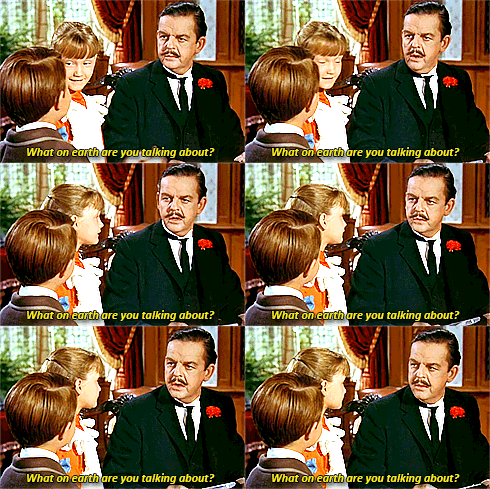
Poppins: This classic musical claims to be about the magical
adventures of its title heroine, but the greater adventure is the one
undertaken by her employer, George Banks. At the film’s start George returns
home from work gloating about his outwardly perfect home and family. In keeping
with the values of Edwardian England, he demands complete obedience and
propriety from his family, whom he describes as “subjects” in the “lordly life”
he leads. The moment that he opens the front door, however, viewers are shown
just how imperfect the Banks’ home really is. In an effort to establish independence from her confining marriage, Mrs. Banks has devoted herself to the suffragette cause to such
an extent that she is hardly present in her children’s lives. Meanwhile, the
children, Jane and Michael, attempt to gain both of their parents’ attention by
acting out and rebelling against the family’s series of nannies. Rather than
recognizing the ways in which his own behavior may have contributed to his
family’s dysfunction, George instead opts to impose even further restrictions
upon his already stifled wife and children, which naturally leads to the
household becoming the very ‘ghastly mess’ that he was trying to ward off. It
is then that Mary Poppins flies onto the scene to work her magic. Unlike
George, who demands his family’s unquestioning obedience, Mary Poppins earns
Jane and Michael’s respect by treating them with kindness, understanding, and patience.
Similarly, while she does expect the children to follow her rules, she also
instills the value of those rules in them by explaining their purpose. Her infectious
influence also extends to the household staff who begin treating each other
with the same consideration and politeness that she displays towards them. As a
result, she is able to whip the home into the spit spot shape that George
wanted by employing the one tactic that her boss never considered; treating
those around her as people rather than subjects. George is equal parts
mystified and unnerved by this sudden change until he loses his job and realizes
that he was treating his family with the same dismissive lack of empathy that his employers regarded him with. By the film’s conclusion, he is reinstated at
his job, reconciled with his family, and free to return to his old life, albeit with a crucial
change of perspective. By the time that the credits roll, George Banks may not
have become the employee or society man that he wanted to be, but thanks to a
spoonful of sugar and a taste of his own medicine he has become the husband and
father that he needed to be.
![]() |
| It's not like she doesn't have 8 more lives... |
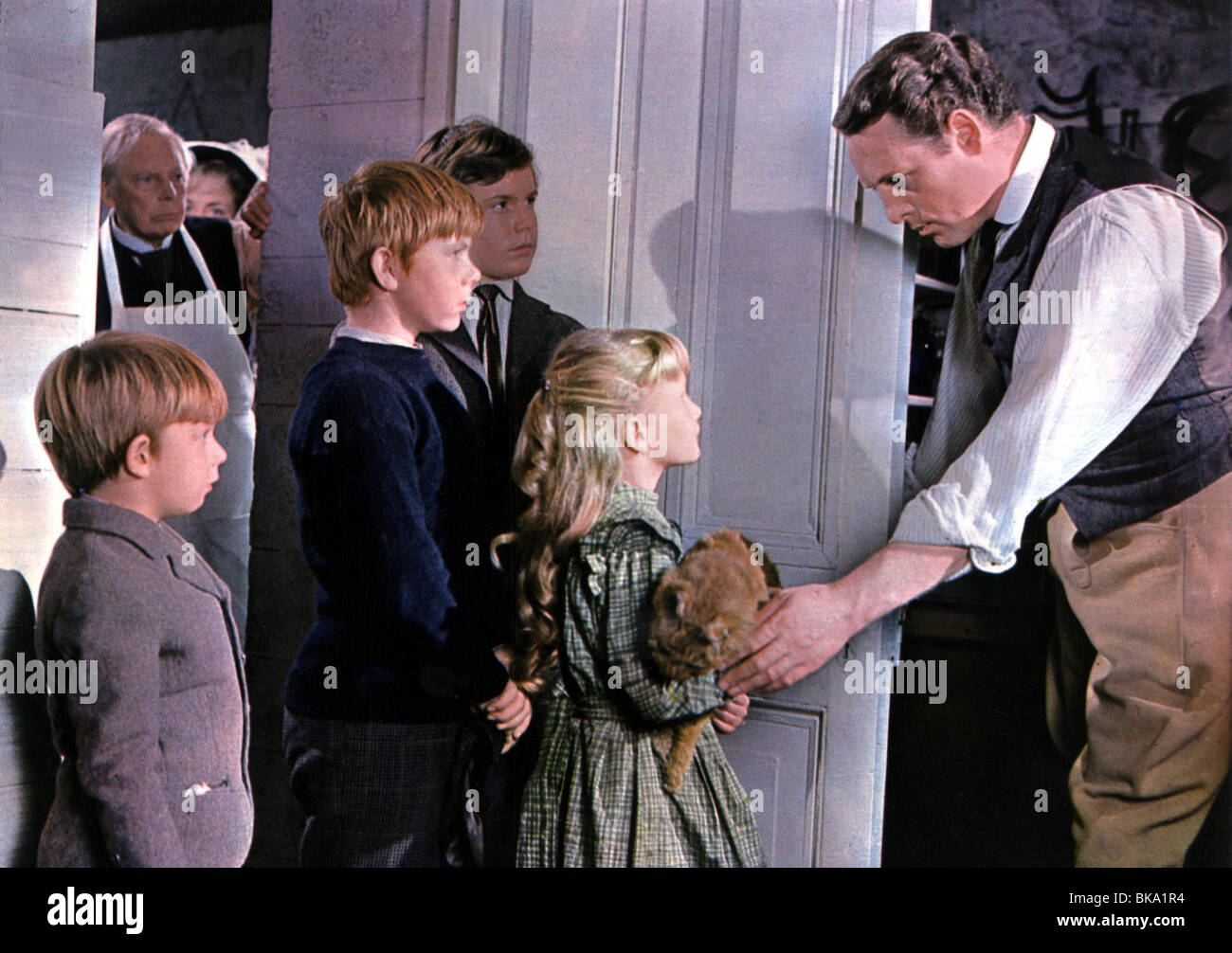
The Three Lives of Thomasina:
With its meditations upon life, death, grief, and redemption this 1963 film
makes for one of Disney’s most complex and emotionally resonant efforts. The
film follows young Mary Macduhi and her stern veterinarian father, Andrew, as
they struggle to come to grips with the death of Mary’s mother. When grief
leaves her father a cold shadow of his former self, Mary pours all of the
love that she can no longer give to either of her parents into her beloved cat,
Thomasina. Despite working as a veterinarian for years, Andrew sees pets as a
frivolous nuisance and prefers to work with livestock and other ‘useful’
animals. As a result, he feels no remorse after euthanizing an elderly or ill pet, which he sees as an act of mercy. When Thomasina contracts tetanus
during a fight with another cat, he immediately opts to have her euthanized for
fear that the disease could spread, leading to an epidemic. When Mary learns
this devastating news her already strained relationship with her father is
damaged to the point of estrangement. Andrew tries to reconcile with his
daughter, but his every effort is hampered by his inability to understand her
love for Thomasina or show his love for her. When news of Thomasina’s death
reaches the townsfolk his already suspect professional reputation is called
into question. Complicating matters further, word of local recluse Lori
MacGregor’s herbal healing and innate skill with animals spreads throughout the
town, leading Andrew’s clients to begin taking their pets to herfor treatment.
When he finally meets his new rival, he reluctantly realizes that while she
lacks his medical training, his own practice would benefit from her natural
love of and dedication to animals. What Andrew fails to realize, however, is that
Lori is currently treating Thomasina after his assistant failed to properly
euthanize the cat. Through his friendship and eventual romance with Lori, Andrew learns the healing
power of love and is finally able to express his love for Mary and his remorse
at what he believes to be Thomasina’s death. By the film’s conclusion he
realizes that all creatures great and small serve some purpose and are deserving
of the same love and care that we would like to be treated with. When Thomasina
makes a triumphant return to the MacDhui’s, she finds a home where there was
once a house and takes her place in a family that is finally whole.
The Little Mermaid: This
1989 animated musical launched the Disney renaissance with its tale of fathers,
daughters, and the power of letting go. Although the title would suggest that the
film’s focus is upon the headstrong Ariel, the film’s real emotional journey is
the one undertaken by her father, King Trident. At the start of the film widowed
King Trident rules his family with the same firm hand that he rules his kingdom
with, except for his youngest daughter, rebellious Ariel. Although she
constantly breaks with convention and family rules, her charisma and musical
talent make her the clear family favorite. Despite his many indulgences of Ariel, however, he holds firm to one sacred rule; that none of his daughters may
swim to the ocean’s surface, where they could be spotted by humans. In typical
angsty teen fashion, she proceeds to not only break this cardinal rule, but
to test her father even further by interacting with humans and collecting as
many man-made items as she can find. While his anger at discovering his
daughter’s secret treasure trove is justified, King Trident’s reaction is not.
Rather than explaining why his rules are in her best interests, he instead
launches into a bigoted tirade about the inherent evil of all humanity. When
she attempts to argue, he responds with a violent outburst that culminates in
his destroying her beloved collection in its entirety. It is only after Ariel runs
away and seeks help from his arch-enemy, Ursula, that he finally realizes that his
overbearing efforts to protect his daughter only served to drive her away from
him. It is this realization that allows him to reflect upon his ruling and
parenting methods and admit that his actions and reactions are every bit as
important as the intentions behind them. When he finally locates his missing
daughter he puts aside their differences and risks his life and kingdom in
order to ensure her safe return. He faces his ultimate test, however, only after
Ariel has returned home and he is dismayed to find that she despondently
continues to long for the surface world. He then makes the choice to put her
happiness above his own and permanently transforms her into a human. By
returning her to human form King Trident not only allows Ariel to return to her
beloved Prince Eric, but more importantly provides her with the freedom to choose
her own path and find her own happiness. While Ariel may have traded in her
tail for legs, it is her father who undergoes the film’s greatest and most
satisfying transformation as he evolves from iron fisted ruler to open minded father
and leader.
Monday, May 27, 2019
Classics: A Review of Colette By Lauren Ennis
"The hand that holds the pen writes history" says famed writer Colette. Over the course of her long and notorious career Colette defied the social, sexual, and literary norms of her day with a daring and personal flair that could fill several history books. The 2018 drama Colette chronicles the life of the literary maverick from her unassuming beginnings in rural France through her tumultuous marriage to her eventual transformation into the icon that readers know today. Even as it relates the historic facts of Colette's life and career the film weaves a startlingly modern tale of one woman's journey to discover her own identity. Part period piece and part timeless ode to the creative spirit Colette is a historical drama that speaks to our times.
The story begins in rural France as teenage Gabrielle Colette is courted by worldly Parisian writer Henri Gauthier-Villars, better known by his pen name 'Willy'. Despite the significant age difference between the two and rumors surrounding Willy's libertine lifestyle, her parents consent to the marriage in hopes of alleviating their financial troubles. The couple then travel to Paris where Gabrielle learns that her husband owes his literary success to a series of ghost writers working under his name. She is also dismayed to learn that his supposedly flourishing brand is facing financial difficulties. Before long, the artistically inclined Gabrielle is recruited to join the ranks of ghost writers working under Willy's name. To both husband and wife's astonishment her semi-autobiographical first novel, Claudine, proves to be a runaway commercial and critical hit. The pair's professional success soon puts a strain on their already fraught marriage, however as Gabrielle becomes increasingly determined to write under her own name. The film then goes on to chart her struggle to find her social, sexual, and creative identity as she is transformed from complacent and sheltered Gabrielle to fiery trendsetter Colette.
The film breathes new life into the classic period piece by relating its startlingly contemporary story with a wit and style worthy of its subject. Although the film does contain the customary dazzling costumes and tranquil landscapes typical of the genre, the acting and writing remain at center stage. As a result, viewers are able to fully engage with the film's multidimensional heroine to the fullest extent and gain insight into both Gabrielle the woman and Colette the writer. The script and performances combine to lend depth and complexity to each character, creating the illusion that actual lives are unfolding on-screen rather than a scripted plot. This is particularly true of the film's portrayal of Willy who maintains an unexpected charisma and humanity even as he engages in one underhanded activity after another. Colette herself is also presented with unusual realism as the film commendably refuses to portray her as either a martyr to the confines of her era or as an anachronism. As a result, viewers are treated to a version of Colette's life that more closely resembles her actual biography than the legend popular history has built around her.
The film also succeeds in its frank portrayal of her unconventional lifestyle. While period biographies either sanitize or glorify their subject's personal lives Colette does neither. Instead the film depicts the evolution of Colette and Willy's marriage from a conventional union to a bohemian open relationship without offering any judgment. This objectivity allows viewers to make their own judgments and prevents the film from drifting into heavy handedness. Perhaps the film's greatest strength is the way in which it accurately relates its historical tale while posing questions about issues that we continue to face today. The film's exploration of such subjects as gender and marital roles, sexual experimentation and artistic freedom allow the film to depict the events of Colette's controversial life while simultaneously reminding us of the questions and controversies in our own lives. In this way, the film maintains a sense of relevance without losing its sense of time and place. Combining time-honored tradition with timely themes Colette is a film that is every bit as timeless as the woman who inspired it.
The world of turn of the century France comes to glittering life thanks to the superb work of the film's cast. Eleanor Thomlinson is appropriately alluring in her role as the seductive American heiress who captures the eyes of both Colette and Willy. Denise Gough conveys both warmth and strength as Colette's gender-bending love interest, Missy. Dominic West is magnetic in his by turns charming and callous performance as pleasure and fame seeking Willy. Keira Knightley is at her most dynamic and fierce as she fully embodies the contradictory, controversial, and ever creative Colette.
Colette is every bit as innovative and fascinating as its heroine. Through its intelligent script and exemplary performances the film brings the life and times of Colette to the screen with a vitality and effervescent charm that is nothing short of inspired. With its dazzling visuals and deceptively light wit the film is a feast for both the eyes and the mind. Though its frank portrayal of topical themes the film takes the tired period piece genre into the 21st century. Beguiling, clever, daring, and utterly unique; Colette was all of these things and more and thankfully so is the film that she inspired.
![]() |
| Watch it, I'm writing here! |
The story begins in rural France as teenage Gabrielle Colette is courted by worldly Parisian writer Henri Gauthier-Villars, better known by his pen name 'Willy'. Despite the significant age difference between the two and rumors surrounding Willy's libertine lifestyle, her parents consent to the marriage in hopes of alleviating their financial troubles. The couple then travel to Paris where Gabrielle learns that her husband owes his literary success to a series of ghost writers working under his name. She is also dismayed to learn that his supposedly flourishing brand is facing financial difficulties. Before long, the artistically inclined Gabrielle is recruited to join the ranks of ghost writers working under Willy's name. To both husband and wife's astonishment her semi-autobiographical first novel, Claudine, proves to be a runaway commercial and critical hit. The pair's professional success soon puts a strain on their already fraught marriage, however as Gabrielle becomes increasingly determined to write under her own name. The film then goes on to chart her struggle to find her social, sexual, and creative identity as she is transformed from complacent and sheltered Gabrielle to fiery trendsetter Colette.
The film breathes new life into the classic period piece by relating its startlingly contemporary story with a wit and style worthy of its subject. Although the film does contain the customary dazzling costumes and tranquil landscapes typical of the genre, the acting and writing remain at center stage. As a result, viewers are able to fully engage with the film's multidimensional heroine to the fullest extent and gain insight into both Gabrielle the woman and Colette the writer. The script and performances combine to lend depth and complexity to each character, creating the illusion that actual lives are unfolding on-screen rather than a scripted plot. This is particularly true of the film's portrayal of Willy who maintains an unexpected charisma and humanity even as he engages in one underhanded activity after another. Colette herself is also presented with unusual realism as the film commendably refuses to portray her as either a martyr to the confines of her era or as an anachronism. As a result, viewers are treated to a version of Colette's life that more closely resembles her actual biography than the legend popular history has built around her.
![]() |
| These pants are made for walkin... |
The film also succeeds in its frank portrayal of her unconventional lifestyle. While period biographies either sanitize or glorify their subject's personal lives Colette does neither. Instead the film depicts the evolution of Colette and Willy's marriage from a conventional union to a bohemian open relationship without offering any judgment. This objectivity allows viewers to make their own judgments and prevents the film from drifting into heavy handedness. Perhaps the film's greatest strength is the way in which it accurately relates its historical tale while posing questions about issues that we continue to face today. The film's exploration of such subjects as gender and marital roles, sexual experimentation and artistic freedom allow the film to depict the events of Colette's controversial life while simultaneously reminding us of the questions and controversies in our own lives. In this way, the film maintains a sense of relevance without losing its sense of time and place. Combining time-honored tradition with timely themes Colette is a film that is every bit as timeless as the woman who inspired it.
The world of turn of the century France comes to glittering life thanks to the superb work of the film's cast. Eleanor Thomlinson is appropriately alluring in her role as the seductive American heiress who captures the eyes of both Colette and Willy. Denise Gough conveys both warmth and strength as Colette's gender-bending love interest, Missy. Dominic West is magnetic in his by turns charming and callous performance as pleasure and fame seeking Willy. Keira Knightley is at her most dynamic and fierce as she fully embodies the contradictory, controversial, and ever creative Colette.
Colette is every bit as innovative and fascinating as its heroine. Through its intelligent script and exemplary performances the film brings the life and times of Colette to the screen with a vitality and effervescent charm that is nothing short of inspired. With its dazzling visuals and deceptively light wit the film is a feast for both the eyes and the mind. Though its frank portrayal of topical themes the film takes the tired period piece genre into the 21st century. Beguiling, clever, daring, and utterly unique; Colette was all of these things and more and thankfully so is the film that she inspired.
![]() |
| Whose story is this again?! |
Wednesday, May 15, 2019
Classics: A Review of Mamma Mia By Lauren Ennis
Many little girls grow up dreaming of the day that they will walk down the aisle in the perfect dress with their father at their side. In the 2008 hit musical Mamma Mia! Sophie's dream wedding is hampered by one complication; she doesn't know who should walk her down the aisle because she doesn't know who her father is. Songs and shenanigans ensue when she sets out to find three men from her mother's past in hopes that one of them will prove to be her biological father. Through the power of love, laughter, and plenty of disco she finds her three possible dads only to realize that the person she really needs to walk her down the aisle is the one who was by her side all along.
The story begins as Sophie (Amanda Seyfried) sends invitations to her wedding to three men (Pierce Brosnan, Stellan Skarsgard, and Colin Firth) from her mother's past. When her college friends arrive to attend the wedding she gleefully informs them that she plans to have her father walk her down the aisle, even though she doesn't know exactly who her father is. Sophie then goes on to reveal that after reading her mother's old diary she learned of three men with whom her mother had relationships the summer before Sophie was born; all of whom could be her possible father. She then shocks her friends by telling them that she has invited all three men to her wedding, without telling her mother, Donna (Meryl Streep). Hilarity ensues when all three men arrive for the wedding and an already over stressed Donna is forced to confront her former flames while Sophie struggles to determine which of them is her biological father.
For a film whose plot hinges on three possible fathers, the appropriately titled Mamma Mia! is all about mothers and daughters. Free-spirited Donna and tradition minded Sophie could not see the world more differently. Unconventional Donna worries that Sophie will regret her decision to marry young while Sophie longs for the traditional family that she never had. Even as she remains wary of Sophie's choices, however, Donna provides her daughter with nothing less than her full support as she throws herself into planning Sophie's wedding all while managing her struggling hotel. She even goes so far as to graciously welcome her three former lovers in an effort to avoid any interference with the wedding. When the time finally comes to let her daughter go to start a new life, Donna puts Sophie's happiness before her own misgivings and sends her off with love and encouragement. While Sophie might fail to recognize these everyday examples of her mothers love the more that she learns about Donna the more that she is able to appreciate the sacrifices that her mother made throughout her life. It is this new found appreciation and understanding of her mother that finally allows Sophie to see her dedicated mother as a source of inspiration rather than embarrassment. By the film's final number both women learn to see the world from each other's perspective and Sophie realizes that regardless of who her father is, her mother already provided her with all of the family love, encouragement, and guidance that she could ever need.
Mamma Mia! is every bit as charming, uplifting, and infectiously entertaining as the ABBA tunes that it is built around. Following in the classic Hollywood musical tradition the film showcases a series of toe-tapping numbers against a story that is pure escapist fun. Though its combination of popular music and winning performances the film transports viewers to a cinematic fantasy that you'll want to return to again and again. For a film that will have everybody and their mother ready to dance, jive, and have the time of their lives hit the disco floor with Mamma Mia!
Through its charismatic performances, Mamma Mia! treats viewers to a musical extravaganza. Christine Baranski and Julie Walters are uproarious in their turns as Donna's eccentric best friends and former band mates, Tanya and Rosie. Dominic Cooper makes for an apt leading man in his endearing turn as Sophie's fiance, Skye. Colin Firth is a dry-witted delight as Donna's glam-rocker ex turned stuffy banker, Harry. Stellan Skarsgard is all macho charisma as Sophie's second possible father, bad boy adventurer Bill. Pierce Brosnan conveys the debonair charm of a matinee idol as Donna's great love, architect Sam. Amanda Seyfried and Meryl Streep own center stage with Streep lending one of the most exuberantly entertaining performances of her career and Seyfriend showing off her musical and comedic chops with equal skill.
Easily one of the most memorable movie musicals of the modern era, Mamma Mia! provides viewers with an escape they will want to retreat to again and again. Through its toe-tapping tunes and uplifting script the film relates an endearing tale of mothers and daughters that the whole family will enjoy. For a film that is equal parts heartwarming and showstopping look no further than Mamma Mia!
![]() |
| Mamma Mia, here we go again... |
The story begins as Sophie (Amanda Seyfried) sends invitations to her wedding to three men (Pierce Brosnan, Stellan Skarsgard, and Colin Firth) from her mother's past. When her college friends arrive to attend the wedding she gleefully informs them that she plans to have her father walk her down the aisle, even though she doesn't know exactly who her father is. Sophie then goes on to reveal that after reading her mother's old diary she learned of three men with whom her mother had relationships the summer before Sophie was born; all of whom could be her possible father. She then shocks her friends by telling them that she has invited all three men to her wedding, without telling her mother, Donna (Meryl Streep). Hilarity ensues when all three men arrive for the wedding and an already over stressed Donna is forced to confront her former flames while Sophie struggles to determine which of them is her biological father.
![]() |
| Meryl Streep; academy award winner and dancing queen |
For a film whose plot hinges on three possible fathers, the appropriately titled Mamma Mia! is all about mothers and daughters. Free-spirited Donna and tradition minded Sophie could not see the world more differently. Unconventional Donna worries that Sophie will regret her decision to marry young while Sophie longs for the traditional family that she never had. Even as she remains wary of Sophie's choices, however, Donna provides her daughter with nothing less than her full support as she throws herself into planning Sophie's wedding all while managing her struggling hotel. She even goes so far as to graciously welcome her three former lovers in an effort to avoid any interference with the wedding. When the time finally comes to let her daughter go to start a new life, Donna puts Sophie's happiness before her own misgivings and sends her off with love and encouragement. While Sophie might fail to recognize these everyday examples of her mothers love the more that she learns about Donna the more that she is able to appreciate the sacrifices that her mother made throughout her life. It is this new found appreciation and understanding of her mother that finally allows Sophie to see her dedicated mother as a source of inspiration rather than embarrassment. By the film's final number both women learn to see the world from each other's perspective and Sophie realizes that regardless of who her father is, her mother already provided her with all of the family love, encouragement, and guidance that she could ever need.
Mamma Mia! is every bit as charming, uplifting, and infectiously entertaining as the ABBA tunes that it is built around. Following in the classic Hollywood musical tradition the film showcases a series of toe-tapping numbers against a story that is pure escapist fun. Though its combination of popular music and winning performances the film transports viewers to a cinematic fantasy that you'll want to return to again and again. For a film that will have everybody and their mother ready to dance, jive, and have the time of their lives hit the disco floor with Mamma Mia!
Through its charismatic performances, Mamma Mia! treats viewers to a musical extravaganza. Christine Baranski and Julie Walters are uproarious in their turns as Donna's eccentric best friends and former band mates, Tanya and Rosie. Dominic Cooper makes for an apt leading man in his endearing turn as Sophie's fiance, Skye. Colin Firth is a dry-witted delight as Donna's glam-rocker ex turned stuffy banker, Harry. Stellan Skarsgard is all macho charisma as Sophie's second possible father, bad boy adventurer Bill. Pierce Brosnan conveys the debonair charm of a matinee idol as Donna's great love, architect Sam. Amanda Seyfried and Meryl Streep own center stage with Streep lending one of the most exuberantly entertaining performances of her career and Seyfriend showing off her musical and comedic chops with equal skill.
Easily one of the most memorable movie musicals of the modern era, Mamma Mia! provides viewers with an escape they will want to retreat to again and again. Through its toe-tapping tunes and uplifting script the film relates an endearing tale of mothers and daughters that the whole family will enjoy. For a film that is equal parts heartwarming and showstopping look no further than Mamma Mia!
![]() |
| I'm not gonna cry *sniff* |
.
Subscribe to:
Posts (Atom)