Tuesday, December 23, 2025

Classics: A Review of Bad Santa By Lauren Ennis

 The holidays are a time for joy, family, good will, and laughter. For con-man Willy Stokes, however, its seasons scammings. 2003's hit comedy Bad Santa follows Willy as he attempts to pull off the greatest scheme of his criminal career, all while in the guise of a department store Santa Claus. Along the way, he discovers found family, redemption, and just maybe something resembling the holiday spirit. This Christmas, discover how fun it is to be on the naughty list with Bad Santa.
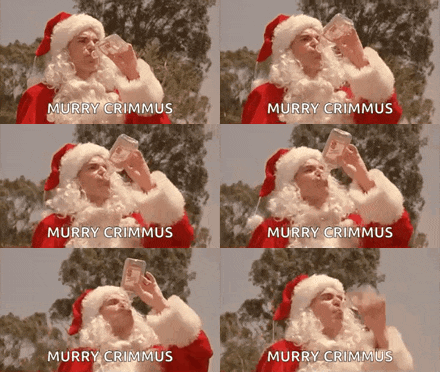

The story begins with Willy and his partner in crime, Marcus, robbing a department store while under cover as Santa and an elf. One year later Willy has wasted most of his share of the loot, leaving him unable to refuse Marcus offer of one last job. The pair go about arranging their usual scam with Willy taking a job as a department store Santa while Marcus is again cast as Santa's elf. The job is soon complicated, however, by the store's suspicious manager and conniving security chief. Just as the duo's scheme threatens to unravel a Christmas miracle arrives in the form of gullible, dim-witted, customer Thurman Merman. Believing that Willy really is Santa, the boy offers him the family car and access to the family safe. What begins as a convenient arrangement grows into something more as Willy begrudgingly takes on the role of Thurman's mentor, protector, and father-figure. What follows is a madcap caper that will have even the hardest humbugs chuckling 'ho, ho, ho'.

Bad Santa is the perfect blend of humor and heart. The film makes the most of its absurd premise by juxtaposing Willy and Marcus' crudeness and criminality with the supposed wholesomeness of their department store roles. In this way, the film speaks to the Grinch in all of us as it follows the duo through a endless lines of screaming children, nagging mothers, and cheery coworkers that would leave mana a Santa begging for New Year's. Beyond its most obvious gags, the film relates an all too human tale of hard times, regrets, and redemption. With the arrival of Thurman the film does more than give Willy a dupe to pull one over on, it gives him a reason to keep going. Despite his blatant efforts to manipulate and use the naive boy, Willy finds himself increasingly looking out for Thurman's best interests. By the film's finale the pair's unlikely friendship inspires Willy to a selflessness worthy of St. Nick. Laugh all the way this Christmas with Bad Santa.
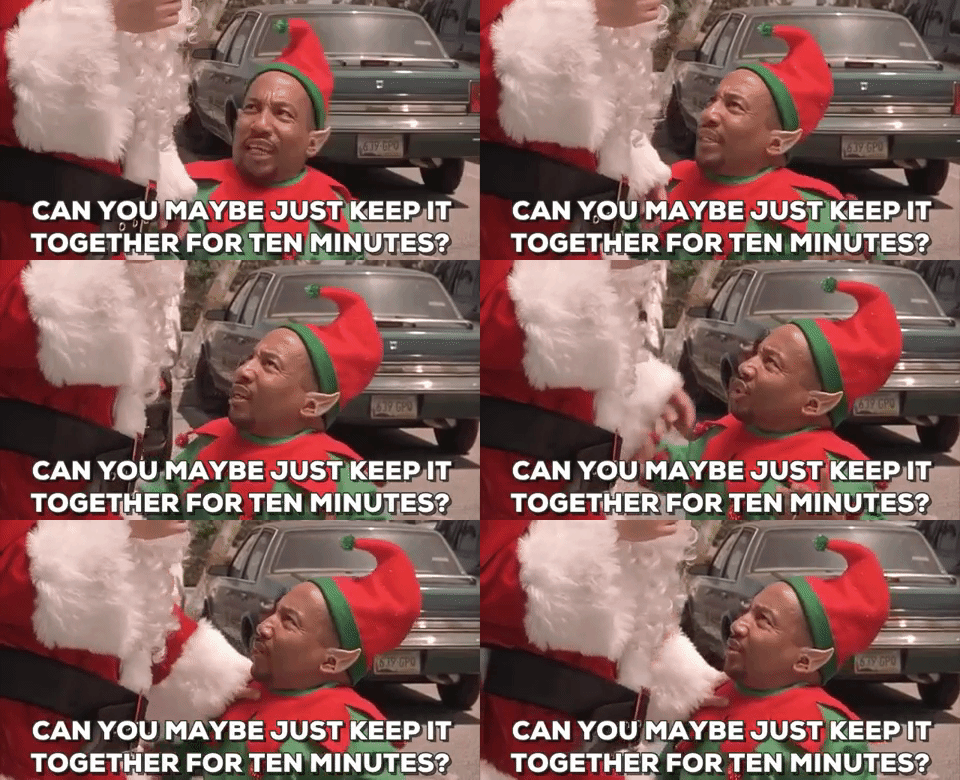
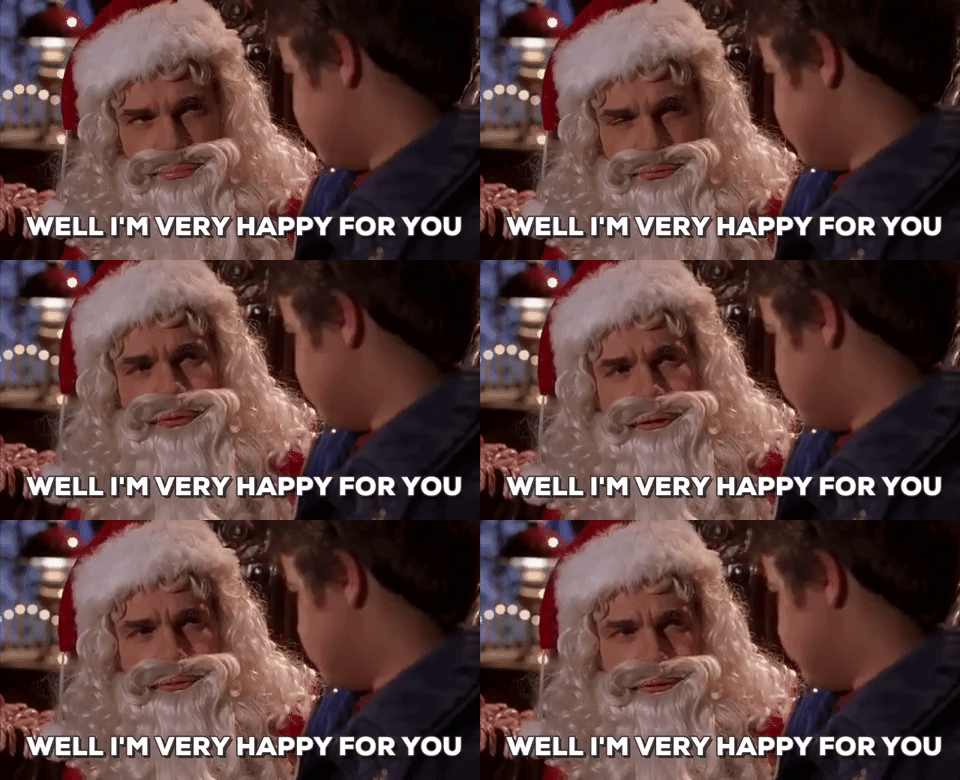
The film brings it off beat tale of yuletide larceny to uproarious life thanks to the work of its cast. Lauren Graham blends sultriness and sweetness as local bartender turned Willy's love interest, Sue. John Ritter turns in a hilariously neurotic turn worthy of Gene Wilder as store manager, Bob. Bernie Mac balances smooth and sinister as the store's unscrupulous security guard, Gin. Tony Cos steals each scene in which he appears as Willy's sharp-witted partner, Marcus. Brett Kelly lends the film its heart as innocence and wonder of Christmas personified, Thurman. Billy Bob Thorton is nothing short of iconic as Willy. In his hands, what easily could have been a one-note caricature is instead a by turns tragic, hilarious, and surprisingly touching portrait of a man in desperate need of redemption.

At once a pitch-black comedy and a heartfelt tribute to the holiday spirit Bad Santa is a modern Christmas classic. The script balances black humor with yuletide sentiment to expert effect. The performances bring each of the characters to uproarious, unforgettable, life. This Christmas sike your eggnog and embark upon some holiday hijinks with Bad Santa.


Friday, December 12, 2025

Classics: A Review of Edward Scissorhands By Lauren Ennis

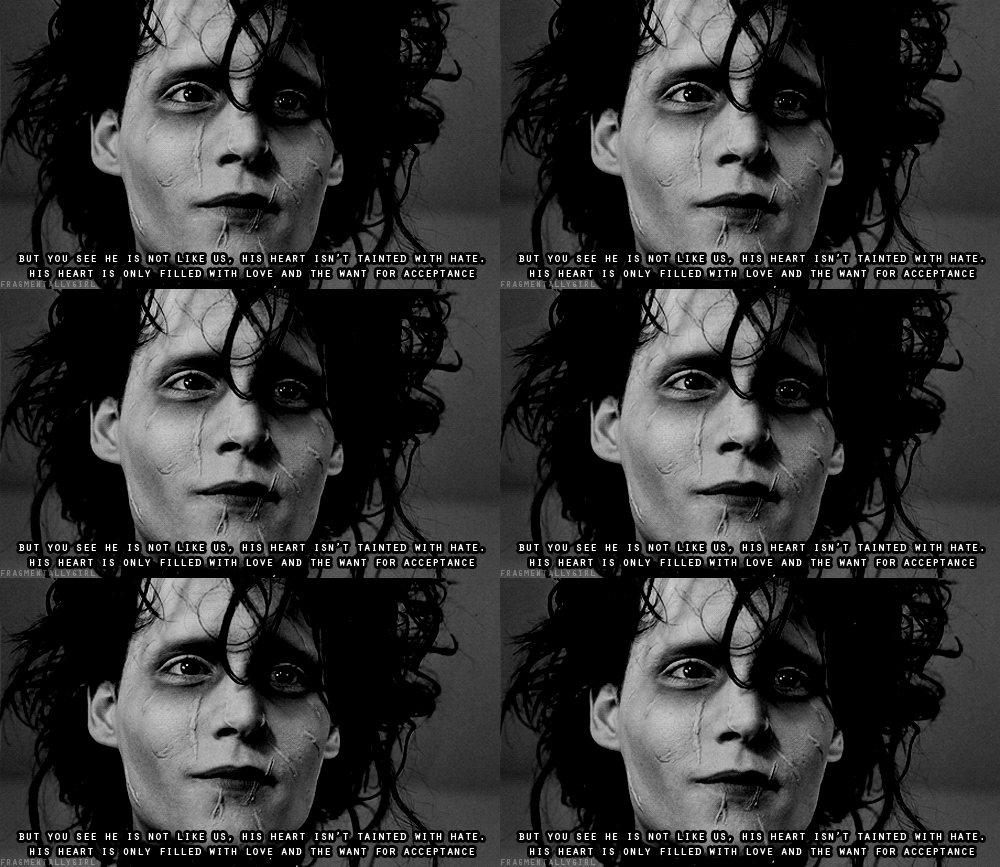
"No matter what, Edward will always be special" Peg Buggs proudly declares of her young protege, Edward. Thirty-five years after its release, Edward Scissorhands remains as special to generations of viewers. Blending the gothic with the modern the film serves as an ode to the individual in a conformist world. Carve your own path with Edward Scissorhands.

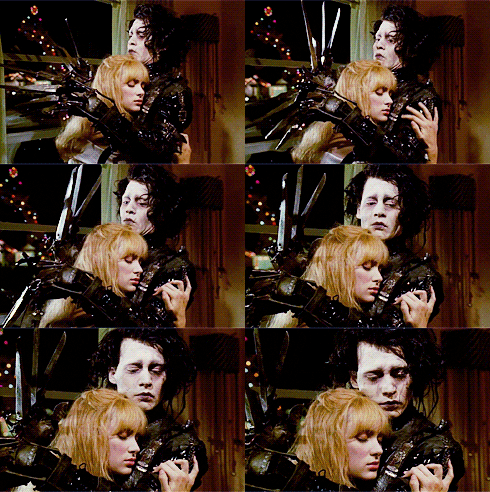
The story begins with an eccentric inventor creating a living young man whom he names Edward. Unfortunately, the inventor dies of a sudden heart attack before completing Edward's hands, leaving the boy with scissors where his hands should be. Under-socialized Edward is then left to fend for himself until Peg Boggs arrives selling Avon. Kind and optimistic Peg welcomes the young man into her home and invites him to become part of her family. Life with the Boggs' has a profound effect on Edward as he slowly begins to assimilate into their suburban neighborhood. His newfound happiness is soon threatened, however, when several of the locals exploit his trusting nature and threaten to drive him out of town when he tries to defend himself. It is his budding love for Peg's teenage daughter, Kim, that ultimately gives him the strength to remain true to himself amidst the onslaught of duplicity and conformity. What ensues is an ode to the eccentric in us all that is certain to soften even the hardest of hearts.

Inspired by Burton's own experiences as an awkward, artistic, teen in Burbank, California Edward Scissorhands is a testament to the power of art and the artist's vital place in society. Through its depiction of Edward's efforts to fit in the film aptly captures the artist's eternal struggle between originality and belonging. Upon his initial arrival he is treated as a local curiosity and his talents are welcomed by bemused neighbors. As the novelty inevitably wears thin, however, his eccentricities devolve from endearing to odd. While he struggles to navigate his new life his missteps begin to garner scorn and suspicion rather than sympathy. Edward's journey from unwitting local celebrity to social pariah mirrors the all too familiar rise and fall of many artists. Much like Edward, many artists are initially embraced for their originality. When familiarity breeds fatigue, however, the very admirers who catapulted the artist to fame will then tear that same artist's work to the ground. Similarly, Edward's struggle between his desperate need to belong and his inability to conform is directly reminiscent of the artist's need and desire for acceptance even as their artistic nature prevents them ever truly fitting in. Even as the town turns on its unusual hero, Edward's legacy lives on through the hearts he inspired, minds he changed, and the unique, inimitable beauty of the snowflakes he created. In this way, the film serves as a heartening reminder of the vital, lasting, importance of art even if it is underappreciated or misunderstood. Fall in love with the artistry of Edward Scissorhands.


The film brings Tim Burton's whimsical vision to unforgettable life thanks to the work of its star-studded cast. Vincent Price blends heart and humor in his brief scene-stealing performance as the inventor. Alan Arkin infuses Boggs family patriarch, Bill, with dry wit and down to earth charm. Diane Weist is a delight as selfless, optimistic, Peg. Anthony Michael Hall is a villain you'll love to hate as Kim's callous boyfriend, Jim. Kathy Baker makes for an apt would-be femme fatale in her by turns sultry and desperate turn as Joyce. O-Lan Jones is hilarious in her hellish performance as religious zealot Esmeralda. Winona Ryder expertly captures Kim's evolution from selfish and impressionable teen to courageous young woman. Johnny Depp turns in arguably the best performance of his iconic career. In his hands, Edward is more than a novelty eccentric or fish out of water and instead that most rare of wonders, a pure-hearted soul.  

Thirty-five years after its release Edward Scissorhands remains every bit as original, tender, and inspiring as it's title hero. The script casts a magical spell as it weaves a mesmerizing modern fairytale. The cast bring Burton's vision to heartfelt, unforgettable, life. The film's tagline said "Edward's story will touch you, even if he can't"; nearly forty years later it still does.