Thursday, February 22, 2024

Classics: A Review of The Color Purple By Lauren Ennis

 "I think it pisses God off if someone walks by The Color Purple in a field somewhere and don't notice" free spirited blues singer Shug Avery tells her friend, Celie. Over the course of forty years Celie learns to find her own bit of purple amidst the tangled weeds of abuse, poverty, and tragedy that make up the field of her life. Nearly forty years after its release The Color Purple remains one of the most visceral, compelling, and inspiring films in modern cinema. Join Celie and discover the beauty of The Color Purple.
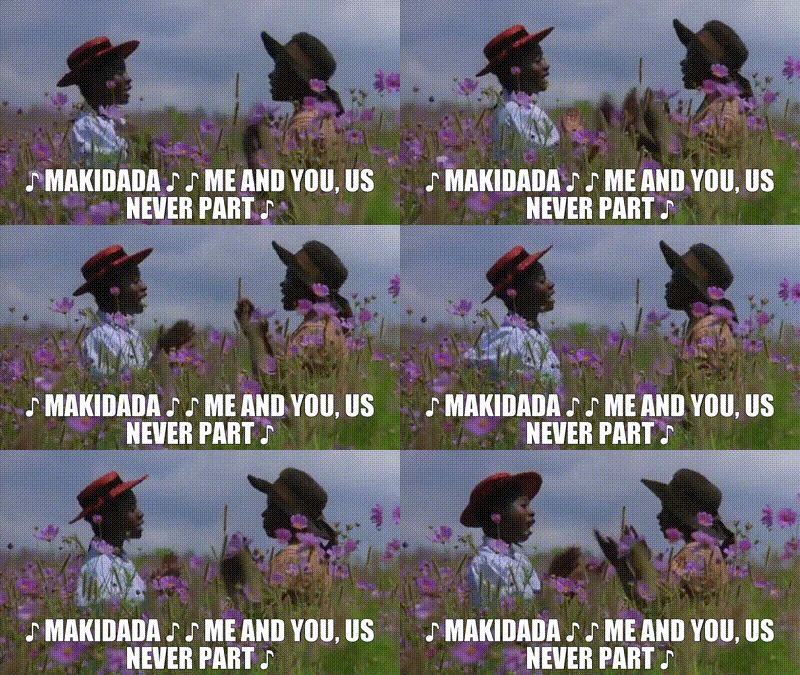
The story begins in 1910 Georgia with teen sisters Celie and Nettie playing in a field of purple flowers. The heartwarming tone is abruptly shifts when it is revealed that the girls lives are marked by poverty and abuse. In a letter to God Celie confesses that she is pregnant for the second time after years of suffering sexual abuse at the hands of her step-father. In an effort to conceal his guilt, when Celie's second child is born her step-father arranges for the bay to be adopted and Celie to be married to a neighboring farmer. She soon finds herself in even more dire circumstances when her husband subjects her to emotional, physical, and sexual abuse. In what is perhaps his greatest act of cruelty, her husband goes on to forbid her from seeing the one person who has ever shown her any real love; Nettie. Over the ensuing years Celie endures abuse and tragedy against the backdrop of a changing South. What follows is a tale of resilience and triumph in the face of adversity and a testament to the human spirit.

The Color Purple brings Alice Walker's 1985 novel to visceral life. While the film approaches the novel's difficult subject matter with sensitivity it does so without flinching from the brutal reality of Celie's existence. In this way, the film challenges viewers to confront the all too real horrors of sexual abuse, domestic violence, poverty, and prejudice without resorting to heavy handed messages or lecturing. Perhaps the films greatest success is its ability to put a human face on these issues in a way that will leave viewers contemplating their full impact long after the final credits fade. Despite its harsh subject matter, however, the film is infused with a hope, humor, and humanity that ensure the story avoids becoming offputtingly bleak without reducing its power. As a result, the film manages to be gritty without becoming gratuitous and empathetic rather than exploitative as it treats viewers to one of the most compelling experiences in modern cinema. Follow Celie for the journey of a lifetime as she discovers the meaning of The Color Purple.

The film transports viewers to the gritty reality of the turn of the century South thanks to the brilliant work of its cast. Danny Glover perfectly conveys the cruelty of Celie's husband, known only as Mister, while still infusing him with insecurity and immaturity. Oprah Winfrey is a force of nature as Celie's outspoken daughter-in-law, Sophia. Willard Pugh lends an apt comic turn as Celie's hapless step-son, Harpo. Akosua Busia infuses Nettie with warmth and quiet strength. Margaret Avery proves to be a scene stealer as Mister's former mistress turned Celie's love interest, sultry singer Shug. Whoopie Goldberg turns in the performance of her career in her portrayal of Celie's transformation from battered victim to independent and resilient survivor.

All of the most inspiringly bright and devastatingly dark shades of the human experience can be found in The Color Purple. The script brings Walker's novel to visceral life as it unflinchingly depicts Celie's tragedies and triumphs. The stellar work of the cast brings each of the characters to screen with complexity and humanity. Witness the power of cinema in the beauty of The Color Purple.

I'm not crying, you're crying!

Tuesday, February 6, 2024

Classics: A Review of Don Juan Demarco By Lauren Ennis

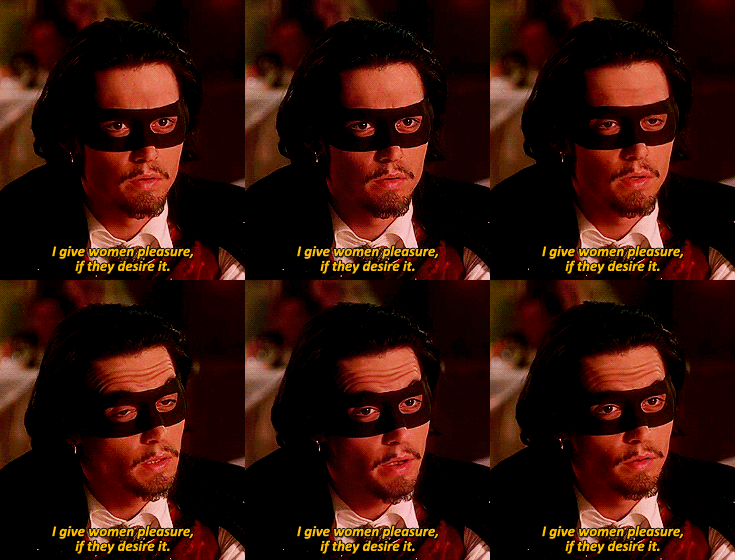
 What does it mean to love a woman? This is the mystery that Don Juan DeMarco dedicates his life to solving. In 1994's romantic comedy Don Juan DeMarco a psychiatrist attempts to treat a patient with an unusual delusion; he has fallen head over heels in love with love. What ensures is an unorthodox treatment that ultimately heals doctor and patient alike and leaves the entire hospital looking for love. This Valentine's Day fall under the spell of Don Juan DeMarco.

The story begins with a young man dressed suspiciously like Zorro approaching a woman at a hotel. Although she's waiting for another man she gives in to the Latin lover's charms and spends the night with him. After this final conquest, he immediately sets out on his plan to commit suicide. He is next seen poised to jump of a billboard  featuring a photo of his lost love, the centerfold model he calls Dona Ana. Following this stunt he is promptly admitted to a mental institution and placed under the care of Dr. Jack Mickler. Over the course of his ten day evaluation he regals the doctor with tales of his conquests and his rejection by his one true love, the mysterious Dona Ana. Even though he is sure that the don is actually a young man from Queens suffering from grandiose delusions the doctor is charmed by his stories. Over the course of the evaluation, however, the doctor begins to wonder if there might be some truth to the legend of Don Juan after all.

The film mixes comedy and romance to create a love letter to all things love. The script makes the most of the story's outrageous premise by relating Don Juan's full story in a series of flashbacks that are charged as much by comedy as by eroticism. Despite its sensual subject the film wisely leaves the full details of its hero's exploits largely to the imagination. In this way, the film is in keeping with his insistence that it is love and not lust that he is seeking, and is all the sexier for it. Even as it follows its hero from one conquest to the next the film's beating heart lies in the bond between its two leads. Though he is tasked with curing Don Juan, it is Dr. Mickler who is left profoundly changed by their time together. While he remains skeptical of the young man's stories, the doctor sees that there is beauty and truth within them. It is through this shift in his perspective that he regains his passion for both his profession and his marriage. As a result, both men learn the value in recognizing the world for what it is while still seeing it for what it could be. Through its elusive blend of fact and fiction the film relates a fantasy that viewers will be hard pressed not to fall for.

The legend of Don Juan is brought to vibrant life thanks to the work of its cast. Geraldine Pailhas infuses Dona Ana with warmth, mystique, and sensuality. Faye Dunaway shows off a welcome wit as Dr. Mickler's wife, Marilyn. Marlon Brando turns in an infectiously fun performance in his depiction of Dr. Mickler's transformation from staid psychiatrist to passionate lover. Johnny Depp reminds viewers that he is far more than a mere pretty face in a turn that blends roguish charm, vulnerability, and comedic skill.

In its blend of fantasy and fact and comedy and romance Don Juan DeMarco reminds us of what a romantic comedy should be. The script pays affectionate homage to the romance genre while offering a loving send-up of its inherent absurdities. As a result, the script balances unabashed romance with uproarious humor to expert effect. The performances of the cast sparkle with effervescent charm as they bring the world of Don Juan to outlandish life. This Valentine's Day surrender to the charms of Don Juan DeMarco.


Wednesday, January 24, 2024

Classics: A Review of Blue Eye Samurai By Lauren Ennis

 "Under the law revenge is a luxury for men" street-wise brothel madam Madame Kanji notes. For outcast orphan turned master swordswoman Mizu, however, revenge is the purpose for her entire existence. The 2023 Netflix series Blue Eye Samurai follows Mizu as she seeks the four white men who could be her father and discovers difficult truths about herself and the world around her along the way. Blending Japanese history, classic cinema, and cutting edge animation the series takes viewers on a pulse pounding journey through Japan and into the darkest depths of the human soul. For a bloody good time set yourself on the path of revenge with the Blue Eye Samurai.

Move over, Mulan

The story begins in 1600's Japan, in what is known as the country's Edo Period. At this time Japan's borders have been closed to the outside world for decades and all foreigners are forbidden from stepping foot on Japanese soil. As a result, any mixed race children left behind by foreign fathers are viewed as less than human. In this restrictive world mixed race orphan Mizu embarks upon her quest for revenge. As retribution for her mother's rape and her own resulting outcast existence, she sets out to find and kill the four white men who were in Japan at the time of her conception. Her vendetta pits her against the ruthless Irish gun-runner Abijah Fowler, who is in pursuit of his own retribution against the Japanese government. What ensues is a blood soaked journey across Japan littered with formidable foes, unlikely allies, and a trail of bodies.
 
Animated but still adult, eastern with a wild west edge, Blue Eye Samurai is every bit as unique as its heroine. The series shatters the stereotype that animation is for children by relaying a gritty story that is strictly for adults. While the series features plenty of sex and violence it is its exploration of such complex themes as trauma, social ostracism, politics, and corruption that make it stand out as mature viewing. Even as Mizu slices and stabs her way towards her goal the story never loses sight of the greater battle she faces within herself. As a result, the series acts as both a character study and an action drama, ensuring that viewers remain invested in Mizu's journey even when she puts down her blade. Similarly, the series' supporting characters are all multifaceted and complex, with everyone from comic relief Ringo to villain Fowler possessing logical motives and compelling backstories. In this way the series elevates itself from action drama to historical epic as it showcases the struggles of an array of characters from across the spectrum of Edo society. For viewing that is a cut above take a thrill ride through feudal Japan with Mizu in Blue Eye Samurai.

The series transports viewers to Edo era Japan in all of its beauty and brutality thanks to its stunning animation and brilliant cast. The series blends two dimensional animation techniques with three dimensional technology to seamless effect. As a result, the animation is something akin to a moving painting in which there is poetry in every flake of snow and each drop of blood. The vocal performances bring each of the series' characters to vivid life. Masi Oka infuses Mizu's unlikely apprentice, disabled chef Ringo, with warmth, humor, and decency. Darren Barnett turns in a complex and charismatic performance as Mizu's childhood enemy turned reluctant ally, Taigen. Brenda Song balances a charm, sensuality, and resilience worthy of Scarlett O'Hara as princess Akemi. Ming Na Wen doles out wisdom and wit in equal measure as world weary Madame Kanji. Even in the midst of its outstanding ensemble cast the series is dominated by the portrayal of its titular samurai. Maya Erskine delivers a powerhouse performance that combines intelligence, cynicism, torment, vulnerability, and steely resolve as Mizu.

Fusing the best of East and West and classic and contemporary, Blue Eye Samurai pushes animation and television to new heights. The script takes viewers on a non-stop thrill ride all while showcasing an array of complex characters. Even at its most bloody the animation is never less than breathtaking and the vocal performances imbue each of the characters with depth and complexity. For an unforgettable viewing experience follow the bloody trail of the Blue Eye Samurai.

"You have murder in your eyes"


Sunday, December 24, 2023

Classics: A Review of Trading Places By Lauren Ennis

The new year is the perfect time to create a new you. For street hustler Billy Ray Valentine and wealthy stock broker Louis Winthorpe III this annual effort at reinvention is taken to a whole new level in 1983's Trading Places. This modern take on The Prince and the Pauper is a social satire of 80's America that continues to garner laughs and spark conversation today. Trade up this new year with Valentine and Winthorpe in Trading Places.


The story begins with Wall Street tycoons Randolph and Mortimer Duke engaging in a sibling rivalry. While debating the impact of nature versus nurture the bored brothers decide to implement a social experiment to test their theories. The concoct a plot to take two men from opposite ends of the social spectrum and switch their lives, placing a bet on whether or not the men will be fundamentally changed by their altered circumstances. Their unwitting test subjects are career criminal Billy Ray Valentine and the Dukes' firm's managing director, Louis Winthorpe III. Through a series of schemes the Dukes frame Winthorpe for drug dealing, theft, and soliciting a prostitute, effectively ending his personal and professional lives. Meanwhile, Valentine is installed in Winthorpe's home and job. The experiment follows the brothers' plan until Valentine overhears their scheming and realizes that they plan to return him to the slums when their wager is over. He then seeks out Winthorpe and the unlikely pair set out on an uproarious plan of their own to turn the tables on the Dukes and find their own piece of the American Dream along the way.

Trading Places combines 30's screwball comedy style antics with sharp social commentary to relate a madcap adventure that still packs a comedic punch forty years after its release. Through its depiction of Valentine's meteoric rise and Winthorpe's devastating fall the film explores the transactional nature of modern society and the ways in which we are shaped by our circumstances. In this way, the film casts a scrutinizing gaze upon society's obsession with wealth and status, which has become even more consuming in the social media era. The interactions between the characters also allows the film to examine the racial and class divisions of its time without resorting to stereotyping or lecturing. The film additionally subverts the expectations surrounding these social divisions by having the characters reach the realization that it is the machinations of elites like the Dukes that divides them far more than any individual differences. By having the disparate characters unite in their effort to reclaim control of their lives the film offers a message of camaraderie and personal empowerment that is desperately needed today. Even as it delves into weighty themes the film never loses sight of its role as a comedy, finding humor in the foibles of human nature and the absurdity of society. Start your new year with the smart set in Trading Places.

The film remains a comedy classic thanks to the brilliant work of its cast. Ralph Bellamy and Don Ameche convey class and callousness in equal measure as the ruthless Randolph and Mortimer Duke. Kristin Holby personifies snobbishness as Winthorpe's frigid fiancĂ©e, Penelope. Paul Gleason oozes sleaze as corrupt security expert Clarence Beeks. Denholm Elliott infuses Winthorpe's butler, Coleman, with warmth and charm. Jamie Leigh Curtis proves that she is more than just another horror scream queen in her by turns sweet and sassy portrayal of prostitute Ophelia. Even surrounded by an exemplary supporting cast the film belongs to Dan Aykroyd and Eddie Murphy as Winthorpe and Valentine. Aykroyd perfectly walks the line between tragedy and comedy in his at once haughty and heartbreaking turn as Winthorpe. Murphy turns in one of the best performances of his career in his hilarious depiction of street smart hustler turned sophisticate Valentine. 

At once a biting social satire of 80's America and a timeless comedy of mores and manners Trading Places has more than earned its place as a comedy classic. The script's blend of social commentary and slapstick ensures that it continues to offer laughs and lessons that resonate today. The charismatic performances of the cast carry the story with effortless charm. This new year raise your glass along with Winthorpe and Valentine in Trading Places.


Thursday, December 21, 2023

Classics: A Review of All the Light We Cannot See By Lauren Ennis

How do you find your way through the deepest darkness? How do you hold onto your humanity in an inhumane world? These are the questions that lie at the heart of the 2023 Netflix limited series All the Light We Cannot See. Based off of the 2014 Pulitzer Prize winning novel, the series follows a group of ordinary people struggling to hold onto a spark of humanity during the darkest days of World War II. The series is at once an epic tale of love, loss, courage, and redemption and an intimate exploration of the inner depths of the human heart that will satisfy readers and newcomers alike. As we continue through the dark days of winter cozy up with All the Light We Cannot See.

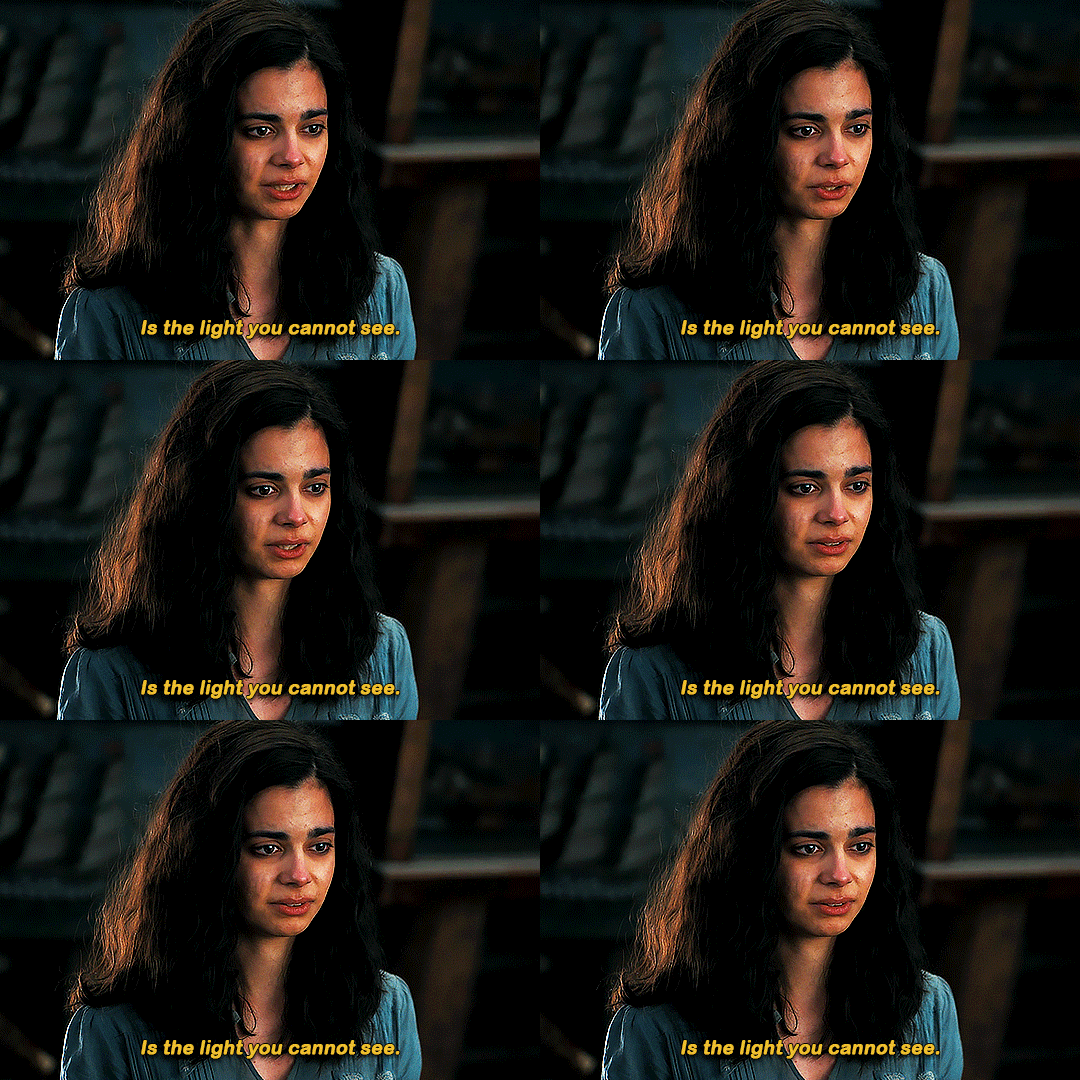
The story begins in 1944 Saint Malo France with young Marie-Laure Leblanc hiding in her uncle's house as she awaits the arrival of Allied troops. Blind since childhood, she is able to contribute to the French Resistance without drawing the suspicions of the occupying Nazis. Following in her uncle's footsteps she operates a radio broadcast through which she boosts local morale and transmits coded messages. Meanwhile, German orphan turned unwilling Wehrmacht radio operator Werner Pfennig arrives in the city with his regiment. Unbeknownst to Werner, it is Marie's illegal broadcast that he tunes into each night. When he is ordered to locate and execute whoever is responsible for the broadcast the two are set on a collision course that will put their loyalties, principals, and humanity to the ultimate test.

The series breathes fresh life into the war drama genre by dividing its focus between characters on both sides of the conflict. In this way, the series presents a more complex portrayal of the war than a simplistic battle of good versus evil. By relating one half of its story from the perspective of Marie, a blind teenager alone in occupied territory, the series offers a fresh take on the tired resistance trope and raises the dramatic stakes. Similarly, the focus upon reluctant soldier Werner lends a human face to real life events and highlights the plight of ordinary citizens caught in the crossfire of evil committed by their governments. The script blends war time drama with not one, but two, mysteries in a twisting tale that will leave viewers on the edge of their seats until its poignant finale. It may be a fight for love and glory, but All the Light We Cannot See is far from the same old story. For a classic war time drama with a twist tune in to All the Light We Cannot See.

The series transports viewers to the heart of war-torn Europe thanks to the stellar work of its cast. Lars Eidinger is a force of nature in his portrayal of sadistic Nazi officer Reinhold Von Rumpel's single-minded pursuit of Marie and the artifacts she is assigned to protect. Marion Bailey is a delight as Marie's feisty aunt, Madame Manec. Marc Ruffalo consistently balances quiet strength and whimsy, even as he struggles to balance a consistent accent. Hugh Laurie infuses Marie's traumatized uncle, Etienne, with a world-weariness, grit, and decency reminiscent of Humphrey Bogart's Rick Blaine. Even in the midst of apt supporting performances the series belongs to Aria Mia Loberti and Louis Hoffman as Marie and Werner. Hoffman imbues Werner with an intelligence, sincerity, and charm that ensure audiences will see the man behind his uniform. Loberti expertly blends innocence, maturity, and strength in a portrayal of Marie that is nothing short of a revelation. Together, the pair make for compelling drama and convincing chemistry.

An epic drama with a beating heart, All the Light We Cannot See is a series that reminds us of the spark that makes us human. The by turns heart pounding and heart felt script brings the beloved novel to vibrant life. The performances infuse each of the characters with depth, complexity, and humanity. Join Marie and Werner on a journey into the darkest depths of the human heart and find All the Light We Cannot See.


Thursday, November 23, 2023

Classics: A Review of Tokyo Godfathers By Lauren Ennis

The holidays are a time to gather with friends and family to celebrate and express gratitude for all that we have. But what about those who have no one to gather with and nowhere to go? Can we still find gratitude and hope when all else is lost? These are the questions that lie at the heart of the 2003 animated Christmas comedy Tokyo Godfathers. The film is at once an unflinching look at the gritty reality of life on the streets of modern Tokyo and a wholesome celebration of the Christmas spirit. Through its combination of wit, whimsy, and gravitas the film is easily one of the most original and satisfying films to watch at any time of the year. This Christmas, hit the streets with the Tokyo Godfathers.

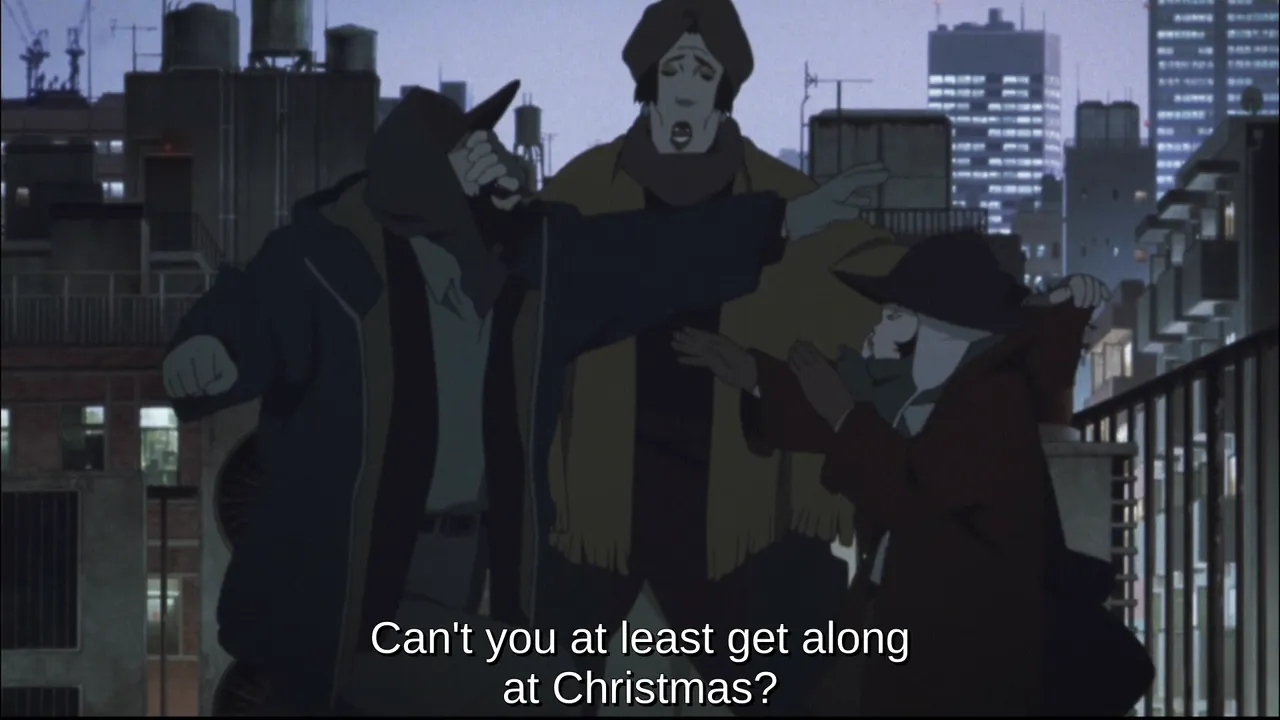
The story begins on Christmas Eve with three homeless friends, Gin, Hana, and Miyuki doing their best to celebrate the holiday. While searching for presents for one another in a dumpster they come upon an abandoned infant. Although Gin and Miyuki agree that the best course of action would be to turn the child over to the police Hana insists on keeping the baby girl, whom she names Kiyoko. Gin and Miyuki eventually convince Hana that she cannot provide for the baby and she agrees to give Kiyoko up on one condition; that they return her to her rightful parents. The trio then embark upon a search for Kiyoko's parents and find love, redemption, and a few Christmas miracles along the way.

The film sets itself apart from other holiday fare by relating an equal parts gritty and wholesome tale of the true meaning of Christmas that will resonate throughout the year. Rather than focusing upon the magical adventures of Santa Claus or the heavenly miracles of the New Testament the film instead finds magic and miracles in the mundanity of modern life. In this way, the film manages to relate a timeless tale of second chances that is more timely than ever. The film portrays its characters as at once tragic, comic, and all too human. Through its honest approach to its characters, the script treats them with sympathy for their plight while still holding them accountable for the actions that they took to place them there. As a result, the film shares the spirit of goodwill towards our fellow men without resorting to heavy-handed messages or lecturing viewers. In this way, the film uses the misadventures of its modern Magi to spread a vital but deceptively simple message of hope and harmony that will win over non-believers and the devout alike. Capture the magic of cinema and share in the spirit of the season with Tokyo Godfathers.


Satoshi Kon's signature animation transports viewers to the by turns glamorous and gritty streets of modern Tokyo. The film brilliantly brings the city to life through its realistic backgrounds, which keep the characters' sometimes fantastic adventures grounded in reality. The backgrounds lend the film particular character by highlighting the city's back alleys and homeless encampments rather than postcard cityscapes and tourist attractions. As a result, the film brings the characters' world to visceral life. The character designs imbue each of the characters with personality and charm. The designs maintain Kon's sense of realism in keeping with the film's weighty themes while still showcasing just enough exaggeration to carry off its comedy. Feast your eyes on a taste of modern Japan with Tokyo Godfathers.

In its ninety-two minute run time Tokyo Godfathers offers a Christmas feast for the eyes and heart. The film's animation is nothing short of gorgeous as it takes viewers on a journey through the streets of Tokyo. The script offers a by turns tragic and heartwarming tale that contains far more humanity than many live action films. Through its unique story the film explores the coldest, darkest, corners of society all while reminding viewers of the warmth and light that define the season. For a holiday to remember spend your Christmas with Tokyo Godfathers.


Saturday, October 28, 2023

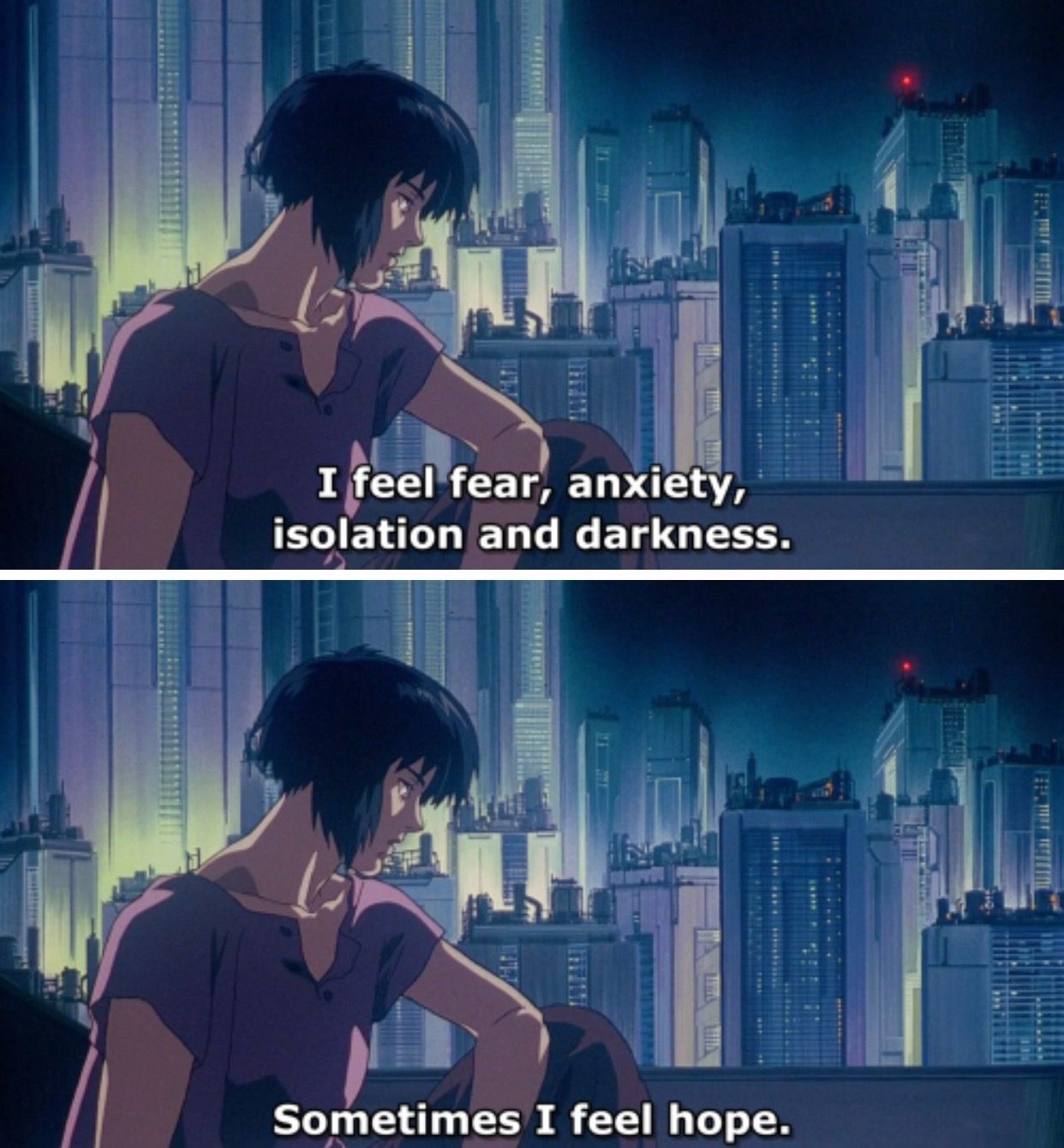
Classics: A Review of Ghost in the Shell By Lauren Ennis

 What does it mean to be human? This is the question that lies at the heart of 1995's animated drama Ghost in the Shell. Part heart pounding action thriller and part philosophical meditation on the nature of existence this film is a total masterpiece. In the decades since its release the film remains startlingly resonant and is even more relevant today that it was upon its release. Even as anime has gained a popular following in Western media the film continues to be considered the gold standard for the medium amongst aficionados and newcomers alike. Discover the haunting beauty of Ghost in the Shell.


The story begins in the year 2029 in a world in which cybernetic technology dominates society. People routinely augment or even replace their body parts with cybernetic parts to enhance their appearance and abilities. These technological advances have led to the rise of a new type of criminal in the form of sophisticated hackers. Rather than merely hacking into a computer these criminals use cybernetics to hack into people's augmented bodies and minds. In response to this cyber crimewave the state employs a team of cyborgs who act as elite security agents. One of these cyborgs is the film's enigmatic heroine, Major Matoko Kusanagi. After successfully completing an assassination she learns that a criminal mastermind known as the Puppet Master has been hacking into the minds of highly placed individuals in order to spy upon and assassinate government officials. Motoko and her partner, Batou, embark upon a dangerous mission to find the Puppet Master and bring him into state custody. Unbeknownst to her, however, the Puppet Master has plans of his own in which she plays an integral part. What ensues is a game of cat and mouse that will lead Motoko to question her mission and even her very existence.

Decades after its release Ghost in the Shell remains one of the most complex and original stories ever put to animation. The film's futuristic flash and thrilling action sequences still draw viewers in, but it is the film's weighty themes that keep audiences returning to its dystopian vision. Much like 1986's Blade Runner, Ghost in the Shell takes viewers on a thrill ride through the crime ridden streets of the not so distant future. Like its predecessor, the film then goes on to invert the conventions of its police procedural to relate a much more poignant and personal tale of the search for meaning. Through its exploration of cyborg Matoko's existential crisis the film raises vital questions about memory, individuality, and what it means to be human. The film refuses to offer definitive answers and instead allows viewers to see themselves in its so nearly human heroine as we contemplate our own existence. Beyond its philosophical musings the film also offers warnings for the future against technological dependence, the dangers of artificial intelligence, and the dehumanization that inevitably occurs in an isolated populace. Given the current state of modern technology and its impact upon our society the film's warnings are nothing short of prophetic. Glimpse into the future with Major Matoko in Ghost in the Shell.

The film's animation brings its dystopia to vivid life. The scenery transports viewers to a futuristic world that is at once familiar and entirely alien. Following in the tradition of Blade Runner and Soylent Green the film showcases a world that has surpassed our own technologically even as it has regressed in all other aspects. Despite its many advancements the film's world is crowded and dirty and everything in it is shown to be disposable. This sense of a future in decay immerses audiences in the characters' world while highlighting Motoko's fears that she too will one day be deemed obsolete and discarded. The character designs aptly reflect each of the characters' distinct personalities and strike an ideal balance between futuristic fantasy and contemporary reality. The action sequences seamlessly blend traditional animation and CGI to dazzling effect.

Nearly thirty years after its release Ghost in the Shell remains one of the most well known and well loved films in all of anime and it is little wonder why. The film's philosophical themes challenge viewers, even as its action packed plot ensures that audiences remain entertained. The animation takes viewers on a journey into a future that is at once thrilling, fascinating, and frightening. Follow the haunting whisper of Ghost in the Shell.