On Saturday, July 25, 2020 actress Olivia de Havilland died at age one-hundred and four. Over the course of her fifty-three year career she performed in theater, film, and television, earning two Academy Awards, a Golden Globe Award, two New York Film Critics Circle Awards, a National Board of Review Award, one Venice Film Festival Volpi Cup, and a star on the Hollywood Walk of Fame. Throughout her career she brought a diverse array of characters to life in films that ranged from historical dramas, to adventure movies, to contemporary melodramas, to romantic comedies. In each of her roles she infused her performances with a depth, intelligence, and charm that cemented her place as one of the brightest stars in film history. In honor of her life and career I'll be turning the spotlight on three of my personal favorite Olivia de Havilland performances.
Who says that nice girls finish last?!
The Strawberry Blonde: This jaunt back to 1890's New York may be the best showcase of de Havilland's comedic chops. The film follows dentist Biff Grimes (James Cagney) as he struggles to maintain his dental practice and marriage. When Biff learns that his old rival, Hugo (Jack Carson), has scheduled a dental appointment at his office he reflects upon their friendship and the woman (Rita Hayworth) who turned them from friends to bitter enemies. While it's Rita Hayworth's Virginia who is the strawberry blonde of the title, it's de Havilland's supporting performance as Virginia's friend, Amy that steals the show. In her portrayal of passionate, modern, Amy, de Havilland stands in perfect contrast to Hayworth's cool and calculated socialite and lends the film warmth and humor. Her performance cleverly plays off of her prior typecasting as 'the girl next door' as she portrays a woman who may not be as free thinking as she pretends to be. When Amy meets traditional Biff, a battle of the wits and wills ensues that is nothing short of high minded hilarity. As the pair's incessant arguing gives way to a budding romance de Havilland and Cagney display a crackling chemistry with her exuding a girlish charm that is nothing short of infectious. By the film's conclusion viewers are sure to fall as much for Amy as Biff and are guaranteed to be left with little doubt as to why gentlemen may prefer strawberry blondes but marry brunettes.
Don't fuss with me...
Hush...Hush, Sweet Charlotte: Murder, madness, and mayhem...don't exactly sound like the elements of a typical Olivia de Havilland film. In this 1964 classic, however, she more than delivers in her first foray into horror. Despite replacing original star Joan Crawford, de Havilland so completely embodies her role as duplicitous Miriam Deering that it's difficult to believe that the part was not written with her in mind. She aptly alternates between Miriam's outward charm and inward malice in a performance that subverts her earlier role as a demure Southern belle Melanie Hamilton. In a fascinating casting choice she plays completely against type as she portrays Miriam with such calculating cruelty that she more than matches the expert performance of her co-star Bette Davis. In her signature style she plays her role with a depth and subtlety that ensure that she is not reduced to a stock villain as she palpably conveys the loss and insecurity that led her character from lonely child to embittered woman. Throughout the film's occasionally outrageous plot her performance remains firmly grounded in reality as she expertly portrays the conflicting facets of Miriam's personality. By the film's conclusion she is so delightfully deviant that she has become what every villain strives to be; a character whom viewers will love to hate. For frightfully good viewing join de Havilland in Hush...Hush, Sweet Charlotte.
Should have put a ring on it
The Heiress: This 1949 adaptation of Henry James' Washington Square gave de Havilland both her second Oscar win and arguably the greatest role of her career. The film follows ultimate underdog Catherine Sloper as she struggles to find happiness in the restrictive world of 19th century New York. Plain, awkward, and insecure, Catherine is a far cry from the typical Hollywood heroine, and all the more compelling for it. After devoting her life to caring for her cold, distant, father she seemingly finds love with the charming, but penniless, Morris Townsend. Fearing that Morris is more interested in his daughter's fortune than her heart, Dr. Sloper does his best to dissuade the couple's budding romance. The film then follows Catherine as she suffers betrayal at the hands of both of the men in her life, only to rise from the depths of loss a stronger, empowered, woman. De Havilland infuses her performance with a warmth, intelligence, and aching longing that makes Catherine entirely believable and all too relateable. From the moment that she unassumingly appears on screen, de Havilland speaks to the outsider in all of us. In her portrayal of, in the words of Dr. Sloper, an "entirely mediocre and defenseless creature without a shred of poise" de Havilland redefined what a heroine could be. In an era in which the silver screen was dominated by glamorous faces de Havilland turned in a performance that was all heart, earning her place in the hearts of generations of viewers. For an acting masterclass witness the marvel that is Olivia de Havilland in The Heiress.
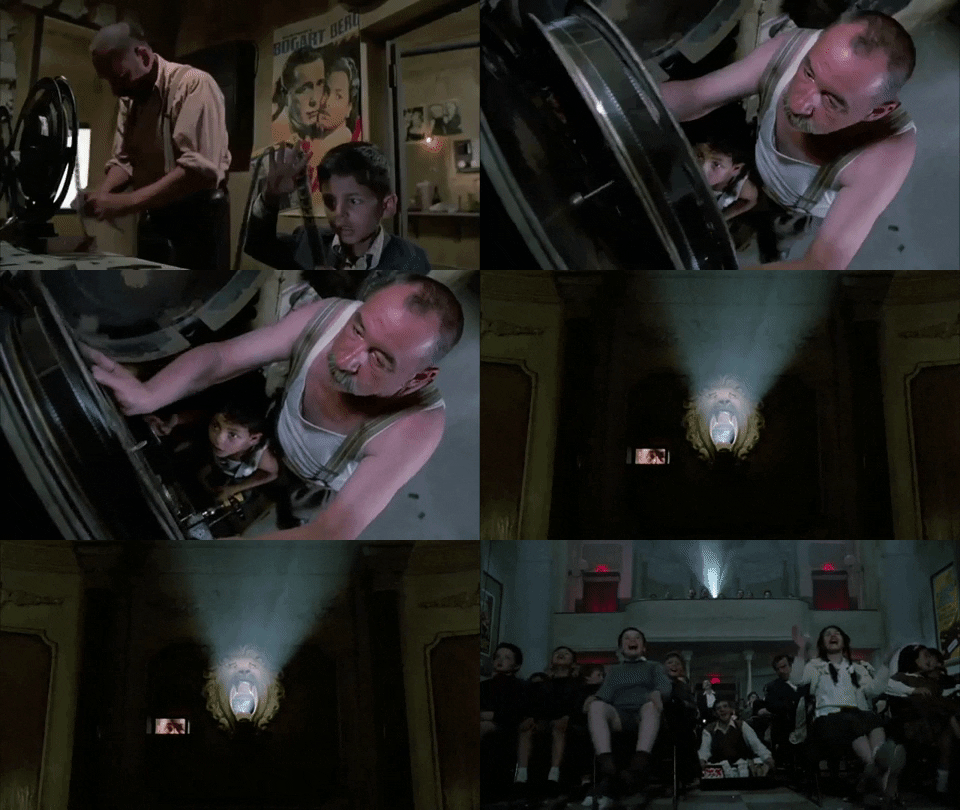
Since the advent of cinema film has been a unifying art form. Through film people from around the world and across the decades have been able to visit distant landscapes, explore emotions, and exchange ideas. In the 1988 film Cinema Paradiso a man reflects upon his childhood love of the movies and the mentor who helped foster that love into a lifelong passion. This deceptively simple coming of age tale earned Oscar, Golden Globe, and Cannes Film Festival awards and over thirty years after its release remains nothing short of cinematic paradise.
A portrait of the artist as a young man
The story begins with successful filmmaker Salvatore learning of the death of his childhood mentor, Alfredo. The film then flashes back to Salvatore's childhood in impoverished post-war Sicily. While his widowed mother struggles to raise and provide for her two children, willful Salvatore escapes the bleak atmosphere that permeates his home by retreating to the local cinema. It is there that he dares to hope for a life beyond the dusty streets of his village as he is regaled with tales of heroes, villains, and every colorful character in between. As the cinema's films and audiences change with the years one constant remains; the faithful presence of its projectionist, Alfredo. While the precocious Salvatore's constant antics wear on the adults around him, including the gruff projectionist, Alfredo recognizes the boy's passion for film and the two form an unlikely friendship. The film then chronicles Salvatore's coming of age as he grows from impish boy, to earnest adolescent, to world weary man with Alfredo and the movies that they shared guiding him every step of the way.
This love letter to the movies celebrates the ways in which film can compel, challenge, and unify film-goers from all walks of life. Throughout the film Salvatore, along with the rest of his village, finds refuge from the grinding reality of post-war Europe in the world of endless possibility presented on the silver screen. Although the villagers remain divided over war-time alliances, personal grudges, and petty jealousies, for a few all too brief hours in the dark all is forgiven and anything is possible until the final credits roll. Through the power of film lonely Salvatore is able to find a friend and surrogate father and Alfredo finds a student, friend, and the son he never had. For Salvatore, the influence of film lasts throughout his life by inspiring him as he struggles through school, adolescent romance, and eventually leaves the limited streets of his village behind to pursue a career in film making.
Even as it basks in the warm glow of cinematic nostalgia, Cinema Paradiso acts as more than a call to creativity as it also offers a warning against the dangers of censorship. Throughout the film the village priest, Father Adelfio, visits the cinema to preview each film that Alfredo shows and designate any 'objectionable' scenes that must be removed before general viewing. While these scenes are played to comedic effect, they highlight the ways in which censorship shapes our views of art and prevents us from making our own interpretations of artwork. The theme of censorship runs as an undercurrent throughout the film which carries over into the characters' personal lives. For example Salvatore's relationship with his mother is strained by her refusal to tell him the truth about his father's death in World War II. Similarly, it is revealed (in the original director's cut) that Salvatore's relationship with Elena ended not because her family moved to a new town, but instead because Alfredo hid her letters and prevented the couple from openly communicating. In both instances the censoring of personal information prevents the characters from fully understanding the events unfolding around them and making informed decisions.
Swoon-worthy celluloid
The film's warning against the dangers of censorship holds eerie relevance in today's climate of 'cancel culture' in which art and history are routinely subjected to censorship for failing to meet an ever changing standard of political correctness or 'wokeness'. Much like in Cinema Paradiso the effects of this censorship are now carrying over into real life as cancel culture moves from canceling history and art to censoring individuals. This pervasive intolerance, which is touted for promoting inclusivity, in fact acts to remove any diversity of opinion as it effectively attempts to put an end to freedom of debate, discussion, and ideas. Rather than allowing society to learn from the past and work towards a better future, this movement has instead devolved into a mob mentality which targets any opposing work, idea, or individual for erasure. Proponents of this movement claim that it is elevating society's values and thoughts, but as Alfredo notes "A mob doesn't think. They don't know what they're doing". It is now up to us as readers, viewers, consumers, and individuals to ask ourselves, if we will tolerate the censoring of our culture by this impulse and emotion driven mob or if the freedom of thought and speech is worth defending.
The film brilliantly transports viewers to post-war Italy thanks to the stellar work of its cast. Antonella Attili personifies world weariness as Salvatore's struggling mother while still conveying Maria's unconditional love for her children. Agnese Nano is nothing short of enchanting in her portrayal of Salvatore's teenage love interest, Elena. Leopoldo Trieste showcases a comic absurdity worthy of Charlie Chaplin in his turn as the village's stern, but hilariously inept priest, Father Adelfio. Salvatore Cascio, Marco Leonardi, and Jacques Perrin seamlessly portray Salvatore as he evolves from lonely child to successful, but conflicted, man. Philippe Noiret brilliantly brings Alfredo to life as he portrays each aspect of the by turns curmudgeonly, comical, warm, and wise projectionist with equal aplomb.
At once a powerful coming of age drama and a celebration of the silver screen, Cinema Paradiso is must-see viewing for any movie lover. Through its by turns heartfelt and thought provoking script the film serves equally well as a valentine to celluloid past and a warning for the present. The film's uniformly superb performances aptly transport viewers into post-war Sicily while relating a universal tale of love, loss, and creativity that will resonate with viewers of any generation. Join Salvatore and Alfredo and rediscover the magic of the movies in Cinema Paradiso.
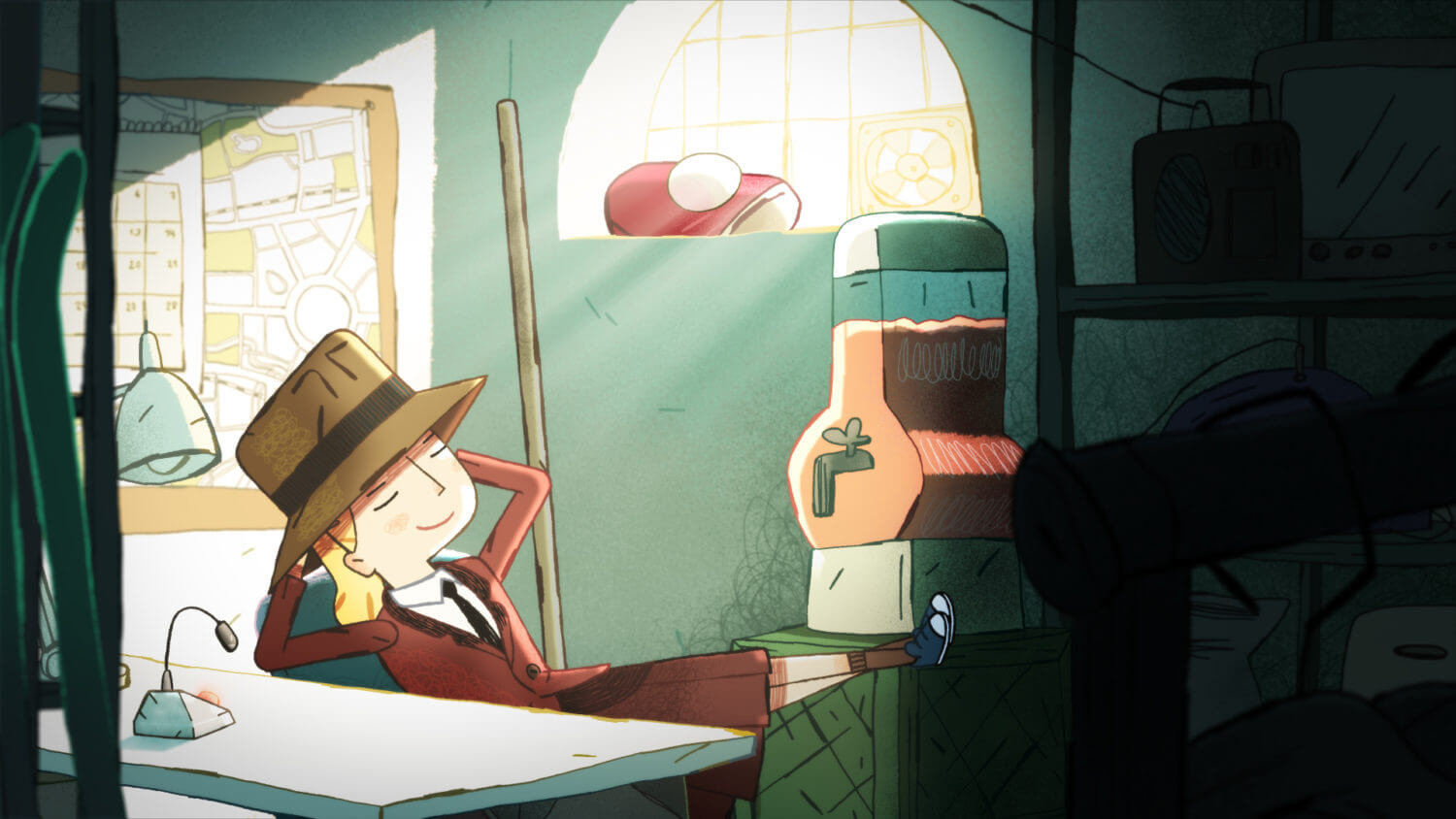
Being the new kid in town is never easy, but for aspiring detective Agathe-Christine, it's the adventure of a lifetime. Combining elements of classic espionage and detective stories with a modern sensibility, 2017's Next Door Spy relates a mystery that will leave young viewers guessing until its final frame. Join Agathe-Christine as she sleuths and snoops through the mystery of the Next Door Spy.
The story begins with ten year old Agathe-Christine (or A.C. as she prefers to be called) moving to a new town with her mother, older sister, and little brother. While the rest of her family sets about meeting neighbors and trying to adjust to their new home, mystery devotee A.C. takes to the basement where she springs into action establishing her own detective agency. When she realizes that there isn't much of a market for child-detectives she starts her own investigation into her neighborhood, particularly the elusive boy across the street. As she probes deeper into her new neighbor's life she stumbles upon her greatest mystery yet and learns vital lessons about honesty, friendship, and staying true to yourself along the way.
Merging Nancy Drew style mystery with modern growing pains the film relates a charmingly offbeat tale of seeking the truth and finding yourself along the way. Through its emphasis upon the conflict between A. C.'s passion for detective work and her concerned family's desire's for her the film raises apt questions about the need to balance our interests and our responsibilities. The film also relates an inspiring message about the importance of helping others as the motives for A. C.'s detective work shift from her dreams of success and recognition to her sincere desire to help her neighbor, Vincent. The film additionally reminds viewers not to judge others as A. C. finds her first impressions of her new neighbors challenged throughout her investigation. By the film's conclusion she solves the greatest mystery of all as she discovers who she is and what sort of person she wants to become.
The film is colorfully brought to life thanks to the work of its cast. Voiced by Simone Edemann Mogeljerg, A. C. is an endearing heroine who will have audiences rooting for her every step of the way. Oliver Botcher creates a sense of mystery around A. C.'s neighbor, Vincent, and turns in a multi-faceted performance as Vincent's character is gradually revealed. Tommy Kenter lends dry humor in his portrayal of local business-owner, Arnie. Anne-Grethe Bjarup Riis and Kristine Sloth are entertainingly insufferable as A. C.'s overbearing mother and self-absorbed sister. Dar Salim and Albert Rudbeck Lindhardt imbue their roles as Vincent's father and brother with vital warmth and humor.
At once an engaging mystery and a coming of age story, Next Door Spy holds thrills for the whole family. Through its merging of classic mystery with a modern setting the film presents a fresh tale that will satisfy fans of such classics as Harriet the Spy and The Hardy Boys while still offering plenty to entertain young viewers. Offering an array of action, adventure, and life lessons Next Door Spy should be next up on any family's viewing list.
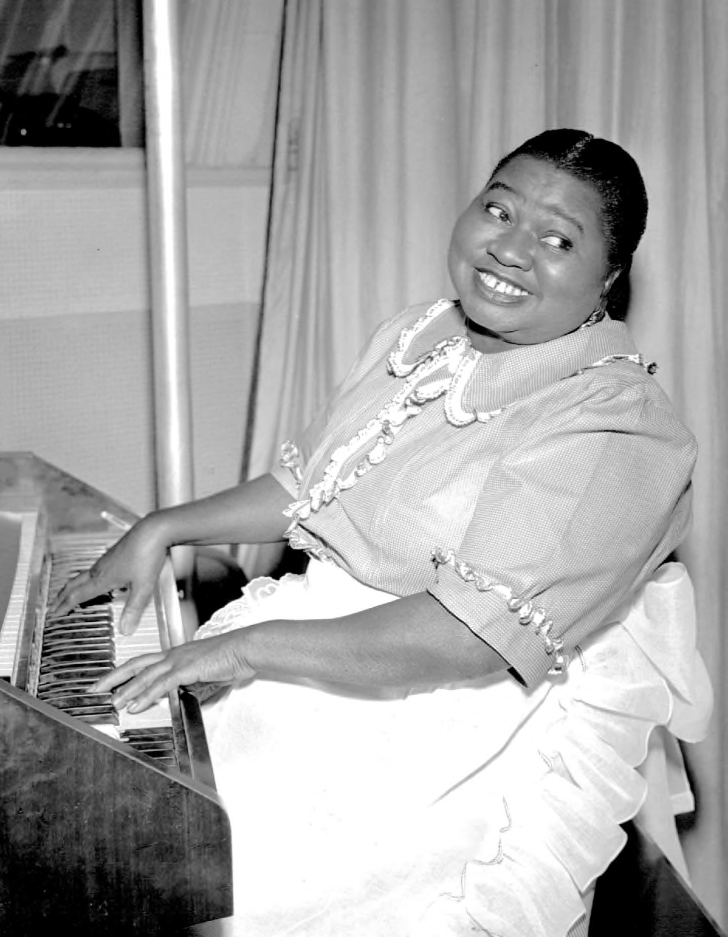
Actress, singer-songwriter, and dancer Hattie McDaniel was a triple threat the likes of which Hollywood has rarely seen. Although she is best known for her Oscar winning turn as Mammy in 1939's Gone With the Wind, she was a dynamic performer who successfully conquered the stage, screen, and airwaves over the course of her thirty-eight year career. Her rags to riches success story is the stuff that the American dream is made of and her philanthropic efforts serve as an apt reminder of the difference that one person can make in the world. In honor of her birthday on June 10, I'll be turning the spotlight on her life, career, and legacy.
"I did my best, and God did the rest"-Hattie McDaniel
Born the youngest of thirteen children of former slaves, Hattie McDaniel's beginnings were far from the 'typical' Hollywood success story. In order to escape both racial prejudice and grinding poverty her family moved from Wichita, Kansas to Denver, Colorado when she was five years old. Even in the relatively egalitarian west, however, the family still found themselves struggling to survive as the injuries that her father had suffered while serving in the Civil War significantly limited his employment opportunities. At the mere age of eight McDaniel and her brother took to the stage in an effort to supplement their parents' meager incomes. After nearly ten years of treading the boards in vaudeville she became determined to pursue performing full-time and quit school at age seventeen. She then appeared in a traveling minstrel show where she developed her skills as a singer-songwriter as well as a performer. While touring with the show she began to attain the status of a local celebrity, particularly after a much discussed performance in which she daringly subverted racial stereotypes by performing in "white-face" in what was ordinarily a role performed by white actors in "black-face". In another trailblazing moment she became one of the first African American women to perform with an orchestra on the then cutting edge medium of radio. She even performed under the direction of famed Broadway impresario Florenz Ziegfeld for a brief period until financial constraints forced him to lay her and her cast mates off.
Despite her artistic successes, from the 1910s through the 1930's McDaniel continued to struggle financially. Throughout this period, she continued to work a 'day job' in a series of domestic service positions as a powder room attendant, a laundress, and a maid in order to support herself. In an attempt to supplement her income she joined her siblings in Los Angeles in hopes of obtaining work as an extra in Hollywood while continuing to pursue her stage career. She landed her first major role in 1934 when she sang an on-screen duet with Will Rogers in John Ford's Judge Priest and quickly followed it up with the role of Mom Beck opposite Shirley Temple and Lionel Barrymore in 1935's The Little Colonel. Her portrayal of Queenie in 1936's Showboat brought her to the attention of several prominent directors and lead to her obtaining steady work in a series of roles throughout the remainder of the 1930's.
"Putting a little time aside for clean fun and good humor is very necessary to relieve the tensions of our time"-Hattie McDaniel
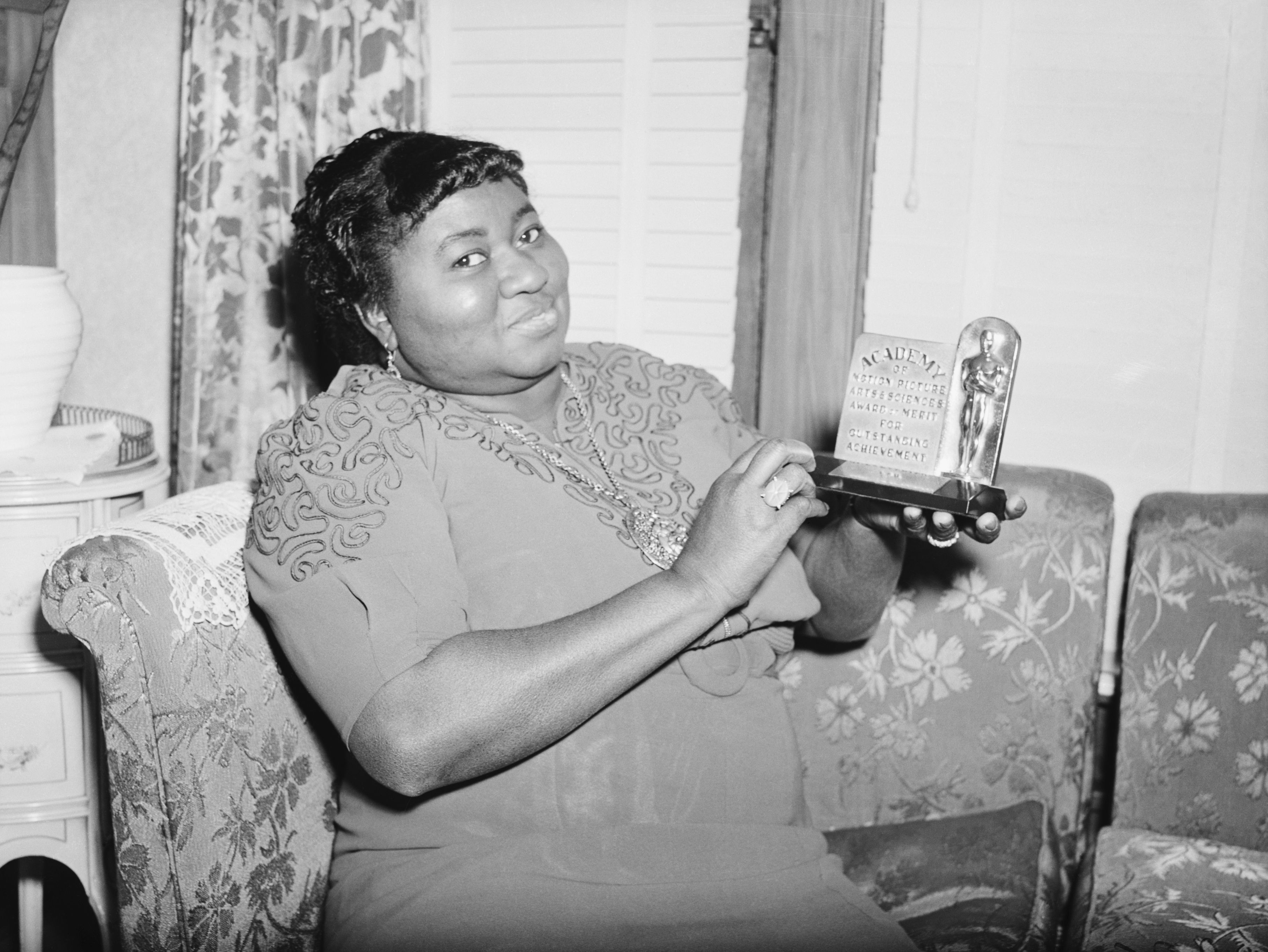
By 1939 McDaniel was known for her work throughout Hollywood, but in 1939 she was cast in the role that would ultimately lead to her becoming a cinematic legend. On the recommendation of star (and close personal friend), Clark Gable, she was cast in the coveted role of Mammy in Gone With the Wind. Drawing upon her own personal experiences in domestic work she created a multi-faceted and believable character in her performance. Even before the film's debut, however, she was subject to scrutiny from the NAACP, who claimed that in her numerous roles as domestic workers she played caricatures rather than characters and reinforced racial stereotypes. Gone With the Wind proved to be an instant classic, and led to McDaniel becoming the first African American to win an Oscar. This honor proved bittersweet, however, when she was prohibited from attending the film's premiere in then-segregated Atlanta, and later forced to sit apart from her cast mates at a table in the back of the venue during the Academy Awards Ceremony. Although her win was a cultural as well as personal milestone she continued to be plagued by criticism from African American audiences and even received hate mail from black servicemen during World War II. Little did her critics know, however, that throughout filming she pressured the film's directors (several directors were assigned to the project throughout filming) to rewrite her lines, which were written in dialect, and refused to utter the racial slurs which were included in the original script. When asked by Hollywood Reporter about the polarizing effect of her performance she replied, "I have never apologized for the roles I play. I have been told that I kept alive the stereotype of the Negro servant in the minds of theatergoers. I believe my critics think the public more naive than it actually is".
The criticism of the black community eventually led to a decline in the domestic roles that had formed the basis of McDaniel's film career. Rather than accept defeat she instead reinvented herself once again and starred in the radio comedy Beulah, becoming the first African American woman to star in a radio series. The series, which featured McDaniel portraying a sassy maid, was subject to the same criticism that had followed her throughout her film career. When the NAACP again accused her of reinforcing stereotypes she reminded her critics that the role drew upon her own personal experience and declared, "I'd rather make seven-hundred dollars a week playing a maid than seven dollars a week being one!".
Unbeknownst to many of her critics, McDaniel was devoted to philanthropic efforts within the black community throughout her life. During World War II she organized entertainment for African American troops and acted as chairwoman of the Negro Division of the Hollywood Victory Committee. She also founded her own philanthropic society, les Femmes D'Aujourd'hui, and joined Sigma Gamma Rho, a sorority for women of color devoted to philanthropy and the advancement of equality. She also played a pivotal role in outlawing restrictive racial covenants (which were used to segregate neighborhoods) by organizing her neighbors in West Adams Heights to advocate for change and acting as one of the named defendants in the legal case Tollhurst v. Venerable. She continued to advocate for equality to the end of her days when she requested to be buried at the then segregated Hollywood Forever Cemetery shortly before she died of breast cancer at age 57 in 1952. While her request was denied and she was instead buried in the Rosedale Cemetery a marble memorial was erected in her honor in the Hollywood Forever Cemetery in 1999.
In a paraphrase of her Academy Awards acceptance speech her gravestone reads "Aunt Hattie, you are a credit to your craft, your race, and to your family", and truer words were rarely written. Today her name appears on two stars on the Hollywood Walk of Fame; a fitting tribute to a star who shined both on screen and off. Over the course of her all too brief life Hattie McDaniel not only overcame poverty and prejudice, but also helped others to do the same. She approached praise and criticism with equal grace and remained true to herself every step of the way. In short, she is exactly the sort of woman whom Rhett Butler would have described as a "great lady".
Hattie McDaniel accepting the 1940 Academy Award for Best Supporting Actress
Monique's touching tribute to McDaniel when she accepted her 2010 Academy Award for Best Supporting Actress
Corruption, fear, and violence are just another day in the life in the crime infested streets of Gotham City. In this city in which law and order are ideals rather than realities a dark figure emerges to ensure that justice prevails and crime does not pay. He may not be the conventional hero that the people of Gotham City want, but Batman is the avenger that they need. In 2008's The Dark Knight Batman is put to the ultimate test in a battle of wills against the anarchistic Joker which eerily mirrors society's ongoing struggle against the forces of chaos.
Holy Oscars Batman!
The film begins with Gotham in a state of relative calm thanks to the efforts of Batman and Commissioner Gordon. Meanwhile, the arrival of idealistic District Attorney Harvey Dent promises a brighter future for the city and leaves Bruce Wayne wondering if the time has come for Batman to finally hang up his cape and cowl. Just as peace finally seems to be within the city's reach, however, a new threat appears in the form of the Joker. Through his singular pursuit of social anarchy the Joker plunges the city's law abiding citizens and criminals alike into a state of perpetual chaos, and pushes Batman and his allies to the very edge of darkness.
Easily the darkest and most complex entry in the Batman franchise The Dark Knight portrays the utter chaos of a world at war with itself. Through his central struggle against the Joker Batman is forced to confront numerous ethical questions which call his moral code into question. These same questions surrounding law enforcement, citizen surveillance, and vigilante justice particularly resonated with viewers at the time of the film's release during the War on Terror, and have gained even greater relevance in the midst of today's social unrest. In the wake of the tragic murder of unarmed civilian George Floyd at the hands of police cities around the world have seen protesters filling their streets to demand justice. What began as peaceful protests has in many cities, however, descended into violence, destruction, and mayhem. The rioting, looting, and attacks on both law enforcement and civilians does nothing to further racial equality or to ensure that Floyd's killer is brought to justice. What this wanton destruction does do is perpetuate further injustice as it plunges city streets into the same sort of chaos and anarchy that the Joker brings to Gotham. Those responsible for this mayhem, whether they be opportunistic criminals, extremist Antifa militants, or members of the Black Liberation Army and Weather Underground inspired group Black Lives Matter, may claim to be seeking justice, but are in fact only ensuring that the world around them burns. This unrest leaves us grappling with many of the same questions that Batman faces as he struggles to uphold the law even as the forces around him push him ever closer to breaking it himself. These are indeed some of the darkest days in recent memory, but as Harvey Dent assures the citizens of Gotham City "the night is darkest just before dawn", and if we stand together in unity against these agents of chaos and demand that our leaders stand with us against this destruction dawn will come.
Gotham City and its enduring struggle against evil is brilliantly brought to life thanks to the superb work of the film's cast. Maggie Gyllenhaal is a welcome addition to the cast, replacing Katie Holmes as Assistant District Attorney Rachel Dawes. In Gyllenhaal's capable hands Rachel is transformed from stock love interest to a fully realized heroine in her own right. Aaron Eckhart shines as Gotham's charismatic 'White Knight' Harvey Dent and portrays Harvey's transformation into ruthless vigilante Two-Face with tragic anguish. Gary Oldman perfectly captures Commissioner Gordon's essential honesty and growing world weariness as he struggles to remain morally upright in a world of corruption. Morgan Freeman and Michael Caine aptly fill dual roles as both Bruce Wayne's and the films' consciences in their portrayals of Wayne Enterprises' CEO Lucius Fox and Bruce's best friend and butler, Alfred. Christian Bale and Heath Ledger dominate the film in their portrayals of Bruce Wayne/Batman and the Joker. Ledger is nearly unrecognizable as he transforms into the personification of chaos in the form of the Joker. The performance is more than worthy of his posthumous Oscar for Best Supporting Actor as he infuses his every gesture with a manic energy and underlying menace. Bale turns in an iconic performance that surpasses any in the Batman franchise and perhaps even in the entire superhero genre as he expertly captures the dark knight's reluctant heroism even as he struggles to battle his inner demons. Together, the two engage in a battle of the wills that is the stuff of cinematic legend.
Tragic, twisted, tumultuous, and ultimately triumphant The Dark Knight is more than just a super hero movie, it is a story for our times. Through its brilliant script and magnetic performances the film breathes fresh life into the Batman franchise while paying apt homage to the films and comic books that came before it. The film's gritty portrayal of the timeless struggles between good and evil and chaos and order make it both timeless and eerily timely in today's current state of unrest. In this uncertain time now more than ever we could all use, "a silent guardian, a watchful protector, a dark knight".
For several weeks citizens across the globe have been instructed to 'stay home and save lives'. The reasoning behind this global shutdown was that if the coronavirus' spread was slowed each nation's healthcare system would remain intact and able to provide patients with the care that they need. As the weeks pass into months, however, it has become increasingly obvious that this effort to confront the pandemic has given rise to another, equally threatening crisis; an economic crisis. While it is universally acknowledged that private enterprise is the backbone of a modern economy, business is so much more than just a method for making money. Businesses great and small provide countless individuals with employment and allow employees and owners alike to pursue financial stability, self-improvement, and self-fulfillment. As the shutdowns in various states and countries continue, however, the doors of numerous businesses remain firmly shut, leaving business people stranded without a source of income. The longer that lock-downs remain in place the more difficult that it will be for businesses to reopen, and all too many may be forced to permanently closed. In a show of solidarity with businesses around the world and in an effort to remind those in power of the crucial role that business plays in society I'll be turning the spotlight on three films that highlight the crucial role that business plays on an individual, societal, and cultural level.
Harry Selfridge: revolutionizing retail since 1909
Mr. Selfridge: At Selfridge's department store shopping was thrilling and work was fulfilling. Based upon the real life story of American entrepreneur Harry Selfridge, ITV's Mr. Selfridge invited viewers to become part of the Selfridge's team and reminded us all that the value of a job well done extends far beyond a paycheck. Through its portrayal of Selfridge and his employees the series highlighted the ways in which careers can transform lives. For example, in its depiction of shop-girl turned department manager, Agnes, the series shows the ways in which economic opportunity allows people to transcend their circumstances. At the series' start Agnes and her younger brother, George, find themselves trapped in a cycle of abuse and poverty. When both siblings find positions at the store, however, they are presented with the opportunity to rise above their troubled pasts and eventually make their own way to find success in both work and life. Similarly, ambitious waiter Victor utilizes his position at the store's restaurant to learn his trade and later fulfill his dream of owning his own restaurant. Later in the series both single mother Tillie and scandal ridden divorcee Mae defy social stigmas and use their positions at the store to provide for and reinvent themselves. While the series explores numerous story lines and historical topics, its overarching theme is the enduring promise of the American dream, albeit in a London department store. Much like in the real life Selfridge's (where employees were regularly provided with then unheard of advancement and educational opportunities), in the world of the series anyone can create a better life for themselves and their families through hard work and ingenuity. It is the desire to make a better life that drives the series' fictional characters just as it has driven countless business owners and employees throughout history. As shutdowns continue in various states and countries, however, this desire is being discouraged and even punished. As long as businesses remain shuttered it is not just merchandise that is being shelved, but also the incomes, hopes, and dreams of business people. This is not to say that safety should be sacrificed in favor of financial stability, but instead that, just as the Selfridge's team so often did, it is time for leaders and businesses alike to adapt and innovate in order to move forward. The real life Harry Selfridge once said, "there are no hard times for good ideas". While the days ahead may be some of the hardest that we've known our leaders would do well to take a lesson from Mr. Selfridge and allow businesses to put their many good ideas regarding reopening the economy safely into action.
It's a lockdown life for us...
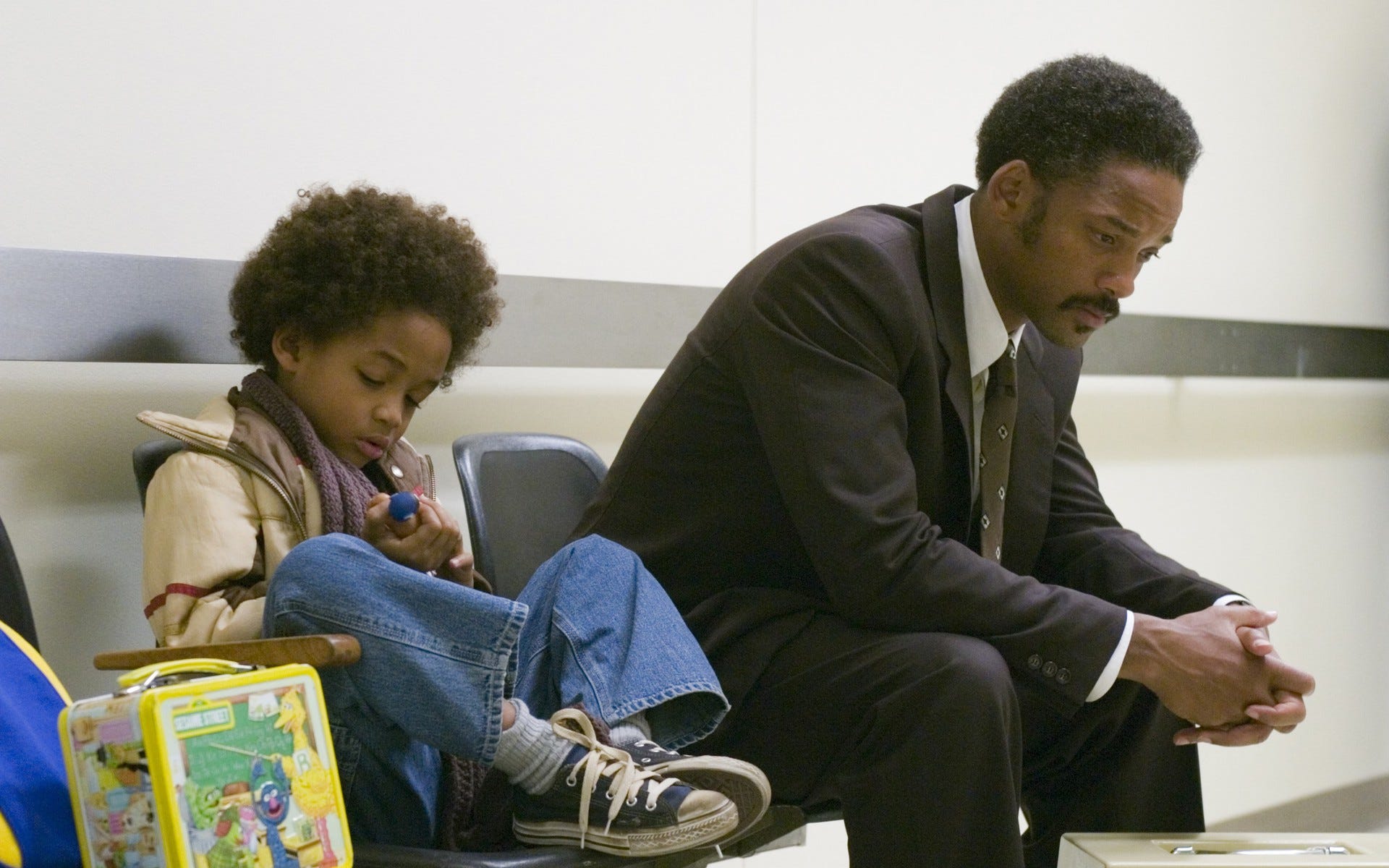
The Pursuit of Happyness: Few films capture the individual toll of unemployment and lack of economic opportunity as well as the 2006 drama The Pursuit of Happyness. Based upon the autobiography of stockbroker Chris Gardner, the film relates a tale of one man's journey from poverty to prosperity. The film begins with Gardner struggling to make ends meet meet selling medical scanners that most hospitals deem an unnecessary luxury. Despite his best efforts he, his wife, Linda, and their young son, Christopher, continue to live a 'hand to mouth' existence. Their financial struggles strain the couple's marriage until Linda finally walks out, leaving Chris to raise his son alone. As Chris' finances continue to deteriorate he and Christopher face eviction and finally homelessness. When Chris is offered an internship at prestigious brokerage firm Dean Witter Reynolds he recognizes the unpaid position for the opportunity that it is. Through the ensuing months he is determined to prove himself as both an employee and a father as he struggles to balance his work and family responsibilities, all while navigating life in the shelter system. Although the film ultimately reaches a triumphant ending, it never shies away from the all too real trials that Chris and his son faced, and that millions continue to face today. Throughout the film the script emphasizes the damaging effects of poverty upon the characters' lifestyles and relationships. For example, although Chris and Linda were shown to enjoy a loving, happy, relationship early in their marriage years of financial instability ultimately drive the couple to a bitter divorce. Similarly, the film aptly highlights the ways in which Chris' lack of economic opportunity leads him into a downward spiral that ultimately culminates in his being evicted and forced to stay in one of the city's overcrowded homeless shelters. The film's depiction of poverty's effect upon children is particularly poignant as it unflinchingly shows the ways in which the struggles of one generation inevitably carry on to impact the next generation. Some critics have contended that the film places too high of an emphasis upon Chris' pursuit of wealth, but those critics have missed the point of the film. While Chris' journey does include his struggle to earn an income in order to provide a healthy and stable life for his son, his success is not one that can be measured in dollars and cents. Instead, his success is best measured in the opportunities that he was able to obtain for both himself and his son. At one point in the film Chris tells his son, "Don't ever let anybody tell you that you can't do something...You got a dream you gotta' protect it. If you want something go get it. Period". In the midst of economic shutdown local, state, and national governments are in fact telling businesses and workers that they cannot pursue their professional goals, protect their dreams, or even do their jobs. As Chris notes throughout the film the Declaration of Independence does not guarantee happiness, but it does designate the pursuit of happiness as an unalienable right to all Americans. By keeping the economy shut down leaders are also shutting down the most crucial rights of citizens to liberty and the pursuit of happiness.
Well said, Madam
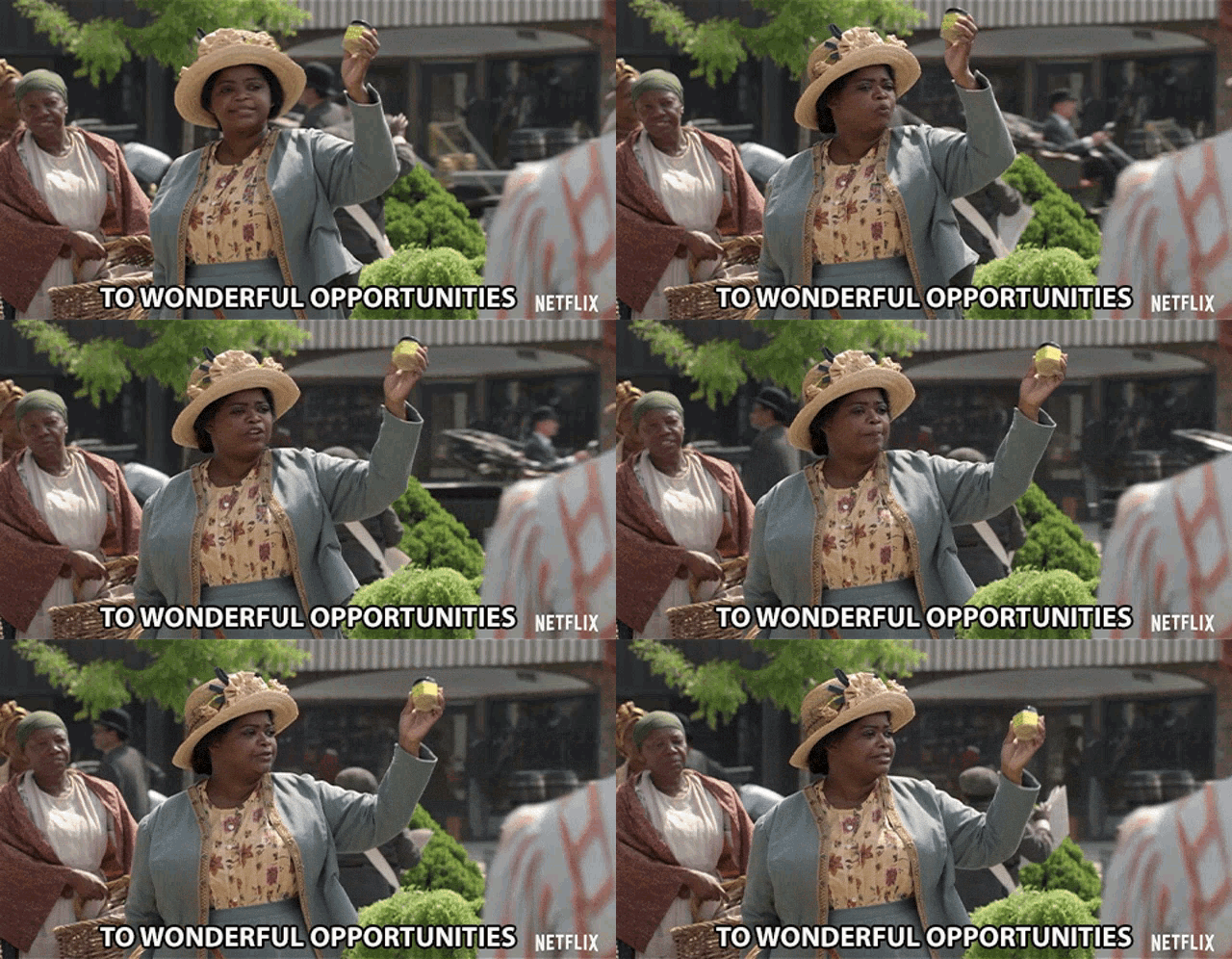
Self-Made: Netflix's recently released miniseries Self-Made tells the larger than life tale of hair-care tycoon Madam C.J. Walker and shows us all how one person's dream can benefit an entire community. Born the child of slaves in 1867, orphaned at age seven, and widowed by age 20 Sarah Walker's beginnings were rife with strife and struggle. Her story is not one of tragedy, however, but instead one of incredible triumph as she rose to not only become one of America's first female self-made millionaires, but also a shining example of philanthropy and political activism. The series depicts the ways in which Walker's entry-level job in a local salon allowed her to leave her back-breaking job as a laundress behind and still provide for herself and her daughter. The series then shows how her entrance into the beauty industry renewed her confidence and sense of purpose. Even more significantly, this position also gave her the vital inspiration to embark upon her own career manufacturing hair care products to other women of color. She then began what would ultimately become more than just a business; the Madam C.J. Walker hair-care empire. Rather than merely concentrate upon profits and expansion, Walker constantly sought ways to use her business to give back to her community. Initially, she sought to provide other women of color with employment opportunities that would help them to escape poverty and provide them with employment options beyond domestic work. As her success grew, however, she recognized the ways in which her public role as a businesswoman could be used as a political platform. She then began using her business as a means to advocate for civil rights and women's suffrage, while donating her profits to the anti-lynching movement and educational organizations . Over one hundred years after her company was founded Sarah Walker's story remains a remarkable tale of the ways in which doing well allows us to also do good. Today businesses continue to follow Walker's example and serve the community at large, but they cannot do so if they are not permitted to open. Reopening businesses will revive communities so that together we can not only survive but thrive both during this pandemic and long after the last cases are reported.
What would you do if you were told that you had just thirty days left to live? In the Dallas Buyers Club Ron Woodruff is faced with that very question when he is diagnosed with AIDS. Although his diagnosis is functionally a death sentence, Woodruff refuses to accept defeat and begins what will prove to be the fight of his life as he embarks upon a battle against cultural stigmas, medical bureaucracy, and his illness. His real life efforts ultimately allowed him to live seven years-2,525 days longer than his original thirty day prognosis-before he succumbed to AIDS related complications in 1992 and helped pave the way for today's "right to try" laws.
The story begins in 1985 with Woodruff enjoying a risky lifestyle of riding bulls, snorting cocaine, and hiring prostitutes. His entire world screeches to a halt, however, when he consults a doctor regarding his persistent cough and fainting episodes and learns that he is not only HIV positive, but is suffering from AIDS. Desperate for more time, he arranges to illegally buy the experimental drug AZT after he is deemed too ill to take part in a clinical trial. When AZT proves toxic to his immune system, however, he learns of other drugs being touted as potential cures around the world which are not available in the US. With the help a disgraced doctor he then begins smuggling these alternative treatments into the US. When his symptoms begin to improve he realizes the lucrative potential of his new venture and begins selling treatments to other desperate AIDS patients, beginning what becomes known as the Dallas Buyers Club. Through this enterprise he offers his fellow AIDS sufferers "all the drugs you could want" in exchange for the hefty price of $400 per month. While his motives are initially strictly financial, as time goes on he witnesses the ways in which the regulations of the FDA and the medical establishment are inflicting almost as much damage on patients as the virus itself. He then springs into action and embarks upon a one-man crusade to secure patients' rights to have a say in their own treatment.
Dallas Buyers Club is a film that is every bit as unconventional, innovative, and ultimately empowering as the man and movement that inspired it. The film perfectly captures the anxiety, desperation, and despair that permeated the atmosphere of the AIDS crisis with an unflinching honesty. Through its portrayal of Woodruff's struggle to treat his illness the film also raises vital ethical questions about modern medicine. Throughout the film, Woodruff and his associates are treated as criminals for trying to have a say in their own treatment, and essentially told that the medical establishment know best. As the story unfolds, however, his interactions with physicians and members of the medical and pharmaceutical industries consistently indicate otherwise. When he is first diagnosed with AIDS he is told that he has thirty days to live and instructed to "get your affairs in order" rather than provided with information about his illness or any alternative to passively accepting death. Similarly, when he raises concerns about AZT's toxicity his claims are dismissed in spite of the FDA and NIH's corroborating data. It is only when he travels to Mexico and receives treatment at the underground clinic of Dr. Vass that Woodruff is provided with what he needs to fight his illness; knowledge and hope. Throughout the film, the so-called experts characterize Woodruff as a reckless outlaw and even go so far as to refer to him as "a common drug dealer", but as he bluntly reminds them, it is these same experts who are knowingly providing terminally ill people with drugs that have the potential to cause irreparable harm. Even the judge presiding over his lawsuit against the FDA agrees that "If a person has been found to be terminally ill they ought to be able to take just about anything that they feel will help" before lamenting, "But that's not the law" when he is ultimately forced to rule in favor of the FDA. Ron Woodruff's struggles to determine his own treatment highlight the ways in which the pharmaceutical industry and government bureaucracy have all too often placed profits and prestige above patient welfare and denied countless people the right to maintain control over their own lives and bodies. While in recent years "compassionate use" or "right to try laws" have been implemented which allow terminally ill patients greater agency in their own treatments, these laws still require patients to obtain approval of their physician, the FDA, the company producing the drug, and their physician's institution. Although it has been nearly thirty years since his passing, Woodruff's story remains strikingly relevant as the debate over experimental drugs to treat COVID-19 rages, with patients once again caught in the political and bureaucratic crossfire.
The film transports viewers back to the height of the AIDS crisis thanks to the superb work of its cast. Jennifer Garner exudes girl next door charm in her portrayal of conflicted physician Eve Saks and makes a perfect foil to Denis O'Hare's callous Dr. Sevard. Jared Leto is a revelation in his nearly unrecognizable performance as Ron's unlikely business partner, drug addicted transgender AIDS patient Rayon. Leto's performance goes beyond his physical transformation, which is impressive enough, as he fully embodies Rayon with wit, world weariness, and aching vulnerability. Matthew McConaughey is a force of nature as Woodruff, combining his signature southern charm with a cool charisma worthy of Paul Newman and a vital, poignant, desperation. In his hands Woodruff's journey from self-absorbed bigot to renegade activist avoids typical cinema cliches and acts as an apt tribute to the man behind the movement.
In its depiction of Ron Woodruff's life and legacy Dallas Buyers Club relates a story that is nothing short of inspiring. Through its equal parts gritty and intelligent script the film aptly portrays the devastation that was the AIDS pandemic while raising moral and ethical questions that remain strikingly topical in today's health crisis. The uniformly superb work of the film's cast brings Woodruff and his colorful cohorts to vivid life and pays fitting tribute to the millions who were and continue to be impacted by HIV. For must see viewing join Matthew McConaughey and Jared Leto in the Dallas Buyers Club.