Thursday, September 29, 2016

Do Horror films help American's cope with their fears (PART II)

Confessions of a Film Junkie: Do Horror films help American’s cope with their fears? (PART II)

By Brian Cotnoir


     I wrote an article a little over two years about whether or not it can be said that Horror films help American’s cope with their real life fears.  I talked about how since the earliest days of films that some American’s rely on Horror films to help cope with their fears.  I briefly touched upon Horror movies reflecting the fears of people of the late 90’s and early 2000’s, but I really didn’t get into that much detail, and so seeing as it seems like the whole country is in some form of turmoil I decided that I would take this opportunity to write a follow up to that article.             
So right before 9/11 there weren’t many quality Horror movies out there.  Sure there were films like “Scream”, “The Others”, and “The Sixth Sense” which, that were wildly successful, and “Deep Blue Sea”, which walked the line between Horror and Adventure.  We also had Tim Burton’s “Sleepy Hollow” which was marketed as Horror, but in all actuality was more campy horror, than actual horror.  And then we had really bad films like “I Know what you did Last Summer”, “Jeepers Creepers” and the remake of “The Haunting”.  But amongst all of those films the one Horror film of the 90’s that stood above all of them was, “The Blair Witch Project”.   I was only 10 years old at the time of the release so I didn’t see it until much later when it was out on video, but I remember people talking about it.  Some said it was the “Scariest Movie since The Exorcist”, and that it was “going to revolutionize the film industry”.  While, I never found “The Blair Witch Project” to be all that good or even scary, there’s no doubt that this film had a major effect on how Horror films would be made and marketed for years to come (but I’ll get into that a little bit later).                 
     Then that fateful day happened; September 11, 2001, to this date the most devastating act of terrorism ever inflicted upon this country.  Thousands of lives lost, millions of people’s lives turned completely upside down, it was the scariest thing ever seen, and it was being broadcasted to billions of people all around the world on live TV.  For a brief time the scariest thing people saw wasn’t a Violent Slasher movie being shown in theaters it was images of terrorists attacking people, and scenes of bloody conflict and combat being shown on the 6 o’clock news.  Reality had once again become the scariest thing in the world, and it was during this time that we introduced to new styles and types of horror films.                                               

During this time, with the Internet becoming more and more widely accessible to people in the world, we began to gain excess to films from foreign markets.  During the years that followed the 9/11 attacks we began to see in an influx of Asian Horror films like “Ringu” and “Jun-on”, which would be remade for American audiences with an American cast under the names “The Ring” and “The Grudge”.  For Many Americans these films were our first real introduction to Asian cinema, and let’s be honest at this point in the world the only thing most American’s new about Asian Culture was “Chinese” food and Anime.  These films were great because not a lot was really known about Asian culture and so we were able to get some exposure to Asian horror films which presented with stuff to fear that we’ve never seen before.  Foreign Horror has truly flourished in the U.S. in the past decade and we’ve gotten many great horror films from overseas such as Sweden’s “Let the Right One In” (which was made into “Let Me In” by America two years later), Norway’s “Dead Snow”, Australia’s “The Babadook”, South Korea’s “Thirst”, and Iran’s “A Girl Walks Home Alone at Night”.  Foreign Horror takes risks that most American studios never would attempt.  Before films like “Ringu”, no American studio would make a film about a VHS tape that will cause you to die if you watch it.  And films like “Let the Right One In”, “Thirst”, and “A Girl Walks Home Alone at Night”, deviate away from the typical Victorian Vampire story of Aristocratic love and sensuality and focus more on how a vampire survives and functions in today’s world.  It’s something entirely unique.                                           

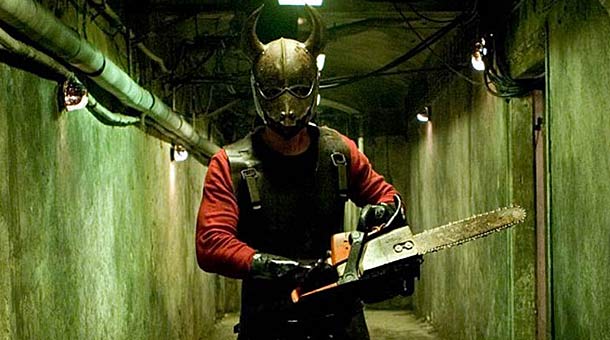
    Meanwhile, in America at this same time, when studios weren’t doing their own versions of popular foreign Horror, they were trying to find new ways to shock and terrify us.  During these times we saw a rise in Splatter Films (or “Torture Porn” as it’s sometimes called).  Film’s like James Wan’s “Saw” and Eli Roth’s “Hostel” became notorious for their bloody violence and gory imagery, and they became these sort of “I-Dare-you-to- see-this-film” kind of movies; especially “Hostel”.  You see a big thing that most American’s had to come to terms with—in the years following the 9/11 attacks—was realizing that a lot of people actually hated American’s.  “Hostel” was a film about spoiled young American’s who go overseas looking for sex and good times and end up getting kidnapped and sold to bitter European’s who’d love to torture and kill young deserving Americans.  Some of these films served almost as a warning to not travel abroad for fear that you will be attacked and killed by angry foreigners for the sole fact that you are an American.  Why do we watch these kinds of films and more importantly why do we enjoy these films? I know for me personally, I enjoy these films because I like seeing people get what they deserve.  I don’t think it’s because I’m sadistic, but rather it’s helping me cope with my own fears.  Let’s be perfectly honest, Paxton and his friends from “Hostel” aren’t really all that likable, so it’s hard for me to feel sympathetic towards them when they’re being tortured.  The college environmental group in “The Green Inferno” (another film by Roth) is so despisingly despicable because they’re masquerading behind a cause for their own personal gains and not because they actually want to make a difference.  They’re so unlikable, that I’m actually cheering for the cannibals in this film.  Even all the violence in the highly controversial “A Serbian Film” is justifiable.  Milos has been lied to, manipulated, and tortured by Vukmir, so it’s only fitting that he kills him in one of the most violent ways imaginable.  It’s because we like to see these bad and unlikable character get punished that we are able to let go of our own fears.   We’re not scared because it’s the main characters in these films that we feel relatable too, but rather the killers in the film we often relate too because we imagine ourselves as them and not the victims.                           

Now, I’m going to go back to “The Blair Witch Project”.  Now this wasn’t the first “found footage” Horror film ever made, but this was the film that showed studios a way to make a cheap—but still frightening—horror movie.  You see “The Blair Witch Project” had one major advantage over most films; it had the allure of a “I Dare you To See it” film and had a new form of media to market it; the internet.  The makers of “The Blair Witch Project” used the internet to promote their film and help spread the message and myth of it to help it reach a wider audience.  It was these filmmaking techniques and marketing strategy that would pave way for another found footage series to find success.  Oren Peli’s “Paranormal Activity” truly ushered in the age of the Found Footage Horror film in Hollywood.  Like the “The Blair Witch Project”, the marketing for “Paranormal Activity” was solely a viral marketing campaign.  The first time I heard about this film was from my best friend who heard it from her older brother who lived in California.  He saw the film in theaters and then told us we had to see it, when it came around.  It wasn’t showing in any theaters in Boston at the time (near where we went to school) and when we tried finding out more about it on-line found the website where you could request that it be shown in a theater near you.  To our excitement, “Paranormal Activity” came to Boston theaters and we were absolutely blown away by it.  Once again, like “The Blair Witch Project”, “Paranormal Activity” sparked many debates amongst its viewers about whether the film was real or not. The success of “Paranormal Activity” sparked the demand for sequel films, prequel films, spin-off’s and countless copycat films by other studios hoping to cash in on the found footage popularity genre. Even today some studios are still making Found Footage Horror films, even though by now most of us are fully aware that they are fake.  So why do so many people keep going to see them?                            Well going back to the 9/11 discussion, we saw thousands of people killed on live TV right before our very eyes.  Look at all the violent attacks that we’ve see reported on the news the past several years; The Sandy Hook Elementary School massacre, the Boston Marathon Bombing, The Charleston Church Shooting, the Pulse Night Club shooting in Orlando, and many other horrific acts of violence.  With all those tragic and horrifying things happening in the real world today, how can anybody be afraid of a Horror movie about a fictional serial slasher, or a vampire, or even aliens?  It’s not scary to some because it’s not real.  We see terrifying things in real life on the news every day and I think that it’s because found Footage Horror films have the illusion of appearing like the events on camera are actually happening that makes them more frightening to some people.  The special effects don’t look like some big-budget CGI work, they look like they’re actually happening.  I think some people honestly, want to believe these films are real.  I think everyone knows someone who believed for years that some found footages films were real.  I think there is a good possibility that some people want to believe these films are real so they can be more afraid of something than what’s actually happening in the world today.                                              
    Whether you agree with me, or you think I have no clue what I’m talking about, there is no denying that Horror films have changed greatly in the 15 years since 9/11.  Without even realizing it, the industry has completely changed how we make, market, and view Horror films.  I wonder what will be in store for Horror films in the years to come.

Tuesday, September 27, 2016

Classics: A Review of Pan's Labyrinth By Lauren Ennis

Fairy-tales are one of childhood’s most time honored and universal traditions. It is through these tales that children are exposed to the traditions of the past while learning vital lessons for their present. Although these tales are aimed children, they often contain moral messages that carry even more resonance as children reach adulthood. In the 2007 drama Pan’s Labyrinth, the traditional fairy tale is used to weave a surreal story that serves as a historical allegory, as the fairy tale daydreams of an imaginative girl are used to highlight the all too real horrors of her life in post-Civil War Spain.
One thing's for sure; it can't be any worse than life out there...

The story begins with ten year old Ofelia (Ivana Baquero) and her recently remarried and now pregnant mother, Carmen (Ariadna Gil), arriving at their new home in the Spanish countryside to join Ofelia’s stepfather, Captain Vidal (Sergi Lopez). While Carmen insists that the remarriage was the best decision for the entire family, Ofelia quickly learns otherwise when she meets her stepfather, who proves to be far more ruthless and terrifying than any of the fictional monsters in her books. A loyal devotee of Franco’s fascist regime, Vidal takes a sadistic pleasure in hunting down and exterminating the remaining remnants of the republican rebels. Although he runs his household with the same tyrannical zeal as his regiment, Carmen remains convinced that life with her new husband is still a better alternative to the merciless streets of post-war Spain. As a result, Ofelia’s only true ally in her new home is kind but resilient housekeeper Mercedes (Maribel Verdu), who leads a double life as a rebel spy by feeding information to the resistance group led by her brother. Surrounded by fear and violence, Ofelia retreats to the fantastic world of her fairy tales, reimagining herself and those around her as characters in an epic quest.

 Released in Spain in 2006, Pan’s Labyrinth was met with almost universal acclaim across the globe. While the film’s broad appeal is surprising considering its historical subject matter, the electrifying performances and breathtaking effects successfully bring both the gritty reality of fascist Spain and the surreal world of Ofelia’s imagination to vibrant life.  In its many depictions of post-war Spain the film portrays the poverty and violence that comprised life under Franco with an unflinching realism that draws viewers into Ofelia’s harsh reality. Similarly, the film also keeps viewers engaged in her fictional journey through spectacular effects that bring the characters and obstacles that she encounters to life with by turns mystifying and horrifying detail. The cast turn in uniformly superb performances, as they successfully weave both tales. Ariadna Gil is appropriately world weary as the defeated Carmen and her resignation stands in excellent contrast to the determined idealism that Alex Angulo brings to republican agent Doctor Ferreiro. Maribel Verdu captures the steely resilience and nurturing kindness of Mercedes in a way that ensures that she remains a three dimensional character rather than a heroic symbol. Similarly Sergi Lopez portrays the vile Captain Vidal with a pathos that ensures he remains a realistic, if despicable, person rather than a caricature of a villain. Even amongst an immensely talented adult cast, Ivana Baquero steals the film as she captures Ofelia’s waif-like innocence and maturity that belies her years. Baquero infuses her performance with an intelligence, depth, and nuance that many an adult actress could learn, and lends an essential  authenticity to both of Ofelia’s storylines.
Remember kids, its not polite to stare

While the story is brought to life through a combination of excellent performances and dazzling special effects, the key to the film’s worldwide success lies largely in its ability to tell that story on two levels with equal depth and nuance. The scenes involving Ofelia’s daily life resonate on both a personal and political level as each of its characters clash over their conflicting vision of a better life, and more crucially a better Spain. For example, to Vidal and his men their sadistic behavior is entirely justifiable as a means to achieving a unified nation. Similarly, to Mercedes and her fellow rebels, their defiance of the fascist government is part of a heroic effort to regain Spain’s freedom. Finally for war-weary Carmen, like so many others in post-war Spain, the only option is to resign herself to the new regime and leave the ideals and memories of the past behind. It is through this interaction of characters across both the social and political spectrum that director Guillermo del Toro successfully explores the political and social unrest that fueled the Spanish Civil War and lingered after the fascist Nationalists claimed victory. Meanwhile, Ofelia follows the example of the adults around her by seeking her own vision of a better world, albeit one that exists entirely in her mind. On the surface, the merging of this complex historical drama with a children’s fantasy would seem an odd fit at best and absurd at worst. In del Toro’s skilled hands, however, the two tales work together to form a more complex and emotionally resonant whole as the horrors of Ofelia’s daily struggles to survive fuel her imaginary quest. Although the monsters and obstacles that she faces throughout her fantastic journey cleverly echo those that she encounters in reality, the defining aspect of her imaginary journey is its end goal; to achieve redemption for herself and those around her. In this way, her imaginary struggle directly mirrors that of Spain as a nation coming to terms with a bloody past and uncertain future and serves as a reminder of the high cost of war.


Historical drama, fantasy, and political allegory are just a few phrases to describe the intricate maze that is Pan’s Labyrinth. Through its combined superb cast, visionary special effects, and captivating script the film tells of a nation engulfed in the turmoil of poverty and war and a young girl’s struggle to create her own light amidst the darkness surrounding her. For a journey into the psyche of the human mind, as well as into one of the most complex eras in modern history, look no further than the twists and turns of Pan’s Labyrinth.
A girl and her best friend; her imagination

Sunday, September 11, 2016

Classics: A Review of Justified By Lauren Ennis

One of America’s most beloved and enduring genres is also one of the most uniquely American genres; the western. With its emphasis upon individualism, self-sufficiency, lawless societies, and frontier justice, the western encompasses some of the most crucial values and conflicts that still confront American society. While the western is often characterized by its historical setting, the grittiness, isolation, and complex morals of the genre hold just as much, if not even more, resonance in a modern setting. In the series Justified, the adventures of modern day US Marshal Raylan Givens reminds us that there is still plenty of America beyond the west to be won and a place for frontier justice among the frontiers of modern urban America.
Will the real outlaw please stand up?

The Story: The story begins with US Marshal Raylan Givens (Timothy Olyphant) entering a deadly confrontation with a Miami drug lord that is fittingly portrayed as a modern-day wild west style duel. Despite Raylan’s insistence that the shooting was justified, his superiors are tired of his hair-trigger habits and send him to work in the crime and drug infested Lexington, Kentucky, under whose jurisdiction Raylan’s hometown of Harlan falls. Upon reaching Kentucky, Raylan is introduced to the staff who make up the local marshal’s office including his boss and eventual mentor Art Mullen (Nick Searcy), cynical ex-Iraq War sniper Tim Gutterson (Jacob Pitts), and the ever professional Rachel Brooks (Erica Tazel). For his first assignment, Raylan is immediately forced to return to Harlan, where his personal and professional lives intersect in ways that force him to face the many demons from his troubled past.

Season one largely focuses upon Raylan’s efforts to take down the ruthless Crowder crime family after he is assigned to protect battered wife Ava Crowder (Joelle Carter) following her murder of her abusive husband Bowman. Raylan is drawn even further into the twisted world of the Crowder’s when Ava’s brother in law, sociopath Boyd Crowder (Walton Goggins), begins his own reign of terror and Raylan learns of the debt his mentally unstable father owes to the Crowders. Season two follows Raylan’s attempt to bring the formidable Bennett crime family, led by equal parts charismatic and deadly matriarch Mags Bennett (Margo Martindale), to justice, while Boyd struggles to remain on the right side of the law in the wake of his disillusionment with the rest of the Crowder clan. Season three lends a unique approach to the story as both Boyd and Raylan are pitted against vicious Detroit gangster Robert Quarles (Neal McDonough), who has come to Kentucky in an effort to expand the territory of the Tonin mafia family. Season four expands the show’s narrative by changing gears once again as Boyd and Ava race against Raylan and the marshals in trying to locate DB Cooper-esque fugitive Drew Thompson, and the millions that Thompson is reported to possess. Season five returns to the show’s familiar format with the Crowe family of Florida becoming enemies of both Boyd and Raylan as they seek to muscle in on the local drug trade. Season six brings the diverse elements of the show full circle as the ongoing rivalry between Raylan and Boyd reaches an explosive climax set against the backdrop of corrupt politics, criminal machinations, and treacherous personal relationships.
Southern belles shoot first and ask questions later

The Characters: One of the series’ greatest draws is its colorful and complex cast of characters. At first glance, Raylan appears to be just another in a long line of television anti-heroes who make their mark by breaking all the rules. Upon closer observation, however, beneath his cocky grin and swagger Raylan is revealed to be a tormented man haunted by a past that he is struggling to separate himself from. Similarly, Boyd is first introduced as just another criminal in Harlan only to be later revealed to be one of the most complicated and formidable foes Raylan faces. In many ways it is difficult for viewers to know the ‘real’ Boyd Crowder as he alternates between moments of genuine compassion and tenderness in his personal relationships and the consistent calculated ruthlessness that he displays in his criminal dealings. Ava displays similar complexity as she evolves from one of Raylan’s many love interests to an independent, but conflicted, heroine as she navigates Harlan’s underworld. Beyond its central trio, the show features a full cast of wily and magnetic characters, all of whom bring their own brand of humor, grit, and southern charm. Standouts among the vast cast of villains include Ma Barker style matriarch, Mags, folksy barbeque king turned corrupt community leader, Ellstin Limehouse (Mykelti Williamson), sadistic gangster Robert Quarles (Neal McDonough), charmingly cunning mob widow Katherine Hale (Mary Steenburgen), and quietly menacing drug lord Avery Markham (Sam Elliott). The fun doesn’t stop at the bad guys, however, with laughs and thrills coming courtesy of such characters as teen orphan turned budding queen pin Loretta McCready (Kaitlyn Dever), Raylan’s sassy and fickle ex-wife, Wynona (Natalie Zea), lovably dim-witted prostitute Ellen May (Abby Miller), and Barney Fife-esque bumbling constable Bob Sweeney (Patton Oswalt). With these delightfully wicked and always entertaining characters, as well as many others, at the helm Justified is a by turns comic and bleak journey into the underbelly of modern America that viewers won’t want to return from.


What Kept Me Watching: Perhaps Justified’s greatest asset is its inability to neatly fit into the confines of one genre. While it’s lone lawman in a lawless land harkens back to the greatest of classic westerns, its focus upon modern crime also brings the series into the territory of a police procedural. Just when viewers think that they have the good and bad guys straight, however, the story takes a turn that brings the narrative’s already murky morality into question in the tradition of the best in film noir. Finally the rivalry between conflicted hero Raylan and the ever one step ahead Boyd is directly reminiscent of such legendary cinema rivalries as Batman and the Joker and Rocky Balboa and Apollo Creed. Through its ability to seamlessly shift from one genre to another the series is able to provide something for fans of classic and modern drama alike, while adding its own unique edge. Adapted from a short story written by master crime author and screenwriter Elmore Leonard (who also acted as script advisor), Justified features some of the snappiest dialogue and sharpest characterizations on television and features plots that will keep you firmly planted on the edge of your seat. For a journey into the modern American frontier, take a ticket to Harlan, Kentucky and rest assured the trip will be Justified
Welcome to Harlan County

Sunday, August 28, 2016

Classics: A Review of The King and I By Lauren Ennis

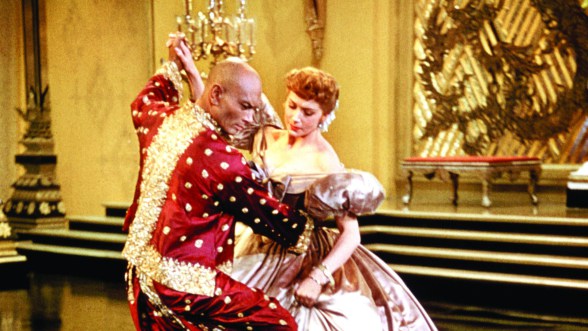
The weather is growing cooler and the nights are growing shorter; that can mean only one thing; autumn is on its way and summer vacation is reaching its inevitable end. In keeping with the season, this week’s review will focus upon a tale of teachers and students that reminds us that we all could learn a lesson or two no matter who we are or how old we grow. Combining the elements of the biography and musical genres, 1956’s The King and I is a sumptuous feast for the senses that is also a study of cultural and gender clashes. Featuring powerhouse performances from Yul Brynner and Deborah Kerr, and an iconic Rogers and Hammerstein score The King and I is an example of the movie musical at its most entertaining, which continues to teach and inspire audiences sixty years after its release.
Pure movie magic

The story begins in 1860’s Bangkok as English widow Anna Leonowens (Kerr) arrives to assume her new position teaching English to the many children of King Mongkut (Brynner). Although she experiences culture shock upon entering Siam, willful Anna refuses to adhere to the local cultural norms, which demand subservience from women. She even goes so far as to argue with the king when he breaks the terms of her contract and refuses to provide her with a residence adjoining the palace for her and her young son (Rex Thompson). Despite her initial difficulties, however, Anna becomes devoted to her work and teaches both the royal children and harem lessons that extend far beyond the facts and figures of the classroom. Although the two continue to question the mores and values of each other’s cultures Anna and the King form a begrudging respect for one another as she comes to admire his progressive ambitions and he learns to appreciate her independence and intelligence. As time goes on, Anna even takes on the role of advisor to the King as he consults her in his efforts to modernize his nation. The delicate balance between teacher and ruler is put to the ultimate test, however, when the pair is faced with conflicts both foreign and domestic that bring their fundamental differences to the fore.

What makes The King and I stand out amongst other classic musicals is its approach to its subject matter, which seemed to defy every standard set for the genre. While many musicals of the era utilized plot merely as an excuse to showcase elaborate song and dance numbers, the music in The King and I serves as a means of enhancing the story, which remains the film’s central focus. Similarly the characters are all written with depth and sympathy in a way that avoids the black and white characterizations that were so prevalent in early musicals. Furthermore, the film avoids genre clichés by focusing upon the complicated friendship between Anna and the King, rather than forcing the pair into a forced, conventional Hollywood romance and finishes on a hopeful, but still far from happy, ending.

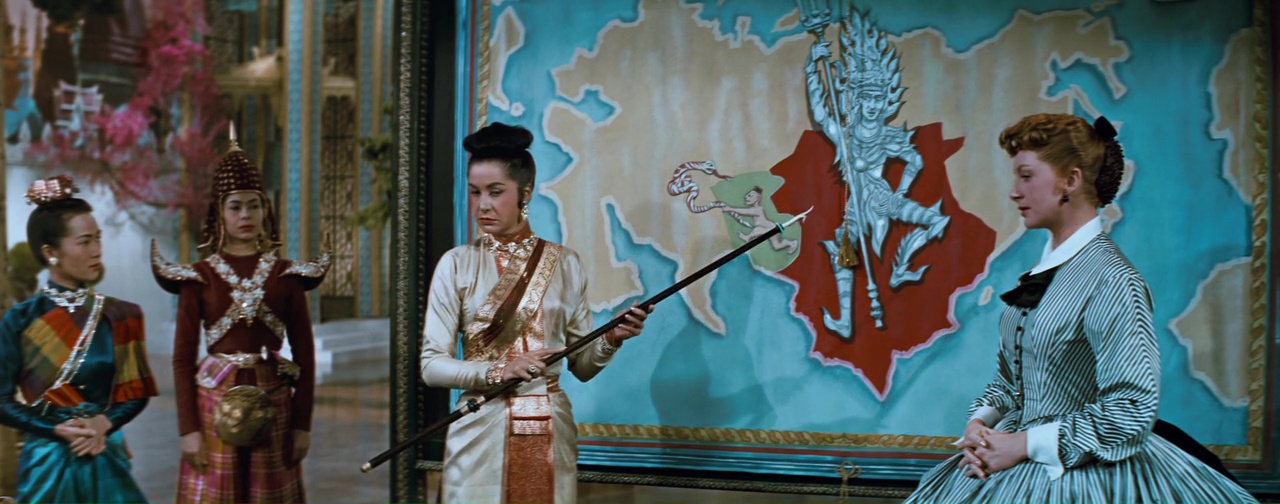
Perhaps the film’s greatest strength, however, is its emphasis upon education as a means of both personal and societal growth. Throughout the film, the King declares his intention that Siam become a modern nation and wisely recognizes that education is the best means of achieving this goal. The film takes this notion a step further by showing that in spite of their many cultural differences, the one thing that truly sets modern and independent Anna apart from her tradition-bound charges is her education, which has provided her with the knowledge and skills to build a life for herself as a single mother in a distant land. Similarly the King’s tireless efforts to further educate himself remind us that learning is a lifelong necessity and the crucial starting point in changing the world around us. While the film does not feature the genre staples of inner city youth, test scores, or administrative interference, The King and I is a testament to the enduring value of education in all its forms.
This map illustrates our need for updated school supplies

The film’s star studded cast ensured a successful transition from stage to screen by breathing fresh life into the well-known tale. Rita Moreno brings a haunted quality to her unwilling concubine in her portrayal of Tuptim’s isolation as a foreign consort in the King’s harem. Similarly Carlos Rivas infuses Lun Tha with depth as he highlights the dignitary’s conflict between his love for Tuptim and his duty to his country. Terry Saunders lends warmth and intelligence to her role as the King’s head wife, Lady Thiang and Martin Benson is appropriately formidable as the King’s traditionally-minded right hand man, Kralahome. Deborah Kerr’s Anna is a woman who is truly ahead of her time as she infuses Anna with an endearing combination of warmth, dignity, charm, and ferocity that leave little wonder as to how she is able to win over the King, his children, and his harem while still remaining true to herself. Yul Brynner is in short made for his role as King Mongkut as he brings the role he originated on Broadway to life in all of its nuance and complexity. Even as he continually expresses views and makes decisions that are in direct contrast with today’s mores and social advancements, Brynner’s charisma, ironic humor, and commanding presence ensure that his King remains a character audiences can’t help but root for.


Through its combination of signature songs, captivating performances and thought provoking story, The King and I is a prime example of the magic of the movie musical. Through its dazzling costumes and sets the film successfully transports viewers to 1860’s Bangkok, while its layered performances and well written script ensure that there is plenty for modern audiences to ponder and relate to. With a score including such Broadway standards as “Getting to Know You”, “Hello Young Lovers”, and “Shall We Dance” the film will be sure to have you tapping your toes before the final credits role. Through its musical journey into the importance of education The King and I is a film that belongs on every teacher and student’s back to school list. 
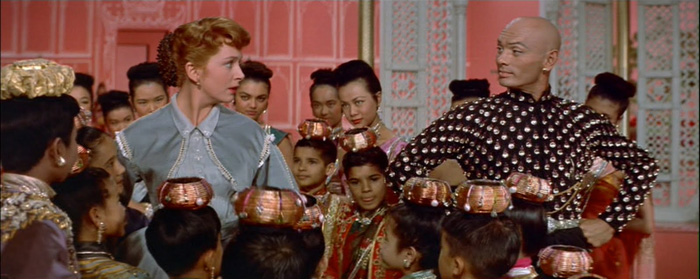
106 children...and you thought modern classes were too big!

Classics: A Review of The King and I By Lauren Ennis

The weather is growing cooler and the nights are growing shorter; that can mean only one thing; autumn is on its way and summer vacation is reaching its inevitable end. In keeping with the season, this week’s review will focus upon a tale of teachers and students that reminds us that we all could learn a lesson or two no matter who we are or how old we grow. Combining the elements of the biography and musical genres, 1956’s The King and I is a sumptuous feast for the senses that is also a study of cultural and gender clashes. Featuring powerhouse performances from Yul Brynner and Deborah Kerr, and an iconic Rogers and Hammerstein score The King and I is an example of the movie musical at its most entertaining, which continues to teach and inspire audiences sixty years after its release.
Pure movie magic

The story begins in 1860’s Bangkok as English widow Anna Leonowens (Kerr) arrives to assume her new position teaching English to the many children of King Mongkut (Brynner). Although she experiences culture shock upon entering Siam, willful Anna refuses to adhere to the local cultural norms, which demand subservience from women. She even goes so far as to argue with the king when he breaks the terms of her contract and refuses to provide her with a residence adjoining the palace for her and her young son (Rex Thompson). Despite her initial difficulties, however, Anna becomes devoted to her work and teaches both the royal children and harem lessons that extend far beyond the facts and figures of the classroom. Although the two continue to question the mores and values of each other’s cultures Anna and the King form a begrudging respect for one another as she comes to admire his progressive ambitions and he learns to appreciate her independence and intelligence. As time goes on, Anna even takes on the role of advisor to the King as he consults her in his efforts to modernize his nation. The delicate balance between teacher and ruler is put to the ultimate test, however, when the pair is faced with conflicts both foreign and domestic that bring their fundamental differences to the fore.

What makes The King and I stand out amongst other classic musicals is its approach to its subject matter, which seemed to defy every standard set for the genre. While many musicals of the era utilized plot merely as an excuse to showcase elaborate song and dance numbers, the music in The King and I serves as a means of enhancing the story, which remains the film’s central focus. Similarly the characters are all written with depth and sympathy in a way that avoids the black and white characterizations that were so prevalent in early musicals. Furthermore, the film avoids genre clichés by focusing upon the complicated friendship between Anna and the King, rather than forcing the pair into a forced, conventional Hollywood romance and finishes on a hopeful, but still far from happy, ending.

Perhaps the film’s greatest strength, however, is its emphasis upon education as a means of both personal and societal growth. Throughout the film, the King declares his intention that Siam become a modern nation and wisely recognizes that education is the best means of achieving this goal. The film takes this notion a step further by showing that in spite of their many cultural differences, the one thing that truly sets modern and independent Anna apart from her tradition-bound charges is her education, which has provided her with the knowledge and skills to build a life for herself as a single mother in a distant land. Similarly the King’s tireless efforts to further educate himself remind us that learning is a lifelong necessity and the crucial starting point in changing the world around us. While the film does not feature the genre staples of inner city youth, test scores, or administrative interference, The King and I is a testament to the enduring value of education in all its forms.
This map illustrates our need for updated school supplies

The film’s star studded cast ensured a successful transition from stage to screen by breathing fresh life into the well-known tale. Rita Moreno brings a haunted quality to her unwilling concubine in her portrayal of Tuptim’s isolation as a foreign consort in the King’s harem. Similarly Carlos Rivas infuses Lun Tha with depth as he highlights the dignitary’s conflict between his love for Tuptim and his duty to his country. Terry Saunders lends warmth and intelligence to her role as the King’s head wife, Lady Thiang and Martin Benson is appropriately formidable as the King’s traditionally-minded right hand man, Kralahome. Deborah Kerr’s Anna is a woman who is truly ahead of her time as she infuses Anna with an endearing combination of warmth, dignity, charm, and ferocity that leave little wonder as to how she is able to win over the King, his children, and his harem while still remaining true to herself. Yul Brynner is in short made for his role as King Mongkut as he brings the role he originated on Broadway to life in all of its nuance and complexity. Even as he continually expresses views and makes decisions that are in direct contrast with today’s mores and social advancements, Brynner’s charisma, ironic humor, and commanding presence ensure that his King remains a character audiences can’t help but root for.


Through its combination of signature songs, captivating performances and thought provoking story, The King and I is a prime example of the magic of the movie musical. Through its dazzling costumes and sets the film successfully transports viewers to 1860’s Bangkok, while its layered performances and well written script ensure that there is plenty for modern audiences to ponder and relate to. With a score including such Broadway standards as “Getting to Know You”, “Hello Young Lovers”, and “Shall We Dance” the film will be sure to have you tapping your toes before the final credits role. Through its musical journey into the importance of education The King and I is a film that belongs on every teacher and student’s back to school list. 
106 children...and you thought modern classes were too big!

Sunday, August 14, 2016

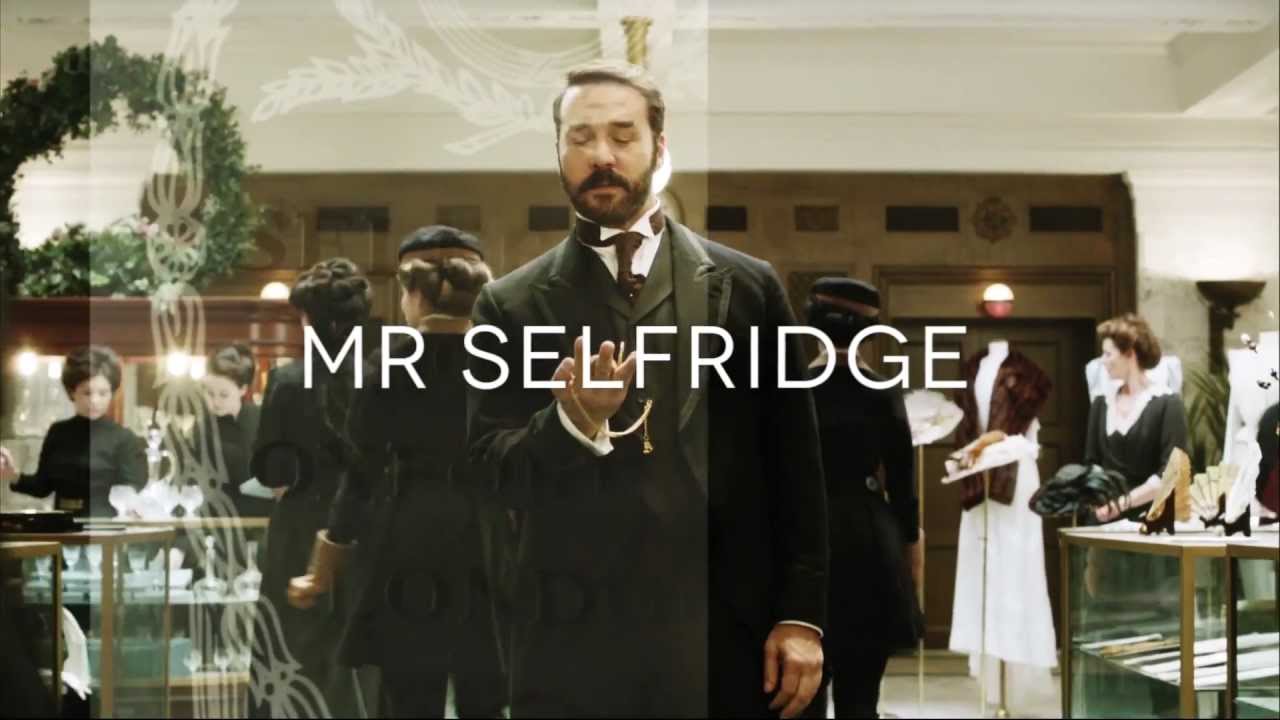
Classics: A Review of Mr. Selfridge By Lauren Ennis

Some stories are tailor-made for film with a clear story arc that can neatly can be contained within just a few hours of cinema. Some stories, however, are so complex and epic in scale that they require entire seasons to contain all of the drama, suspense, and passion that they entail. Such is the case with the biography of larger than life turn of the century entrepreneur Harry Gordon Selfridge, the man who started a retail revolution when he founded the London department store Selfridge’s. Beginning in 1909 and ending in 1929, the ITV series Mr. Selfridge chronicles the personal struggles and social changes that swept through Selfridge’s doors as the Edwardian era gave way to the upheaval of World War I and eventually the fast living modernism of the 1920’s. Part biography, part historical drama, Mr Selfridge is as enticing as an upscale window display and as addictive as shopping itself.
One day at work you won't want to be late for

The Story: The story begins in 1909 as Harry Selfridge (Jeremy Piven) arrives in London driven by a singular ambition; to open the world’s greatest department store. He soon encounters resistance, however, when his prospective partner withdraws funding and London society rejects his project as an affront to the status quo. Eventually, however, he enlists the aid of savvy reporter Frank Edwards (Samuel West) and shrewd socialite Lady Mae (Katherine Kelly) to land the new backer and public interest needed to take Selfridge’s from an innovative idea to a glittering reality. Through the dogged persistence of Harry and his talented staff, the store opens to a successful debut that marks the beginning of his reign as the ‘Earl of Oxford Street’. As season one continues, he continues to build upon the store’s success, even as his personal life becomes a casualty to his taste for life in the fast lane, and his staff face a host of personal crises of their own. Season two begins on an uncertain note five years later as Harry struggles to rebuild his family while he and his staff brace for the arrival of World War I. Season three picks up at the end of the war and chronicles the myriad of ways in which the aftermath of war continues to impact the store in the wake of trauma and loss. Season four brings the story full circle as Harry struggles to hold onto his crumbling empire as personal loss drives him to revert to his old, self-destructive, habits. From political upheaval and sweeping social change to personal triumphs and tragedies the series relates a historical tale that still manages to be cutting edge in true Selfridge’s fashion.
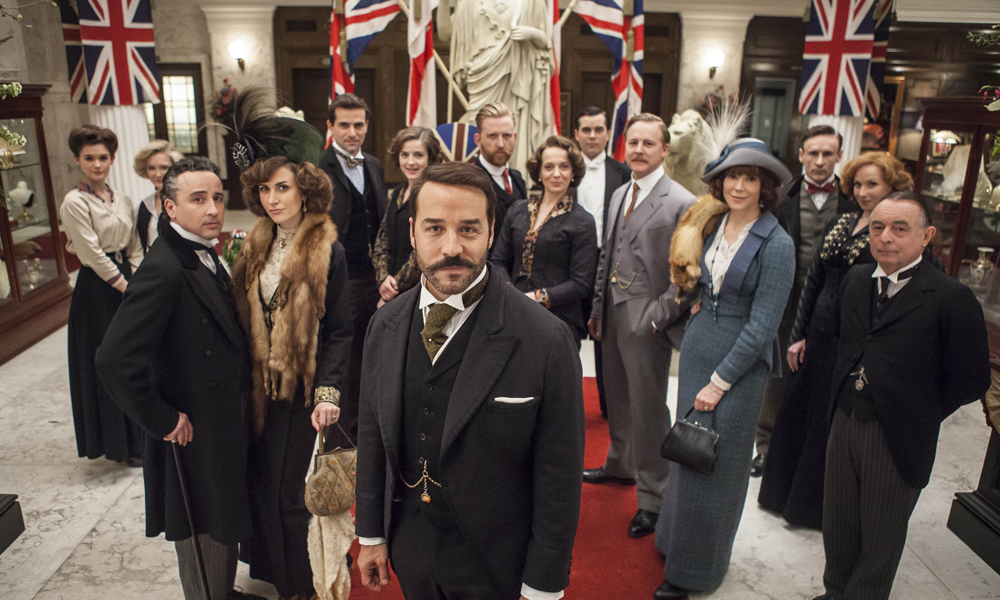
You can't keep a good cast down

The Characters: Although the plot contains plenty of twists and turns, the thing that kept this reviewer consistently coming back for more was the rich characterizations of each member of the Selfridge family and the store’s staff. Jeremy Piven superbly brings the larger than life Harry Selfridge to life with all of his complexities and demons fully intact. Through Piven’s performance, Harry is revealed to be a man who is always on the lookout for the next big thing in both his professional and personal life, as he continually gambles on new store innovations as well as with his family life. Even as he indulges in such vices as gambling, drinking, and extramarital dalliances, however, he remains a character audiences will root for as he grows and learns from his many mistakes and displays a consistent generosity, kindness, and understanding. Although the series is set in the male dominated world of early twentieth century commerce, one of Mr. Selfridge’s greatest assets is its array of independent and strong-minded female characters. At the start of the series, Harry’s wife, Rose (Frances O’Connor), seems to embody the ideals of her era as she tirelessly supports her husband and devotes herself to their children. As season one continues, however, she becomes discontented with her relegated role in the background and steadily gains her own voice as she becomes determined to take control of her marriage and live life on her own terms. Similarly, shop-girl Agnes Towler (Aisling Loftus) begins the series as a meek, put-upon, heroine worthy of Dickens, but eventually develops a quiet strength and confidence that take her to the coveted role of head of the store’s art department. Agnes’ first boss, outwardly formidable but inwardly insecure head of accessories Josie Mardel (Amanda Abbington), also evolves in fascinating but believable ways as she develops a sense of self-worth beyond her career and allows herself to live her tumultuous life to the fullest. Even mean-girl Kitty (Amy Beth Hayes) develops as the series continues until she ends season four as a still strong-willed, but more mature and compassionate woman. While the ever sassy Lady Mae is already a force to be reckoned with in the show’s pilot episode, insights into her difficult personal life reveal her to be a far more complex and multifaceted character than her early one-liner’s would suggest, and make her one of the series’ most watchable characters. The show’s excellent writing isn’t restricted to its female characters, however, as its male cast continue to evolve right along with their female counterparts. Agnes’ love interest, waiter Victor Colleano (Trystan Gravelle), begins the series as an ambitious and charming young man, but hardens as his eyes are opened by a series of heartbreaks and the traumas of World War I. Similarly, Harry’s best friend and head of display, dashing Henri Leclair (Gregory Fitoussi), is humbled after his attempt to start over in New York fails and is eventually forced to redefine himself after returning from World War I with PTSD. Even Agnes’ childishly naïve younger brother, George (Calum Callaghan), develops his own inner strength and remains true to his moral code as he works both in and out of the store and becomes a family man. Perhaps the male character who undergoes the most drastic change is the stodgy chief of staff Roger Grove (Tom Goodman-Hill), as he finally begins to see life beyond black and white and recognize his own failings as he learns to forgive the faults of others.


The Relevance: British television is full of period pieces, but Mr. Selfridge stands out amongst these popular and critically acclaimed programs through its ability to be startlingly relevant even as it remains true to history. From the struggle between work and family, to addiction, to domestic violence, to racial and gender tensions, Mr. Selfridge regularly explores social issues that hold just as much relevance today as when Selfridge’s first opened. Through a combination of razor sharp writing, rich performances, dazzling sets, and vibrant costuming, Mr. Selfridge ensure's that 20th century London is every bit as entertaining as a Selfridge’s promotion. At once innovative and classically timeless, Mr. Selfridge is an apt tribute to its namesake character and the store he founded.
Far more than just pretty faces

Tuesday, August 2, 2016

Classics: A Review of Meet Joe Black By Lauren Ennis

The late 1990’s and early 2000’s saw the rise of a unique cinematic trend as Hollywood turned to both the scientific and spiritual. With conspiracy theories surrounding the impending start of a new millennium and new technology all around society began to look both inward and upward as it considered the future that awaited. It was this thirst for all things both futuristic and mystic that led to the release of such films as Vanilla Sky, The Matrix, and What Dreams May Come, among many others. One film that particularly stands out in this niche genre is the 1998 fantasy drama Meet Joe Black, which through its mediations upon life and death, maintains a timelessness that continues to resonate long after Y2K has been reduced to a mere footnote in pop culture.
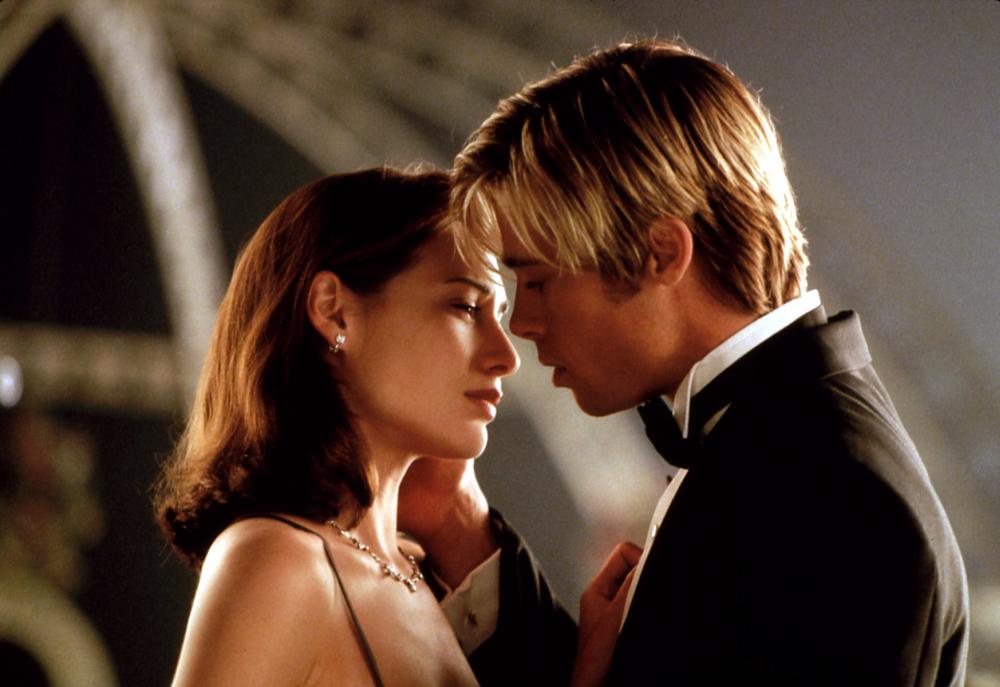
Leave it to Brad Pitt to make death look dreamy

The story begins with media tycoon Bill Parrish (Anthony Hopkins) preparing for his sixty-fifth birthday. After a glimpse into his wealthy lifestyle, successful business, and happy family life viewers are left with the impression that Bill is a man who truly has it all, until a fateful visit from a stranger who is truly out of this realm. One night a young man arrives at the Parrish mansion and is revealed to be none other than Death himself (Brad Pitt), but rather than fulfill his duty and collect Bill’s soul then and there Death offers Bill a proposition that even the shrewd mogul can’t refuse. The deal at first appears simple enough; Bill will offer his guest a tour of life as a mortal and in exchange Death will postpone Bill’s demise. As Death, renamed Joe Black, becomes acclimated to mortal life, however, he also becomes subject to human emotions as he develops an unusual friendship with Bill and faces temptation in the form of Bill’s beautiful physician daughter, Susan (Clarie Forlani). Eventually, Joe and Bill face the unknown together as Joe experiences life in all its complications and wonder for the first time, while Bill simultaneously comes to terms with leaving those same experiences behind.

Although the film’s entire premise and central character are built around death, Meet Joe the Black is at its heart a cinematic celebration of life. While a long line of uplifting and inspirational films preceded its release, the film stands apart through its unique approach in examining life from Death’s perspective. For new arrival Joe, every day is an adventure into the unknown, as even such simple acts as crossing the street and eating peanut butter inspire child-like wonder in him. As a result, the film reminds audiences of thrills and surprises that we are so often too busy to notice. While Joe’s enthusiasm encourages a fresh perspective upon the joys of everyday living, Bill’s struggle to come to terms with his inevitable death reminds viewers of just how fleeting and precious those simple moments are. Despite the consistent focus upon life’s many highs, however, death literally remains a consistent presence, with Joe serving as a sobering reminder of the inevitable end that awaits all of us. Yet even in its exploration of the characters’ attempts to cope with loss the film approaches its subject matter with a sensitivity and optimism that ultimately highlights the value of a life well lived and a death approached with dignity.
A deadly dynamic duo

The film’s uniformly superb cast brings the unusual story to life in a way that keeps the largely fantastic plot grounded. Marcia Gay Harden and Jeffrey Tambor lend apt support in their by turns comic and heartfelt performances as Bill’s older, extroverted, daughter, Allison, and her inept, but desperate to please husband, Quince. Jake Weber is appropriately smarmy as Susan’s boyfriend and Bill’s treacherous second-in-command, Drew without ever falling into stock villain caricature.  In Clarie Forlani’s hands Susan is more than an idealized love interest as she captures the vulnerability beneath Susan’s self-sufficient exterior. Even in the midst of these excellent performances, however, the film belongs to Brad Pitt and Anthony Hopkins. Pitt shows he is capable of far more than pretty boy charm as his Joe evolves from socially awkward and almost childlike during his early scenes to a fully fleshed and conflicted character as the film reaches its finish. Similarly Hopkins makes the most of what easily could have been a one-note role as the warm-hearted everyman, and infuses Bill with a pathos that keeps audiences invested in his journey long after we learn what its outcome will be.


A fantasy with real life resonance, Meet Joe Black is a lesson in life and love for every generation. The film’s excellent script approaches an infamously dark subject with a light touch and relays a first rate fantasy while still telling an all too human tale. The superb cast breathes fresh life into age old questions concerning life and death and lends depth and poignancy to each performances. Philosophical journey, romantic drama, and fantasy, are just a few of the things you’ll find when you Meet Joe Black
Don't fear the reaper...