Sunday, April 24, 2016

Classics: A Review of Purple Rain By Lauren Ennis

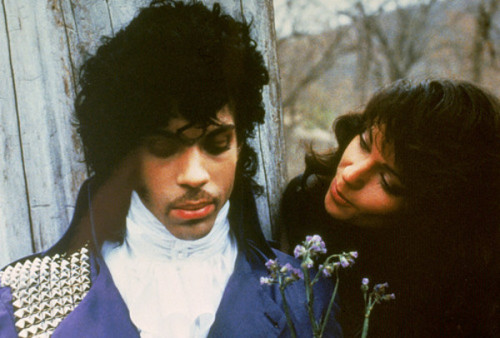
On Thursday, April 28, 2016 music legend Prince Rogers Nelson, better known as Prince, died at age 57. In a career that spanned three decades, seven Grammy Awards, an Oscar, and five number one hits, Prince redefined popular music through his blend of pop, funk, R&B, and synth rock, which formed a completely unique and instantly recognizable signature sound. While best known for his work as a singer, songwriter, and composer, Prince also worked in film and starred in three films, two of which he also directed. Dearly beloved, these words have been gathered here in tribute to Prince’s film debut in which he showcased a performance that was the stuff of music legend; 1984’s rock musical Purple Rain.
Purple is officially the new black

The film begins with an everyman protagonist known only as ‘The Kid’ (Prince) struggling to start a music career amidst a troubled personal life. In order to escape his disruptive home life with his parents (Clarence Williams III and Olga Karlatos), whose relationship with both The Kid and each other is fraught with emotional and physical abuse, he throws himself into his music. Despite his devotion to his work, however, he continues to encounter personal conflict as his band becomes plagued with in-fighting and several members consider quitting to join other groups. The Kid’s primary musical rival, Morris (Morris Day), makes note of the band’s difficulties and quickly takes advantage of them by pitching a new girl-group to their club’s management and offering the position of lead singer to The Kid’s girlfriend, Apollonia (Apollonia Kotero). She reluctantly accepts the offer, which brings the already frustrated Kid to his breaking point, leading him to lash out at her in abusive behavior that directly mirrors the same abuse he has been trying to escape at home. Faced with continuing his downward spiral and repeating the very cycle of abuse he has been trying to rise above, The Kid is forced to re-evaluate his work, his relationships, and ultimately himself in a coming of age story for the MTV generation.

After numerous stale efforts throughout the 1960’s and 1970’s, the movie musical threatened to become an outdated genre, but Purple Rain’s balance of tradition and innovation brought the classic genre into the modern era. While the movie musical had been an established genre since the early days of talking pictures, movie musicals had largely shied away from rock and modern pop, instead utilizing the tried and true show-tunes that the genre had been built upon.  Purple Rain reinvigorated the movie musical by not only incorporating, but framing an entire film around, modern rock and pop at their most electrifying. In many ways the film, which features several concert-worthy performances to propel its story, is as much a feature-length music video as it is a movie musical. For example, while most musicals feature characters spontaneously breaking out into song, Purple Rain restricts its musical interludes to the confines of the nightclub in which The Kid’s band performs, keeping the film firmly rooted in reality. Despite its restricted use of music, the film contains musical performances that, with their use of choreography, costuming, and sound that were all on the cutting edge of pop culture at the time of the film’s release would have fit in perfectly on an MTV special. Despite its trend-setting performances, the film’s coming of age story remains a universal one that could have been used in movie musicals of previous decades. Timelessly compelling and an apt glimpse into 1980’s pop culture, Purple Rain is truly a musical for the ages.
Chicks dig brooding

While the supporting performers all lend apt portrayals, Purple Rain truly belongs to Prince, whose charisma, showmanship, and passion carry the film. While The Kid is an everyman audiences can root for, he is also deeply flawed and displays dark tendencies. As a result, it was crucial that the role be filled by an actor who possessed the daring to fully portray The Kid without whitewashing his demons, but who could also balance the character’s faults with enough likability to ensure that audiences would remain invested in his story. In Prince’s hands, The Kid is a truly complex character whose struggle to break the cycle of his family’s abuse and make good in music is one that is at once deeply personal and wholly universal. While he holds his own as a leading man, the pop legend’s musical skills remain front and center as he brings The Kid’s story to life through a series of classic performances that have become the stuff of music history. With Prince at the helm, Purple Rain is a film experience that audiences continue to bask in today.


Singer, songwriter, composer, musician, actor, and director Prince was a true artist whose work was never less than revolutionary. In the three decades since he first appeared on the scene, music has continued to evolve and change as movements and trends have come and gone, but Prince’s influence remains a constant. In the wake of his death, his work remains a celebration of and testament to the sensuality, spirituality, and creativity that make up this thing called life. Next time that elevator tries to bring you down, look no further than Prince and his Purple Rain to give you the lift that you need.

All bow before the Prince

Sunday, April 10, 2016

Classics: Three Cheers for Bette Davis By Lauren Ennis

The Kim Carnes song “Bette Davis Eyes” goes, “she’ll tease you, she’ll unease you all the better just to please you…”. Over the course of a career that lasted over five decades, Bette Davis did more than tease, unease, and please; she set the standard for what film acting at its most complex and fierce could be. From her Hollywood start as a budding ingĂ©nue to her final films in which she became known as a scene-stealing character-actress, Davis blazed a fiery trail not just for women, but for all actors seeking to create meaningful and challenging roles. In honor of what would have been her 108th birthday on April 5th, I will be discussing three of my favorite performances from Davis’ legendary career.
A romance that will leave you relieved to be single

Of Human Bondage: Described by Life Magazine as “the best performance ever recorded on the screen by a U.S. actress” Davis’ portrayal of wanton and malicious Mildred Rogers in Of Human Bondage was nothing short of explosive. The film follows the destructive on and off relationship between a mild-mannered medical student (Leslie Howard) and the vulgar tearoom waitress with whom he develops a masochistic obsession. After twenty films in which she was relegated to supporting roles and underwritten b-movie heroines Davis was finally able to show her full untapped dramatic range as the by turns seductive and abusive Mildred. While other actresses, including established stars Katherine Hepburn and Irene Dunne, refused to take on such an unsympathetic role, Davis rightly saw the part as an ample opportunity to make her dramatic mark. Despite the success of her performance, however, she was only nominated for a Best Actress Oscar after the Academy allowed ‘write in’ votes following public backlash when Davis was denied a nomination. She ultimately lost the Oscar to Claudette Colbert for her performance in It Happened One Night, but was awarded the title of Best Actress following year in what many deemed compensation for her earlier loss. Although her role as Mildred failed to earn her Oscar glory, Davis had passed the ultimate acting test with flying colors, and Warner Brothers took notice. Following the film’s successful release, the studio continued casting her in a series of increasingly complex and daring roles that built the foundation of her landmark career.
Bringing sexy back...to 1914

Mr. Skeffington: This 1944 drama was released during Davis’ heyday when she reigned as the queen of Warner Brothers’ studios. The film is both a cautionary tale warning of the dangers of vanity and an unlikely love story. The story begins at the eve of World War I, with Boston beauty Fanny Trellis keeping a string of suitors at her beck and call and leading a life of luxury that her family’s depleted funds can no longer afford. She is forced to face reality, however, when she learns that to provide for their mutually lavish lifestyle her brother, Trippy, has turned to embezzling from his wealthy employer, Job Skeffington. In order to sway Job from turning Trippy in to the police, Fanny schemes to court and eventually marries the awkward, but devoted, Job. Ashamed that his actions forced his sister into a marriage of convenience to the much older and Jewish Job, Trippy enlists in World War I and is later killed in battle. After Trippy’s death, Fanny quickly loses interest in her husband and embarks upon a series of affairs, which eventually leads to the couple’s divorce. Years later, however, war and illness take their toll on both Fanny and Job, and the two are eventually reunited in time to learn that it is love rather than physical feature’s that constitutes true beauty.  Although billed as a ‘women’s weepie’ or melodrama, the film is actually an apt portrait of a fading society and those who clung to it even in the face of social change. Throughout the film, Fanny insists upon behaving like the high society belle she was before the war, even as her society is changed beyond recognition. It is this inability to see beyond the superficial world of her of her youth that eventually costs Fanny her marriage, her relationship with her daughter, and nearly costs her a last chance at love. Similarly, the film indicts the prejudices of Fanny’s world by highlighting both the absurdities and dangers of anti-semitism and the ways in which the anti-semitism already present prior to World War I eventually fueled the Holocaust during World War II. While not considered one of Old Hollywood’s great beauties, Davis is flawless in her role as a spoiled and vain debutante and leaves little wonder as to how she is able to charm her many conquests. The film once again demonstrates Davis’ willingness to put glamour aside as she portrays a character who not only ages over the course of several decades, but one who is also robbed of her beauty after contracting diphtheria. Over the course of the film she portrays Fanny as she ages from society belle, to sensual vamp, to humbled woman with equal aplomb and increasing nuance. While Fanny may not be “the most beautiful girl” that she is so often described as in the film, Davis’ portrayal of her is nothing less than a thing of beauty.
You feelin' lucky, punk?

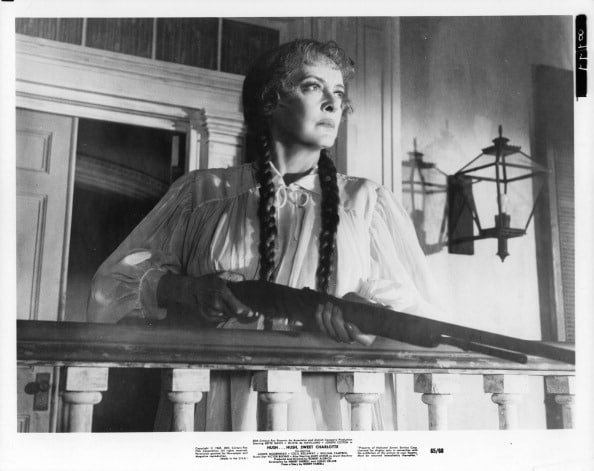
Hush, Hush, Sweet Charlotte: Released towards the end of her career, during which time she transitioned to a successful character-actress and horror maven, Hush…Hush, Sweet Charlotte is proof that even as she passed middle age Davis still had ‘it’. The film is a homage to southern gothic tales, which chronicles the ways in which an unsolved murder and the scandal that led to it have affected the citizens of a small southern town decades later. At the start of the film, local debutante Charlotte Hollis plans to run away with her married lover, John (Bruce Dern), only to later discover that he has been murdered. Although no one is ever charged with the crime, the locals suspect Charlotte and she becomes a social pariah. Decades later she has become a recluse and is struggling to keep her family estate, even as the threat of eminent domain looms. Just as it seems as though things cannot get any worse for the tormented Charlotte, a visit from her glamorous cousin (Olivia de Havilland) unearths old family resentments and secrets, which threaten the very fabric of Charlotte’s fragile existence. As the story twists and turns, questions arise concerning John’s murder and Charlotte’s sanity, which propel the film into the suspense of classic horror. The film is a prime example of Davis at her most fierce as she captures the defiance, pride, and anguish that define the character of Charlotte Hollis. While the horror plot is at times outrageous, Davis is always perfectly believable as she shows her character’s descent into a world in which not everything is as it seems, and makes audiences root for her even as evidence keeps building for why we shouldn’t. Although horror is a genre often maligned for lacking depth and complexity, Davis’ performance contains every bit as much nuance and gravitas as any of her earlier roles, and in many ways calls for even more skill. Thanks to her superb performance, even in the midst of an array of thrills and chills the film’s core remains its heroine’s entirely human struggle for understanding and empathy in the face of social ostracism.  For a horror film that truly is a scream, look no further than Hush…Hush, Sweet Charlotte.

Monday, March 28, 2016

Classics: A Review of The Song of Bernadette By Lauren Ennis

In a world fraught with conflict, violence, illness, and injustice is can seem almost impossible to maintain faith. During this Easter week which comes in the wake of another week in which terror and violence dominated the headlines, it is crucial to remember that there is more to life than the negativity that seems to permeate our world. This week’s review tells the story of an ordinary girl who through an extraordinary experience learns the full meaning and power of faith even as she endures public scrutiny, ridicule, and physical illness; 1943’s The Song of Bernadette. While the story focuses upon the true story of a girl who would become a Catholic saint, the film’s message of hope and faith extends beyond the confines of any one religion or belief system and has something to offer viewers of all walks of life.
Who could interrogate that face?!

The story begins with recently unemployed miller Francois Soubirous (Roman Bonhen) forced by poverty to take odd jobs and live in the city jail with his wife and children, including teenage daughter Bernadette (Jennifer Jones). Although a dedicated student, Bernadette’s poor health forces her to frequently miss school, earning her the ire of her stern teacher, Sister Vauzous (Gladys Cooper). One afternoon while walking home from school she takes a short-cut by wading through the contaminated river by the Massabaille caves and sees a vision of a lady surrounded by light and holding a pearl rosary. She tells her friends of her ethereal encounter, but makes them swear to keep her story a secret. Of course, the secret is too tempting for teenage girls not to divulge, and soon Bernadette is the talk of the town. All this furor draws the attention of local and church authorities who repeatedly question her story and attempt to dissuade her from visiting the cave. Despite protests from her parents and ridicule from the townsfolk, Bernadette continues to visit the cave and follow the lady’s often cryptic instructions. Eventually she begins to win over her critics when her prophecy of a spring appearing at the cave comes true as not only does a spring appear but the spring actually seems to possess miraculous healing capabilities. While the spring proves a source of healing and inspiration for some, its appearance proves to be just the start of Bernadette’s trials as the church launches an investigation into her claims and rumors swirl that the girl’s visions are either a cry for attention, or a symptom of mental illness brought on by wading through the contaminated river. The ensuing investigation is only the first step in Bernadette’s long and arduous journey to becoming a modern-day saint.

The film manages to be largely faithful to the true story of Bernadette Sobouris and her controversial visions while still maintaining an uplifting message and inspirational themes. Throughout the film, Bernadette is portrayed as an ordinary girl as she balances the familiar responsibilities of school and helping out at home, while still enjoying fun with her friends and a budding romance with a local boy. Noted for her poor health and academic difficulties, the only areas that she seems to truly excel in are her capacity for patience and kindness. Even after she begins seeing visions of the Virgin Mary, Bernadette continues to see herself as an average girl and struggles to maintain an ordinary life in spite of her extraordinary experiences. Through this portrait of a saint as a young woman, the film presents viewers with a surprisingly relateable heroine who serves as an apt reminder of the potential for goodness in us all. Bernadette’s story takes on an even more inspiring aspect in its darkest moments as she steadfastly maintains her faith in herself and her religion in the face first of accusations from church and local officials and later petty jealousy and devastating illness. She continues to face adversity even after she stops seeing the visions and reluctantly gives up all that she knows to enter religious life as a nun, but through it all carries herself with a humbleness and grace that are nothing short of saintly. By the film’s finish, it is not the otherworldly visions that viewers will remember as much as the extraordinarily resilience and inherent goodness of the ordinary girl who witnessed them.
Only the real deal can convert the likes of Vincent Price

While many religious films fall prey to stagey performances that are all atmosphere, The Song of Bernadette remains mesmerizing because of the realism and depth that its cast brings to the film. Gladys Cooper provides excellent insight into the ways in which jealousy can transform even the most devout into hypocrites in her portrayal of Bernadette’s teacher turned Mother Superior at the convent, Sister Vauzous. Over the course of the film, Sister Vauzous evolves from merely stern to outright vicious as she sets out to make Bernadette pay for her own inadequacies. Although likely the last actor most viewers would expect to find in an inspirational religious film, Vincent Price not only fits right into the film, but nearly steals every scene in which he appears. While Price was known for delightfully over the top performances in camp horror classics later in his career, his portrayal of local prosecutor, Dutour, is both understated and layered. His natural approach allows viewers’ insight into the reasonably skeptical official’s conflicted perspective as he experiences a crisis of faith and comes to question whether there might be some truth to the girl’s fantastic story after all. Despite the superb performances surrounding her, the film belongs to Jennifer Jones, whose luminous performance exudes innocence and grace without becoming cloying or grating. Despite the fact that Jones was already a twenty-four year old mother of two, she effortlessly captures the naivete and grace of the adolescent Bernadette with a purity that is truly inspiring.


More than a mere religious tale, The Song of Bernadette is a testament to the hope and goodness that is present in the world even in its darkest hour. Through its combination of a literate script and a talented cast, the film brings the story of the young saint to life without once losing its cinematic appeal. Through its chronicle of a one girl’s miraculous experience, the film reveals the ways in which faith can transform our lives. For a tune that will lift your spirits look no further than the lilting song of Bernadette.
Hail Mary...

Sunday, March 13, 2016

Classics: A Review of Sabrina By Lauren Ennis

From the first fairytales and fables that we hear as children to the novels and films that we enjoy as adults stories contain timeless themes that continue to touch and influence our lives. One such familiar theme is the rags to riches success story that makes up every underdog tale from Cinderella to the modern American dream. One film encompasses this familiar theme is a way that is both an endearing take on a classic and a comment on contemporary life; Sabrina. This 1954 romantic comedy continues to serve equally well as romantic escapism and social satire even decades after its release.
Nobody puts Audrey in the corner!

The story begins as chauffer’s daughter Sabrina Fairchild (Audrey Hepburn) longingly looks on as her father’s employers, the Larrabees, hold their annual summer party. Even though she is preparing to leave for cooking school and start a new life in Paris the next day, Sabrina is consumed with regret that she can never part of the glittering world of the Larrabees and their social set. As the party winds down, she comes upon her long-time crush, playboy David Larrabee (William Holden), in the midst of seducing another woman. Distraught, she impulsively attempts suicide only to be caught and rescued just in time by David’s older brother, staid businessman Linus (Humphrey Bogart). She then leaves for her trip as scheduled and embarks upon a journey of more than mere miles as she acquires a new outlook, self-confidence, and of course cooking skills. By the time that she returns to the Larabee estate two years later she no longer resembles the awkward girl living above the estate garage and is every bit the Parisian sophisticate. Her new persona quickly turns David’s head, putting his impending marriage and the Larrabee business merger depending on that marriage in danger. In order to keep the business and wedding plans in place the Larrabee’s send Linus to distract and ultimately send Sabrina back to Paris. What the Larrabee’s don’t count on, however, is the effect of the charms of the chauffer’s daughter on Linus as well as David.

The film is a rare romantic comedy that works equally well as both a comedy and a romance. Sabrina’s evolution from smitten schoolgirl to confident woman provides an excellent backdrop for her dual romances as she grows out of her infatuation with David in favor of a relationship with the more mature Linus. This same trajectory plays well for laughs with her teenage angst so over-the-top that it serves equally well as both dark comedy and insight into adolescent growing pains. Similarly her interactions with Linus build to a solid romantic foundation with their opposite personalities leaving plenty of opportunity for hijinks. The film also contains a satisfying mix of dry wit and broad comedy with each physical act of comedy such as David’s champagne glass accident matched by equally amusing witticisms courtesy of the sparkling cast of characters.
What a little la vie en rose can do

The exemplary cast carries off the romance and comedy aspects of the script with equal aplomb. William Holden imbues his playboy role with a roguish charm that offers no apologies for David’s shenanigans while leaving little doubt as to why Sabrina is so smitten with him. Humphrey Bogart, best known for moody dramas and thrillers proves himself an apt comedic actor in his portrayal of business savvy, but socially awkward, Linus which lends credibility to both Linus’ reputation as a ruthless tycoon and his sweet interactions with Sabrina. While the cast turns in uniformly excellent performances, the film belongs to Hepburn who is a pure delight in her innocent and effervescent performance as a modern-day Cinderella whose secret weapon is not a glass slipper but a winning personality and self-confidence.


Bubbly, witty, and hopelessly romantic, all these phrases aptly describe both Sabrina and its titular heroine. The film’s combination of heartfelt romance and razor-sharp wit make it a winner with something for audiences of all ages and cinematic tastes. The superb cast bring the script to life with a sparkling wit and genuine emotion that ensures that audiences will root for its happy ending, even while enjoying its sly jabs at social disparity. Light as a moonbeam across a starlit sky and effervescent as a fresh glass of champagne, Sabrina is an example of romantic comedy at its finest.
Who says nice girls finish last?!

Monday, February 29, 2016

Classics: A Review of Frida By Lauren Ennis

Biographies have become one of the most popular and time-honored genres in film through their ability to both inform and inspire audiences in their accounts of the lives extraordinary individuals. Over time, however, the genre has become saturated with formulaic films that echo one another in tales of rags to riches and triumph over adversity that, while inspired by true events, border on clichĂ©. Fortunately, this week’s review avoids the familiar trappings of the modern biography by chronicling the controversial art, political activism, and many loves of one art’s most pioneering women; Mexican surrealist painter Frida Kahlo. The 2002 film Frida effectively chronicles Kahlo’s fascinating life, while also successfully capturing the innovative and radical spirit of her work in a biography that is anything but conventional.
Art imitating life or life imitating art?

The story begins in 1925 as a young Kahlo (Salma Hayek) attends college while pursuing her budding craft as a painter. Her life soon takes a difficult turn, however, when she is critically injured in a trolley accident in which she suffers a broken spinal column, broken pelvis, broken collarbone, and punctured uterus. She defies her doctors’ expectations however, when she not only survives the accident, but through months of painstaking work, is able to walk again. During her recovery, she throws herself into her art, producing a series of complex and unique paintings in which she finds her voice as an emerging artist. It is these paintings that eventually draw the attention of famed muralist and notorious libertine Diego Rivera (Alfred Molina), who helps to promote her work and launch her career as a successful artist. Despite her wariness at his reputation as a womanizer, the two become fast friends as they bond over their shared passions for art and politics, which eventually develops into a tumultuous and fiery romance. The film then chronicles the couple’s controversial work in both art and political activism as they continually break-up and make-up, all the while supporting each other as artists and comrades. Through its insight into both her personal and professional lives the film captures the innovation and rebelliousness that made Kahlo an icon of modern art.

While the film does recount the most significant events in Kahlo’s life, its unique approach allows viewers additional insight into the experiences and unique perspective that fueled her pioneering art. For example, throughout the film, scenes are cut-away to show Kahlo’s impression of an event or character, which then segue into many of her most famous paintings. In this way, the film shows how the world around her influenced her perspective and led to her original approach to painting. The film also provides an unflinching look at her unconventional marriage and the ways in which her often fraught relationship with Rivera impacted her work. While many biographies tend to whitewash the historical figures that they focus upon, Frida presents a three dimensional portrait of Kahlo which includes her flaws and mistakes as well as her triumphs. For instance, rather than portray her as a victim of Rivera’s many infidelities the film makes a point to include the fact that she was aware of his philandering before their marriage and even reveals her own extra-marital indiscretions with both men and women. The film also features insight into the couple’s radical politics through its depiction of Rivera’s controversial Rockefeller Center mural and their mutual efforts to aid fugitive Soviet leader Leon Trotsky (Geoffrey Rush) as he fled Stalin’s assassins. Through this multifaceted depiction of its heroine, the film provides a truly informative and compelling portrait of an artist, as a family member, political activist, wife, and woman.
An icon at work

The uniformly superb cast successfully brings each of their diverse characters to life in such a way as to remind audiences of their significance beyond their impact upon Kahlo’s life and career. Cameo appearances by Antonio Banderas, Edward Norton, and Ashley Judd help place Kahlo’s life within the context of the historical events of her day, while still lending depth to their roles as David Alfaro Siqueiros, Nelson Rockefeller, and Tina Modotti. Patricia Reyes Spindola and Roger Rees bring the complexity of the Kahlo home to life in nuanced performances as Kahlo’s stern mother and supportive father, revealing the ways in which her family encouraged her unconventional path in an era in which women were often relegated to secondary roles. Geoffrey Rush brings wry humor and pathos to his role as the tormented Trotsky, as he portrays the political figure less as a revolutionary icon and more as a man trying to make a difference in the world, leaving viewers with little wonder as to how Kahlo is tempted into embarking upon an affair with him. Mia Maestro and Valeria Golino make excellent foils in their performances as Kahlo’s sweet, but meek, sister, Cristina, and fiery romantic rival turned friend, Lupe. Alfred Molina is a burst of charisma and energy in his portrayal of Rivera, in which he provides viewers with insight into the couple’s unusual relationship and reveals why neither was able to give up on their troubled relationship. Despite the excellent performances surrounding her, the film belongs to Salma Hayek, whose turn as Kahlo highlights her humor, tenderness, determination, insecurities, and loss all with a ferocity worthy of the real Kahlo.


More than just a biography, Frida is a romance, inspirational drama, political exploration, and artistic journey all in one. Through a combination of thorough research and nuanced writing, the script provides a compelling account of an iconic artist and the world that she inhabited. Each of the performances bring an additional level of depth and emotion to the film, making each event in Kahlo’s life resonate, even for viewers already familiar with her story. At her Mexican exhibition in 1954 Rivera described Kahlo’s work as “acid and tender, hard as steel and fine as a butterfly’s wing…loveable as a smile and cruel as the bitterness of life” all these phrases and more could aptly describe Frida.
Life is grand with tequila in hand

Friday, February 19, 2016

A Joint Review of "Contracted Phase II"

Confessions of a Film Junkie: A Joint review of “Contracted Part II”

By: Brian Cotnoir & Mina Rosario

     Hello friends, this week I have been very sick with a chest cold and trying to deal with it the best I can, and while I was dealing with my illness it got me thinking about a film a me and a friend of mine reviewed a while back.  The film was “Contracted” and we both presented our arguments strictly from a Male and Female Perspective, and since the sequel to “Contracted” is available on Netflix, now seemed like the perfect time to review it.  So just kick back as the two of us dive into “Contracted Phase II”.

From the Male Perspective (By Brian Cotnoir)

So “Contracted Phase II” leaves off right where we left our story.  Samantha has been transformed into a zombie and is gunned down by police and Riley—you all remember Riley, right?  You know that dumb guy that was infatuated with Sam in the first film despite not realize that she was CLEARLY a lesbian! And as if that shouldn’t have been a big enough put off to Riley, when he finally does get to have sex with her (despite the fact that she’s falling apart faster than a leper in a blender) contracts the same disease she has, and now we’re pretty much going through the exact same story we saw as the first film, only without the suspense and surprises. Yeah, I found it very difficult to get into the story this time around.  I mean we know everything that’s going to happen already, so what’s the point of continuing to watch.  To me “Contracted Phase II” falls under the category of a “Sequel Remake”; it’s pretty much the same story as the first one, only with a few different twists, and maybe a gender swap in the main characters.  Plus, I made it very clear back when we reviewed the first film that I hated the character Riley, so what makes you think making him the focus of the film is going to hold my attention anymore? And trust me the other supporting characters in the film don’t get any more interesting or likeable than Riley (and that’s REALLY saying something).        
     We also get to see more of BJ in this film; you know, the guys who’s responsible for sexually transmitted disease that infects turns these people into zombies.  Hi Question: If BJ gave Samantha the disease by drugging and raping her in the first film then how come he hasn’t transformed into a zombie either?  How come BJ doesn’t seem effected at all by this disease and yet he’s the one spreading it?  What is BJ’s motivation for doing this?  He briefly mentions he’s doing this to get back at society, but never really goes into detail why!         
    This film is a boring as hell!  It’s the same thing as the first one, only I’m not seeing anything new.  The characters are unlikable, the acting is mundane at best, and the film clearly steals elements from much better films like “Cabin Fever” and “Rosemary’s Baby”.  The only thing they really did to the film was up the blood and gore, that’s really the only thing they did.  Do I think you should see “Contracted Phase II”; I say only if you haven’t seen the first one, other than that you can skip it altogether.  I did not like this film, I will give at a very low 1-out-of-5 stars.

From a Female Perspective: (By Mina Rosario)

Hey readers, remember that really weird Zombie STD movie we reviewed last year? Did you know it has a sequel? “There’s only one way to stop this sexually transmitted zombie disease: Find the source of the outbreak,” is how Netflix chooses to describe “Contracted: Phase II”, and they aren’t wrong. The movie pickups where the first one ended and follows a surviving character in his attempts to thwart the person who started the whole virus from spreading.
Following another three days, the story shadows Riley, the bloke who had the most unfortunate sex scene in the last movie, as he slowly decays while trying to catch the ever dodgy BJ, full name now known as Brent Jaffe. He manages to infect his not-love-interest Harper, Grandmother Margie, and several others before meeting the same Zombie ending as Sam and going for a final blow in a sort of fight scene with Brent Jaffe at the end of the movie.
Now, don’t think this movie is just a dry cut and paste of the last movie. This movie has something the other one didn’t. Zombies. All of the infected who die actually reanimate and do the whole zombie thing. Aside from a couple of particularly gross scenes, the zombie parts keep the audience on their toes, as they start off unexpectedly. This movie also seems to try and add in the occult to it’s roster of going-ons. There’s a particular scene with BJ in the basement of his house where he records himself monologuing about the end is coming, and how plague shall be brought down upon the masses while he has a zombie girl hanging from meat hooks behind him. The whole scene is really the most occult thing aside from him and, possibly some other guy, having “Abaddon” tattooed on the inside of the their middle finger on their right hand. But more on that later.
Overall, this movie was great. I’d even say it was better than the first, at least in terms of plot and acting. The first movie, you may remember from my review, had underlying themes of homophobia, biphobia, and a super strong message of “safe sex or you’re doomed”. While the first two themes may not exist because their are no LGBTAQP+ characters, the safe sex message was significantly weaker this time around. And while all throughout the first movie no character admitted that Sam was raped, Riley flat out says it and it’s such an acknowledgement.
In regards to acting, the zombies were definitely zombies, although a particular lunge by one of the zombies was a tad unbelievable. And the living characters actually felt real. They had a presence and emotion to them, and none of the interactions felt fake or forced, like they did in the first movie. Even the screams of terror and pain were believable and appropriate sounding for the relevant scene. Matt Mercer (Riley) and Anna Lore (Harper) did a fantastic job in the respective roles and I do hope this allows them for future endeavors in their career.
The movie also did well to keep me on my toes for a good portion, however as it neared it’s end it became a little predictable. Once Riley and Harper were taken in for medical treatment from urgent care, you kinda knew how it was gonna go. Harper is going to die, and BJ is going to find Riley. BJ’s had a small twist and reveal, but once he was in the hall and doing his thing, it was pretty clear that Riley would have to get out of his hospital bed to finish BJ as a zombie.

Now, what this movie did, that the first did not, was leave an opening, and desire for, another movie. Now, unless you’re Marvel, most movies that do this do it in such a tacky way that most people groan “but this movie ended so well, why are you dragging it on!” Lemme tell you what this movie did. We see an autopsy in the beginning of the movie and the coroner has a tattoo of the word “ABADDON” on the inside of his middle finger. That’s all we see of him, but with the intimate hand gestures on the corpse, the audience can tell he’s not the kind of guy we’d bring home to Ma and Pa. There’s a second scene where Riley gets drugged and kidnapped. We see a hand with the tattoo hand some random dude money as an apology, and then BJ grabs Riley and dips. When BJ finishes his monologue on Day 5 he says “Abaddon is coming.” Quite the build up, right? Well, it seems this was hidden in the first movie as well. After the necrophilia scene in the morgue we see someone cleaning something out and that tattoo on the same hand and finger. Now listen, I had to look up what Abaddon was and it seems it’s the name of a God of Death, particularly with plagues and locusts, and all the stuff BJ says in his monologue. But how does this lead to another movie and not just a plot hole? Well, if you watch after the first credits scene, and this is gonna be a hell of a spoiler so just skip to the next paragraph if you want, you see someone come down the stairs and BJ in a bed with an oxygen mask thing on his face. The unknown man puts his hand on BJ’s forehead, showing the tattoo, and tells him “Soon my friend, very soon.” I’m sorry, are you in shock? Cause I was in shock, and demand answers.
All-in-all, this was a great movie. There was one inconsistency, but honestly I can write a whole new essay on it. In short, the amount of time between infection, death, and reanimation seems inconsistent, and while I can make excuses for some characters due to age and health, I can’t figure it out for all. But like I said, that’s a whole other essay or better suited for a forum thread discussion. If you’re not looking too hard at the movie, it really isn’t a problem in the slightest, and is hardly noticeable. The acting and development of the story is so engrossing you don’t need to pay attention to the zombie turnout rate. I know I lowballed the last movie with a 2.5/5 stars, but it was really the underlying themes in that last one that killed it for me. I want to give this one a 4.5/5. It’s almost perfect. While I won’t be rewatching the first one, I will rewatch this one. And this one did such a great job I would happily watch a third installment, should it happen.


Theodore Theater's Oscar Pick's!


It has arrived! It’s the time of year when we award the year’s best works in film. The 88th Academy Awards will be held on the 28th of February, at the Dolby Theater, in Hollywood, California with Chris Rock hosting this year’s award show. Before we have the pleasure to watch Hollywood’s biggest and brightest stars be recognized for their work, let us pick which stars we believe will be taking home the coveted gold statue.

Side Note: With the recent news of an Oscars’ boycott due to lack of diversity for this year’s nominations I feel an impulse to voice my opinion on the matter. There surely is a problem with diversity in Hollywood. There is not a problem with diversity at the Academy Awards. I do believe that this year’s nominations are not only valid, but also justified as the year’s best performances. The problem is not with a lack of diversity at this year’s awards, but a lack of diversity in Hollywood films in general. The Academy can only chose from the films put in front of them; it is up to Hollywood to diversify casting and give roles to the best actors available, regardless of race or color.


Best Picture:

Nominees:  
     
1.     The Big Short
2.     Spotlight
3.     The Revenant
4.     Mad Max: Fury Road
5.     Room
6.     The Martian
7.     Bridge Of Spies
8.     Brooklyn

Winner: Spotlight.

            Spotlight is the story of the Boston Globe journalists who researched, wrote, and reported the news of child abuse by Catholic priests in the city of Boston. The film will leave you with a story you are not soon to forget. It is a film that will tug at your emotions and test your opinions. If you haven’t already, go watch this film!


Best Director:

Nominees:

1.     Alejandro G. Inarritu
2.     Adam Mckay
3.     Tom McCarthy
4.     George Miller
5.     Lenny Abrahamson

Winner: Alejandro G. Inarritu

            Yes, I believe it will happen. Alejandro G. Inarritu will look to become only the third director to ever win back-to-back Academy Awards for best director (Tom Ford & Joseph L. Mankiewicz). Inarritu’s The Revenant is visually stunning. Its depictions of the natural world are truly something special. The acting turned in by DiCaprio and Hardy is worthy of a mention. With many scenes throughout the film featuring close ups of the characters, Inarritu brings home a genuine view into a period of time in America that has long been forgotten.


Actor In A Leading Role:

Nominees:

1.     Leonardo DiCaprio
2.     Matt Damon
3.     Bryan Cranston
4.     Michael Fassbender
5.     Eddie Rydmayne

Winner: Leonardo DiCaprio

            Is it the year? Will it finally happen for him? We think so. Leonardo DiCaprio will win his first Academy Award. Though he doesn’t actually have many lines in his role as an outdoorsman in The Revenant. DiCaprio’s facial expressions and body language are enough to hold the audience through the film.


Actress In A Leading Role:

Nominees:

1.     Cate Blanchett
2.     Brie Larson
3.     Jennifer Lawrence
4.     Charlotte Rampling
5.     Saoirse Ronan

Winner: Brie Larson


If you haven’t seen Room, staring Brie Larson please do so immediately. I believe Larson to be the runaway favorite. The haunting story of a young girl who is kidnapped and held against her will as she tries to raise her capture;s son. Larson’s co-star Jacob Trembley was outstanding as well.


Actor In A Supporting Role:

Nominees:

1.     Christian Bale
2.     Tom Hardy
3.     Mark Ruffalo
4.     Mark Rylance
5.     Sylvester Stallone

Winner: Christian Bale

            This will be one of the toughest decisions to be made on award night. Stallone recaptured what made the original Rocky films great in his performance, while Bale and Hardy excelled along side great counter-parts. Ruffalo puts forth his best performance yet in one of the year’s best films. Rylance is also very deserving of a nomination, teaming with Tom Hanks in, Bridge Of Spies.


Actress In A Supporting Role:

Nominees:

1.     Jennifer Jason Leigh
2.     Rooney Mara
3.     Rachel McAdams
4.     Alice Vikander
5.     Kate Winslet


I believe this to be another clear cut winner in Kate Winslet. She plays assistant to the great Steve Jobs, which stars Michael Fassbender. The film revolves around three different periods of time, each on the day of a new Steve Jobs product release. Her character is not one that is seen often throughout the film, but her appearances and interactions with Fassbender are sterling.