Tuesday, September 22, 2015

Classics: A Review of The Barefoot Contessa By Lauren Ennis

We are often warned against judging books by their covers and told to be wary of grass that looks too green on the other side of the fence. Yet, despite having been instilled with these lessons since childhood, we all still fall into the inevitable trap of comparing ourselves, usually negatively, to those around us. This habit, while all too human, serves little purpose but to blind us to the better aspects of our own lives in favor of an ideal that may not be all that it appears. The 1953 drama The Barefoot Contessa perfectly captures both the ease with which we are all too often seduced by appearances and the darkness that can lurk behind even the glossiest of surfaces.
Flamenco; hotter than twerking since 1954

The story begins in flashback as a series of acquaintances and friends gather at the funeral of Hollywood sensation Maria Vargas (Ava Gardner). As the funeral gets underway, each of the men who were closest to Maria reflect upon their relationships with her and her influence upon their lives. With each new reminiscence, however, emerges a new and distinct version of Maria as her publicist (Edmond O’Brien) recalls the glamour girl he promoted, her husband (Rosanno Brazzi) looks back on the woman he loved and lost, and her director (Humphrey Bogart) remembers his much missed friend. At the film’s start Maria’s life of fame, fortune, and luxury seems nothing short of enviable, leaving viewers all the more curious as to the cause of her mysterious death. As the film progresses, however, the layers of makeup and marketing are stripped away until all that remains is the poverty stricken dancer director Harry Dawes first met at a Madrid nightclub. The story eventually takes on a cautionary tone as it is revealed that throughout her life, the people in Maria’s life continually tried to control and manipulate her, and that only in death was the elusive star truly free. By the film’s shocking finale, it revealed that Maria’s glittering life was far from golden despite what the public had been led to believe.  

While Hollywood has chronicled the dangers of its fame machine both before and since the release of The Barefoot Contessa, few films have done so in such a subtle or realistic fashion. Unlike fellow Hollywood tale Sunset Boulevard, which emphasized the excess of life on the big screen, The Barefoot Contessa abandons all histrionics in favor of a deceptively simple tale of one actress’ meteoric rise and tragic fall. By utilizing multiple narrators the film also succeeds in balancing divergent tales as Maria’s outward success is chronicled while she continues to battle her inner demons behind closed doors. These dual tales in turn highlight both the falsities of fame and the ways in which private struggles are often masked by public success. As a result, the film is a cautionary tale that emphasizes the pitfalls not just of life in the fast lane, but also of trusting in the lure of appearances. This warning remains particularly relevant in today’s age of social media in which we are constantly bombarded by the supposed excitement, happiness, and success of our friends and acquaintances, all while their hardships and shortcomings remain carefully obscured.
Yes men; no actress' ensemble is complete without one

The cast brings a diverse array of characters to life in roles that easily could have been reduced to types. Warren Stevens is both formidable and pitiful in his portrayal of Kirk Edwards, the bitter Hollywood mogul who first discovers Maria. Similarly, Mari Aldon and Marius Goring light up the screen in their brief but memorable performances as Kirk’s tragic alcoholic girlfriend and a smarmy South American playboy who attempts to add Maria to his collection of showy possessions. Rosanno Brazzi adds depth to his role as Maria’s husband as he develops from a cardboard, Prince Charming-esque, love interest to a haunted character whose outward calm masks his internal battle against a traumatic past. Edmund O’Brien provides a comic center to the dramatic proceedings as Maria’s bumbling publicist, who by the film’s finish finally learns that there is more to living than promoting other people’s lives. Despite the array of fine performances surrounding them, the film truly belongs to Bogart and Gardner in their roles as Maria and Harry. Any questions concerning Gardner’s talent can be ended with one viewing of this film as she evolves from ambitious new-comer desperate to escape her circumstances to established star for whom happiness remains elusive. Gardner also deserves an extra nod for her successful imitation of a Spanish accent in the film’s early scenes and sensual performance of a unique take on the flamenco. Bogart brings his usual world-weary charisma and breathes new life into his persona by imbuing Harry with a fatherly tenderness as well as his standard cynical charm. Together the duo add a warmth and familiarity to a script that could otherwise be too coldly observant and removed from the everyday to elicit much emotion.


Part Cinderella story, and part cautionary tale The Barefoot Contessa is above all thoroughly entertaining. The script lends audiences an inside look at Hollywood in all of its glitz and sleaze with enough razor sharp barbs and parallels to actual celebrities to populate the spiciest of gossip columns. Despite its 1950’s setting, the film remains strikingly relevant in its themes as it warns against the lure of illusions both on-screen and off. For a juicy look at Hollywood behind the scenes, kick up your heels and hop onto the nearest couch for a viewing of The Barefoot Contessa.
A good friend is the stuff that dreams are truly made of

Tuesday, September 8, 2015

Classics: A Review of Tea With Mussolini By Lauren Ennis

The old adage says that “it takes a village to raise a child”. The semi-autobiographical 1999 film Tea with Mussolini proves just how true that sentiment can be. Based upon a chapter in Italian director Franco Zefirelli’s memoir, the film chronicles the efforts of a diverse group of friends to raise a child under the threat of fascism. By turns endearingly quirky and deadly serious, the film highlights the impact and importance of family upon our lives even in the face of the most devastating of adversity.
Sometimes the closest families are made and not born

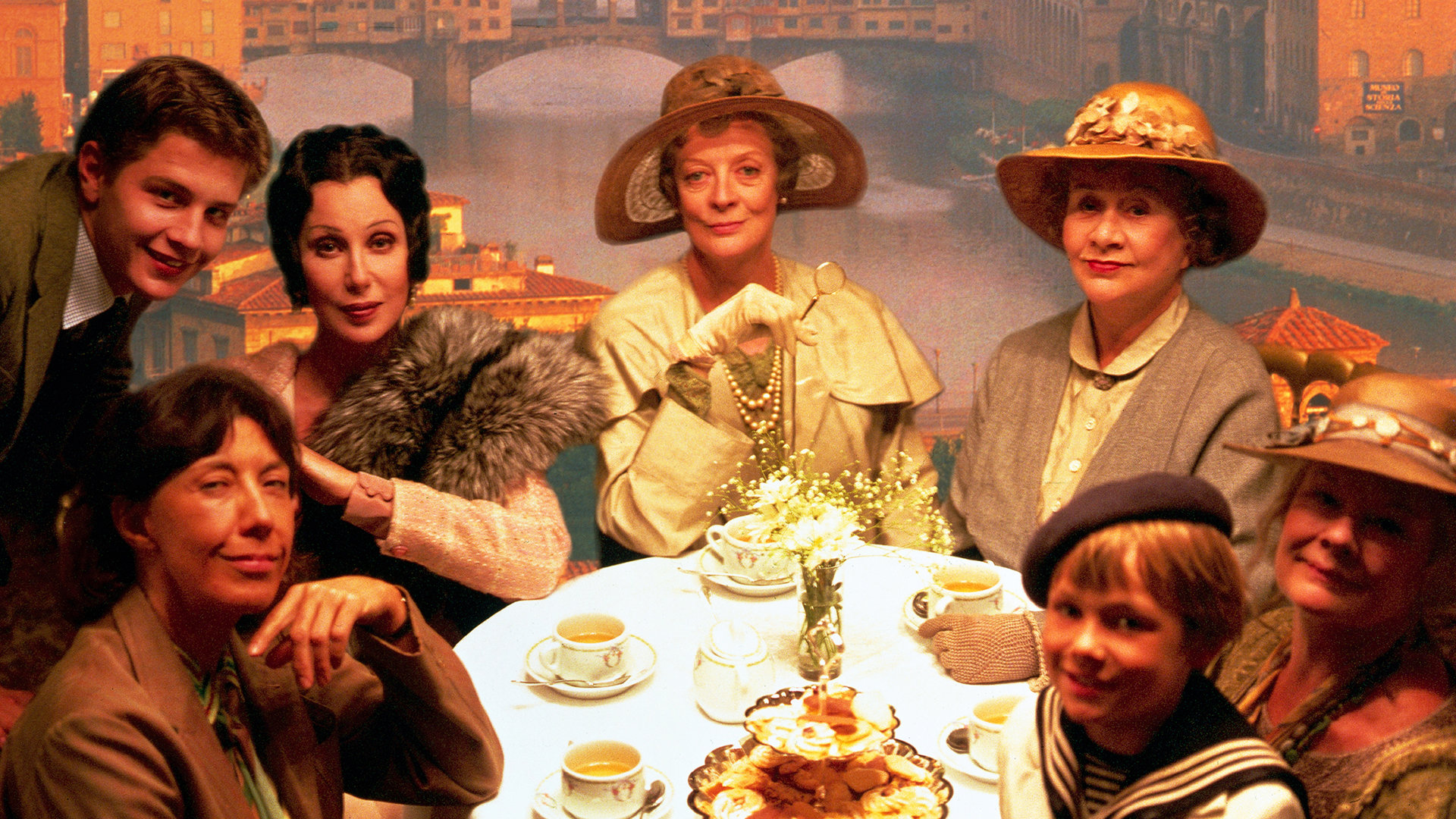
The story begins with a group of eccentric female British expatriates living abroad in Florence, Italy in the mid nineteen thirties. The ladies soon find their idyllic world shaken with the arrival of two very different outside forces; Mussolini’s fascists and a little boy grieving the death of his single mother. The boy, Luca (Charlie Lucas, and later played by Baird Wallace), is quickly taken under the wing of the nurturing Mary (Joan Plowright) after her boss, the boy’s father (Massimo Ghini), places him in an orphanage in order to hide the child’s existence from his nagging wife. Determined that Luca have a better life, Mary and her friends take him in and each play a role in raising him, instilling within him an appreciation for all forms of art and culture. Under their tutelage, he embarks upon a journey to lead an artist’s life and become, “a perfect English gentleman”. Just as Luca begins to adjust to his new family however, the threat of war begins to loom heavy over Florence, prompting his father to pack up the family business, move to Austria, and reluctantly take his son abroad with him. Five years later, Luca returns after running away from an Austrian boarding school to a war-torn Florence that he hardly recognizes. When Mary and her friends are interned as enemy aliens, he springs into action to aid the only family he’s ever known.

While the film chronicles the effects of the rise of fascism and outbreak of World War II upon Florence, the script’s real story lies in the way that the characters cope with and overcome the adversity that they are faced with. When Luca is confronted with the loss of his mother, he finds solace in the world of love and art that Mary and her friends introduce him to. As the film progresses, it is these same foundations that inspire him to leave occupied Austria, join the resistance, and return to pursue the life that he always dreamed of. Similarly, when the women are interned, they turn to their friendship and artistic passions to find the strength and courage to keep going. Even after suffering deprivations, betrayal, and imprisonment at the hands of the fascists, there are two things that the regime cannot take away the diverse group; their love for life and each other. By the film’s finish it is evident that the experiences that they have endured have only left them with a reaffirmed sense of who and what matters most in life.
Tea time anyone?

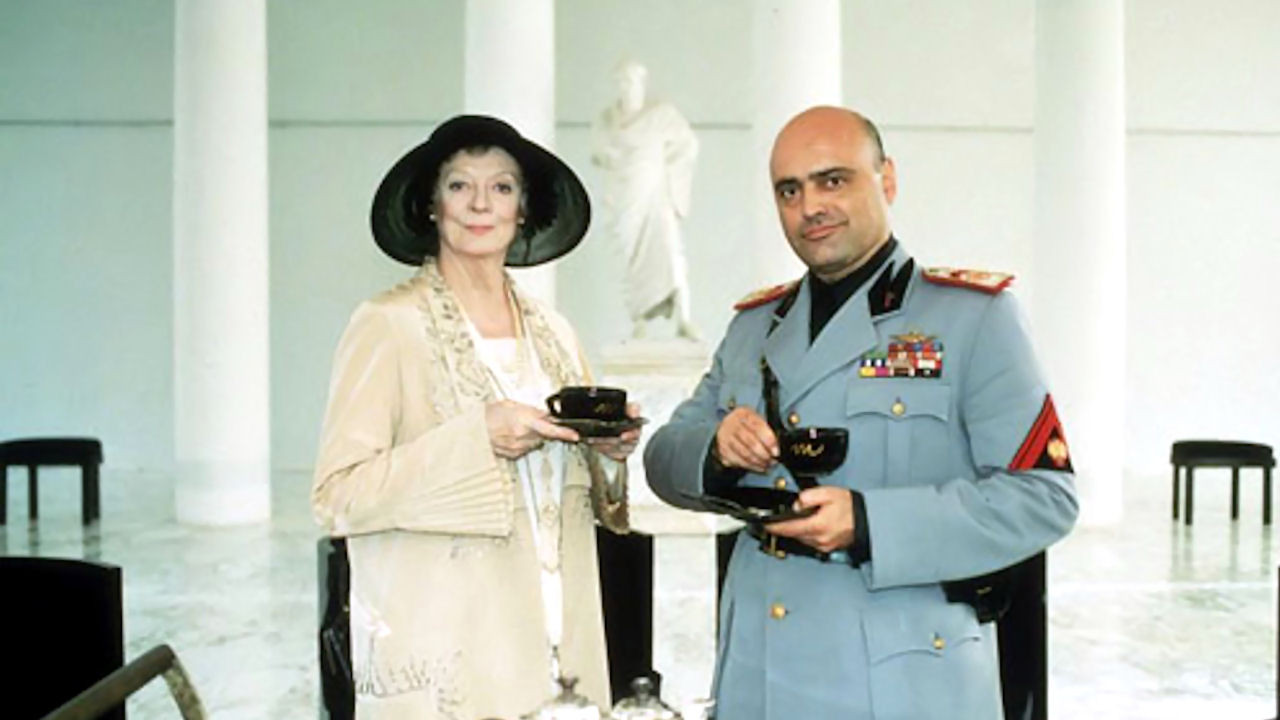
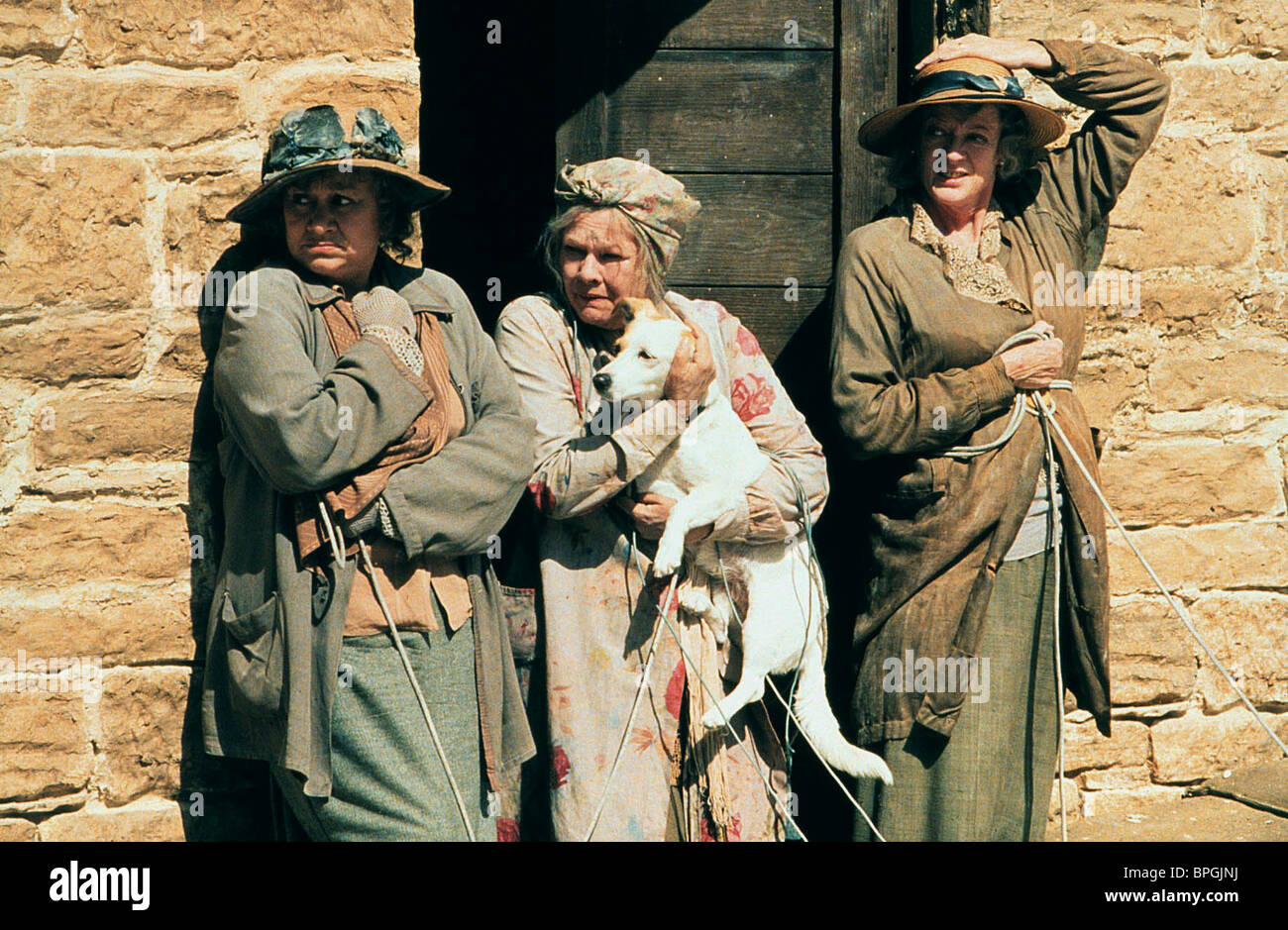
Despite its many hard-hitting themes, the film largely maintains a gentle pace, focusing more upon the inner world of the characters than the devastating historical events surrounding them. As a result, it was crucial that the cast convey the distinct and diverse personalities that populate the film’s version of Florence in order to maintain viewers’ interest and add emotional weight to the often episodic story. Fortunately, the cast proves nothing short of stellar with each member of the ensemble adding their own distinct flavor to the film’s melting pot of characterizations. Judi Dench and Lily Tomlin, although somewhat underused, infuse their roles as a dog-obsessed struggling artist and sarcastic, openly lesbian, archaeologist with quirky charm and an anarchic spirit that leaves audiences wishing they had more screen time. Joan Plowright is utterly enchanting as the loving Mary, and imbues her part with a sincere sweetness and warmth that ensures her bond with Luca is entirely believable. Maggie Smith makes great use of her usual comic haughtiness as the formidable Lady Hester, whose delusions of grandeur leave her unable to see the realities of her changing world. Cher dominates each frame that she appears in as the lovably loud and always entertaining show-girl turned wealthy art collector, Elsa, bringing a necessary pathos to an outwardly superficial but subtly complex character. Both Charlie Lucas and Baird Wallace are joys to watch as they portray Luca’s progression from grieving child, to unsure teen, to courageous young man.


Coming of age tale, inspirational story, and family film, Tea With Mussolini is all of these things and more. Through the combined power of the performances of its uniformly outstanding ensemble cast and equal parts witty and poignant script, the film brings to vibrant life a time and place long since passed. Although the film is set over three quarters of a century ago, its central themes of the importance of family and the power of art speak to all eras and cultures.  If you’re looking for a film that will make you want to get up and seize life in all of its glory, sit back and take a sip of Tea With Mussolini.
They ain't afraid of no dictator!

Sunday, August 30, 2015

Is "Jumanji" a Horror film for kids?

Confessions of a Film Junkie: Is “Jumanji" a Horror film for kids?

By: Brian Cotnoir


I am continuing my generation’s tradition of pointing out how freaky/scary some of the movies and TV shows we had as kids were over the internet.  Yes, for whatever reason we all like to point out the same stuff on the internet: “Freaky Fred on “Courage the Cowardly Dog” was creepy as hell!”, “How awesome and scary was “Are you Afraid of the Dark?”, “What was with that creepy a$$ clown in “The Brave Little Toaster”, and the list goes on.  In fact some of my Most Popular Articles are my “5 Films that you probably didn’t realize were too scary for kids”.  In one of those editions I briefly talked about the 1995 Family Classic “Jumanji”.  I remember my mom and grandmother taking me and my sister to see this in theatres.  Ever since the tragic passing of actor Robin Williams I’ve seen this film shown more and more on TV.  Now the more times I see it the more and more I start to realize, “Wow this is film is creepy as hell! This isn’t a kids movie, it’s more like a Horror film for kids!”    
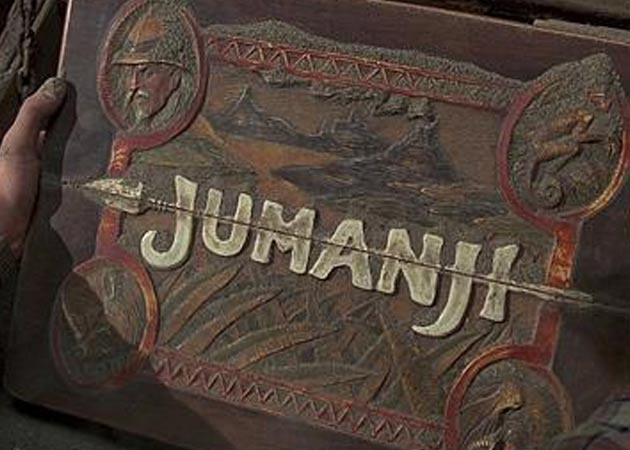
    I mean just look at the opening title credits and scene: a spooky green mist comes out of nowhere and forms the title “Jumanji” before quickly fading out then we get a scene in 1869 where we see two brothers named Caleb and Benjamin out in the middle of the woods at night.  The two brothers grab a wooden chest and off of a cart and throw it into a whole, and begin to bury it.  While they’re burying the box the younger brother Benjamin falls into the whole and then this creepy tribal drum starts to play, Benjamin shouts to his brother “Caleb, help it’s after me!” and then wants to run away after being pulled out of the hole.  Caleb insists that they finish what they started and when his brother asks what will happen if somebody else finds it, to which Caleb replies “May God have mercy on his soul” as lighting flashes behind him.  Yeah just in the first two minutes of this film alone this film definitely gives off a horror movie vibe.  We know that the two boys must have played the game, but we never get to see what sort of things they endured.  I can only assume—based on what we see later in the film—the sort of horrendous things they must’ve encountered.  I actually wish there was a prequel film to “Jumanji” so we can see how the brothers came across this game (maybe the origins of the game too) and what sorts of things happened to them while they played it.          
I think it's Swahili for "You Gonna Die"
     In the next scene the film flashes 100 years later and we see young Alan Parrish riding his bike through the small fictional town of Brantford, New Hampshire.  The town is very reminiscent of the quaint New England towns in a Stephen King novel, and like in a Stephen King novel, our main character seems to be the target of bullying from every kid in town.  After being beaten up and having his bike stolen by a group of Bullies we see Alan walking home, and as he approaches a construction site he all of a sudden begins to hear the tribal drums.  As he explores the construction site and follows the sound of the drums he finds the edge of the chest that the two brothers buried one-hundred years earlier and pulls it out of the dirt.  He opens it up to find a game called Jumanji.  One thing I’ve always wondered about the game Jumanji is can only kids hear the drum noise or can adults hear it to?  When Alan finds the game at the construction site he appears to be the only one who hears the drums playing.  I know a construction zone is typically a noisy place, but even when they weren’t working how could none of them hear the sounds of tribal drums beating?  Or is the drum completely imaginary and it only exists in the minds of the people who get close to it?  Or is it possible the drum beats could be brought on by some kind of mental delirium?                      
Can't we just play Monopoly instead?
So Alan takes the game out and shows it to his friend Sarah and the two begin to play.  After Alan’s first roll he gets sucked into the board game as his friend Sarah looks on in horror.  Alan will eventually be trapped inside the game for the next 26 years.  Not only can Jumanji suck you into the game and keep you as its prisoner, but everything else that comes out of the game want’s to kill you! Oh yeah, amongst the many deadly things that come out of Jumanji at the roll of the dice include giant mosquitoes, man eating lions, killer plants, stampedes of wild beasts, and a English hunter who likes to hunt humans for sport!  Oh yeah, Jumanji is an absolutely terrifying game.  And God forbid you try to cheat in order to win the game because then you get punished for that too.  Peter tries to cheat and he gets turned into a monkey man with giant hairy hands, and a tail and everything.  It’s like a toned down version of Lampwick’s jackass transformation from “Pinocchio” or David Kessler’s werewolf transformation in “An American Werewolf in London”. Let’s also look at the Parish’s home.  After Alan’s disappearance, it is long speculated by most people in town that Alan’s father, Sam, killed his son and hid his body in the walls of the home.  After Sam and his wife pass away, the home goes unoccupied for years, because people believe the stories of Alan’s murder.  So when Peter and Judy move into the house with their Aunt, and they hear the tale of the disappearance of young Alan Parrish, it definitely gives the film the Haunted House vibe.     

Run!  It's a Stampede!

     Not only does the game mess with the people playing the game, but it also affects the people of Brantford too.  Carl Bentley (played by actor David Alan Grier) is constantly tormented by a group of monkeys that was released by Jumanji, and the stampede runs right through the heart of the town of Brantford creating mass chaos and destruction.                       
Please don't let me get cast in the "Planet of the Apes" remake
     Lastly when the game is over and all the deadly creations get sucked back into the game, life resumes off before they started playing the game in Alan’s living room 1969, and only Alan and Sarah have any recollection of what just happened.  What’s craziest is that Sarah had to live through 26 years of life already, and really you think of all the tragedies that have happened between 1969-1995 that she’s going to have to relive (the assassination of John Lennon, The Challenger Explosion, The Gulf War, etc.)  If Sarah and Alan have all the memories they have from the game, then can Sarah do anything to help prevent these tragedies? Not to mention the almost 3 decades of psychological damage she had to endure while she saw her best friend sucked into a board game and believed him to be long dead, how do you come to grips with that?    
     It’s amazing to think that this beloved children’s film might have been made more to scare them rather than entertain them.  Even today it’s probably one of the Best Children’s movies ever made, but is also one of the scariest one’s ever made, and I think there is more than enough evidence to suggest that this may be a Horror film for kids.

Sunday, August 23, 2015

Classics: A Review of A Little Princess By Lauren Ennis

If you ask a little girl what she would like to be when she grows up, don’t be surprised if she replies with the lofty choice of ‘princess’. From fairy tales that date back hundreds of years to modern animated fare, princesses are one of the most instantly recognizable and enduring symbols of girlhood. In recent years, however, the princess tradition has been called into question by feminists and modern critics who claim that it promotes traditional values that are of little use in the modern world. One fairly recent film, however, challenges this criticism through its assertion that the term ‘princess’ can hold a meaning far deeper and more relevant than wearing a tiara and being rescued; the 1995 adaptation of the 1905 Frances Hodgson Burnett novel A Little Princess.
If only more kids' movies were so heartfelt. *I'm not gonna cry...*

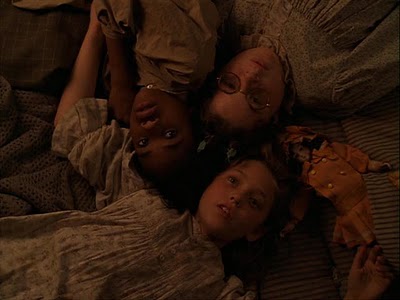
The story begins with 10 year-old Sara Crewe living a carefree life in British occupied India with her widowed father. Conflict enters the pair’s idyllic existence when World War I breaks out and Captain Crewe is called to service (an update from the novel’s 1890’s setting during the Boer War), leading him to entrust Sara’s care to a New York boarding school that her late mother had attended. Upon arriving in New York, Sara is faced with the harsh reality of life within the restrictions of conventional society, as she is met with resistance from the faculty and students alike. With patience and diligence, however, she adapts to the rigorous rules and monotonous lessons of the school, and quickly becomes one of the most popular students through her imagination and charm. These same qualities that set her apart as a student -body favorite also make her stand out as a threat to the faculty, who view her advanced educational background and creativity as a threat to the status quo. When Sara’s father is reported killed and his assets are seized by the British government, the school's cruel headmistress, Miss Minchin, reveals her true colors and forces Sara to live in the school’s attic and work alongside African-American servant girl Becky until she can repay her debt to the school. Orphaned and outcast from her peers, Sara finds herself alone in a harsh world with only her imagination and her firm belief that “every girl is a princess” to cling to as she struggles to make her way in a world that seems to be coming apart all around her.

While children’s films too often resort to potty-humor and trite sentiment to entertain their young audiences, A Little Princess instead tells a story about children that is equally directed towards adult audiences. Rather than the fanciful tale of royalty in a far-away land that its title suggests, the film is instead an exploration of resilience in the face of hardship. While many children’s films feature larger than life villains and outrageous obstacles, Sara faces all too real adversity in the forms of poverty, grief, and societal indifference. As a result, her story is one which resonates with audiences of all ages and walks of life, and whose lessons will remain with children as they grow old enough to understand their full significance. Through its weaving of history and magical realism into what would otherwise be a simple tale of riches to rags and back again, the film transforms Sara’s journey into both an ode to individuality and a tale of the redemptive power of creativity. The film’s inclusion of scenes from the stories that Sara regales her classmates with allows viewers added insight into her mind and reveals the ways in which she uses fiction to cope with the contradictions and losses of her reality. In this way the film also encourages its young viewers to look to its own fictional heroine for inspiration.
Good friends and good stories; all any party needs

The recurring mantra of the film is that “all girls are princesses”; an axiom that Sara’s nanny in India first teaches her and Captain Crewe later reinforces before leaving for the trenches. At first glance, this notion could be viewed as a contrived theme that is too flimsy to sustain an entire film. As the film progresses, however, the idea of ‘a princess’ is redefined so that it bears little resemblance to the stereotypical image of a Barbie-esque beauty in a crown and ball gown. Within the context of the film, ‘princess’ is simply a fantasy term that Sara uses to express her belief that she and her classmates are people of value and worth despite what the world at large would have them believe. The wider range of the term in the film is evidenced when Sara responds to the teasing of snarky Lavinia that “all girls are princesses; even snotty, two-faced bullies like you”, as Sara’s definition extends beyond herself and her friends to all women, including her enemies. The emphasis upon princess as a non-discriminating term makes the word become a symbol of equality and unity in contrast to the divisions of class and race that permeate the time period in which the film is set. By the time that Sara reiterates her beloved mantra to Miss Minchin in the film’s climax, it has become a rallying cry for truth, equality, and dignity rather than the sugary catchphrase that it begins as in the film’s start. As a result, in Sara Crewe’s hands, princess is a term of female empowerment that holds resonance for women of all ages rather than the fanciful dream that critics have come to dismiss it as.


The film’s cast aptly brings its unique version of 1914 India and New York to life through a series of intelligent and heartfelt performances. The child actresses portraying Sara’s schoolmates approach their roles with an intelligence and variety that makes viewers feel as though they are actually witnessing the daily interactions of a group of real children, each with their own desires, interests, and distinct personalities. Heather DeLoach (of Blind Melon music video, ‘No Rain’, fame), and Kelsey Mulrooney particularly stand-out in their portrayals of the initially timid but eventually empowered Ermengarde and lovable but wayward Lottie. Vanessa Lee-Chester and Taylor Fry are excellent in their opposing roles as Sara’s loyal best friend and manipulative arch-enemy, each employing depth and individuality to ensure that their roles are characters rather than caricatures. Eleanor Bron and Rusty Schwimmer shine in their roles as the Minchen sisters, with Schwimmer’s well-meaning but utterly incompetent Amelia and Bron’s manipulative and cruel Headmistress Minchin personifying the ineptitude, hypocrisy, and brutality of the both the adult world and society at large. Liam Cunningham perfectly balances his role as Captain Crewe between the loving father that Sara knows and the dignified officer who is called to lead his men into battle. Liesel Matthews gives a truly commanding performance in her role as Sara, combining by turns wide-eyed innocence, self-assuredness, and steely resilience to portray the difficult role of a natural leader. In each of their varied roles, the cast evade the typical pit-falls of children’s films by avoiding the all too common hysteria, syrupy sweetness, and stereotypes usually dispensed to young audiences, and instead keep the sometimes fantastic plot grounded through a series of emotionally honest and complex performances.

At once a story of one girl’s experience in a distant time and place and a universal tale of love, loss, survival, and redemption; A Little Princess is far from your average family film. Through its enchantingly fantastic view of the world in all its beauty and severity, the film echoes the wonders, innocence, and fears of childhood. Even though I am now an adult and decades have passed since I first saw this film, I continue to find its central message of the importance of self-worth and maintaining one’s individuality both empowering and essential. This film is a must see for any adult who still believes in the magic of creativity and love and any little girl who has ever doubted that she not only could, but in fact should, be considered a princess.

Tuesday, August 11, 2015

Classics: A Review of Out of the Past By Lauren Ennis

Thomas Wolfe wrote that “you can’t go home again”, a quote that has proven ever more resonant with each passing year for each passing generation. For private investigator turned gas station owner Jeff Markham, however, the opposite proves to be true in the 1947 noir classic Out of the Past. Directed by horror master Jacques Torneur, Out of the Past is a twisting tale of the lengths to which we go to escape the past and the ways in which it continues to impact our present, regardless of how far we may run. From its ominous opening reel to its somber final frame, this film personifies the very best of film noir and continues to serve as a reminder of what it is that keeps viewers coming back for more of the genre’s signature darkness.
"Build my gallows high, baby"

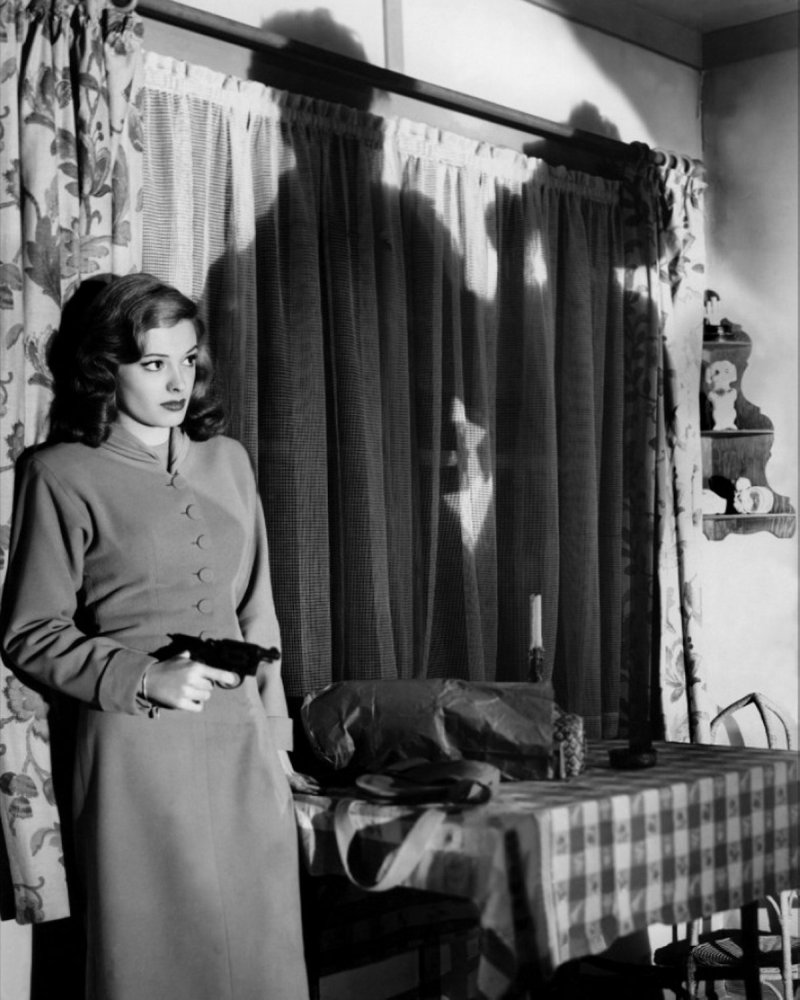
The story begins with the arrival of sleazy mob underling Joe Stephanos (Paul Valentine) disturbing the peace of a small California town. It is soon revealed that Joe has come to town in search of mysterious newcomer Jeff Bailey (Robert Mitchum) at the behest of his boss, ruthless mobster Whit Sterling (Kirk Douglas). After Joe tracks him down to the gas station he now runs, Jeff realizes that he has only stalled the hidden past that he believed he had finally escaped from and reluctantly agrees to meet Whit at the mobster’s Lake Tahoe mansion. Fearing the outcome of his meeting, Jeff stops to visit with his wholesome girlfriend, Ann (Virginia Huston), and in an extensive flashback relates the story of his former life as private investigator Jeff Markham and the events that have brought him into Whit’s clutches for the second time. Over the course of the flashback, Jeff relates how he was hired by Whit to track down the mobster’s sultry girlfriend, Kathie Moffet (Jane Greer), after she disappeared following a domestic dispute that ended with Whit shot and Kathie on the run with forty-thousand dollars of his money. After Jeff located her in Acapulco, the two embarked upon a whirlwind affair before escaping to San Francisco with the forty-thousand dollars, only to be discovered by Jeff’s partner, Jack Fisher (Steve Brodie). Determined to hold onto her new life, Kathie murdered Fisher and fled, leaving Jeff to elude both the police and Whit. Back in the present, Jeff meets with Whit and is forced to take one last job that reunites him with Kathie and forces both of them to face the ghosts of the past that continue to haunt them.
So much for honor amongst thieves

Released just two years after the end of World War II, Out of the Past perfectly captures the jaded attitudes and bleak atmosphere that permeated the early-post war years. Unlike than the ‘awe-shucks’ down-home everyman popularized by such actors as James Stewart and Gary Cooper during the 1930’s, Mitchum’s Jeff is world weary, cynical, and willing to bend as many laws as it takes to survive; in short, he’s truly a man of his time. While he continues to maintain a desire to do the right thing he’s seen far too much of life in an increasingly ruthless world to hold onto any illusions, and his first priority remains self-preservation. In many ways, Jeff could be viewed as a stand-in for the generation of soldiers who had only recently returned home at the time of the film’s release. Throughout the film he remains isolated as he cannot relate to the naïve locals he struggles to blend in amongst and strives to block out any remnants of the violence and pain of his former life. In this way, Jeff’s struggle to build a new life directly mirrors the same struggle that World War II GI’s faced transitioning to civilian life after experiencing the horrors of war. Beyond its central protagonist, the film is populated with characters of murky morals and conflicted motives. While plenty of noirs contain similar characters, Out of the Past succeeds in making each of its central characters unique and intriguing. Kirk Douglas’ mobster, for instance, retains a surprising humanity through his devotion to Kathie. Jane Greer’s Kathy maintains a fascination that few women in the genre can claim as she not only holds her own against, but actually bests the men in her life at their own ruthless games and serves as an excellent foil to the one dimensional temptress, Meta Carson, and the too good to be real Ann. The film tops off its cocktail of mystique and grit with cinematography that is among the best in the genre as it showcases the menace lurking within the bright skies of a small town and the dark alleys of the city streets alike.

The film’s cast superbly bring the film’s complex plot and equally complex characters to life. Kirk Douglas transforms what easily could have been a stereotypical role into an endlessly entertaining performance by imbuing Whit with equal parts charm and malice. Jane Greer is nothing short of electrifying in her performance as Kathie; a combination of razor-sharp wit, sizzling sex-appeal, and steely resilience. Dickie Moore shines in his necessarily understated role as Jeff’s mute assistant, bringing a level of pathos to the crosses and double-crosses that he witnesses without relying upon a single line of dialogue. The supporting cast lends apt support with Rhonda Fleming and Paul Valentine particularly standing out for their gleefully wicked portrayals of manipulative secretary Meta and vicious hired gunman Stephanos. Despite all of the excellent performances surrounding him, however, the film belongs to Mitchum, who in in his portrayal of the ultimate noir hero epitomizes cool. In Mitchum’s hands Jeff is a character whom viewers can’t help rooting for and identifying with despite his many transgressions and ambiguities.


With the array of private investigators, femme fatales, and complex criminals inhabiting its shadowy world, Out of the Past could be considered Film Noir 101. While the film certainly contains all of those typical genre elements, such a label would be a misrepresentation of the truly unique viewing experience that the film is. Rather than a mere exercise in style, the film is actually an in depth look at a society in transition and a generation coming to grips with a past they cannot escape from. Nearly seventy years later, Out of the Past remains a film that speaks to the present and will remain a fan favorite far into the future.
"A dame with a rod is like a guy with a knitting needle"

Tuesday, July 21, 2015

Cinema Debates: "Hostel" vs. "Taken":

Confessions of a Film Junkie: Debates “Hostel vs. Taken”

A Joint Review by Brian Cotnoir & Lauren Ennis

     For Whatever reason many people throughout the world have grown to resent Americans.  Why?  I couldn’t tell you, but it is because of this resentment that travel outside the U.S. is very dangerous for most Americans; especially young Americans.  There are two iconic films that deal with the subject of young Americans in Europe who are being attacked by hostile natives: “Hostel” and “Taken”.  Even though they have similar plots they do have some distinctive differences that help them stand out, and today Miss-E and I are going to debate which film is better.

Hostel (By Brian Cotnoir)

Hostel” tells the story of 2 Yong Americans, named Paxton and Josh, traveling across Europe on trip of fun, debauchery, and self-discovery.  Paxton and Josh (along with their friend Olli from Iceland) wind up in Amsterdam expecting a world of nothing, but pot smoking and sex crazed locals, only to be disappointed to realize that Amsterdam is totally overrun with American tourists, and they want to get away from them.  They meet a European teen, who tells them that they have to go to Slovakia where the hostels there are crawling with young, horny, sex-crazed women who love American guys.  The three friends decide to take a train to Slovakia and after some skeptical uncertainty they arrive at the hostel to discover that it is everything the young man back in Amsterdam promised them it would be.                         
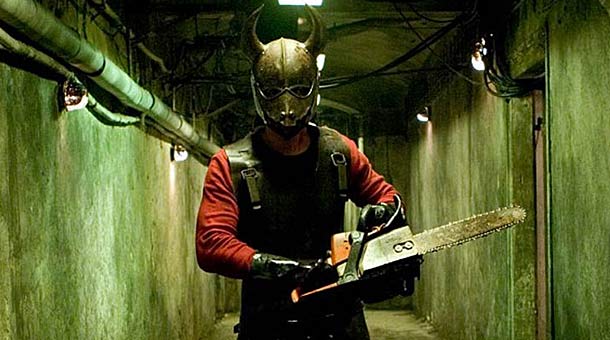
    However after all the binge drinking and promiscuous sex, one of the friends Paxton (played by actor Jay Hernandez) notices that his friends Olli and Josh have disappeared.  He asks the locals if they’ve seen his friends only to be told that they went home or they left.  However Paxton doesn’t believe his friends would just leave without telling him.  After some sleuthing and persistent questioning of the locals Paxton learns that he and his friends have been sold in an on-line auction by a group called The Elite Hunting Group.  The Elite Hunting Group offers people the chance to live out their homicidal and torture fantasies for a high-price, and they always get Top Dollar from people for Americans.  Paxton learns that his friends have endured horrendous deaths and now he is next.   
So the characters in “Hostel” aren’t the most heroic or even likable, but they still have to endure some pretty horrifying things even for a bunch of douchebags.  All they wanted to do was have a good time and have sex with lots of beautiful women.  That is something every guy in life wants.  Now I once had a discussion with a friend of mine and she said “’Hostel’ [was] scary, but totally unrealistic [because] who would every pay just torture someone?” to which I replied “I’m pretty sure if you gave me a baseball bat, and placed a child molester in front of me, I’m pretty sure I could make myself do some things I didn’t think I was capable of doing”.  They Agreed. Now while I can admit that being kidnapped and sold into the sex trade is not a better outcome, I still maintain my belief that being sold to be tortured to death is a much more gruesome fate.  Plus, who’s going to rescue those boys?  Let’s be honest; the first time everybody saw the trailer for the movie “Taken” we all knew that Liam Neeson was going to save his daughter and do it in the most kick a$$ fashion imaginable.  As for Paxton, Josh, and Olli, they only had themselves to rely on.  None of their parents were going to come to their rescue (hell, I don’t even think they knew where in Europe they were).  The only one who managed to get escape with his life was Paxton, and he did it with almost no help from anyone (and trust me: there was no happy ending for Paxton, as made evident by the intro to “Hostel 2”).                      
    The reasons why I feel that “Hostel” is a scarier movie than “Taken”.
  

Taken (By Lauren Ennis)

Unlike Hostel, which focuses upon the physical tortures that an unsuspecting group of tourists endure, Taken’s focus is instead upon its protagonist’s emotional anguish. Like Hostel, Taken involves young Americans who are abducted while on vacation in Europe, but rather than chronicle the horrors that the girls endure at the hands of their captors, the story is told from the perspective of one of the girls’ father as he struggles to find and free his daughter. While both films highlight the dangers that we expose ourselves to when in an unfamiliar place, Taken’s greatest punches are packed not by its many thrilling action scenes, but by the raw emotion at the core of its story. Through its honest portrayal of a parent in crisis, Taken reveals the fears that lie within all us of us and the lengths to which we will go when the people we love are put into jeopardy.

The story begins with former CIA agent turned private bodyguard Bryan Mills (Liam Neeson) struggling to rebuild his relationship with his estranged teenage daughter, Kim (Maggie Grace ). When he learns that Kim and her friend, Amanda (Katie Cassidy), are planning a trip to Paris he is strongly opposed to the idea but eventually agrees to let her go after being pressured by his ex-wife (Famke Janssen). As he sees Kim off at the airport, however, he learns that the girls are actually planning a cross-continental trip following U2’s European tour, rather than the agreed upon stay with Amanda’s cousins. Despite his misgivings, Brian decides that it is too late to stop the girls’ plans and sends Kim off with a loving warning to be careful. Almost as soon as the girls land, however, they form a fast friendship with local boy Peter (Nicolas Giraud) and give him the address of the apartment they’re staying in after he invites them to a party. The seemingly harmless acquaintance quickly turns sinister when the girls arrive at the apartment only to find that Amanda’s cousins are in Spain and several men, using Peter’s tip, infiltrate the apartment and abduct first Amanda and then Kim. Fortunately, before she is kidnapped, Kim makes a call to Bryan relaying her plight and providing him with a description of her abductor. With only Kim’s few words to follow and a “specific set of skills” to aid him, Bryan sets out on a journey through the Parisian underworld to bring his daughter home and take vengeance on her captors.

Despite its status as an action film, Taken highlights a devastating reality and approaches the topic of sex trafficking with the seriousness that it deserves. Over the course of Bryan’s journey, the film depicts the various networks of organized crime and political corruption that run and maintain the vast and lucrative trafficking business. As he delves deeper into the mystery of his daughter’s disappearance he quickly learns how the industry thrives on a combination of greed, societal indifference, and fear. The film deftly shows the maze of networks that make up the trafficking industry, which leaves viewers with little doubt as to how easily its victims can disappear in broad daylight. When he finally gains access to the city’s underground brothels he is horrified to learn how the girls are psychologically and physically abused until they finally break, and are then provided with access to drugs under the guise of allowing them an outlet, which in reality puts them further under their captors’ control. The moment that Bryan finds Amanda dead of an apparent drug overdose is truly chilling in the way that it shows the desperate lengths that trafficking victims will go to in order to escape (at least temporarily) the pain of their existence and echoes the influence of heroin and other drugs in the midst of today’s opiate epidemic. Through its bleak depiction of the inner depths of the sex trade Taken delivers horrors of an all too real variety that will have you thinking twice before you book your next vacation.

While the film contains the familiar action flick elements of death-defying stunts, sadistic villains, and constant plot twists, at its heart Taken remains a tale of a man trying to hold onto his family. When the film first starts, Bryan has retired from the CIA, despite his exemplary career record and the agency’s continued demand for his skills, in an effort to lead a more stable, family-driven life. He then makes time to visit his daughter, even though it means facing remaining bitterness from his ex-wife and awkward interactions with her new husband. Through the film’s early scenes, audiences are able to gain insight into Bryan’s struggle to hold onto what remains of his family, while still leading the violent life that his career demands. As a result, his journey to rescue Kim can be seen as a metaphor for trying to reconnect with her before she reaches adulthood and is emotionally lost to him. Viewed from this perspective, Taken becomes more than a somewhat relatable action film, and is elevated to a universal tale of the need for family connection in an increasingly disconnected world. Therefore, Bryan’s fears of losing Kim both literally in the sense that she could disappear into the international sex trade and figuratively in the sense that his time to be part of her youth is running out are equally terrifying and relevant.

Through its combination of action-packed thrills, emotional depth, and chills torn straight from the headlines, Taken is a film that will maintain a hold on viewers even after they leave the theater. The film works equally well as an entertaining thriller, heart-wrenching family drama, and exploration of the modern black market. When I was first approached with writing this review, the Film Junkie asked, “What’s more terrifying, being kidnapped in Europe and sold to be tortured to death or being kidnapped in Europe and sold as a sex slave”. That is a question that still remains uncomfortable and difficult to answer, but I can answer that the anguish that Bryan withstands in Taken is truly the stuff of every parent’s nightmare that will undoubtedly leave any parents in the audience nothing short of haunted.

Monday, July 13, 2015

A Message from Miss E.

Dear Readers,

I will be writing a joint review with our own Film Junkie next week, which would have been scheduled as an off week. As a result, I will be adjusting the review schedule so that this week will not be featuring a new review and next week will feature our joint review.

In the meantime, I recommend that you check out my reviews of Funny Girl and Doctor Zhivago in honor of star Omar Sharif who died last week, and To Kill a Mockingbird as a prep for the upcoming publication of the original novel's sequel, Go Set a Watchman.

Until then, enjoy the summer sun!

Miss E.