Wednesday, April 9, 2014

A review of "A Lonely Place to Die"

Confessions of a Film Junkie: A review of “A Lonely Place to Die”

By: Brian Cotnoir


“A Lonely Place to Die” is a Scottish Thriller that was released in 2011 that follows a group of mountain climbing/ hiking enthusiasts who are planning a big expedition through the Scottish Highlands. While exploring they come across something mysterious and unexpected.  They find a young Serbian girl who has been buried an underground bunker.  The mountain climbers frantically dig out the girl and pull her to safety.  They learn that the girls name is Anna and that she has been kidnapped.  Two of mountain climbers go in search of help, but unfortunately they are killed.  So the others decide to go off on their own and bring Anna to safety.  Shortly after their trek begins, the remaining mountain climbers realize that they are being followed, and what’s worst the people following them are Anna’s kidnappers and they want to kill the climbers and take Anna back so they can get their ransom; now what started out as a day of hiking and mountain climbing has turned into a day of survival.      
    “A Lonely Place to Die” is a very dull film.  This film starts out so slowly, and it does being to pick up around the 23 minute mark.  However, I found that every time some excitement began to build the pay-off always came up flat.  I mean, there’s very little interest or action that happens.  The characters all give a bland performance, the motive behind the kidnappers isn’t all that good either, and it’s just not entertaining.            
Oh God, it's so dull!
The only good thing that “A Lonely Place to Die” offers is some excellent cinematography of the Scottish countryside.  At times the shots of the Scottish Countryside are so nice, it’s almost like you’re watching a “Tour Scotland” commercial rather than a film.  I can’t say that I hate this film because I actually don’t, if anything I was more disappointed in it.  With a title like “A Lonely Place to Die”, there are endless possibilities you can have for a plot, this film just isn’t a cool sounding as its title might lead you to believe.  The plot feels like it was hastily put together, and the end result was an incredibly dull film. I don’t think I can recommend this film to anyone.  It’s too dull, and for all the good build up it has throughout the film, the payoff is not worth it. 

Wednesday, April 2, 2014

Classics: A Review of Letter From an Unknown Woman By: Lauren Ennis

Every breath you take, every move you make, I'll be stalking you

It is often said that ‘Love hurts’, ‘love conquers all’, and ‘it is better to have loved and lost than never to have loved at all’. Hollywood films often approach the complex and contradictory topic of romance in disappointingly simple terms; boy meets girl, instant attraction, and obstacles that are inevitably overcome. One film from Hollywood’s golden age, however, shows how love can be an ugly, consuming, and selfish thing that doesn’t always overcome after all. 1948’s Letter From an Unknown Woman shows the way in which the life of one impressionable woman is completely devoured by her adoration for a man who can never remember that she exists, let alone return her affections.

The story begins in 1900 as former concert pianist turned jet setting playboy, Stefan Brand (Louis Jourdan), learns that he has been challenged to a duel by the husband of one of his many conquests. While Brand convinces his friends that he will bravely face the challenge, he later confides to his servant (Art Smith) that he has no intentions of attending the duel, and instead plans to safely leave town before dawn. The servant then hands Stefan a letter that came while he was out, which launches the film into a flashback that takes up the majority of its running time. The letter is revealed to have been written by a dying woman named Lisa Berndle (Joan Fontaine) and chronicles her love story with Stefan over the course of twenty five years. In her letter, Lisa explains how she first encountered him when she was fourteen and he moved into an apartment one floor above her own. During this time, she nurses her schoolgirl crush and spends her days attempting to make herself worthy of his affection by attending classes in etiquette and dancing, while devoting her nights to listening outside his apartment door as he practices his compositions. Eventually, however, this routine is disturbed when Lisa’s widowed mother accepts a proposal to remarry, forcing the family to move from Vienna to a distant small town. Distraught at the prospect of losing her connection to her idol, Lisa rebels by first insisting that she won’t move, and then running away when her mother and stepfather prepare to board their train out of the city. Lisa considers her escape a success until she returns to her apartment building only to find Stefan escorting another woman back to his apartment for the night. Crushed, Lisa resigns herself to her new life until she is approached by a young lieutenant (John Good) who asks her to marry him. Despite the man’s kindness and honorable intentions towards her, Lisa refuses his proposal and insists that she is already engaged to someone else in Vienna whom her parents don’t know about. After this sabotage of their plans for her, Lisa’s parents give up on trying to reason with her and allow her to return to Vienna, where she obtains a job modeling dresses in a seamstress’ shop. Unlike her coworkers, who use their jobs to attract wealthy men, Lisa leads a reclusive life in which she is entirely devoted to the elusive Stefan. After months of spending her nights waiting outside of his building to listen to him play, Lisa finally has a chance meeting with Stefan, which leads to him asking her out for a date. After a magical night of visiting a local fair, dinner, and dancing, Lisa reaches her childhood goal of becoming the latest woman to be invited back to his apartment. The next morning, he informs her that he has to leave for a concert in Milan that he ‘forgot’ about and asks her to see him off at the train, promising to return in two weeks. Despite his promise, Stefan never returns and all that Lisa has left of him is his illegitimate son (Leo B. Pessin) whom she gives birth to in secret. Years later, Lisa has remarried and provided a stable life for her son only to have her new life put in danger when her path crosses with Stefan’s once again.

Unlike most romances, which portray love as a beautiful, transforming, experience, Letter From an Unknown Woman instead focuses upon the shortcomings and fickleness of love. While most romances show the leading couple elevated by their love to become better people living more fulfilled lives, Stefan continues to be the same frivolous womanizer at the film’s finish that he was at its start, and Lisa’s life steadily declines as she continues to pursue her unrequited love for him. Although his life remains largely unchanged by their acquaintance, she eventually destroys not one but two chances at a respectable marriage, loses her job, and becomes a single mother (in a time when such situations were socially unacceptable), all in her vain pursuit of a man to whom she means nothing but temporary amusement. Through its unequal love story, the film reiterates the simple truth that loving does not guarantee that either one will be loved in return or that the object of one’s affection will be deserving of that love. As a result, the film shows a more adult approach to the trials and tribulations that too often accompany real life love stories.

One night with you, is what I'm now begging for
Unfortunately, although the film’s premise of a tragic one-sided love story is unique, its execution prevents it from being truly realistic. While Lisa tells a compelling and detailed account of her life-long romance, her narration does not allow the viewer to gain a deeper understanding of her feelings or motives. As a result, the audience never learns what attracted Lisa to Stefan in the first place, or what it is about him that leads her to remain slavishly devoted to him regardless of his shoddy treatment of her. The film hints that it is Stefan’s musical talent that is the key to Lisa’s childhood attraction and later full blown obsession, but the story never differentiates between her adoration for his music and her awe at his celebrity. This in turn makes Lisa’s ‘love’ ring false, as she continues to remain stubbornly fixated on a man whom she never really knows anything about. This is not the fault of Joan Fontaine, who aptly portrays Lisa as she grows from innocent child to wronged woman, but the film’s script which treats its heroine’s motivation as a mere afterthought. As a result, Lisa’s love story reads more like a pathological obsession that would befit a psychological thriller like Fatal Attraction than the genuine, self sacrificing, love that the script demands.

The film’s performances are uniformly excellent, lending superb support to a sometimes unbelievable script. Mady Christians and Howard Freeman as Lisa’s concerned parents and Carol Yorke as Lisa’s childhood friend provide the film’s beginning with necessary grounding as they try to first understand, and then reason with, the willful Lisa. Similarly Marcel Journet portrays Lisa’s husband as an excellent foil to his obsessed wife, as he provides a life of love and leisure to her and her son, despite his knowledge that she will never be able to return his feelings. Art Smith stands out as Stefan’s mute servant, whose friendship brings a level of humanity to Stefan’s frivolous life, despite the fact that he never utters a single line. Finally, Joan Fontaine and Louis Jourdan are both believable and human in their portrait of unattainable love. Fontaine perfectly captures the mixture of stubbornness and innocent naivete that are essential to Lisa’s character. Through her heartfelt performance, Fontaine makes Lisa an intriguing, if not entirely relatable, character who garners more of viewers’ interest than frustration or pity despite her self-destructive actions. Similarly, Louis Jourdan makes Stefan an understandable and almost likable character, despite his constant thoughtlessness, by imbuing him with amiable charm. As a result, while in another actor’s hands Stefan would be callous or cruel, Jourdan makes him too childishly self-absorbed to even notice the drastic consequences of his actions.

While their love does not conquer life’s hardships, Lisa and Stefan’s affair remains one of the most unusual and fascinating romances ever put to celluloid. Through their multidimensional performances, Joan Fontaine and Louis Jourdan make the central lovers more than just types and bring a level of genuine tragedy and honest emotion to the film’s proceedings. While its heroine and her all-consuming love remain enigmatic, the film manages to maturely portray the pitfalls and degradations that love has all too often led to, and refuses to lower its story to sentimentality or easy answers. As a result, Letter From an Unknown Woman is far more memorable than its hero’s convenient memory loss would suggest, and is a film that is certainly worth getting to know.

Proof that groupies are not a new phenomenon

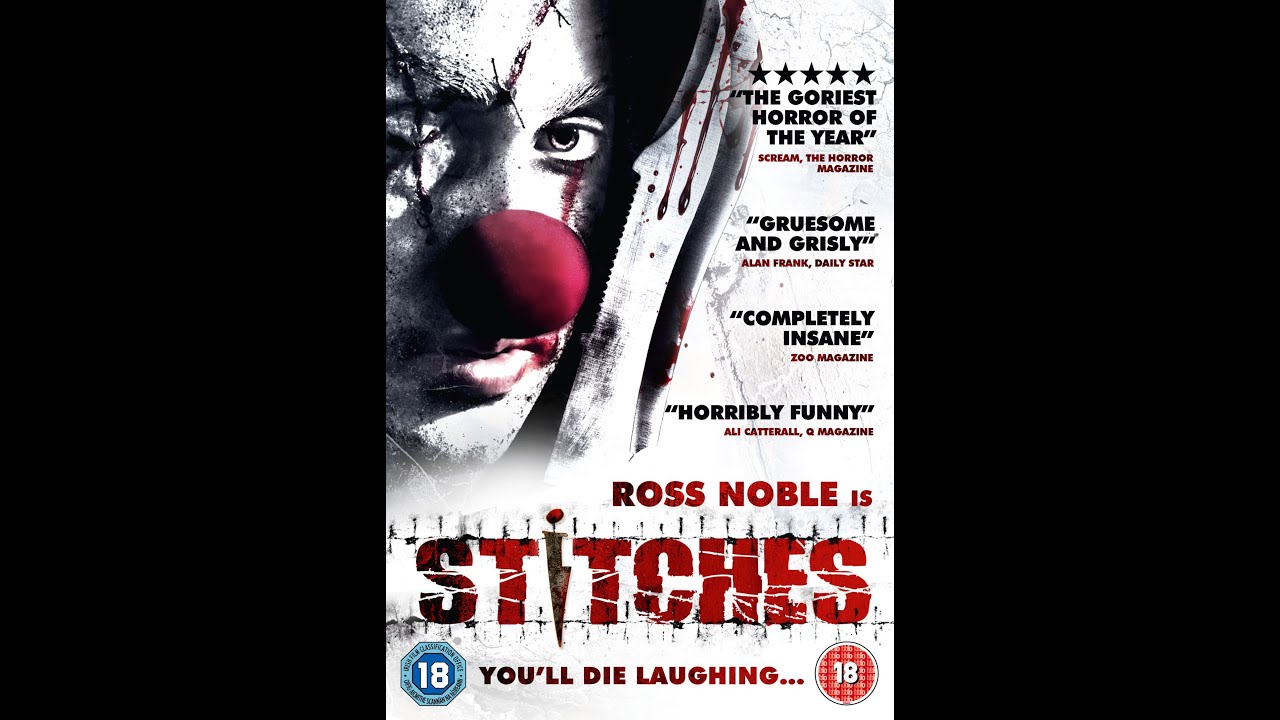
A review of "Stitches"

Confessions of a Film Junkie: A review of “Stitches”

By: Brian Cotnoir


If you’ve read my reviews of “100 Tears” and “Scary or Die”, then you already know how much the “Killer Clown” Motif in horror films.  I’m sorry, but clowns just aren’t that scary.  I know so many people are afraid of movie clowns, like Pennywise the Clown from “Stephen King’s: IT”, and the killer clowns from “Killer Clowns from Outer Space”, but I just don’t get the appeal to them.  To be honest, the only clown I every found remotely scary in any horror film was that creepy clown doll from the movie “Poltergeist”.  I fully expected that the film I’m reviewing today, “Stitches”, would fall into the category of terrible horror film with a stupid killer clown, but much to my surprise I was wrong.  So now, I am here to tell you why you should check out the 2012 Horror-Comedy “Stitches”.           
   “Stitches” is the story of a drunken failure party clown named “Stitches” who dies a horrendous death a young boy named Tom’s birthday party because of a prank played on him by Tom and his friends.  Six years pass, and Tom still isn’t the same since that day.  With this 17th birthday approaching, his friends convince him to let them throw a birthday party for him, and what starts out as a party for a couple of friends turns into a huge party that all the kids in town are attending.  Stitches rises from his grave to seek bloody vengeance against the kids who killed him, and he’s going to give Tom and his friends a birthday party that they’ll never forget for the rest of their short lives.
I just going take a little off the top
 I didn’t mind this film as much because although I did not find it to be scary, I still found it to be a comedic film.  One thing this film did that I actually like is that in most films when they have a two actors playing the same character at different ages in their lives, it’s very hard to keep track of whose who, which is a nice little cheat-sheet that the film offers. Also, some of the scenes in the film were done in a style that is very similar to that of director Edgar Wright (known famously for his works on Shaun of the Dead and Hot Fuzz).  So you get the sense that the film is meant to be taken more as a comedy rather than a horror film.  All the deaths are over-the-top hilarious like a girl getting her eye-ball gouged out with a prop umbrella to a boy having his intestines turned into a balloon animal.  I know a lot of people hate cheesy one-liners in films, but I am just a sucker for them.  I just enjoy them so much, and when Stitches comes back from the grave, that’s practically all of his lines, and they are so bad, so lame, that I couldn’t help but laugh, but I know that thought/idea would deter a lot of people from seeing this film.  Plus, there’s this interesting sub-plot that Stitches the Clown is a member of this ancient clown cult, and I found it to be quite interesting.

Could you please repeat that?
I couldn't here you over the sound
of me soiling my trousers! 
"Everybody Happy?"
Plus, I liked how more than one teen survived the end.  It would have been very cliché for Tom and his love interest be the only survivors, but his best friend actually makes it alive with them.  It was a nice change of pace. I can’t really think of a point in the film where I felt the need to nitpick the acting.  Most of the cast was written as genetic typical teenagers, with no one really standing out as a great performance.  Actor Ross Noble was rather enjoyable as the homicidal clown, Stitches, and I was most pleased that they gave him a motive. He’s not just an evil clown for the sake of being an evil clown, he’s evil because he was killed a party and had to wait 6 years until Tom had another birthday party before he could rise from the grave to seek his vengeance.                     
   My final consensus on my initial screening of this film is that if you are a fan of films like “Drive Thru” or “Leprechaun” then I think you will enjoy the dark comedy of “Stitches”, if you are not, then I recommend you skip this film entirely.

Wednesday, March 26, 2014

Classics: A Review of The Grand Budapest Hotel By Lauren Ennis


Wilkommen, bienvenue, and welcome!
In response to the innumerable hardships of the Great Depression, Hollywood released a series of irreverent comedies throughout the 1930’s that gave viewers a chance to escape from their problems and kept them coming back for their next comedic fix. These comedies, known as screwball comedies, featured whimsical and often bizarre plots in which characters attempt to hilariously maneuver through outrageous obstacles. As political and financial tensions continue to mount, our own generation could use a healthy dose of screwball escapism. Fortunately, there is a new release which not only provides the zany fun of the 1930’s tradition, but also adds a sharp modern edge; The Grand Budapest Hotel.

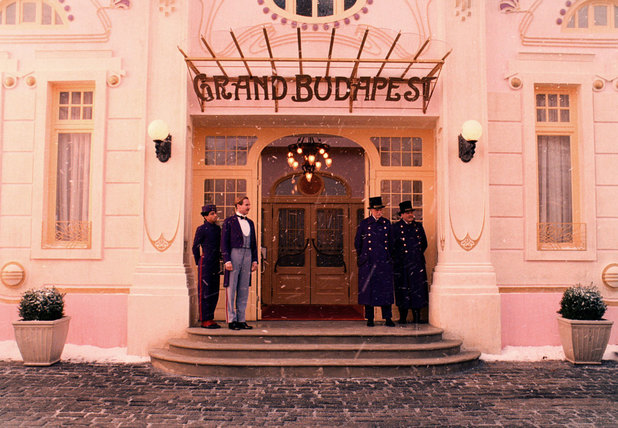
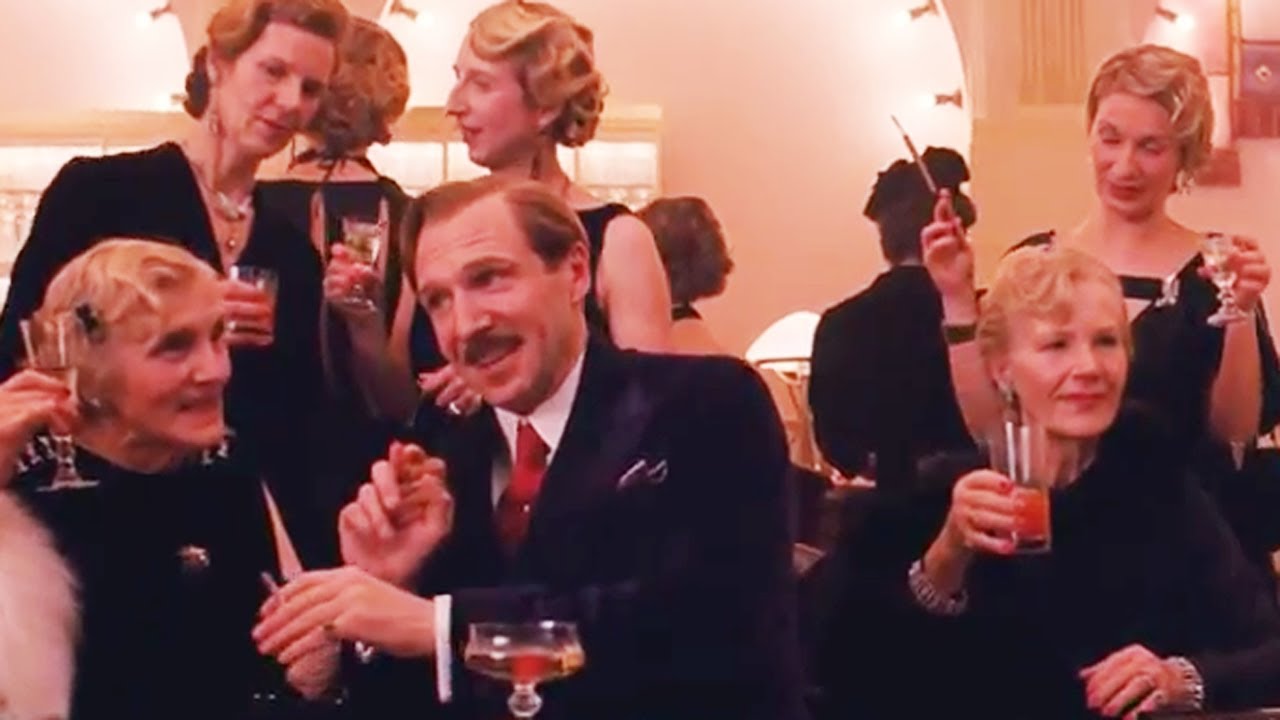
The story begins in 1968 as an unnamed British writer (Jude Law) visits the long since dilapidated Grand Budapest Hotel in the fictional country of Zubrowka in hopes of finding some inspiration. Over the course of his stay, the writer befriends the hotel’s mysterious proprietor, Zero Moustafa (F. Murray Abraham), who tells the writer the tale of how he rose from a life of poverty to become the business tycoon that he is today. The film then flashes back to the 1930’s as young Zero (Tony Revolori) begins on the job training in his new position as the hotel’s lobby boy under the tutelage of the hotel’s legendary concierge, Gustave H. (Ralph Fiennes). Zero soon learns that the debonair Gustave goes above and beyond his duties as concierge, and provides additional services as a ‘companion’ (or as I prefer, gigolo) to many of the wealthy matrons who frequent the hotel. All is well for the unlikely duo until one of Gustave’s lady-friends (Tilda Swinton) is found poisoned and her scheming relatives (headed by Adrien Brody) conveniently place the blame on Gustave, who has inherited a priceless work of art beseeched to him in her will. A madcap caper ensues as Zero attempts to break Gustave out of prison and catch the killer, all while attempting to keep hold of both the priceless painting and his relationship with local baker’s assistant, Agatha (Saoirse Ronan).

Through its combination of a fictionalized 1930’s setting and screwball antics, the film harkens back to the comedies of Hollywood’s Golden Age from start to finish. Fiennes’ Gustave fills a role that in an earlier era would have been reserved for plucky actresses such as Carole Lombard or Katherine Hepburn. As the film progresses, Gustave is revealed to be a modernist take on Don Quixote who sees nothing but beauty and pleasure in an increasingly difficult and ugly world. Much like Hollywood’s former leading men and ladies before him, Fiennes imbues his hapless hero with an endearing if delusional idealism that both lends credibility to the plot’s often outrageous proceedings and makes it impossible for viewers not to root for him. Tony Revolori’s Zero provides an excellent straight man, grounding a story that otherwise revolves around Fiennes’ chaotic center. Revolori’s deadpan delivery and apt comedic timing, played against Fiennes’ zany enthusiasm makes the pair a formidable comedy team.

Our charming hosts
The film’s whimsy is heightened by its equally dizzying plot and set design. After the initial straightforward opening, the story begins spiraling into a complex web of intrigue and thrills. Each step that Gustave and Zero take towards finding the truth serves to put them into another, even more odd, conundrum than the one that preceded it. This approach allows the film to make the most of its standard mystery premise and utilize it to the highest comedic potential. Similarly, the film’s set, ranging from the pastel rococo design of the hotel to the quaint storybook-esque city surrounding it, gives the film an unreal quality befitting a fantasy or fairytale. Each surface of the hotel is shown in bright colors more befitting a dessert than a luxury hotel, and the landscapes outside hold a cut and paste quality that makes the entire film resemble a cinema sized pop-up book.  As a result, the implausible antics of the plot seem perfectly believable in this world of make believe.

Through its winning combination of nostalgic humor and modern sensibility, The Grand Budapest Hotel provides modern audiences with the sort of beguiling comedy that has been sorely lacking in cinema for several decades. With excellent performances, a razor sharp script, and an enchanting set, the film transports audiences into another time and place where unknown dangers and unexpected punch lines wait around every corner. The film manages to walk the fine line between genre homage and original venture and is guaranteed to earn appreciation from both classic film fans and modern cinema buffs alike. So join Zero and Gustave and check into the Grand Budapest; chances are you’ll want to extend your stay.

The lord of the grannies

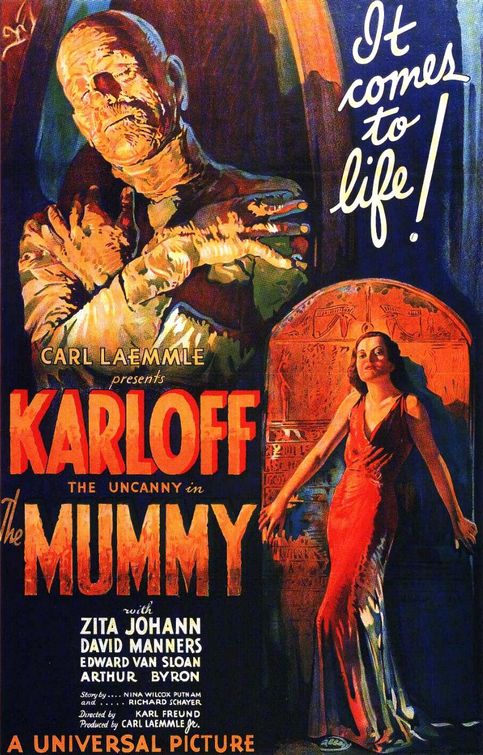
A review of "The Mummy" (1932)

Confessions of a Film Junkie: A ‘Classics’ review of “The Mummy” (1932)

By: Brian Cotnoir


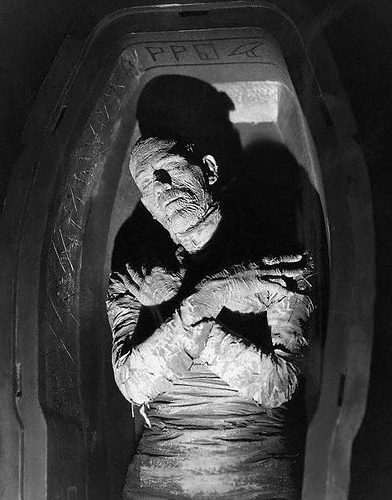
I can’t tell you all how much I enjoy the “Universal Horror Monsters”.  They are one of the essential pillars of great Horror films.  Dracula, Frankenstein, The Wolf Man, the list just goes on and on.  I got into the Universal Horror Monsters after watching Bela Lugosi in the original “Dracula” film (and I strangely enough got interested in Bela Lugosi after watching Edward D. Wood Jr.’s “Glen or Glenda”).  So I’ve always had a soft spot for Bela Lugosi, but to be honest I never was that into Boris Karloff.  Then I saw “The Black Cat” and I became more interested in checking out his works.  For those of you who live under a rock, Boris Karloff is known most famously for being the actor who played the monster in the original “Frankenstein” film.  I was going to review that, but one can be said about “Frankenstein” that hasn’t already been said, so I decided to review one of his less-popular (shall we say) monster movie roles and I decided to review “The Mummy”.                    

    So “The Mummy” Starts off Egypt in 1921 in Egypt.  Sir Joseph Whemple and one of his colleagues uncover the mummy of Imhotep.  What Sir Joseph and his colleagues find most unsettling is that Imhotep does not have any surgeon scars on his corpse, leaving them to suspect that he may have been embalmed and entombed alive as a sort of punishment.  After Sir Joseph’s assistant reads from the forbidden “Scroll of Thoth” Imhotep comes back from the dead and takes the Scroll of Thoth before disappearing.  Ten Years pass and Sir Joseph’s son, Frank, has followed in his father’s footsteps and is on an archeological dig of his own in Egypt.  A mysterious stranger by the name of Ardath Bey tells Frank and his colleagues of a supposed un-opened tomb of the Egyptian Princess Ankh-es-en-amon.  Frank and his colleagues discover the princesses’ tomb and have her body and other treasures brought to the Museum in Cairo.  Ardath Bey (SPOILERS!)is actually the resurrected mummy of Imhoteph and Ankh-es-amon was his lover over 3,700 years ago who he tried to bring back from the dead, but is unable too.  Imhotep comes across a woman, named Helen Grosvenor, who is half-British and half-Egyptian, and bears a striking resemblance to Ankh-es-en-amon.  Imhotep will stop at nothing to make Helen his bride, but Frank Whemple is willing to fight him to the death to win the heart of the woman he (claims to) love.           
Just look how bored they look
So how would I describe this film?  Oh, I know.  It’s duuuuuull.  When you compare this film to other Universal Horror greats like “Dracula”, “Frankenstein”, “The Wolf man”, and “Phantom of the Opera”; yes, “The Mummy” is quite dull.  Most of the film was kind of mimicked after the same plot to “Dracula”:  There’s a pretty girl, the monster attempts to seduce her, the hero comes in destroys the monster and saves the girl.  The End.  The only real differences in “The Mummy” are character names, and they replace the crucifix in “The Mummy” with an ankh to ward of bad guy.  I was actually falling asleep in my seat trying to make it through this film, and it’s not even that long; it’s only 73 minutes!  That’s how bored I got. 

No really, he's the villain?  I would've never guessed!
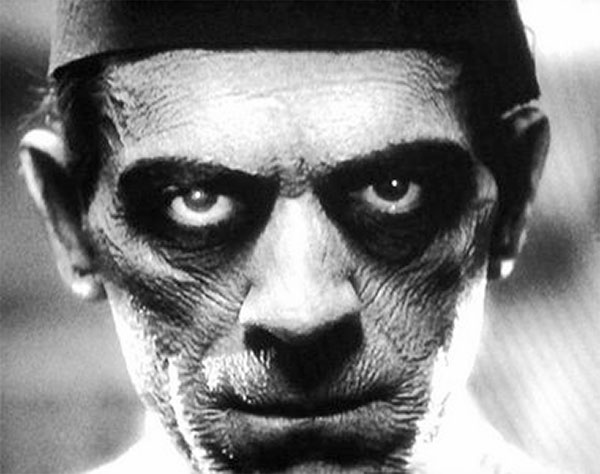
    Not to mention there’s no suspense.  We already know that Karloff is playing the mummy in the film, so when he appears as Ardath Bey, it’s not like it’s revealed to be a huge twist-to-the-plot, because you from the second that Ardath Bey introduces himself in the film that it’s clearly Boris Karloff, and he’s clearly the bad guy.                                   
He's such a tool!
Also, can I please talk about how much I hate the character Frank Whemple.  Okay, so he’s supposedly an archeologist, and yet we never see him do any digging (he hires the Egyptian locals to do that for him), and yet he get’s almost all the credit for discovering Ahnk-es-en-amon’s tomb?  Then he finds Miss Grovesnor trying to get into the museum after closing (because she was under Imhotep’s spell) and he decides that he is “in love” with her and wants to marry her.  Oh My Osiris, he is a boring and awful character.  I don’t think it would be fair to call him a “hero” because he doesn’t do anything.  He doesn’t even save the girl!  She has to save both of them from Imhotep’s evil deeds.  And I’m just going to come out and say it:  the ending is really weak.  Probably, one of the worst ending’s I’ve ever seen to a film                           
Im just gonna take this...okay?
Now as much as I am bashing this film there are something’s I found cool about this film is that even though it’s pretty much the same plot as “Dracula” it also got some of its influence from the real life Discovery of “King Tut’s Tomb” in 1922.  The Discover of the Tomb of Tutankhamen was one of the Biggest and Most Popular Discoveries of the early 20th Century.  So it was smart on Universal Studio’s part to try and capitalize on the popularity of the tombs discovery.  Also Karloff’s mummy make-up looks really good.  I did some research on it and found out that his make-up for the opening scene where he is dressed up as a mummy took 7-hours to do!  That is some serious dedication to your work.  The only thing that makes these “effects” more impressive is that I think they’re still better than the CGI effects in the 1999 remake as well (granted, I haven’t seen all of “The Mummy” remake)                             
     My advice to you is that if you are fan of Classic Horror Films and you want to see something good with Karloff in it go see “The Black Cat” (1934) or “Frankenstein”, and whatever you do just skip “The Mummy”.

Wednesday, March 19, 2014

Classics: A Review of The Public Enemy By Lauren Ennis

Such nice boys

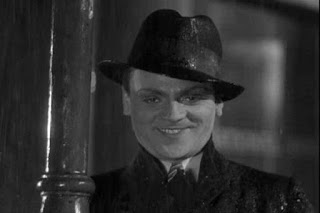
Before Henry Hill and his associates taught audiences the meaning of the term ‘goodfella’, before Tony Montana introduced us all to his ‘little friend, and before Don Corleone made offers no viewer could refuse there was a scrappy bootlegger called Tom Powers trying to make his mark in Chicago’s underworld. Through his multifaceted characterization, James Cagney made Tom Powers one of Hollywood’s most dynamic villains and its first gangster whom audiences couldn’t help but root for. With this film, Cagney introduced his unique persona to filmgoers and the gangster genre has never been the same since. In belated honor of St. Patrick’s Day, this week’s review will pay a much deserved tribute to this groundbreaking tale of the Irish mob that set the stage for decades of gangster films to come.

The story follows the traditional gangster tale formula of detailing the rise and fall of its protagonist, the tough talking and fast shooting gangster, Tom Powers. The film begins not with Tom’s introduction to his life of crime, however, but instead with his childhood in 1915. The opening scenes reveal that while Tom’s family was far from perfect, they were essentially an average family attempting to make a decent living. The story continues as Tom and his friend, Matt Doyle (Ed Woods), begin committing petty crimes for the Fagin-like con artist, Putty Nose (Murray Kinnell). As time goes on, the boys work their way up to committing more serious and sophisticated crimes until Putty Nose assigns them to rob a fur warehouse. After the robbery goes awry, the boys learn that Putty Nose has already left town, leaving them to face all repercussions alone. The robbery forces the boys to lay low and temporarily forgo their burgeoning criminal careers until they are approached by local bootlegger, Paddy Ryan, (Robert Emmett O’Connor) to join his mob as enforcers. The two eagerly accept the offer and begin living the high life of wealth and women of the Prohibition-era underworld. Just as it seems that they are about to reach the top of their game, however, Tom and Matt find themselves in the midst of a city-wide gang war and learn that they might not be ‘so tough’ after all.

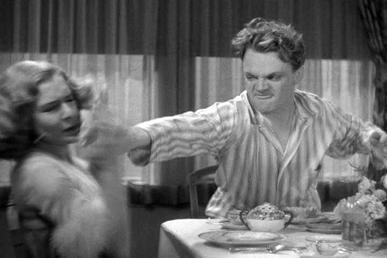
One of the most notable aspects of The Public Enemy is the gritty and brutal realism with which it portrays Prohibition-era mob life. Throughout the film, the victims of Tom and his associates are continually referenced as reminders of the all too real price that society pays when it glamorizes its criminals. Similarly, all of the gangsters, while initially likable, are quickly revealed to be duplicitous and ruthless in their interactions with both their enemies and their supposed friends. The extent of gangland brutality is expertly captured in the infamous scene in which Tom smashes half a grapefruit in his girlfriend’s face for talking back, and another scene in which Tom guns down a former associate as the man pleads for his life. As a result, while Tom is the film’s protagonist, he is never presented as anything remotely resembling a hero. This approach, while typical of the film’s era is refreshing in a time in which criminals are routinely presented as loveable rebels. Through this gritty approach to its subject, the film is able to present an accurate account of both mob life and the people who inhabit it.

Good mornin', good mornin'...
While most of the elements that make up the film’s plot have since become standard fare, several members of the cast more than make up for the story’s more dated elements. Murray Kinnell’s performance as the charmingly shameless Putty Nose brings comic relief to the film’s early scenes and pathos to its later scenes when a hardened Tom seeks him out for revenge. Similarly, Robert Emmett O’Connor’s Paddy Ryan is such a genuinely likable character that O’Connor almost makes audiences forget about the bloodshed that his character is responsible for. One of the film’s most interesting turns is from Beryl Mercer as Tom’s childishly naïve mother. In her portrayal, Mercer presents a portrait of a woman so desperate for a happy home that she deludes herself about her son and completely blind herself to the reality of his criminal lifestyle. Mae Clarke adds spunk to her role as Tom’s neglected girlfriend, making her performance far more enjoyable than Jean Harlowe’s bland portrayal of Tom’s new girlfriend, which unfortunately comes across as more of a script reading than a full-fledged performance. The supporting cast members lend apt support, particularly Ed Woods and Leslie Fenton as Matt and fellow gangster Nails Nathan.

Despite the many enjoyable performances in the film, The Public Enemy undoubtedly belongs to its star, James Cagney. At the time of the film’s production, Hollywood was still adjusting to the advent of ‘talking’ pictures and many writers, directors, and actors were still relying upon obsolete techniques left over from the silent era. As a result, many of the films released at the start of the 1930’s possess an awkward, stilted, quality due to a combination of minimalist plots, stagey dialogue, and most noticeably, overacted performances. The Public Enemy, however, contains a charge that is nothing short of electric as audiences witness Cagney’s neighborhood tough evolve into a truly ruthless criminal. This is due in large part to Cagney’s previous experience working on the New York stage before beginning his film career, which provided him with a foundation in improvising and realistic acting. Cagney also brought his real life experiences into play as he utilized his knowledge of city life and the colorful characters who inhabit it to imbue his performance with a strangely endearing combination of street smarts, personal insecurity, ambition, and gritty charm. The depth and energy of his performance makes Tom stand out as far more than just another tough guy and instead makes him an accurate portrait of the dark side of the American Dream during the Great Depression. His performance is truly multidimensional as he effortlessly shifts between Tom’s hardened persona in front of his friends, to his insecurity at home, to his relentless need to prove his worth on the streets. Cagney’s turn in The Public Enemy remains one of the most fascinating and entertaining portrayals of a criminal in cinema, and an example of the modern acting that would soon overtake Hollywood as it entered its Golden Age.

Through its striking realism, The Public Enemy was one of the first films to show 1930’s audiences the true potential of sound film. The film provides an excellent portrayal of the temptation and inevitable failings of criminal life that remain as alluring and chilling today as they were upon the film’s original release. The film brought James Cagney to viewers’ attention, launching what would become a legendary career that spanned over five decades. Join Cagney and the rest of the cast for a truly explosive good time that you won't soon forget.

You still look pretty tough to me, Tommy

Wednesday, March 12, 2014

Classics: A Review of The Quiet American By Lauren Ennis


Hi didelly dee an expat's life for me!
One of cinema’s most powerful genres is the war film. Through their depiction of the physical destruction and mental devastation that war inflicts upon soldiers and civilians alike, the best war films tell universal tales that are relatable to people of all eras, cultures, and lifestyles. One of the shortcomings of watching period war films, however, is that they are unable to provide the full story of any given conflict within the confines of the screen. As a result, it is difficult for viewers to see the big picture of the numerous events leading up to or gain insight into the reasons behind any given conflict. One unique war film, however, chronicles not only the turmoil of war but also the various political intrigues that spark and fuel it; The Quiet American. Through its portrayal of civil unrest and domestic distress in 1950’s Vietnam, The Quiet American provides an unusual and unusually informative take on the Vietnam War, which its story foreshadows.

The story begins in 1952 Saigon as British reporter Thomas Fowler (Michael Caine) introduces viewers to the seeming paradise of his expatriate life. Fowler spends his days writing bland articles chronicling the most obvious events of the civil war unfolding between colonialists and communists in the northern part of Vietnam, and his nights doting upon his Vietnamese mistress, Phuong (Do Thi Hai Yen). The simple comforts of Fowler’s life are soon called into question, however, with the arrival of American aid worker Alden Pyle (Brendan Fraser), whose friendship challenges Fowler’s stance upon the political events surrounding him. According to Pyle, neither colonialism nor communism is the solution to Vietnam’s troubles and a third, moderate, force must therefore be utilized to neutralize both sides. Fowler initially brushes off Pyle’s political theories as the vague, idealistic, dreams that are so common amongst the young and inexperienced. Despite their different political views, the two form a strong friendship that is later tested when Pyle falls in love with Phuong and offers her the two things that Fowler never can; marriage and passage out of Vietnam. When his newspaper requests that he return to London after determining that there is not enough of a story to cover, Fowler sets out to find the inside story behind the accepted Vietnam narrative. During his investigation, Fowler unexpectedly meets up with Pyle again and learns that there is far more to his American friend than naive ideals after all.

While numerous films have related varying accounts of the Vietnam War, The Quiet American stands out for its willingness to examine the reasons and events that led to it. Rather than taking a definitive stance, the film instead chooses an approach similar to that of its protagonist and observes as the intrigues between the conflicting factions unfold. The film relates both the financial motives and paternalistic approach that fueled the colonial rule of the French controlled government of Indochina (the colonial name for Vietnam), as well the oppression that led to the nation’s eventual communist uprising. The film delves even deeper into the politics of the time by including the covert tactics utilized by the United States in Vietnam and other nations throughout the Cold War. The most effective aspect of the film’s political portrayal is the way in which all sides are shown to be equally and ruthlessly devoted to their own goals, regardless of the damage that will be inflicted upon the civilian population in order for those goals to be achieved.

The film was originally due to be released in September, 2001, but was held back after the terrorist attacks of September 11th, as its politically charged story was deemed to be ‘anti-American’, rather than simply anti-war. It was this same view of the story that led MGM to alter Pyle’s character and soften the film’s ending in their 1958 adaptation, which both nullified the message of Graham Green’s original novel and limited the story’s emotional impact. In order to avoid a possible backlash, Miramax planned to release the film straight to dvd, but fortunately reconsidered after being persuaded to test the film at the Toronto International Film Festival by star Michael Caine. The film went on to become a critical success at the festival and an even greater success later at the Academy Awards in which Caine was nominated for the Academy Award for Best Actor. The story remains as effective an anti-war tale today as it was upon the novel’s publication in 1955 and has as much, if not more, poignancy and relevance in today’s world of complicated and conflicted international relations.

A greencard is always a solid basis for a marriage
While the central love triangle serves as an excellent metaphor for the rival forces competing for control of Vietnam (Fowler represents complacent Europe while Pyle represents idealistic America) the domestic struggle that it creates is just as complicated and compelling as the political struggle that provides its backdrop. Instead of one man being the clear choice for Phuong, both men are shown to be equally in love with her and both are later revealed to be guarding secrets from her. Initially, Fowler’s relationship with her seems to be a superficial one based upon his physical attraction and her need for financial stability. This first impression is further reinforced when Fowler confides in Pyle that the reason that he and Phuong are living together rather than married is because he already has a wife whom he left behind in London. Similarly, Pyle’s relationship with her is based upon his need to protect and take care of someone, and she in turn is all too happy to be taken care of. As the film continues, however, Pyle’s desire to take care of both Phuong and her country is shown to be far more complicated and dangerous than a simple need to help others. The love triangle turns even more convoluted when Pyle is eventually revealed to be working in Vietnam as a CIA agent rather than an aid worker, and the true depth of Fowler’s feelings for Phuong finally becomes all too clear to both her and viewers. As a result, audiences are able to empathize with all three parties, which in turn enables them to become more engaged with both the characters and the overall story.

Although the film’s script is excellent, the final product would not have been nearly as effective or intriguing without its talented cast. As the world weary Fowler, Michael Caine demonstrates equal parts cynicism and vulnerability, making him equally convincing as both a detached playboy expatriate and a crusading reporter. The subtlety of his performance allows him to display a full range of contradicting emotions while remaining believable and relatable. Similarly, Brendan Fraser perfectly captures Pyle’s outward naivety and hidden ruthlessness with equal skill. His portrayal of Pyle is particularly worth noting for the fact that even after Pyle’s double life is revealed he is still able to maintain his character’s initial idealism, providing credibility to Pyle’s devotion to what he tells himself is a just cause. Finally, Do Hai Yen provides a fascinating performance as the enigmatic Phuong, elevating her heroine beyond a mere symbol into a flesh and blood woman.

For its mature approach to a complex topic, The Quiet American is a film that will continue to inform and entertain for years to come. Through its exploration of the early causes and intrigues that preceded the Vietnam War, the film provides excellent insight into how and why the war occurred. Through its intelligent script, superb performances, and gorgeous cinematography, the film provides viewers with a combination of romance, mystery, intrigue, and atmosphere that is both entertaining and informative. While the story of The Quiet American is specific to Vietnam, its message is one that remains relevant in any age or nation.

Oh what a tangled web we weave...

FOR ANOTHER LOOK AT EXPATS CAUGHT UP IN INTERNATIONAL CONFLICT, DON'T MISS MY FULL-LENGTH SCREENPLAY A FIGHTING CHANCE http://offthewallplays.com/2015/02/19/a-fighting-chance-screenplay-about-spanish-civil-war/